
Nobody lines up at a cruise night to talk about the wagon. I get it. But if you actually want to understand what Chevrolet was building between 1968 and 1972, you can't just look at the SS cars and call it done. The Concours wagon was the other half of the same platform, built on the longer chassis, aimed at a completely different buyer, and it's a lot more interesting under the sheet metal than most people give it credit for.
History & Heritage
6 min read
The Concours Wagon: Second-Gen's Family Hauler Side
The 1968-72 Chevelle Concours wagon rode on the longer sedan wheelbase, skipped the SS package, and offered a rear-facing third-row seat few remember.
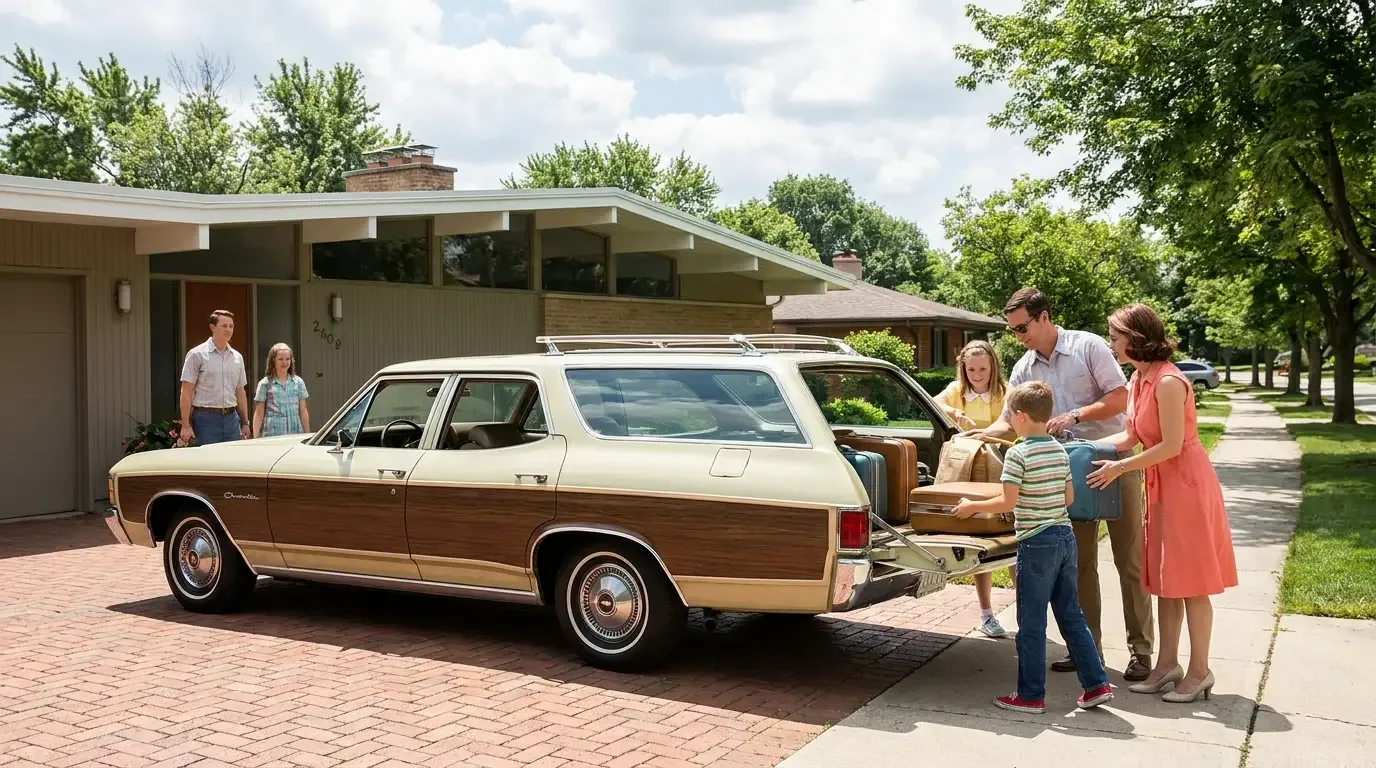
I've had guys bring these into the shop assuming they're basically a Malibu with a different back end. They're not. The wagon rode on the longer wheelbase shared with the four-door sedans, not the shorter one under the coupes, and that changes more about how the car drives and how it was built than a casual look would tell you.
Why the wagon isn't just a coupe with a hatch
Second-generation Chevelles split their wheelbase by body style. The two-door coupes and convertibles rode on a 112-inch wheelbase, tighter and more nimble. The four-door sedans and every wagon variant rode on a 116-inch wheelbase, four inches longer, built for stability and cargo capacity rather than a short-throw feel through a corner. If you've read Chevelle's golden years and only came away with the coupe story, you missed half the engineering decision Chevrolet made for this generation. The wagon wasn't an afterthought grafted onto the sporty body. It was built on the platform meant for family use from the start.
That longer wheelbase means a 1968-72 wagon rides differently than the coupe sitting next to it at a show. Softer, more composed over broken pavement, less eager to change direction. That's not a flaw. That's the car doing exactly what it was designed to do.
Where Concours fits in the trim ladder
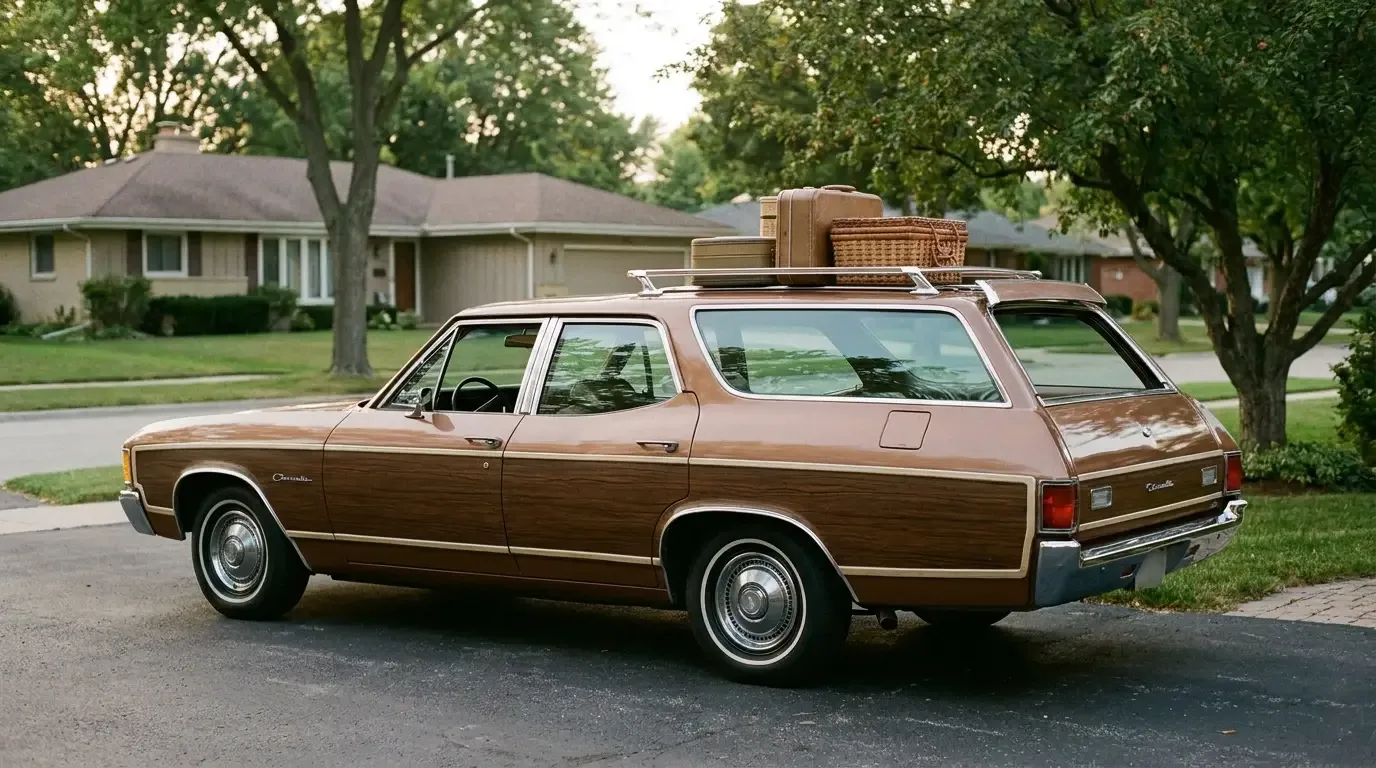
Concours wasn't just a badge dropped onto whatever wagon Chevrolet felt like building that year. Wagons ran their own four-name ladder, separate from the 300/Malibu names used on sedans and coupes, but built to the same idea. Nomad, a name recycled from the famous 1955-57 wagon, covered the base trim, roughly equivalent to a 300 in content level. Greenbrier sat above it, trimmed to base-Malibu standard. Concours sat above that, and Concours Estate topped the whole lineup with the nicer interior trim, more brightwork, and, on the Estate specifically, simulated woodgrain paneling down the flanks, the same visual cue Ford was running on the Country Squire and Country Sedan at the same time. Chevrolet wasn't inventing the woodgrain wagon format. It was matching a format the market already expected and putting its own trim ladder underneath it.
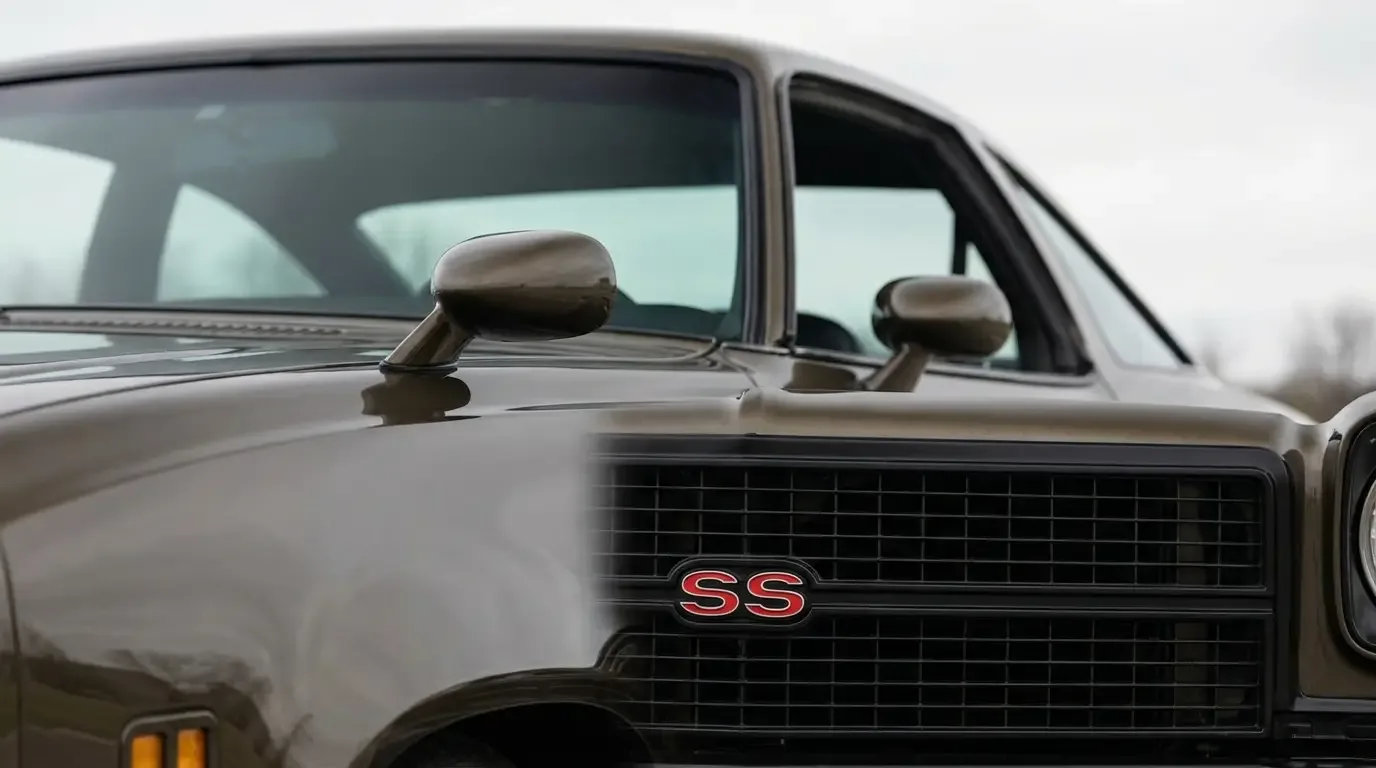
What Concours did not get, in any second-generation year, was an SS wagon package. Chevrolet never built a factory SS-badged Chevelle wagon during this run; that combination didn't reach the order form until 1973, one year after this generation ended. If someone's showing you a wagon with SS badging from this era, that's a modification or a re-badge, not something that left the factory that way. Keep that straight before you evaluate a car's originality.
Engines and what the wagon was actually built to do
Small-block V8s, the 307 and 350, did most of the work in Concours wagons, and that's not a weakness, it's the right tool for the job. A wagon hauling a family and cargo doesn't need a solid-lifter big block to be a good car. Big-block 396 and, later, 402 engines were available in wagons in some years, most documented on 1969-70 Concours wagons, giving buyers who wanted more grunt for towing or highway passing a factory option without needing to step into the SS lineup they weren't buying anyway.
The three-seat configuration is where these wagons get genuinely useful as period pieces. A rear-facing third seat, when ordered, pushed capacity up to nine passengers. That's a feature almost nobody restoring a Chevelle today thinks about, and it's part of why a well-preserved three-seat Concours is scarcer than most SS survivors from the same years, simply because fewer people bothered to keep one intact once wagons stopped being fashionable.
What to look for if you're buying one now
Wagons rust in places coupes don't worry about as much. Check the tailgate hinges and the surrounding sheet metal, check the floor under the third-row seat area if the car has one, and check the roof rail channels, because water finds its way into wagon roofs in ways it never does on a two-door. Woodgrain paneling on a Concours Estate is often reproduction by now, since original material didn't hold up to decades of sun and weather, so don't assume factory-original just because it looks period-correct.
Prices on these have moved less than SS cars, which is exactly why they're worth a look if you actually want a second-generation Chevelle to drive rather than trailer. A solid Concours wagon still tends to sell for a fraction of a documented SS396 or SS454 in comparable condition, and you can browse Chevelle wagons currently listed to get a feel for where the market actually sits right now rather than where the auction headlines point.
| Wagon series | Wheelbase | Roughly equivalent to | Notable feature |
|---|---|---|---|
| Nomad | 116 in | Chevelle 300 | Base trim, no woodgrain |
| Greenbrier | 116 in | Base Malibu | Mid trim, upgraded interior |
| Concours | 116 in | Upper Malibu | Top-tier trim, extra brightwork |
| Concours Estate | 116 in | Upper Malibu | Simulated woodgrain paneling |
"I've seen more SS396 clones roll through Detroit than I care to count, but a straight, unmolested Concours Estate wagon with the original woodgrain intact? That's rarer than half the muscle cars people fight over."
Mike Sullivan
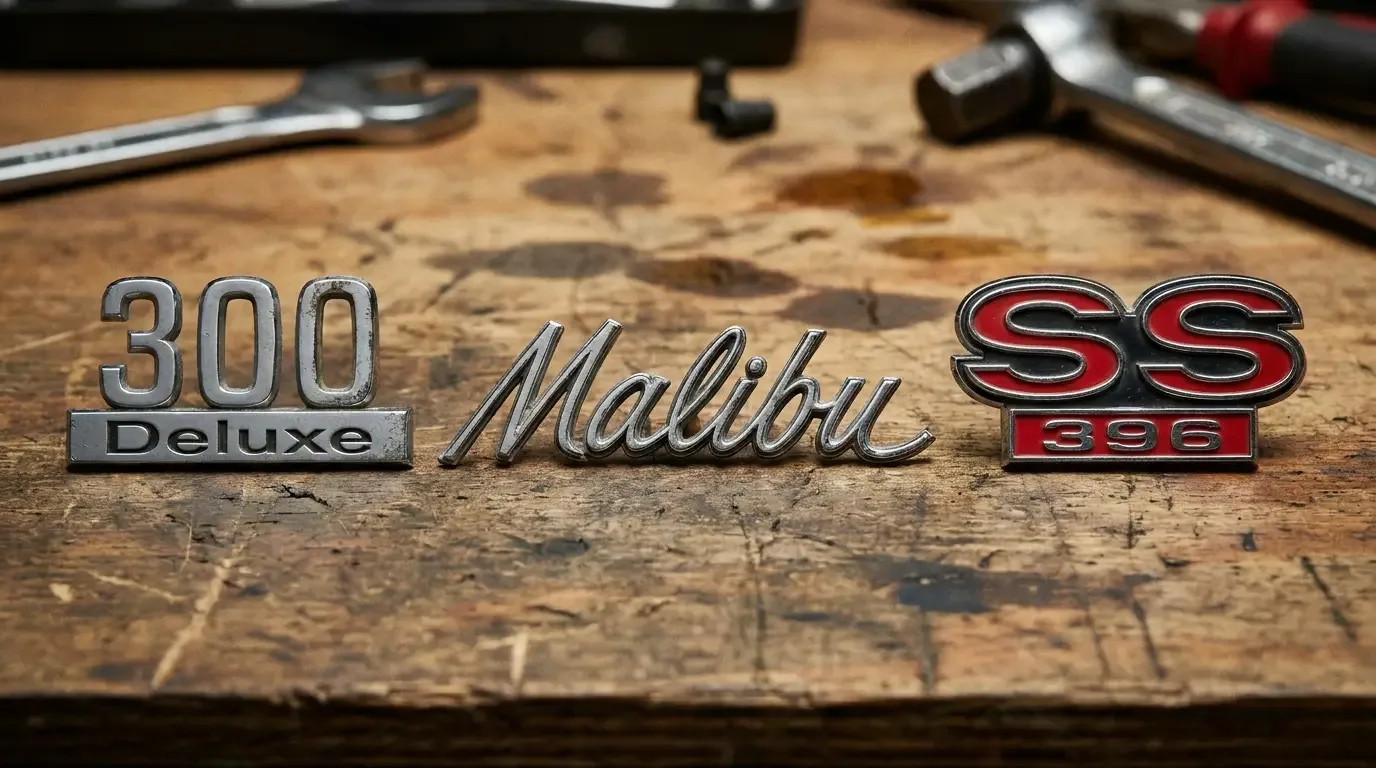
The wagon side of this generation doesn't get the attention the SS cars do, and that's fine, it means better buys for people who actually want one. Trim naming across this whole run gets confusing fast once you start comparing 300, Malibu, and SS badges side by side, which is exactly what next: Malibu, 300, or SS sorts out in more detail. Understand the wagon's place in that ladder and you understand a piece of the second-generation Chevelle that most people walk right past.
Sources and notes
- Wikipedia, "Chevrolet Chevelle" (wheelbase by body style, wagon series naming, 1973 SS wagon introduction)
- Wikipedia, "Chevrolet Nomad" (Nomad as base Chevelle-trim wagon name, Greenbrier as base-Malibu-trim wagon)
- Curbside Classic, "COAL: 1972 Chevrolet Concours Wagon" (Concours/Concours Estate trim positioning)
- Barn Finds, "Hot Rod Wagon: 1969 Chevrolet Chevelle Concours 396" (big-block engine option in wagons)
- Holley Motor Life, "Unearthed: Big-Block, 4-Speed Chevelle Wagon" (big-block wagon documentation)
- Automobile-Catalog, 1972 Chevelle Concours Estate Wagon full range specs
Related Reading
Have a
Chevrolet Chevelle
for Sale?
Reach thousands of serious classic car collectors across the US.
Sell It Here →
Are You a Classic Car Dealer?
List your full inventory and connect with targeted classic car buyers.
Join as a Dealer →

About the author
Mike Sullivan
Detroit-area muscle car enthusiast and restoration specialist with three decades of hands-on experience working on American iron.
Related Listings - Chevrolet Chevelle
More in History & Heritage
Comments
Be the first to comment on this article.