
Ask most people why the muscle car died and they'll tell you gas got expensive. That's part of it. But the bigger story starts a couple years earlier, under the hood, where a set of federal rules and a fuel change quietly took the teeth out of the American V8 before the first gas line ever formed. I've had enough of these engines apart to see exactly where the compression went, and it wasn't the oil embargo that pulled it out.
History & Heritage
6 min read
Emissions, Unleaded Fuel and the Muscle Car
How 1970s emissions rules and unleaded gas dropped compression and reshaped the muscle car V8, plus what valve seat recession means for buyers today.
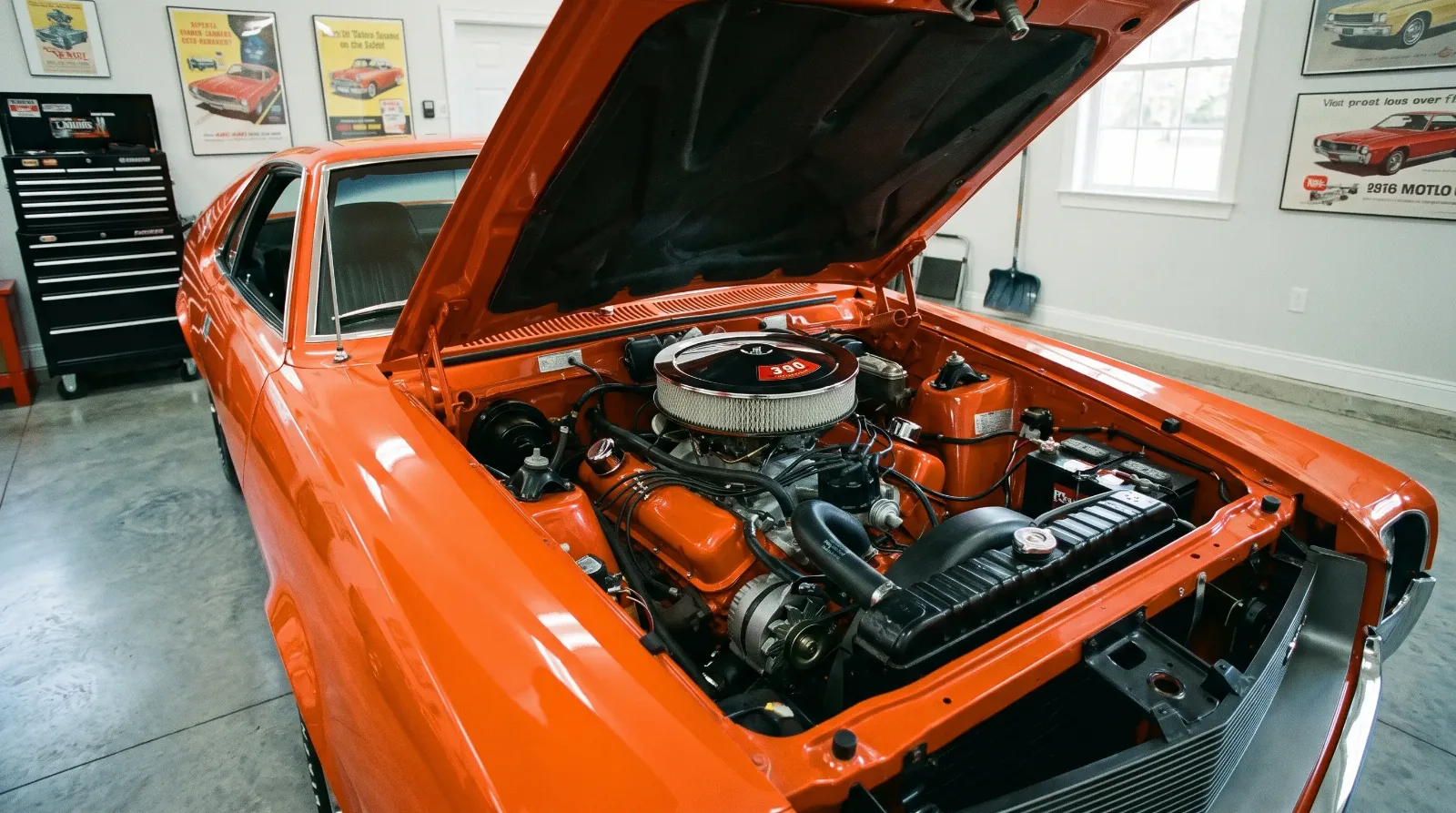
The Clean Air Act of 1970 set the clock. It handed the brand-new Environmental Protection Agency the power to write tailpipe standards, and Detroit had to start engineering for them almost immediately. If you want the wider arc of how this fits the decade, we cover it in detail in the main history piece. Here I want to stay under the hood, because that's where the damage actually happened.
Why clean air rules landed on the V8
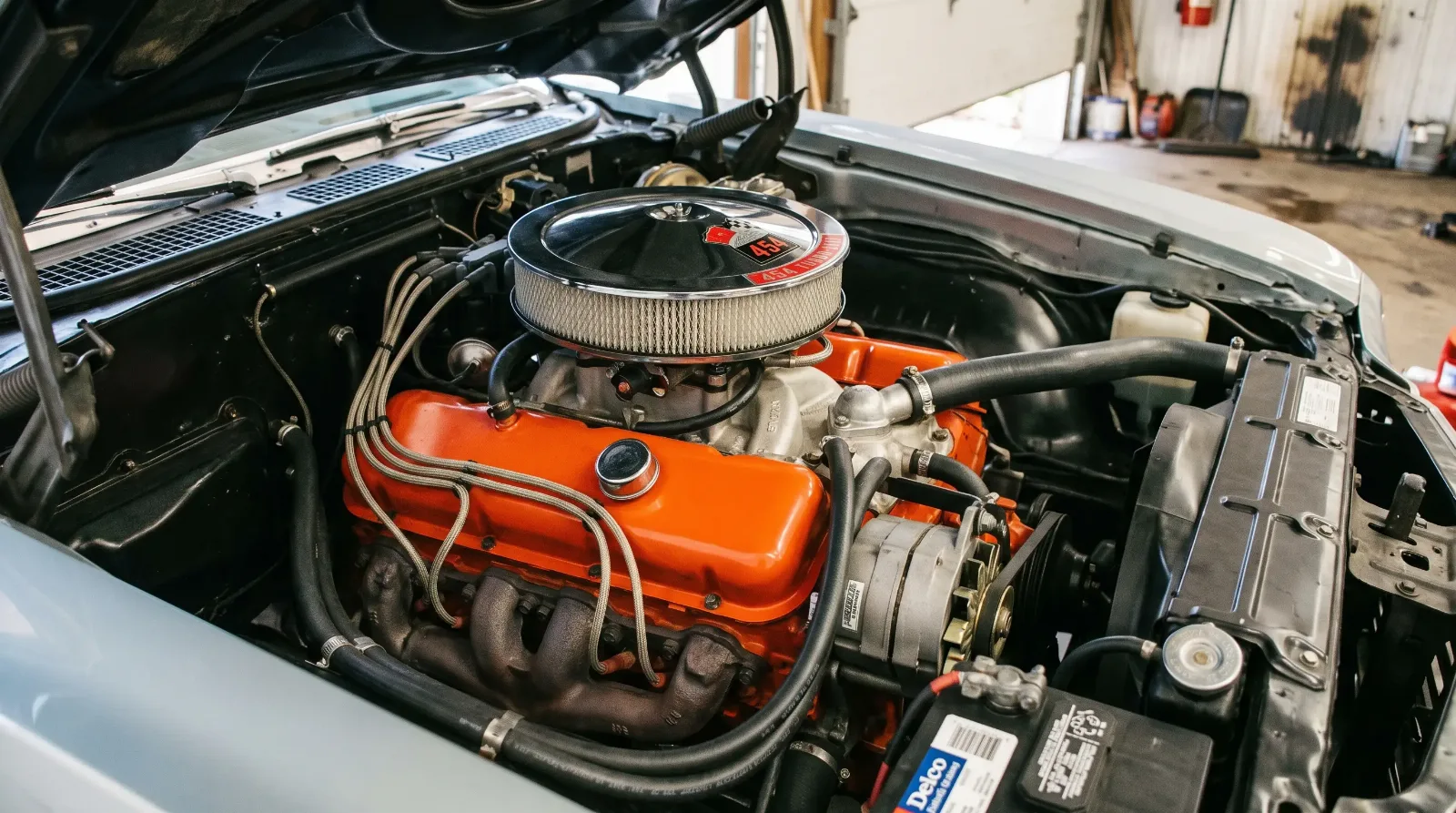
By the late 1960s the smog problem in cities like Los Angeles was impossible to ignore, and the car was the obvious culprit. Hydrocarbons, carbon monoxide, oxides of nitrogen. All three come out the back of a rich-running, high-compression V8 in quantity, and the muscle cars of that era ran rich and hard by design. Nobody was tuning a 440 for clean air in 1969.
The regulations came in stages, and the manufacturers knew the toughest standards were still coming down the road. Rather than re-engineer everything at once, the fastest way to cut emissions and buy time was to change the fuel and drop the compression. That's a cheap fix on paper. On the street it cost the cars their character.
The compression drop nobody wanted
For the 1971 model year, GM made the call across the board. Ed Cole, running General Motors at the time, mandated that every engine be designed to run on lower-octane fuel so the corporation would be ready for unleaded gas and the catalytic converters everyone saw coming. Compression ratios that had been sitting at 10.5:1 and higher came down to around 8.5:1 almost overnight.
That single change does most of the work. Lower compression means less cylinder pressure, less pressure means less power, and a big-block that made real numbers on 11:1 in 1970 was a softer engine the next year on the same displacement. The LS6 454 is the clean example. In 1970 it was rated at 450 hp gross on 11.25:1 compression. The 1971 big-blocks were down near 8.5:1 and the numbers followed them down.
| Change | Roughly 1970 | 1971-1972 |
|---|---|---|
| Typical big-block compression | 10.5:1 to 11.25:1 | around 8.5:1 |
| Fuel expectation | high-octane leaded premium | lower-octane, unleaded-capable |
| HP rating method | SAE gross | SAE net (from 1972) |
| Catalytic converter | none | widely fitted from 1975 |
The gross-to-net rating change for 1972 made the collapse look even worse on the spec sheet, because net figures are measured with the accessories and full exhaust attached. So a buyer reading a 1972 brochure saw a number that was lower for two reasons at once: the engine really had less compression, and the yardstick had changed.
What unleaded gas actually did to these engines
Tetraethyl lead had been in the fuel since the 1920s. It did two jobs. It raised octane cheaply, and it left a soft deposit on the valve seats that acted as a cushion every time a valve slammed shut. Pull the lead out and you lose both. The octane problem the factories solved by dropping compression. The valve seat problem is the one that still bites owners today.
The catalytic converter is what forced the issue. Lead poisons the catalyst and ruins it fast, so once converters became standard equipment for 1975, unleaded fuel was mandatory on those cars. Older muscle cars built for leaded premium were suddenly running on something their valve seats were never machined for, and on an engine that gets driven hard, the exhaust seats can recede into a soft cast-iron head over time.
Valve seats and the fix that actually works
Here's the part I get asked about most. If you own a 1960s or early-1970s muscle car with its original heads, you do not need to panic about modern pump gas, but you do need to know what you're working with. A stock cast-iron head with soft integral seats can suffer valve seat recession under sustained heavy load on unleaded fuel. A car that gets driven to shows and back on weekends usually never sees enough load to matter. A car that gets flogged is a different conversation.
What this means for a buyer today
Don't let a seller scare you with fuel talk to justify a low price, and don't let one wave it away either. What you're really checking is the history of the heads. Original, unrebuilt, and driven hard for fifty years is the combination that can hide a valve seat problem. Rebuilt with hardened seats is a non-issue. It's the same lesson as everything else on these cars: the paperwork tells you more than the paint.
"People blame the gas crisis for killing the muscle car, but the compression was already gone by the time anybody sat in a fuel line. The rules pulled it out a year earlier, quietly, and most buyers never noticed until they read the horsepower on the window sticker."
Mike Sullivan
The emissions and fuel changes were the opening act. What followed was a decade where the badges stayed and the engines under them got weaker every year, and that slow fade is its own subject. If you want to see how the story ends, read the full story of what came after the muscle era finally ran out of road.
Related Reading

Have a
Classic Car
for Sale?
Reach thousands of serious classic car collectors across the US.
Sell It Here →
Are You a Classic Car Dealer?
List your full inventory and connect with targeted classic car buyers.
Join as a Dealer →
#muscle car history
#compression ratio
#emissions muscle car era
#unleaded fuel
#valve seat recession

About the author
Mike Sullivan
Detroit-area muscle car enthusiast and restoration specialist with three decades of hands-on experience working on American iron.
More in History & Heritage
Comments
Be the first to comment on this article.