
A friend of mine bought a 1976 Trans Am new, Y-code, the honest-to-goodness 455 in the last year Pontiac offered it. He still has it. And every time somebody at a show finds out what the horsepower rating was, they do the same thing: a little pause, a recalculation, and then a polite nod. Around two hundred horsepower, give or take, out of 455 cubic inches. Six years earlier that displacement would have made more than double.
History & Heritage
5 min read
The Malaise Era: What Came After Muscle
The malaise era, roughly 1973 to the early 1980s, is when muscle car badges outlived their engines. How the numbers fell and why the survivors matter now.
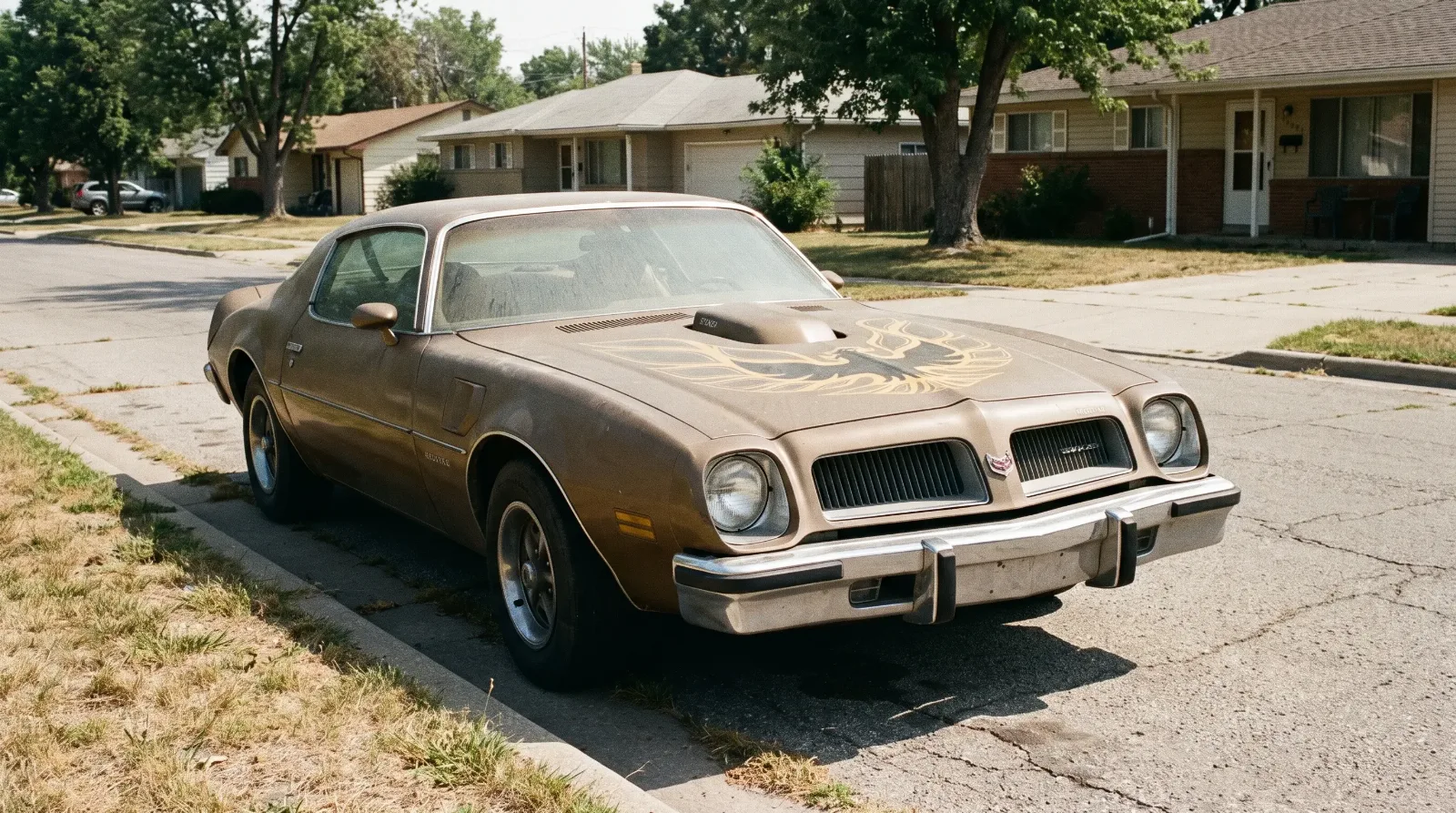
That gap is the malaise era in one driveway. The cars still looked the part. The shaker scoops, the screaming chicken on the hood, the fat rear tires. What lived under all of it had been slowly strangled by a decade of regulation, insurance, and fuel panic until the numbers barely made sense next to the styling. If you want the full run-up to this point, the muscle car history explainer covers it, and this piece picks up where the good years end.
What the malaise era actually was
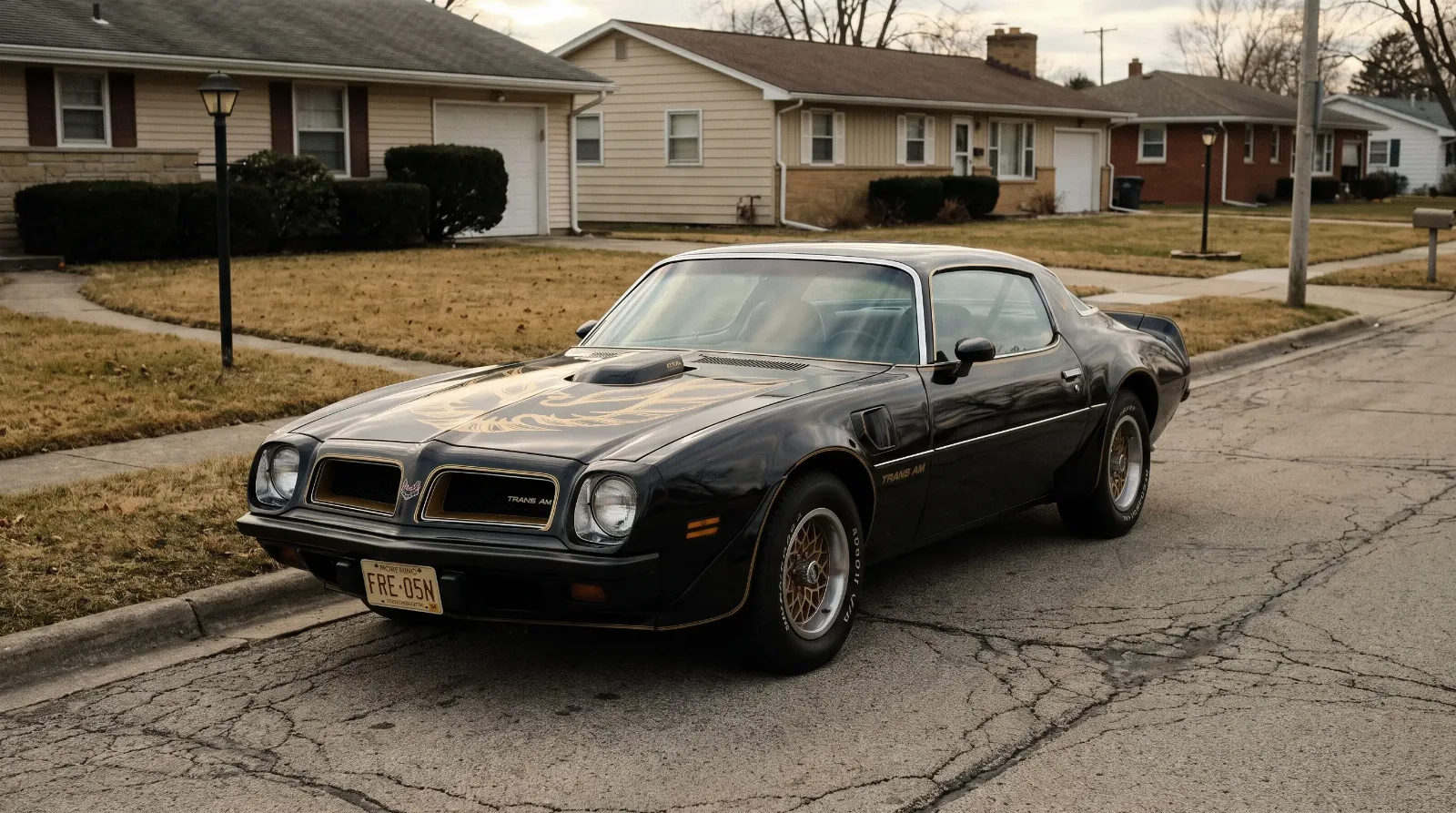
The term itself is a little unfair, and it came later. Writers borrowed it from a 1979 Jimmy Carter speech about a national crisis of confidence, a speech where he never actually said the word malaise, and pinned it onto the cars of roughly 1973 through the early 1980s. It stuck because it fit. These were the years American performance cars got heavier, slower, and sadder while the badges on their flanks still promised something the engines couldn't deliver.
Several things landed at once. The 1973 oil embargo sent gas prices up and put drivers in lines at the pump. Federal 5-mph bumper rules for 1973 and 1974 bolted heavy chrome battering rams onto cars that used to wear delicate trim. Catalytic converters arrived for 1975 and demanded unleaded fuel and choked exhausts. And the compression had already been pulled out a couple years before any of that. For the full arc of how American muscle got here, the story of American muscle traces it from the beginning.
How the badges outlived the engines
Here's what makes the era strange to walk through at a car show. The manufacturers didn't kill the nameplates. They kept the Trans Am, the Corvette, the Camaro, the Cordoba with its supposedly fine Corinthian leather. What they couldn't keep was the performance, so marketing did the heavy lifting instead. Stripe packages, spoilers, hood decals, and appearance options carried cars that had very little to back up the look.
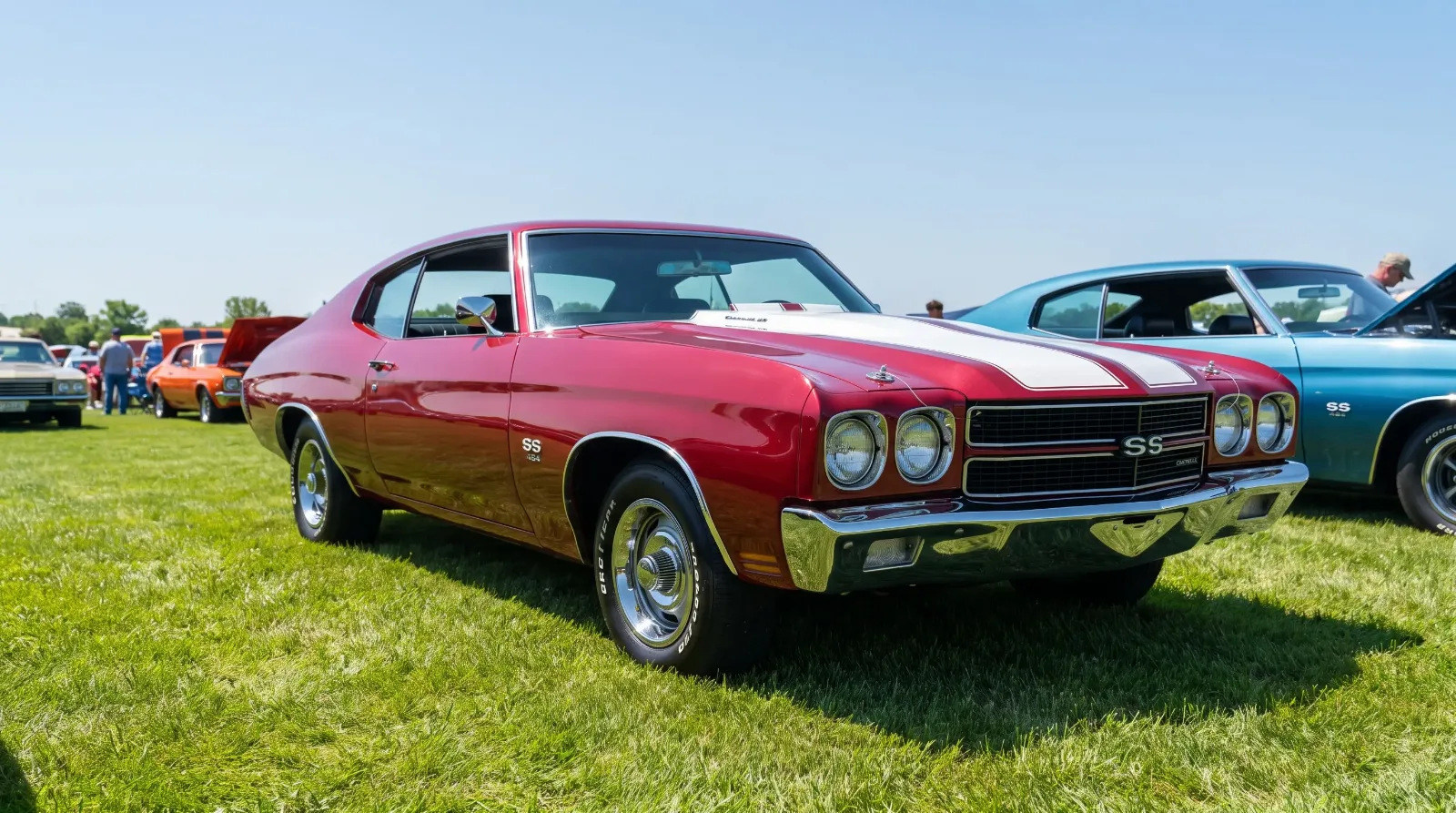
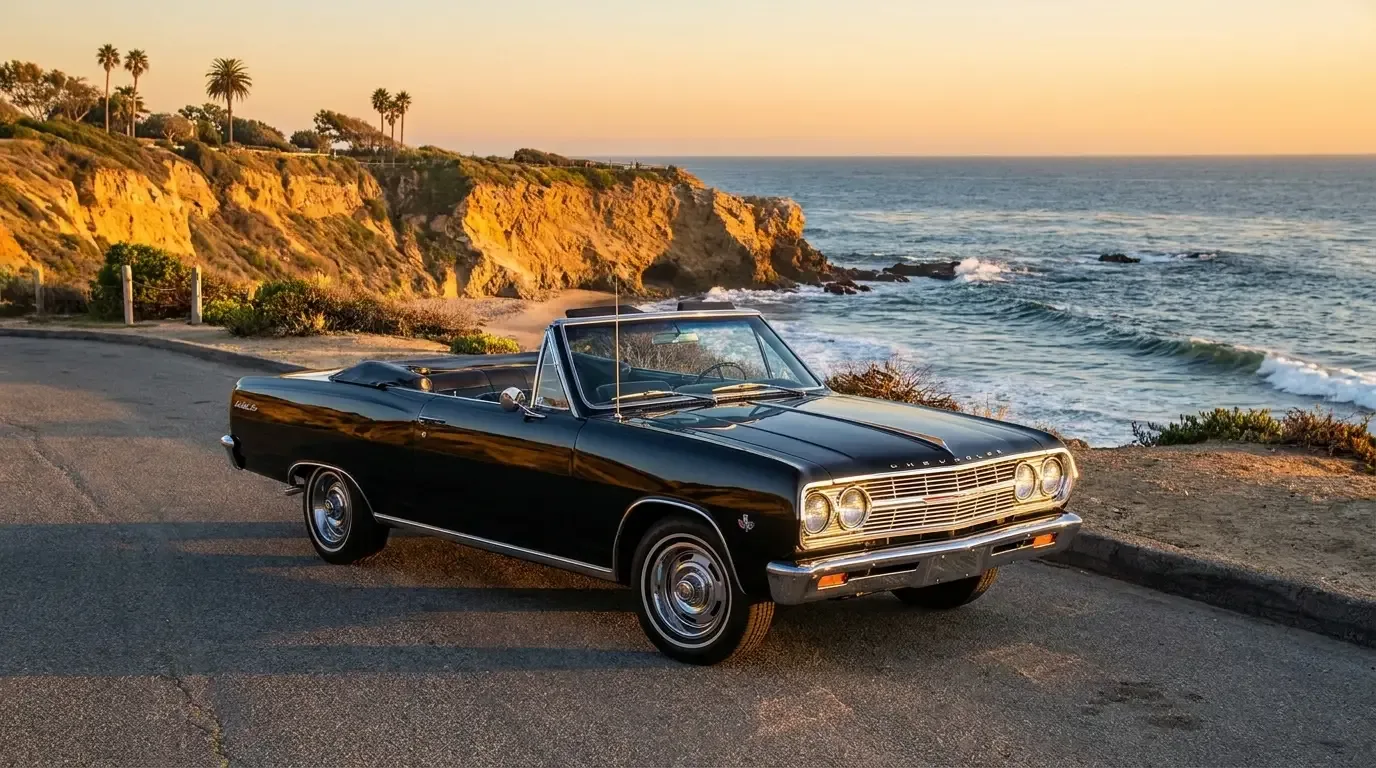
The Corvette is the honest mirror here. In 1975 the base engine made 165 horsepower net, in a car whose whole identity was built on being America's sports car. It was still the best-selling Corvette era by volume a few years later, because buyers wanted the shape and the feeling even when the acceleration had left the building. The Chevelle told the same story on the family-muscle side, and the chevelle malaise era horsepower decline story lays out how far one nameplate fell year by year.
The years the numbers fell
Laid out on a table, the slide is brutal and quick. What took the muscle car a full decade to build up, the early 1970s tore down in about four model years.
| Year | What changed |
|---|---|
| 1971 | GM drops compression across the board for lower-octane fuel |
| 1972 | SAE net ratings replace gross, numbers fall further on paper |
| 1973 | Front 5-mph bumpers mandated, oil embargo hits in October |
| 1974 | Rear 5-mph bumpers added, most big-blocks gone from the order sheet |
| 1975 | Catalytic converters standard, unleaded fuel required |
By 1975 the segment as buyers had known it in 1970 was effectively over. A base Corvette under 170 horsepower, a Mustang shrunk down to the little Mustang II with no V8 at all in its first year, a Charger that had turned into a plush personal coupe. The muscle car didn't get a funeral. It just quietly stopped being offered, one option code at a time.
What buyers rediscovered later
The interesting turn is what happened to these cars in the decades after. For a long time the malaise-era survivors were the ones nobody wanted, the cheap way into an old American coupe, and plenty got parted out or clapped out. Then a funny thing happened. The people who were teenagers when these cars were new grew up, and a clean 1977 Trans Am or a survivor Cordoba started pulling real money and real affection at shows.
They matter now for what they are, not for what they weren't. A well-kept malaise car is a rolling snapshot of exactly how the industry adapted under pressure, and it drives like nothing from the horsepower years, softer, quieter, more of a cruiser than a bruiser. If you're curious how sharply the two decades differ once you drive them back to back, read the full story on the 1960s versus 1970s split.
Why the era still matters
I've come around on these cars. For years I dismissed them the way everybody did, as the sad chapter after the good part. But the malaise era is where American performance learned to survive a world that had turned against it, and the lessons it took, cleaner engines, better fuel management, real aerodynamics, are exactly what powered the horsepower comeback of the 1980s and beyond.
"The malaise cars get laughed at until you spend a weekend with one. Then you stop hearing the horsepower number and start hearing the story. These are the cars that kept the badges alive through the worst decade Detroit ever had, and that counts for something."
Patrick Walsh
If the era has pulled you in, the survivors are more affordable than the 1960s icons and there's real character in a clean example. You can shop classic muscle car listings to see where the market sits, but drive one before you judge it. The chicken on the hood earns more respect than you'd think.
Related Reading
Have a
Classic Car
for Sale?
Reach thousands of serious classic car collectors across the US.
Sell It Here →
Are You a Classic Car Dealer?
List your full inventory and connect with targeted classic car buyers.
Join as a Dealer →

About the author
Patrick Walsh
Automotive journalist covering classic car shows, events, and the enthusiast community across North America.
More in History & Heritage
Comments (1)
K
Kurt Ecklund
1 month ago
Color combinations matter more than most buyers think. Original paint codes add real value; wrong-era repaints subtract from it.