
Somebody always brings the same spec sheet to a show and wants me to explain it. A 1971 Chevelle with a 454 rated one way, a 1972 with what looks like the same engine rated a hundred points lower, and the guy is convinced Chevrolet gutted the motor between two model years. He is half right. Part of that drop was real. But a big chunk of it was accounting, and if you do not know which part is which, you will misread every muscle car built in 1972.
History & Heritage
6 min read
Why Horsepower Numbers Collapsed in 1972
In 1972 muscle car horsepower fell off a cliff. How the gross-to-net rating switch and compression cuts explain the drop.

This is the year the horsepower numbers fell off a cliff on paper, and it confuses people to this day. Two separate things happened at the same time, and they got tangled together in memory. Let me pull them apart, because it matters for anybody buying or valuing one of these cars. For the wider context, here's the full breakdown of the whole muscle era, but 1972 is where the arithmetic changed.
Two different things happened at once
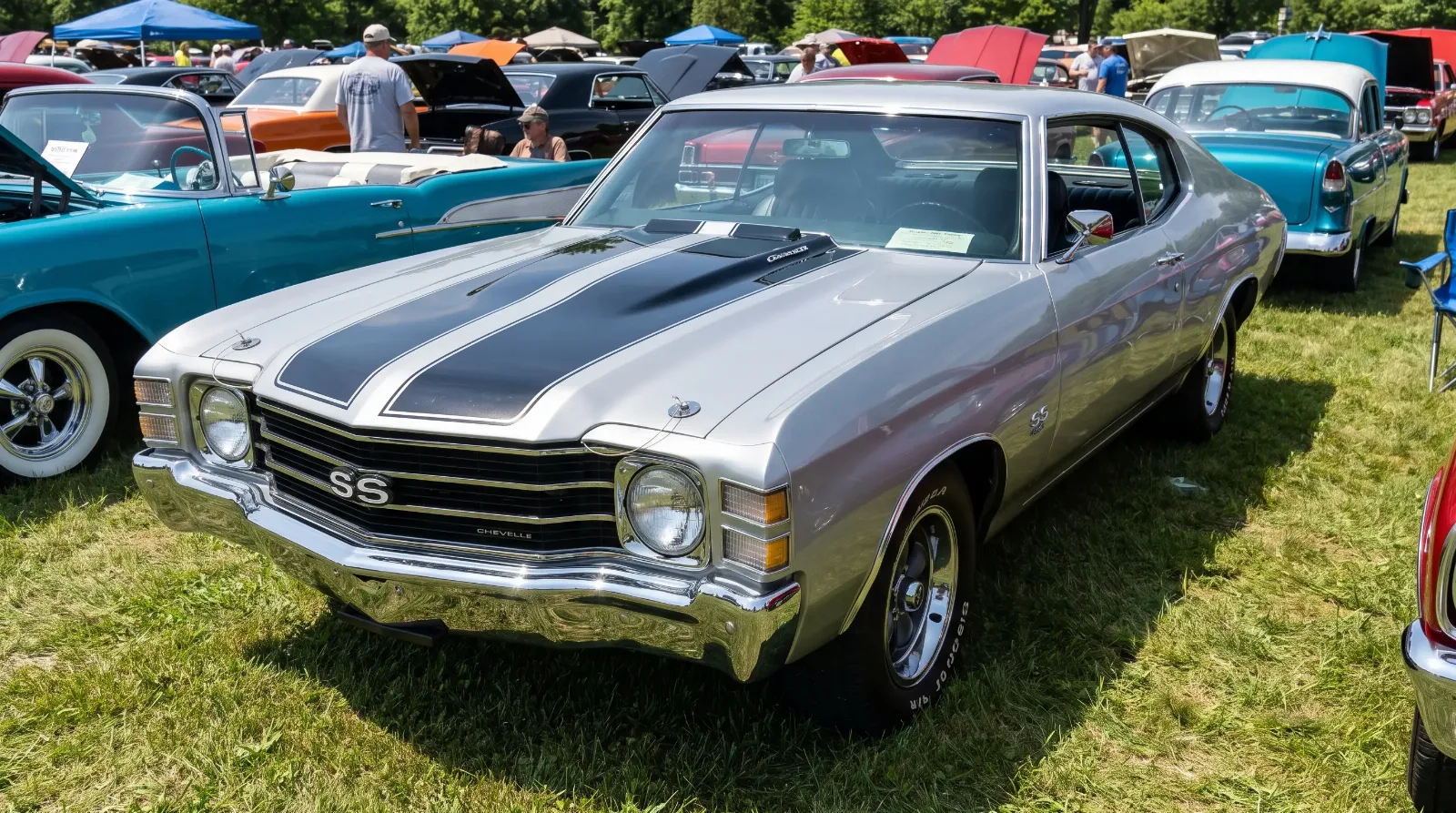
Here is the short version before I get into it. First, the industry changed how it measured horsepower for 1972, switching from gross to net ratings, which lowered every number on the page even if the engine was untouched. Second, the engines really had been detuned starting in 1971, mostly through lower compression, which was a genuine power loss. The 1972 spec sheet shows you both effects stacked on top of each other, which is why the drop looks so violent.
Separate those two and the picture makes sense. Fail to separate them and you will either overpay for a car thinking it lost nothing, or dismiss a car thinking it lost everything. Neither is right. The truth sits in the middle, and it is worth understanding before you write a check.
Gross versus net, explained
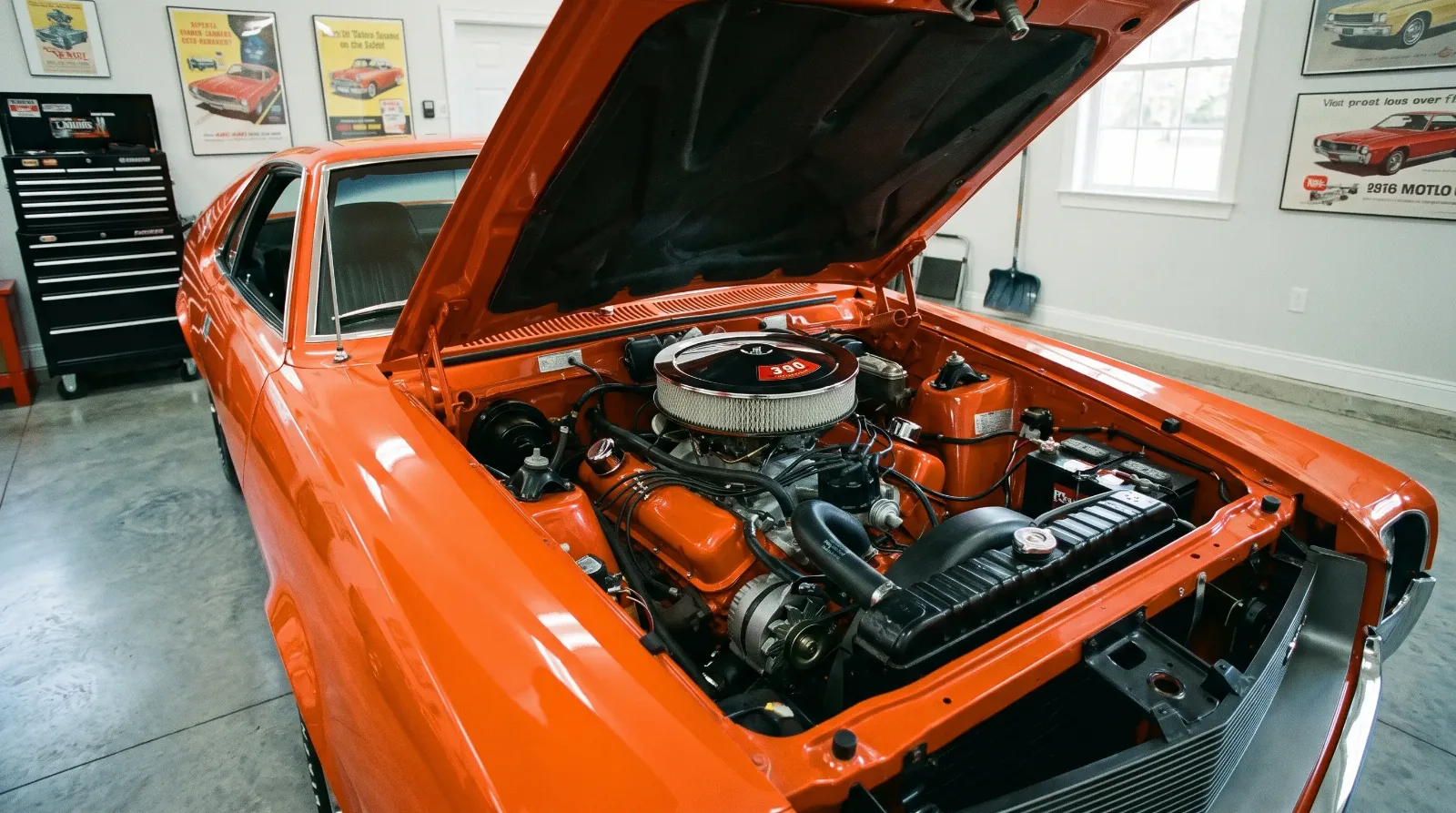
Gross horsepower, the standard through 1971, was measured on an engine test stand under ideal conditions. No air cleaner restricting the intake, no full exhaust system, often no alternator or accessories loading the crank, and the tuning set for the best possible number. It was an optimistic figure, and everybody in the industry knew it. It sold cars and it looked great in an advertisement.
Net horsepower, adopted for 1972, measured the engine as it actually sat in the car. Air cleaner in place, full production exhaust, all the accessories turning, ignition timing set to the emissions-legal spec. That is the power the engine really made on the street. Net figures typically came in something like twenty to thirty percent below the old gross numbers for the same engine, purely because of how they were measured.
| Chevrolet 454 LS5 rating by year | Figure |
|---|---|
| 1970 (gross) | 360 hp |
| 1971 (gross, lower compression) | 365 hp |
| 1972 (net) | 270 hp |
| Reason for the 1972 drop | Net measurement plus earlier compression cut |
The compression cut that was real
Now the part that was not just accounting. For 1971, General Motors dropped compression ratios across its engine lineup so they could run on low-lead and unleaded fuel, getting ahead of the emissions hardware that was coming. Lower compression means the engine extracts less energy from each combustion cycle, and that is a real loss of output, not a measurement trick. A high-compression engine detuned to run on regular fuel gives up power, full stop.
So the 1971 engines had already lost something real compared to 1970, even though they were still quoted in gross numbers. Then 1972 layered the net-rating change on top of that softer starting point. The emissions story ties directly into all of this, and you can read the full story of how unleaded fuel and emissions gear reshaped these engines. The compression cut is the piece people forget, and it is the piece that was genuinely mechanical.
What the numbers actually did
The combined effect was that a 1972 muscle car looked, on paper, like a shadow of its 1970 self. In some cases the on-street difference was smaller than the spec sheet suggested, because a good part of the drop was the measurement change. In other cases, where the compression cut was steep and the emissions tuning was aggressive, the car really had lost a meaningful amount of grunt.
This is why 1972 is such a hinge year for collectors. The 1972 Chevelle in particular gets argued about constantly, being one of the last big-block cars before the segment fell apart, and you can read the full story of that net-horsepower reckoning. The value hangs on knowing exactly what a given car actually lost, which means reading the spec sheet like a mechanic, not like an ad man.
"When a buyer shows me a 1972 spec sheet and says the engine is junk, I ask him one question. Do you know what net horsepower is? Half the time he does not, and half the drop he is worried about is just the factory finally telling the truth about the number."
Mike Sullivan
How to read a 1972 spec sheet
My advice for anybody looking at a 1972 or later car is simple. Do not compare a net rating to a gross rating and panic. They are not the same measurement, so the comparison is meaningless on its face. If you want to know how much power the engine really lost between 1970 and 1972, you have to account for the measurement change first, then look at what compression and tuning took on top of that.
Once you do that, some 1972 cars look better than their reputation and some look worse. The point is to judge each one on the real mechanical facts, not the scary headline number. If you are shopping the era and want to see how the market has sorted all this out, you can shop current muscle car listings and compare what these cars bring today. The 1972 number collapse was half real and half bookkeeping, and knowing the difference is worth actual money.
Related Reading
Have a
Classic Car
for Sale?
Reach thousands of serious classic car collectors across the US.
Sell It Here →
Are You a Classic Car Dealer?
List your full inventory and connect with targeted classic car buyers.
Join as a Dealer →

About the author
Mike Sullivan
Detroit-area muscle car enthusiast and restoration specialist with three decades of hands-on experience working on American iron.
More in History & Heritage


Comments
Be the first to comment on this article.