
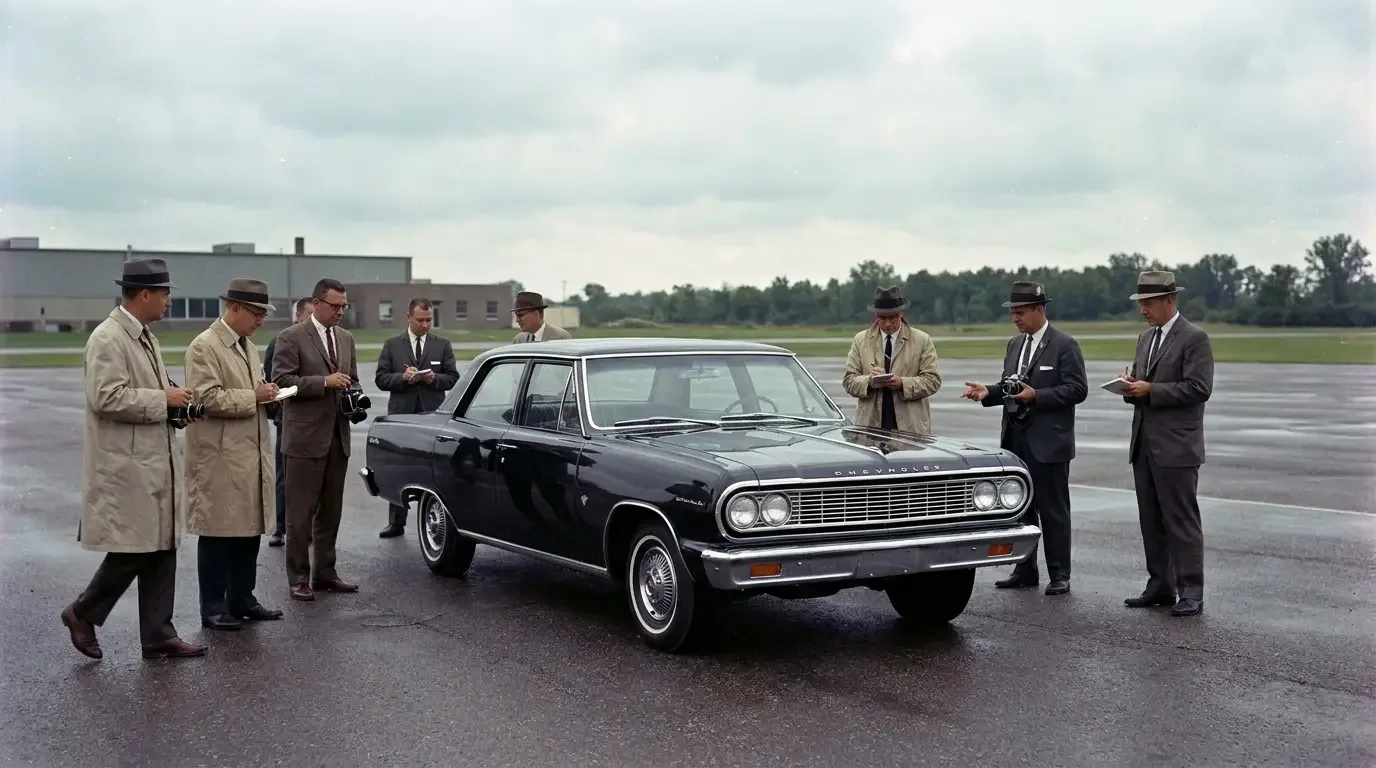
Ask most people to picture a first-generation Chevelle and they'll see a two-door hardtop with SS badging and a big-block rumbling underneath. Almost nobody pictures the wagon. But the Chevelle wagon was there from the beginning, doing the unglamorous work of hauling families, groceries, and camping gear while its two-door siblings got all the magazine covers, and it deserves better than the footnote treatment it usually gets.
History & Heritage
6 min read
The First-Generation Chevelle Wagon Story
The Chevelle wagon never got an SS badge, but it did the real work. Here's the story of the family hauler behind the muscle car legend.
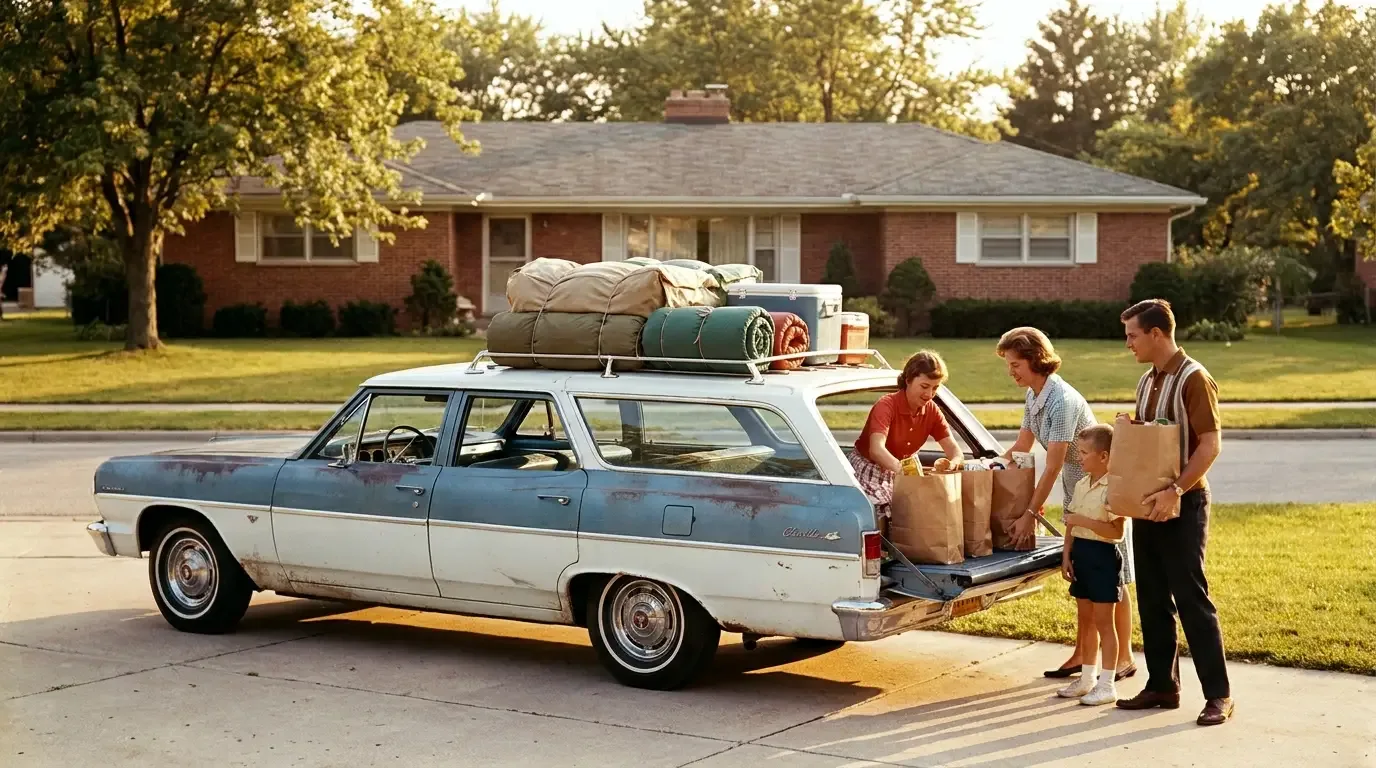
The wagon variant tells you something the SS396 stories don't: what the Chevelle actually was for most of the households that bought one. For the broader first-generation story, the first-generation story covers the full lineup this wagon belonged to. This is about the version that spent its life doing chores, not chasing quarter-mile times.
The wagon lineup from the start
Chevrolet offered the Chevelle wagon from the 1964 model year onward, built on the same A-body platform as the sedans and hardtops but stretched out back into a longroof body style. Wagons came in 300 series and Malibu trim, giving buyers the same basic trim ladder choice they'd get in a two-door, just wrapped around a cargo-hauling body. The Malibu wagon added the trim and comfort touches, chrome, better upholstery, additional sound deadening, that made a family hauler feel less like a stripped-down utility vehicle.
What the wagon never got, notably, was the Malibu SS treatment. The SS package stayed tied to the two-door hardtop and convertible body styles through the first generation, which meant a Chevelle wagon buyer was shopping strictly for practicality, not performance. That's a meaningful distinction if you're trying to place a wagon in the Chevelle's overall story: it occupied its own lane entirely, separate from the muscle car narrative building around the rest of the lineup.
What buyers actually got
A Chevelle wagon buyer in 1964 or 1965 was choosing between the 300 series wagon, priced to compete directly with Ford's Fairlane wagon and aimed at value-conscious families, and the Malibu wagon, which added enough trim and comfort to appeal to buyers who wanted a wagon that didn't look or feel like a bare-bones fleet vehicle. Engine choices mirrored the rest of the lineup: the base six-cylinder for buyers prioritizing economy, and V8 options for families who wanted more capability towing a small boat or trailer.
Cargo capacity and fold-flat rear seating gave these wagons real utility that a sedan couldn't match, and that's exactly the pitch Chevrolet's dealers made to families cross-shopping a wagon against a bigger, thirstier full-size Chevrolet wagon. The Chevelle wagon offered most of the room a family actually used day to day, in a smaller, lighter package that undercut a full-size Impala or Bel Air wagon on both sticker price and fuel bills, the same value argument that sold the rest of the Chevelle lineup.
Living with one day to day
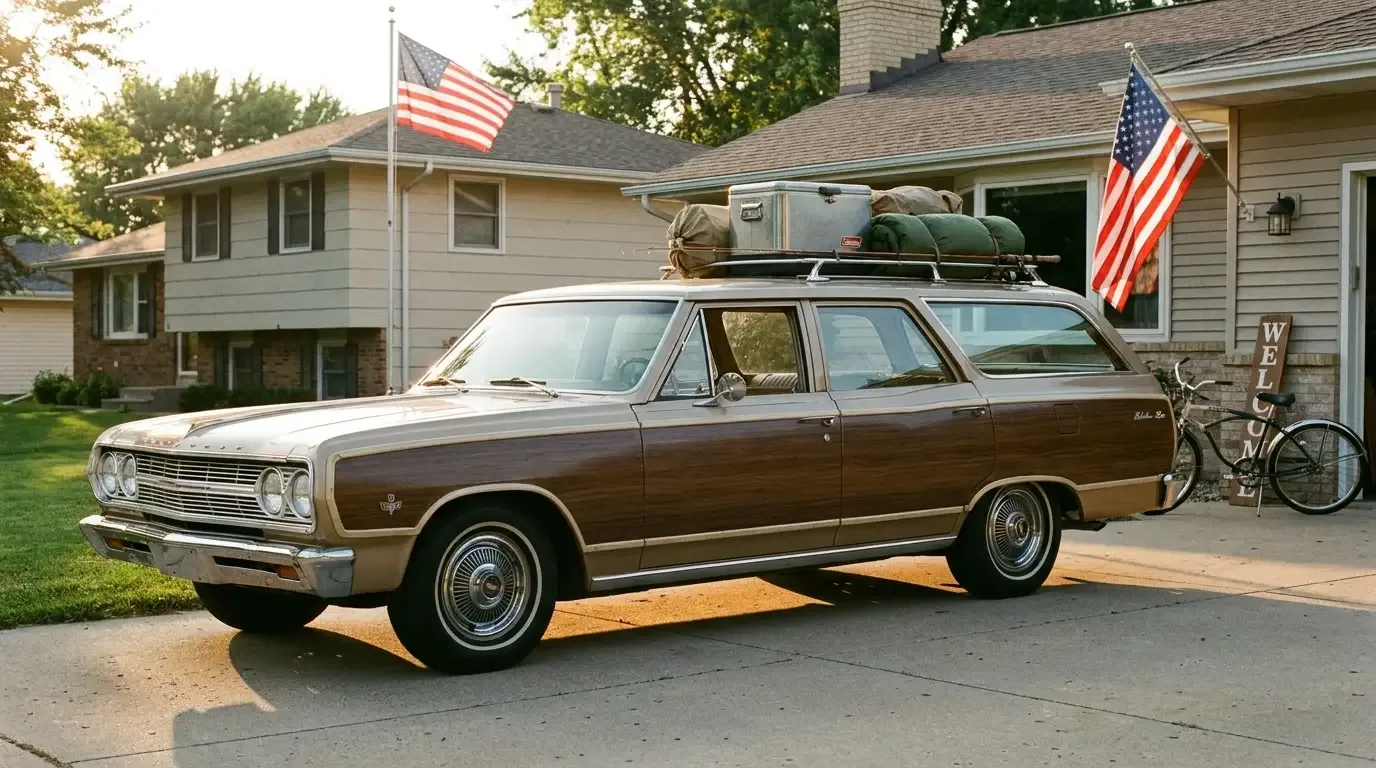
What made the Chevelle wagon work as a daily driver came down to proportions. It was long enough behind the rear seat to swallow a week of groceries or a folded stroller and a cooler without anybody complaining, but it never grew to the barge-like dimensions of a full-size Chevrolet wagon that needed a driveway of its own just to turn around in. Parents cross-shopping wagons in this era cared about exactly that balance, room enough to be useful, size small enough to actually park at a school pickup line or a grocery store lot without a production.
The rear-facing third seat that showed up on some full-size wagons of the era never made it to the Chevelle lineup in the same way, keeping the Chevelle wagon a genuine two-row family hauler rather than trying to compete on maximum passenger count. That kept the focus where it belonged for this platform: a practical, well-proportioned wagon built off a chassis that could also carry a small-block V8 if the buyer wanted a bit more get-up-and-go for highway trips and towing duty. A roof rack option added a bit more capacity for camping gear and luggage on longer trips, one more small detail aimed squarely at the family buyer rather than the enthusiast.
| Trim | Positioning | Notable feature |
|---|---|---|
| Chevelle 300 wagon | Value-focused family wagon | Base six standard, basic trim |
| Chevelle Malibu wagon | Upmarket family wagon | Additional chrome, upgraded interior |
Why they're scarce now
Chevelle wagons from this era simply weren't built to be kept. They were bought to be used hard, driven to the beach and the lumber yard and the kids' soccer practice, and most of them were scrapped or parted out once they'd racked up enough miles and rust to stop being worth fixing. Two-door hardtops and convertibles got saved by enthusiasts who recognized muscle car value early. Wagons didn't have that advocate group, and it shows in how few clean examples survive.
That scarcity has started working in the wagon's favor with a certain kind of buyer, somebody who wants genuine first-generation Chevelle sheet metal and platform but isn't chasing SS396 money. A well-kept first-gen wagon gives you the same basic driving experience, the same era-correct dashboard and door panels, at a price point nowhere near what a documented SS convertible commands. It's a different kind of collector car, quieter, less flashy, but authentic in a way that a lot of resto-mod builds aren't.
"Nobody bought a Chevelle wagon in 1964 thinking about what it would be worth sixty years later. They bought it because it hauled the family and the groceries and didn't cost what a full-size wagon cost. That practicality is exactly what makes the survivors interesting now. You're looking at a car that was never dressed up to be anything other than useful, and there's an honesty in that."
Patrick Walsh
The wagon isn't the Chevelle story most people tell, and that's precisely why it's worth telling. It shows the platform doing its most ordinary job, the one that actually paid Chevrolet's bills while the SS package built the brand's reputation. If you want to see where this all started, browse first-gen Chevelle wagons for sale, or read next: the 1964 press launch story for the debut year that made all of this possible.
Sources and notes
- Wikipedia: Chevrolet Chevelle (body styles and trim history)
- HowStuffWorks, 1964, 1965, 1966, 1967 Chevrolet Chevelle Malibu SS
- MotoGallery, 1964-1967 Chevrolet Malibu SS: History, Specs, Performance
- Automobile-Catalog, 1964 Chevrolet Chevelle Wagon Full Range Specs
- Hagerty: Your Handy 1964-67 Chevrolet Chevelle Buyer's Guide
Related Reading
Have a
Chevrolet Chevelle
for Sale?
Reach thousands of serious classic car collectors across the US.
Sell It Here →
Are You a Classic Car Dealer?
List your full inventory and connect with targeted classic car buyers.
Join as a Dealer →

About the author
Patrick Walsh
Automotive journalist covering classic car shows, events, and the enthusiast community across North America.
Related Listings - Chevrolet Chevelle
More in History & Heritage
Comments (1)
G
Gary Tompkins
1 week ago
Back in '65 a fellow on my line at the plant bought a Chevelle 300 two-door wagon with the 327, and on Saturday nights that plain little longroof surprised a lot of people who assumed it was hauling groceries... The SS badge never came on a wagon, but the engines were on the same order sheet as the hardtops. I have not seen a two-door one in person in thirty years.
Gary, the two-door wagon is a great one to bring up. It only ran for 1964 and 1965, and the engine sheet didn't care about the roof, so a 327 wagon was a real thing on the street. The SS package was the one thing a wagon buyer couldn't order, which is why so few people saw the horsepower coming.