
Pull the build records on any 1972 Chevelle and then a 1973, and the difference isn't subtle. The pillarless hardtop is gone. The doors have frames around the glass now. The whole car sits on a longer wheelbase with a different structure hiding under the sheet metal. Chevrolet called it the Colonnade design, and it's one of the more misunderstood chapters in the model's history because most people assume it happened for styling reasons. It didn't. It happened because Chevrolet and the rest of General Motors were reading the same tea leaves out of Washington that every domestic manufacturer was reading in 1970 and 1971, and the tea leaves said rollover standards were coming for the pillarless hardtop body style.
History & Heritage
7 min read
The 1973 Colonnade Redesign
Why Chevrolet killed the pillarless hardtop Chevelle in 1973 for the Colonnade body, what changed structurally, and what the factory records show.
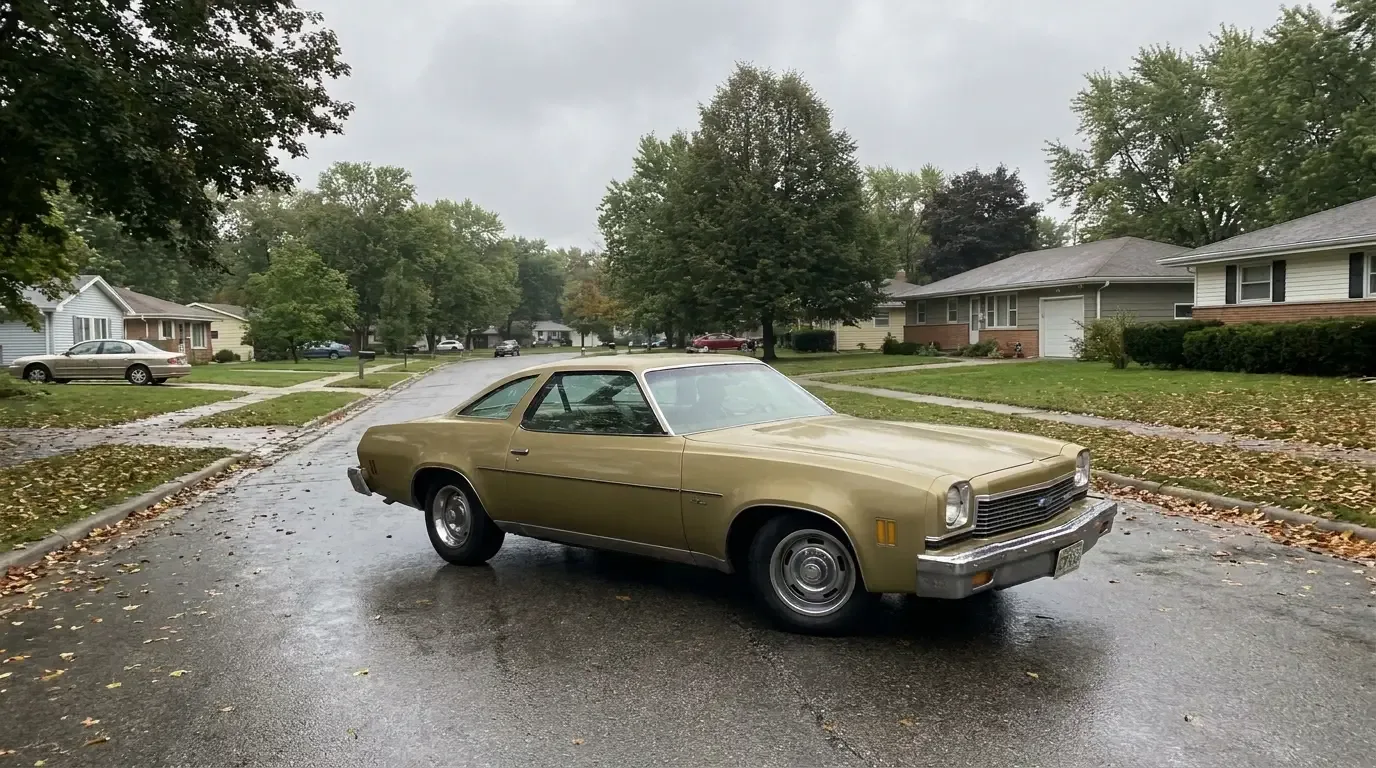
I've gone through enough factory documentation on this generation to say the 1973 redesign gets undersold. It wasn't a facelift. It was a structural program, and understanding what changed and what didn't is the difference between talking about this car accurately and repeating the shorthand version that treats 1973 as "the year the Chevelle got ugly."
Why GM killed the hardtop chevelle
The pillarless hardtop, no B-pillar, frameless door glass, had been a styling signature on GM intermediates since the mid-1960s. The concern inside the industry by the early 1970s was that the federal government was going to mandate roof-crush and rollover protection standards that a pillarless body simply couldn't meet without serious reengineering. GM's response across its intermediate lines, Chevelle, Cutlass, Century, LeMans, was the Colonnade body: a fixed B-pillar, framed door glass, and a much stiffer greenhouse structure. The rollover rule that everyone was designing around was a proposed federal rollover standard that was never actually enacted in the form manufacturers expected, but by the time that became clear, the tooling money was already spent and the Colonnade cars were already on the assembly line. Chevrolet wasn't reacting to a rule that existed. It was reacting to a rule everyone in Detroit assumed was coming.
That's worth sitting with, because it explains a lot of what people criticize about the 1973 car. The extra weight, the different proportions, the loss of that clean hardtop profile, all of it traces back to a structural decision made years before the car reached a showroom floor.
What actually changed underneath
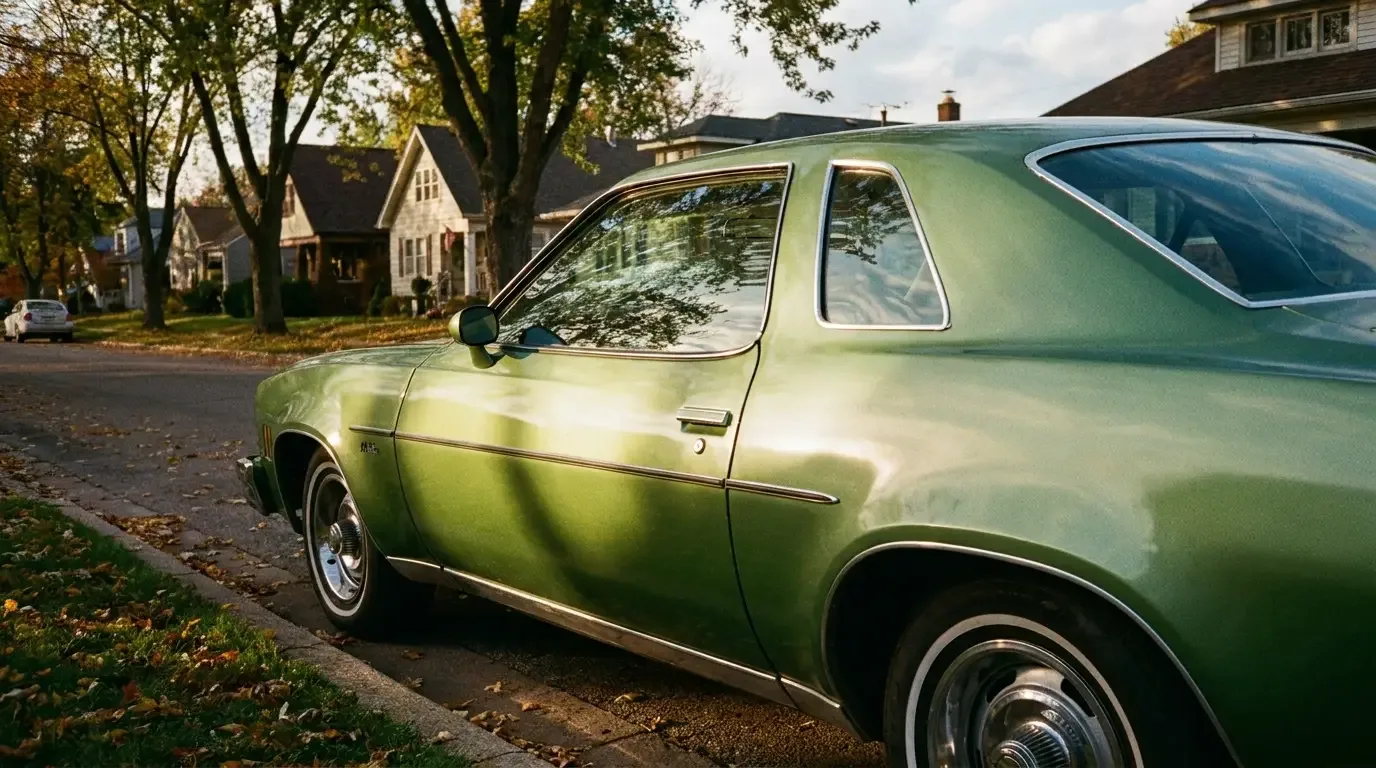
The 1973 Chevelle rides on a wheelbase stretched to 112 inches for the two-door body and 116 inches for the four-door and wagon, longer than the outgoing 1972 car. Overall length grew accordingly. The frame itself carried over the perimeter design from the previous generation but with revised body mounts and a stiffer cowl structure to support the fixed door frames. Curb weight climbed across the board, a heavier chassis, more sound insulation, and additional structure in the roof and pillars all added pounds that the old hardtop body didn't carry.
Suspension architecture stayed familiar: coil springs all around, a front subframe isolated from the body on rubber mounts (GM's "Astro Ventilation" and isolated subframe approach carried into this generation), and the same basic front/rear geometry Chevelle buyers had known for years. What changed was how the car felt on the road. The added weight and structure made the Colonnade Chevelle quieter and, by most period accounts, better isolated from road noise than the car it replaced. It also made it slower with the same engine under the hood, a tradeoff that shows up clearly once you look at the numbers.
The engine lineup carried over, mostly
Under the hood, 1973 was more continuity than revolution. The base six was gone from most Chevelle ordering by this point in favor of V8 power for the majority of buyers, and the V8 lineup ran from a 307 at the bottom through 350 and 400 cubic-inch small-blocks up to the 454 big-block at the top of the order sheet. Horsepower ratings had already shifted to the lower SAE net measurement standard by 1972, so comparing a 1973 rating to a 1970 rating on paper always makes the later car look weaker even when the actual hardware overlaps closely. The 454, for reference, was rated at 245 net horsepower and 375 lb-ft of torque for 1973, a number that reads modest against big-block Chevelles from just a few years earlier but reflects the measurement change as much as any real mechanical detuning.
| Engine | Displacement | Approx. net horsepower (1973) |
|---|---|---|
| Small-block V8 | 307 cid | 115 hp |
| Small-block V8 | 350 cid | 145 to 175 hp depending on carburetion |
| Small-block V8 | 400 cid | 150 hp |
| Big-block V8 | 454 cid | 245 hp |
Trim structure: deluxe, malibu, and the new laguna
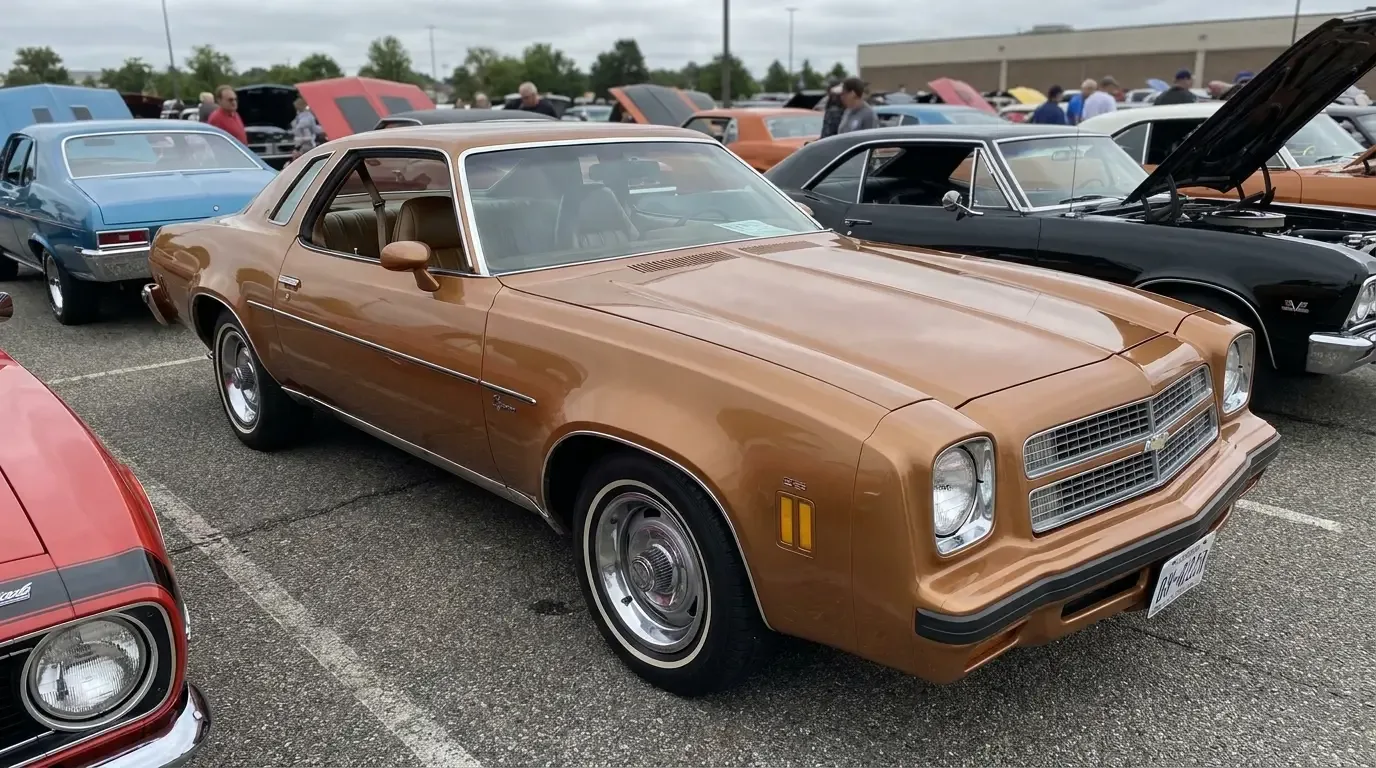
The 1973 model year also reshuffled how Chevrolet organized its trim ladder. Deluxe sat at the entry point, Malibu held the volume middle ground it had occupied for years, and above both sat a name that hadn't existed on a Chevelle before: Laguna. The Laguna arrived as the new top-of-line Chevelle, distinguished by a body-color urethane front cap instead of a conventional chrome grille and bumper, along with upgraded interior trim. It's a piece of the story that deserves its own space rather than a mention in passing, and I'd point anyone curious toward next: Chevelle Laguna 1973-74 for the full account of how that nameplate came together.
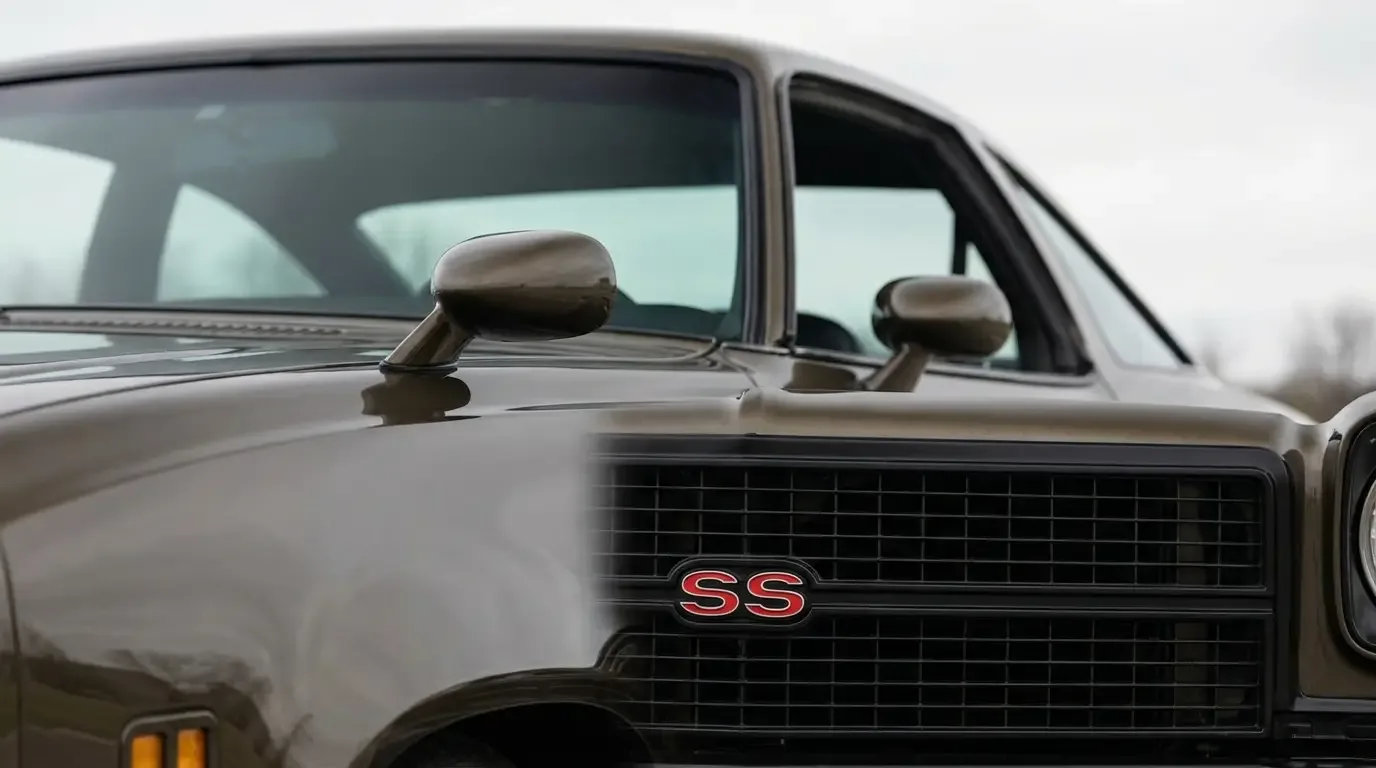
The Chevelle SS package also survived into 1973, though its days as Chevrolet marketed it were numbered. That's a story with enough detail on its own that it's worth reading separately, and I'd send you to next: The 1973 Chevelle SS for the specifics on how the option was configured that year and why it didn't carry forward the way buyers expected.
"People look at a 1973 Chevelle next to a 1970 and assume Chevrolet just lost interest in the car. What actually happened is the engineering brief changed entirely, from styling-led to structure-led, and everything about how the car looks and drives follows from that one shift in priorities."
Tom Ramirez
What the records say about 1973 production
Production volume for the 1973 Chevelle held up better than the car's reputation might suggest. Chevrolet built roughly 327,600 Chevelles for 1973, and the Malibu remained the best-selling configuration by a wide margin over Deluxe and Laguna combined. That tells you something the styling debates tend to skip over: whatever enthusiasts think about the Colonnade body today, it sold. Buyers in 1973 weren't cross-shopping nostalgia. They wanted a quieter, roomier intermediate, and Chevrolet gave them one.
If you're shopping this generation now, the surviving cars carry real presence and none of the fragility of the earlier hardtop bodies, since that fixed-pillar structure holds up better in daily use. Current listings for 1973 Chevelle listings reflect a mix of Malibu-trim survivors and the occasional documented Laguna or SS, and pricing tracks condition and originality closely rather than trim level alone. For the broader arc of how this generation fits into the model's full run, the Colonnade and Laguna years covers the years on either side of this redesign, and the Chevrolet Chevelle story puts 1973 in context against the car's entire production history from 1964 forward.
Sources and notes
- The Rise of the "Colonnade" Hardtops: A Mid-Sized Revolution: background on the proposed federal rollover standard and why it was never enacted.
- 1973 Chevrolet Chevelle Specifications & Dimensions (conceptcarz.com): wheelbase and body dimension figures.
- 1973 Chevrolet Chevelle SS 454 Coupe 4-speed Specs Review (automobile-catalog.com): 454 net horsepower and torque rating.
- 1973 Chevrolet Chevelle Malibu Coupe 350-4 V-8 Specs Review (automobile-catalog.com): 350 and 400 cid net horsepower ratings.
- Chevrolet Chevelle Laguna (Wikipedia): 1973 Laguna, Malibu, and Deluxe trim structure and production context.
- 1973 Chevelle Parts and Restoration Information (SS396.com): total 1973 production volume and trim mix.
Related Reading
Have a
Chevrolet Chevelle
for Sale?
Reach thousands of serious classic car collectors across the US.
Sell It Here →
Are You a Classic Car Dealer?
List your full inventory and connect with targeted classic car buyers.
Join as a Dealer →

About the author
Tom Ramirez
Corvette researcher and historian based in Bowling Green, Kentucky. Two decades documenting Corvette production history from original factory records.
Related Listings - Chevrolet Chevelle
More in History & Heritage
Comments
Be the first to comment on this article.