
In January 1948, a young Los Angeles photographer named Robert E. Petersen stood outside a car show at the Los Angeles Armory selling a thin newsprint magazine for a quarter. He and a partner had printed a first run on borrowed money, and the cover carried a dry-lakes racer instead of a movie star. The kids who bought it that weekend were not buying a magazine so much as buying proof that the thing they did in their garages had a name, a hero list, and a national audience. That first issue of Hot Rod is where the loose, regional pastime of chopping and hopping old Fords started becoming a culture the whole country could read.
History & Heritage
7 min read
How Hot Rod Magazine Spread the Culture
From a quarter magazine sold outside a 1948 car show to the force that legitimized hot rodding: how print media spread and shaped the culture.
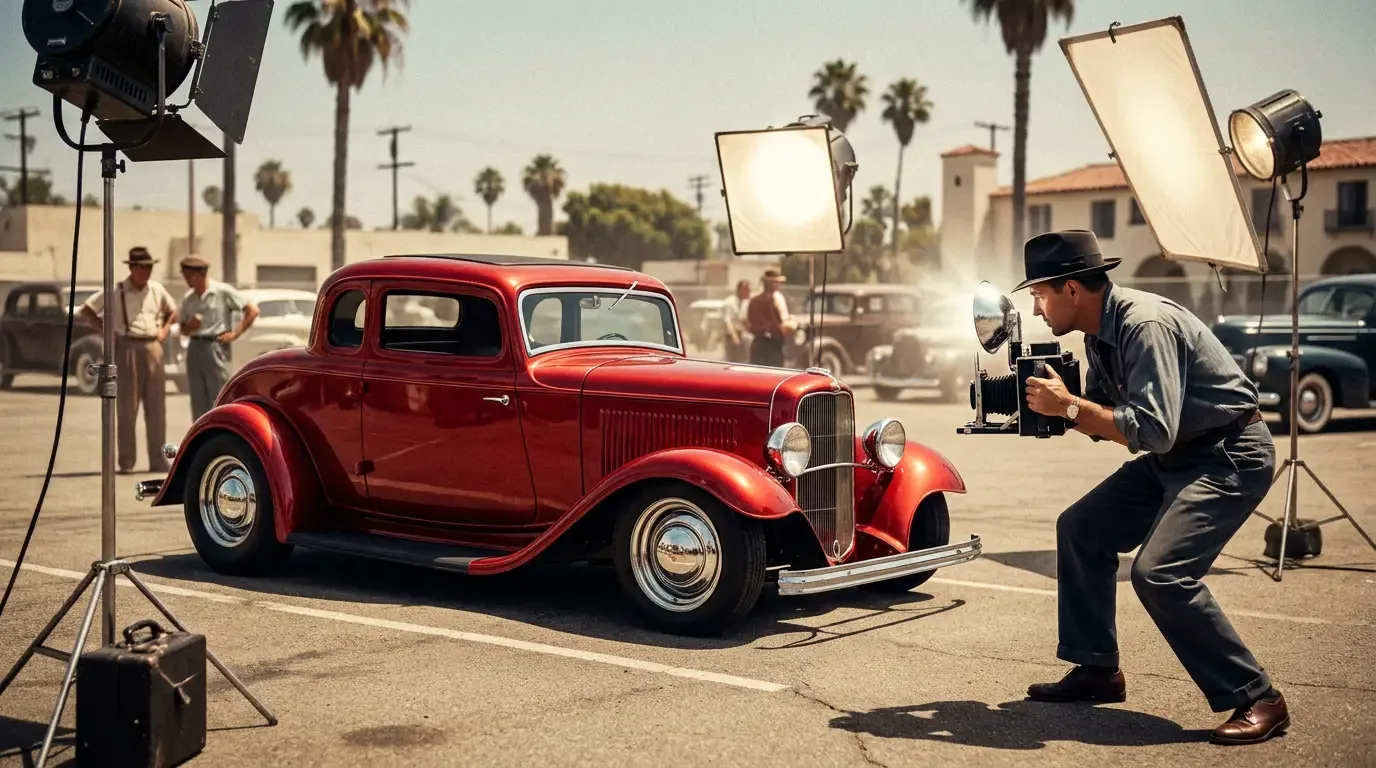
Before that quarter changed hands, hot rodding was a word-of-mouth world. You learned the tricks from the guy two streets over, or you did not learn them. What Petersen and his editors built over the next decade was a shared language and a shared mythology, printed monthly and mailed everywhere. If you want the longer arc, this piece sits inside the broader hot rod history and pairs with the story of The Deuce Coupe: The Definitive Hot Rod, the car the magazine put on more covers than any other.
A quarter, a card table, and a first issue
Petersen was 21 and had been laid off from a studio publicity job when he and Robert Lindsay decided there was money in the crowd that showed up to Southern California speed events. The math was simple. Thousands of young men were building cars, buying parts, and arguing about camshafts, and nobody was printing anything for them. The first issues were small, cheap, and technical, closer to a parts catalog with attitude than to a slick consumer title.
What made it work was that the men writing it were the men doing it. Wally Parks, who edited the magazine early on, was not a journalist parachuted in from New York. He was a racer and organizer who knew the dry lakes and the drag strips from the inside. The copy read like a knowledgeable friend leaning over your fender, which is exactly what a beginner in Ohio or Georgia needed when he had never seen a channeled coupe in person.
Print as the great equalizer
The genius of a national magazine was geographic. Hot rodding had been born on the dry lakes of Southern California, where the weather and the surplus of cheap prewar Fords let it flourish. A kid in Michigan had the same ambition and none of the neighbors who could show him how. The magazine closed that gap. A how-to on louvering a hood or setting up a quick-change rear end reached the same reader in Bakersfield and in Bangor, on the same day, for the same price.
That reach did three things at once. It standardized technique, so builders a thousand miles apart started using the same methods and the same vocabulary. It created stars, turning local racers and painters into names people recognized coast to coast. And it built a market, because every feature car ran parts that readers then wanted to buy, and every advertiser who sold those parts helped fund the next issue.
- Technique spread fast. A trick worked out in one garage could be documented and copied nationwide within a month.
- Heroes went national. Builders, painters, and racers known only in their county became household names to readers.
- A parts economy grew. Feature cars doubled as catalogs, and mail-order speed shops could suddenly reach the whole country.
By the middle 1950s the magazine was not just reporting the hobby. It was steering it. When an editor chose a car for the cover, that car's stance, paint, and engine choice became the template thousands of readers chased.
From outlaw to organized
There is a version of the hot rod story where the cars are pure outlaw, raced on public streets by kids the newspapers called a menace. That version was real, and it was a problem. Insurance companies, police, and worried parents saw only danger. The magazine, and the men behind it, understood that the hobby would be legislated out of existence if it did not clean up its own image.
So Hot Rod pushed hard for organized, off-street competition. Wally Parks left the editor's chair to found the National Hot Rod Association in 1951, and the magazine became the association's loudest advocate. Pages that might have celebrated street racing instead celebrated sanctioned drag strips, safety inspections, and timed runs. The message to a teenage reader was steady and deliberate. Take it to the strip. Do it right. Be part of something respectable.
"You can trace a straight line from a kid reading a safety editorial in 1952 to a grandfather at a sanctioned show today. The magazine did not just record the culture. It decided the culture would grow up rather than get shut down."
Patrick Walsh
That editorial choice matters more than any single feature car. A pastime that could easily have been remembered as a postwar delinquent fad instead became a legitimate American hobby, with governing bodies, insurance-friendly events, and a place at the county fair. The print media did that work, one editorial and one clean-cut cover at a time.
The magazine as a style guide
Photography did as much as prose. A well-lit feature spread taught readers what a good rake looked like, how flames should lick down a hood, and why a certain shade of candy paint stopped people in a parking lot. Kids studied those pages the way other kids studied baseball cards, memorizing details and then trying to reproduce them in gray primer at home.
| Era | What the magazine spotlighted | Effect on builders |
|---|---|---|
| Late 1940s | Dry-lakes racers, stripped-down roadsters | Function and speed set the early template |
| 1950s | Deuce coupes, flatheads, early overhead-valve V8s | The classic hot rod look locked in nationally |
| 1960s | Show cars, wild customs, drag machines | Style and spectacle joined raw performance |
The other titles that followed, from custom-focused magazines to drag-racing weeklies, deepened the same effect. A reader could assemble a whole education from the newsstand. Even builders who never entered a contest absorbed the visual grammar of the hobby from those pages, which is why hot rods from opposite corners of the country ended up speaking the same design language.
Why the print era still shapes the hobby
Most of those old magazines are long folded or absorbed, and the audience moved to forums and video. Yet the shape of hot rod culture we inherited is the shape the print era gave it. The hero list, the standard techniques, the belief that a real rod earns its place at a sanctioned show, all of it was set in newsprint before most current builders were born.
When collectors chase a period-correct build today, they are often chasing a specific magazine cover from a specific year. That is the long tail of Petersen's quarter. If you read enough of the old features and then go looking at what people restore and pay for now, the connection is obvious, and it runs right back to the hot rod story as the print press first told it.
Sources and notes
- Period hot-rod press and archived feature coverage from the postwar era.
- Automotive museum and publishing-history records on Robert Petersen and Petersen Publishing.
- Sanctioning-body and drag-racing organizational histories.
- General histories of Southern California car culture and the dry-lakes racing scene.
Related Reading
Have a
Classic Car
for Sale?
Reach thousands of serious classic car collectors across the US.
Sell It Here →
Are You a Classic Car Dealer?
List your full inventory and connect with targeted classic car buyers.
Join as a Dealer →

About the author
Patrick Walsh
Automotive journalist covering classic car shows, events, and the enthusiast community across North America.
More in History & Heritage
Comments
Be the first to comment on this article.