
The hot rod did not start in a showroom or a design studio. It started on dry lake beds northeast of Los Angeles, where young men drove stripped-down Fords out onto the hardpan to see how fast an old car could really go. That impulse, take a cheap production car and make it faster than the factory ever intended, runs through every decade of this story. Before you follow the arc, it helps to be clear about what a hot rod really is, because the definition kept shifting as the cars, the engines, and the culture changed.
History & Heritage
12 min read
The History of the American Hot Rod
How the American hot rod grew from stripped Fords on the dry lakes into a national culture, from the flathead V8 to Bonneville and beyond.
The dry lakes and the 1930s roots
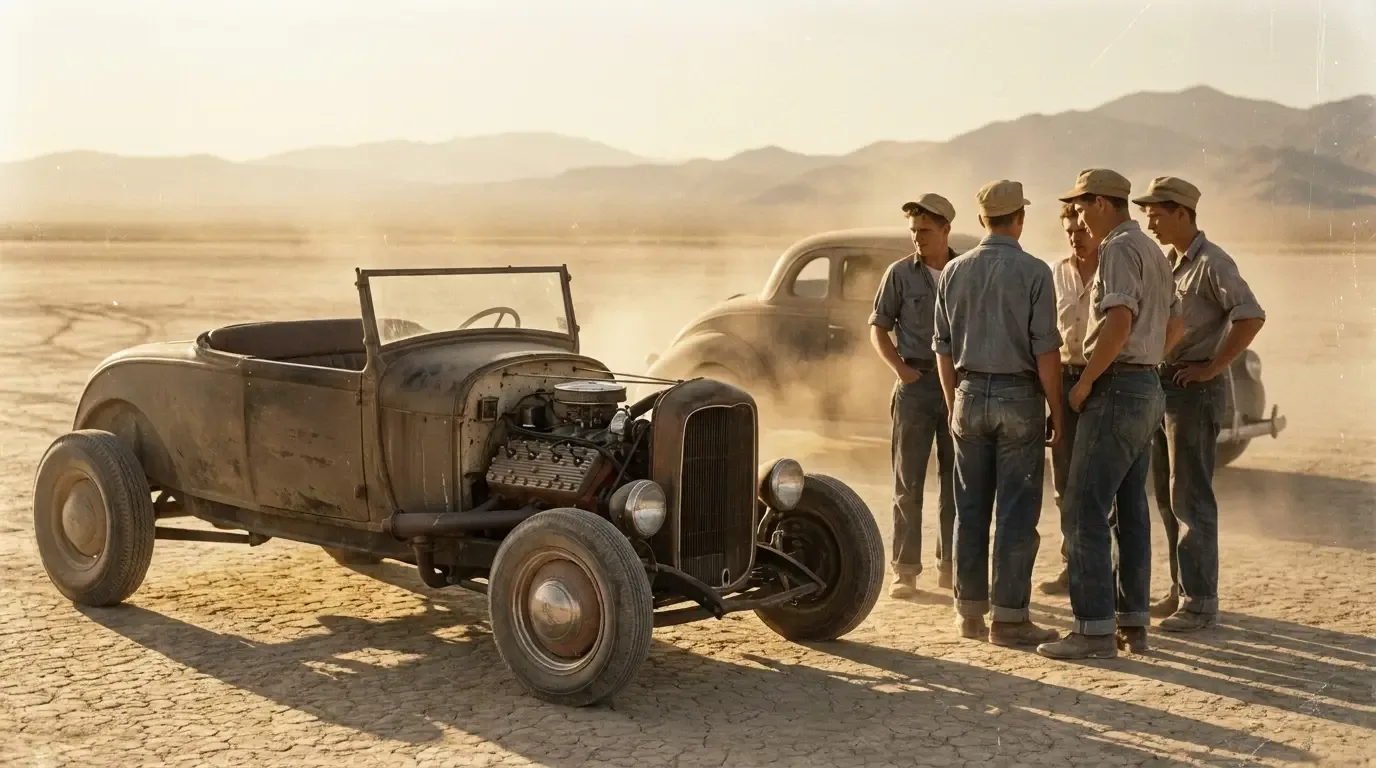
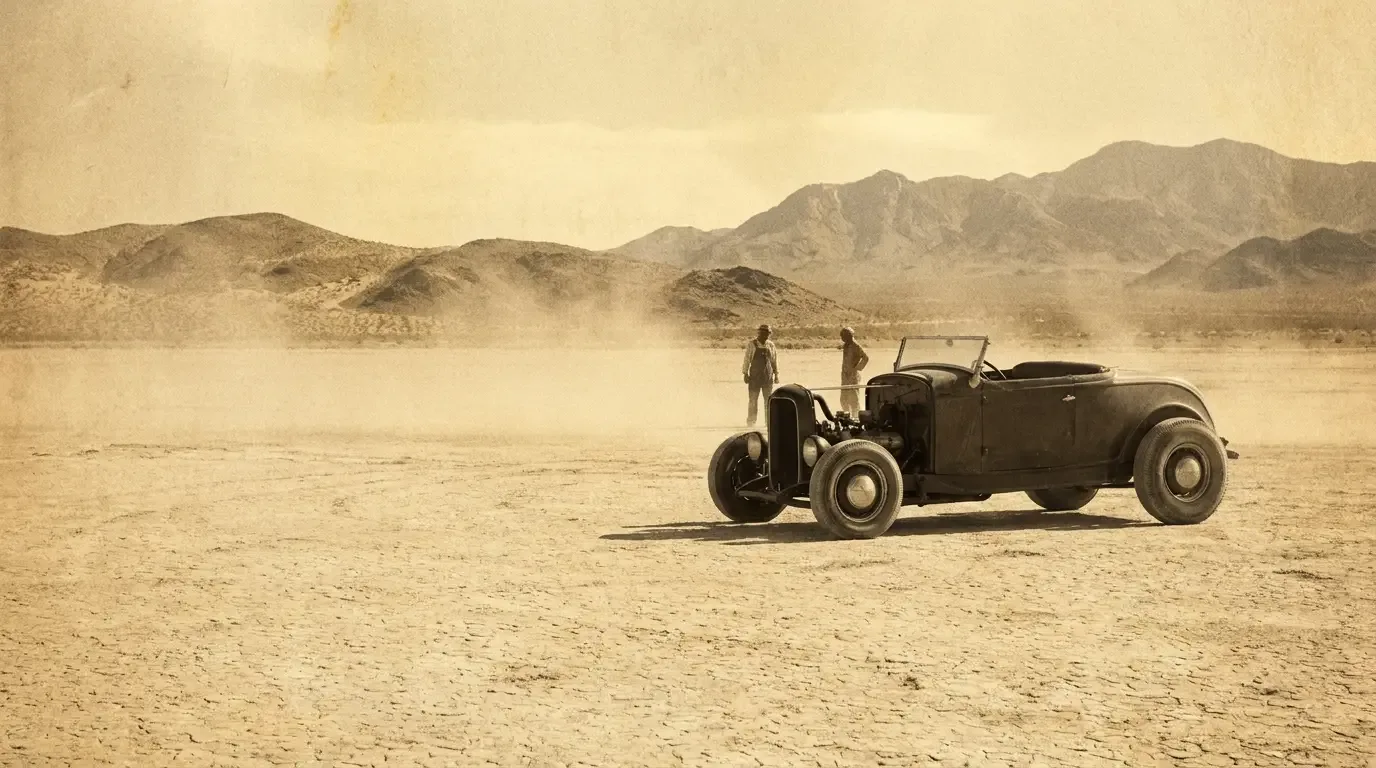
By the early to mid 1930s, Southern California had the three things a hot rod needs: cheap used cars, wide-open flat ground, and a car-crazy generation with time on its hands. The dry lakes, Muroc, El Mirage, Harper, gave drivers miles of dead-level surface to run flat out. Muroc later became part of what is now Edwards Air Force Base, which is why the old timers stopped running there.
These were not organized races at first so much as informal speed runs. Cars charged across the lake bed together, kicking up dust and occasionally tangling, which was dangerous enough that the first timing clubs formed largely to impose order. Groups like the Road Runners, the Sidewinders, and the Throttlers set up a plaque system and ran cars against a clock, turning a chaotic free-for-all into something closer to a sport. Club membership meant a plaque bolted to the car and a place in a community that took speed seriously.
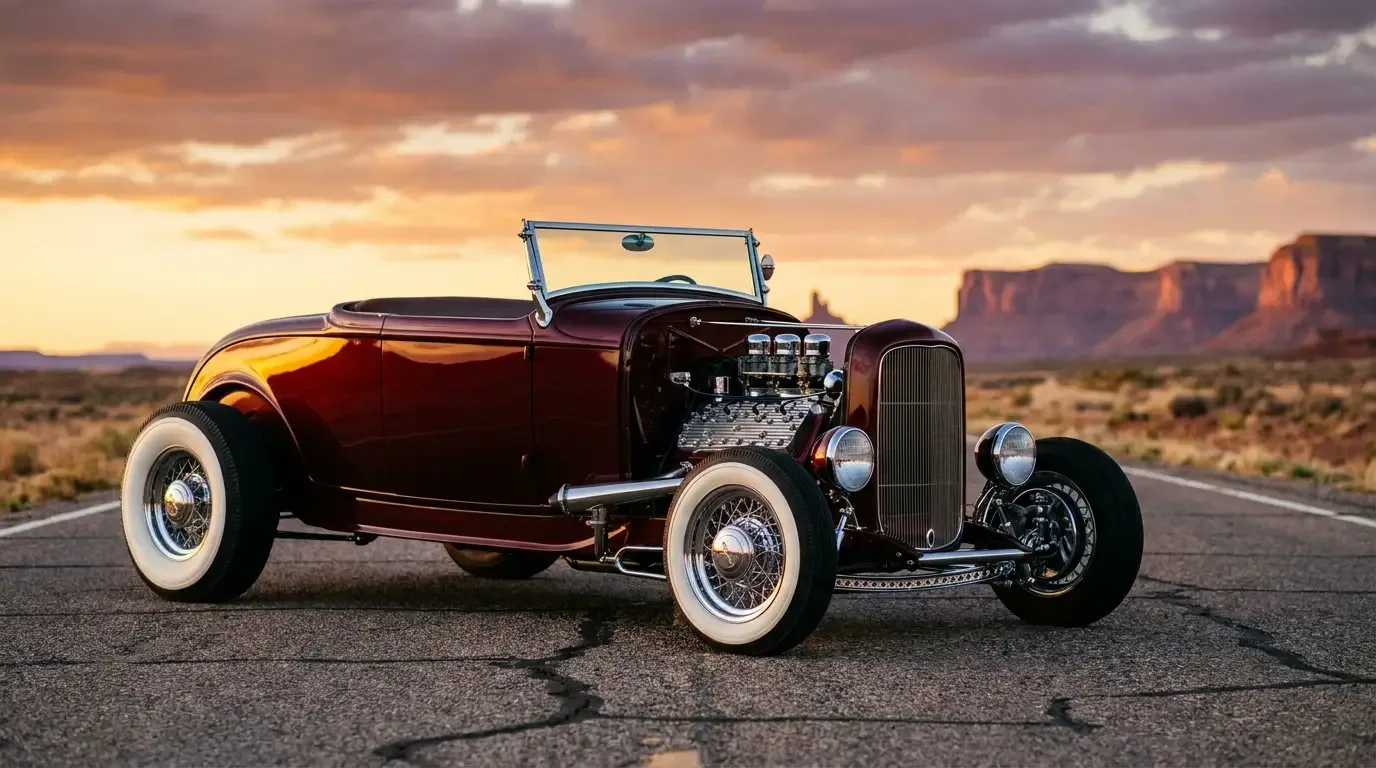
The car of choice was almost always a Ford. The Model T and then the Model A were everywhere and dirt cheap secondhand, and their light bodies made them easy to lighten further. Racers pulled fenders, running boards, hoods, and windshields, dropped the front axle to lower the stance, and did whatever they could to cut weight and wind resistance. A stripped Ford roadster on the lakes looked mean because everything that did not help it go faster had been thrown away.
The real turning point was the engine. In 1932 Ford introduced the flathead V8, and for the first time an affordable American car came with eight cylinders. That engine, cheap, plentiful, and easy to modify, became the beating heart of early hot rodding. Speed shops sprang up selling high-compression heads, dual and triple intake manifolds, and hotter cams for the flathead. Men like Vic Edelbrock Sr. and Ed Winfield were already experimenting with carburetion and cam grinds before the war, and their early work laid the groundwork for the industry to come. The aftermarket parts business that still defines the hobby was born selling go-fast pieces for a $500 Ford.
The war years and the forced pause
The whole scene stopped almost overnight when the United States entered World War II in December 1941. Gasoline and tires were rationed, factories switched to military production, and most of the young men who ran the lakes were drafted or enlisted. You do not build a triple-carb flathead when you are overseas and the tires are impossible to get. Organized lakes racing effectively went dark for the duration.
The pause was real, but it was not wasted time. Those same men spent the war years learning trades that would define the postwar boom. They trained as aircraft mechanics, welders, machinists, and engine builders. They handled aluminum, aircraft hardware, and precision tolerances that no prewar backyard mechanic had ever touched. A kid who had been filing points in a driveway in 1940 might spend the next four years overhauling radial engines or fabricating aircraft parts to tolerances measured in thousandths. When they came home, they brought skills, discipline, and in many cases a little money, all pointed straight back at cars.
Just as important, the war seeded the country with surplus. Aircraft drop tanks, aluminum stock, hardware, and machine tools flowed onto the civilian market cheaply once the fighting ended. Men who had learned to work metal in uniform now had both the skill and the raw material to build something of their own.
The postwar So-Cal boom
After 1945 the hobby did not just restart, it detonated. Southern California had a huge population of young veterans, steady aerospace paychecks, cheap prewar Fords sitting in every used lot, and a warm climate that let you wrench in the driveway year-round. Surplus aircraft parts flooded the market, and men who had just spent four years machining metal turned that skill on their own cars.
This is the moment the aftermarket industry grew up. Vic Edelbrock, Ed Iskenderian, Phil Weiand, Stuart Hilborn, and other names still on parts boxes today were young men building manifolds and grinding cams in small shops clustered around the San Fernando Valley and the L.A. basin. Hilborn's fuel injection, Iskenderian's camshafts, Edelbrock's intake manifolds, these were not corporate products but garage inventions refined at the lakes on weekends and sold out of the back of a shop during the week. What had been a scattering of speed sellers became a real supply chain. If you wanted to make a flathead breathe, someone nearby was casting the part you needed.
Organization followed the boom. The Southern California Timing Association, formed in 1937, reorganized after the war and gave the lakes racing rules, classes, and record-keeping, which pulled the sport away from its outlaw reputation. That push toward legitimacy mattered, because postwar street racing had made hot rodders a target for police and city councils across the country. Newspapers ran scare stories about reckless "hot rod" kids, and the timing associations pushed hard to redirect that energy onto sanctioned courses where it could be measured and controlled.
"Everybody wants to romanticize the postwar years, and they should, but what actually happened is a bunch of guys came home knowing how to weld aircraft aluminum and machine to a thou. That is the whole secret. The cars got good because the builders got good, not the other way around."
Jim Vasquez
The deuce coupe and the shape of a hot rod
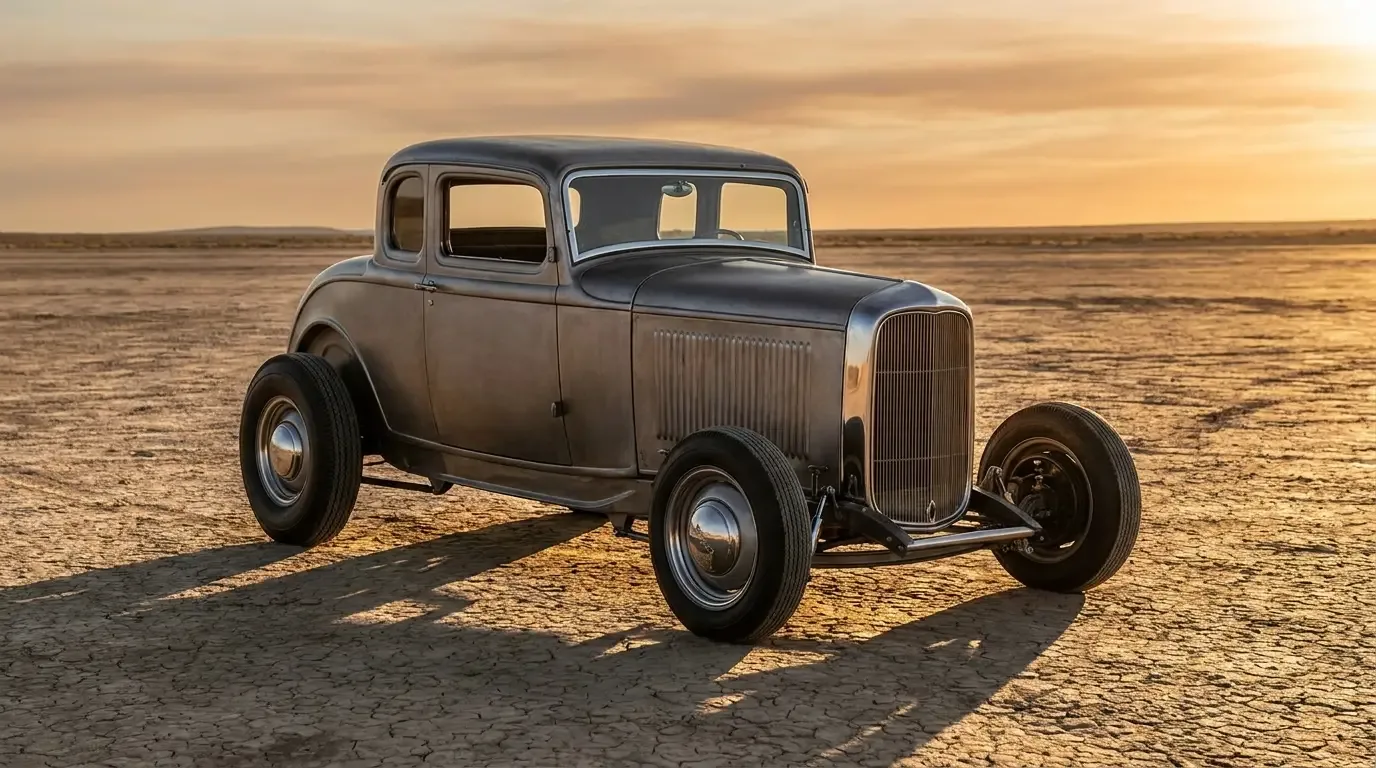
If one car had to stand for all of hot rodding, it is the 1932 Ford, the deuce. The name comes from the "2" in 1932. It landed at the exact right moment: it was the first year of the flathead V8, its lines were clean and upright, and by the late 1940s there were plenty of them cheap. The 1932 five-window and three-window coupes, and the roadster, became the canvas everyone worked from. The deuce roadster in particular, fenderless, chopped, and running a hopped-up flathead, became the single most recognizable silhouette in the hobby.
Builders learned a vocabulary on these cars that hot rodders still use. The chop lowered the roofline by cutting sections out of the pillars. The channel dropped the body down over the frame rails so the whole car sat lower without touching the suspension. A dropped or dropped-and-filled front axle got the nose down. Louvers punched into the hood and deck let heat out and looked fast standing still. None of these were bolt-on. They were cut-and-weld body and frame work that separated a real build from a car with a loud exhaust. Getting a chop to look right, keeping the glass angles and door gaps clean after slicing inches out of the pillars, was the mark of a builder who knew what he was doing.
| Modification | What it does | Why it matters |
|---|---|---|
| The chop | Lowers the roof by sectioning the pillars | Changes the whole silhouette; hardest to do well |
| Channeling | Drops the body over the frame rails | Lowers ride height without altering suspension |
| Dropped axle | Lowers the front ride height | Gets the classic nose-down stance |
| Louvers | Vents punched in hood and deck | Releases engine heat; period-correct look |
| Nose and deck | Removes hood and trunk emblems and trim | Cleans the body for a smooth, custom finish |
Getting this bodywork right is still the dividing line between a hot rod and a project that fell apart in someone's driveway. If you want to understand the craft side of it, the actual process of how to build a hot rod makes clear why a clean chop takes real skill and why so many first attempts look wrong.
Bonneville and the chase for top speed
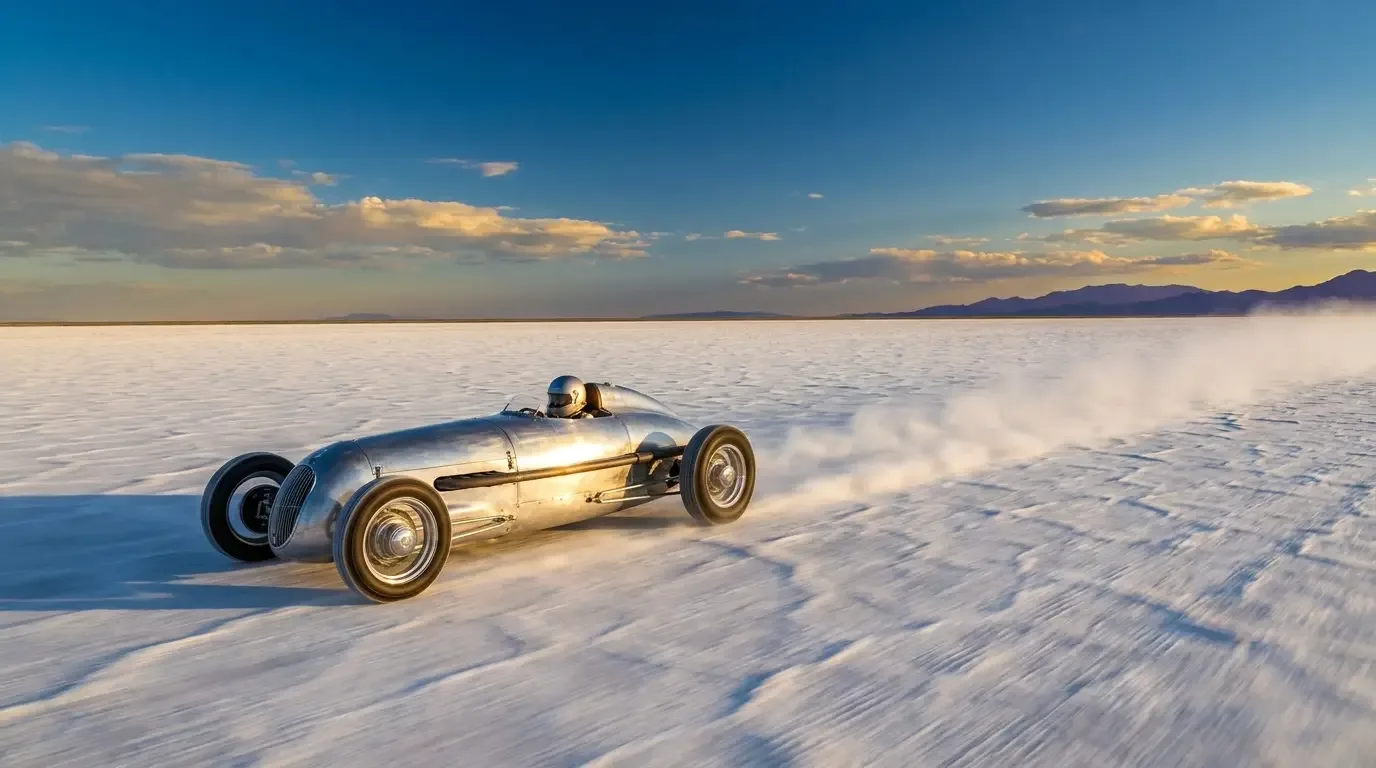
The dry lakes gave hot rodding its start, but the salt flats at Bonneville, Utah, gave it a cathedral. When the SCTA ran its first Bonneville National Speed Trials in 1949, drivers finally had miles of smooth salt instead of a short lake bed, which meant they could chase genuine top-speed records rather than short-course times. On the salt a car could hold full throttle for mile after mile, and the numbers climbed accordingly.
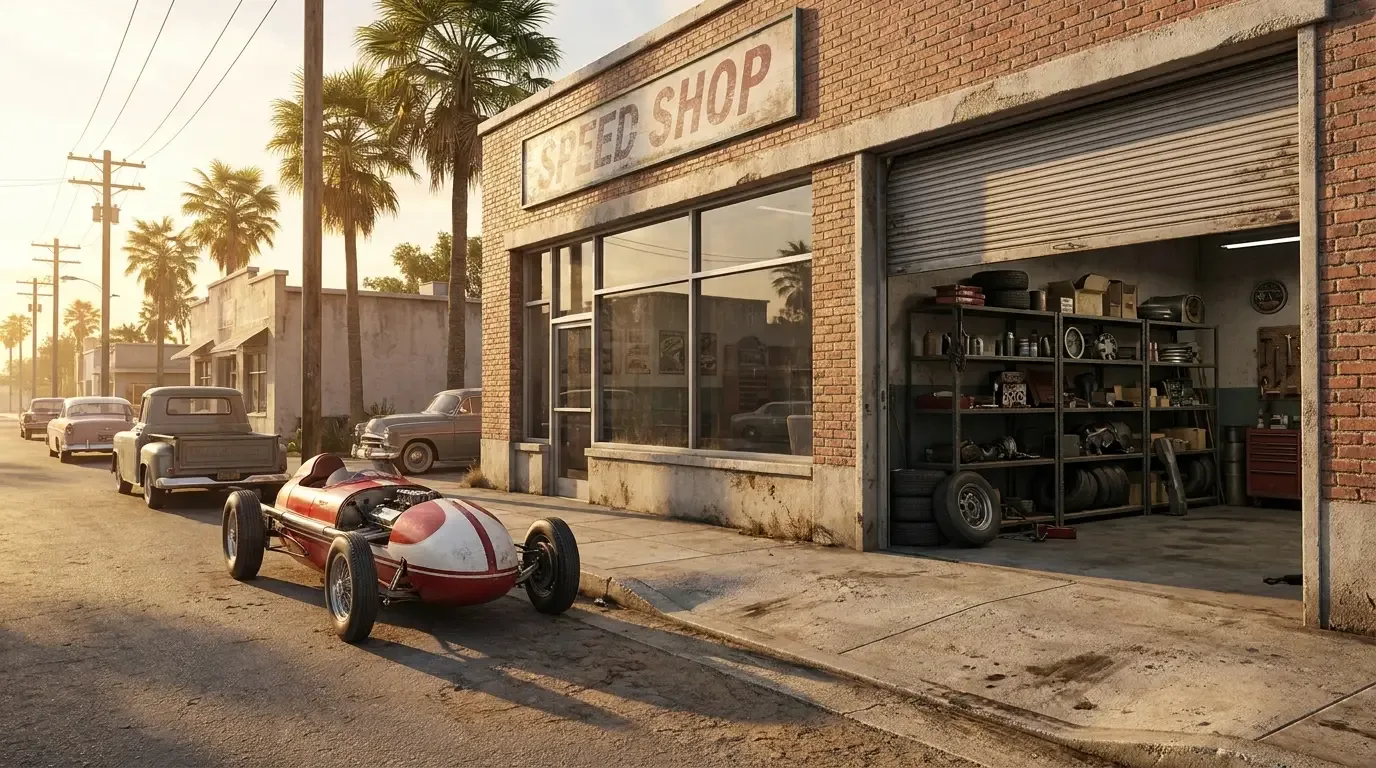
Bonneville pulled hot rodding toward engineering. On the salt, aerodynamics, gearing, and cooling mattered as much as raw horsepower, and the streamliners and belly-tank lakesters that ran there looked nothing like a street coupe. The belly-tank cars, built around surplus aircraft drop tanks, were a direct line from wartime aviation surplus to record-setting speed, a slick teardrop shape that was cheap, plentiful, and already aerodynamic. Racers like Alex Xydias and his So-Cal Speed Shop streamliner turned the salt into a proving ground where a small shop could out-engineer far bigger budgets. Speed Week at Bonneville still runs every summer, and it remains one of the few places where an amateur can set a national record with a car built at home.
Hot Rod magazine and the culture going national
For its first fifteen years hot rodding was mostly a Southern California phenomenon spread by word of mouth. That changed in January 1948, when Robert Petersen and Robert Lindsay launched Hot Rod magazine, selling early copies by hand at the timing-association events themselves. Suddenly a kid in Ohio or Georgia could see the cars, read how the parts worked, and learn the vocabulary of the lakes without ever setting foot in California.
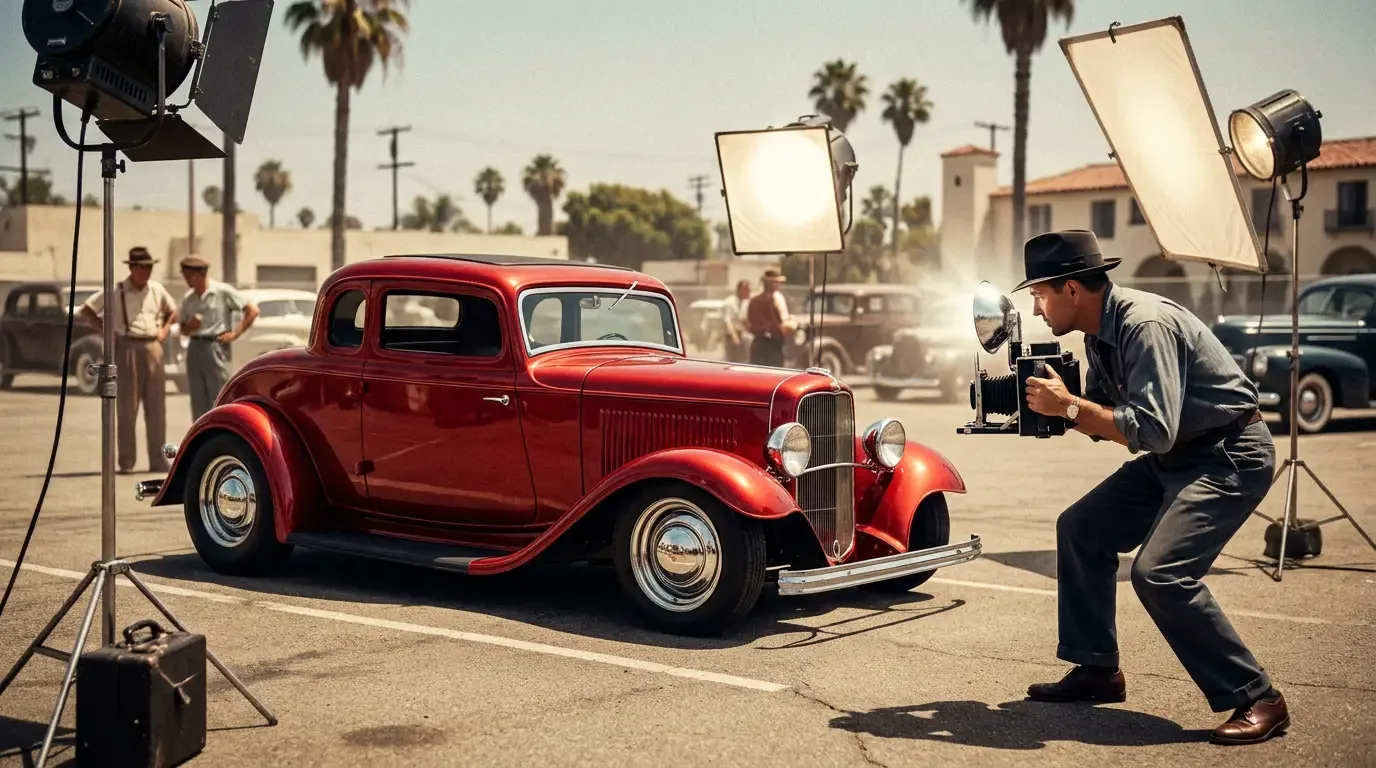
The magazine did two things at once. It sold the dream, page after page of finished cars and record runs, and it sold the parts, because the speed shops advertised in its pages. A reader could see a technical feature on a manifold in one column and an ad for that exact part a few pages later. Petersen built that single title into a publishing empire, later adding Motor Trend and a stable of enthusiast magazines, that shaped car culture for decades. Hot Rod turned a regional habit into a national industry, and it gave the aftermarket a nationwide storefront. By the 1950s the deuce coupe on a magazine cover was as much a piece of American iconography as anything coming out of Detroit.
The 1960s shift and what came after
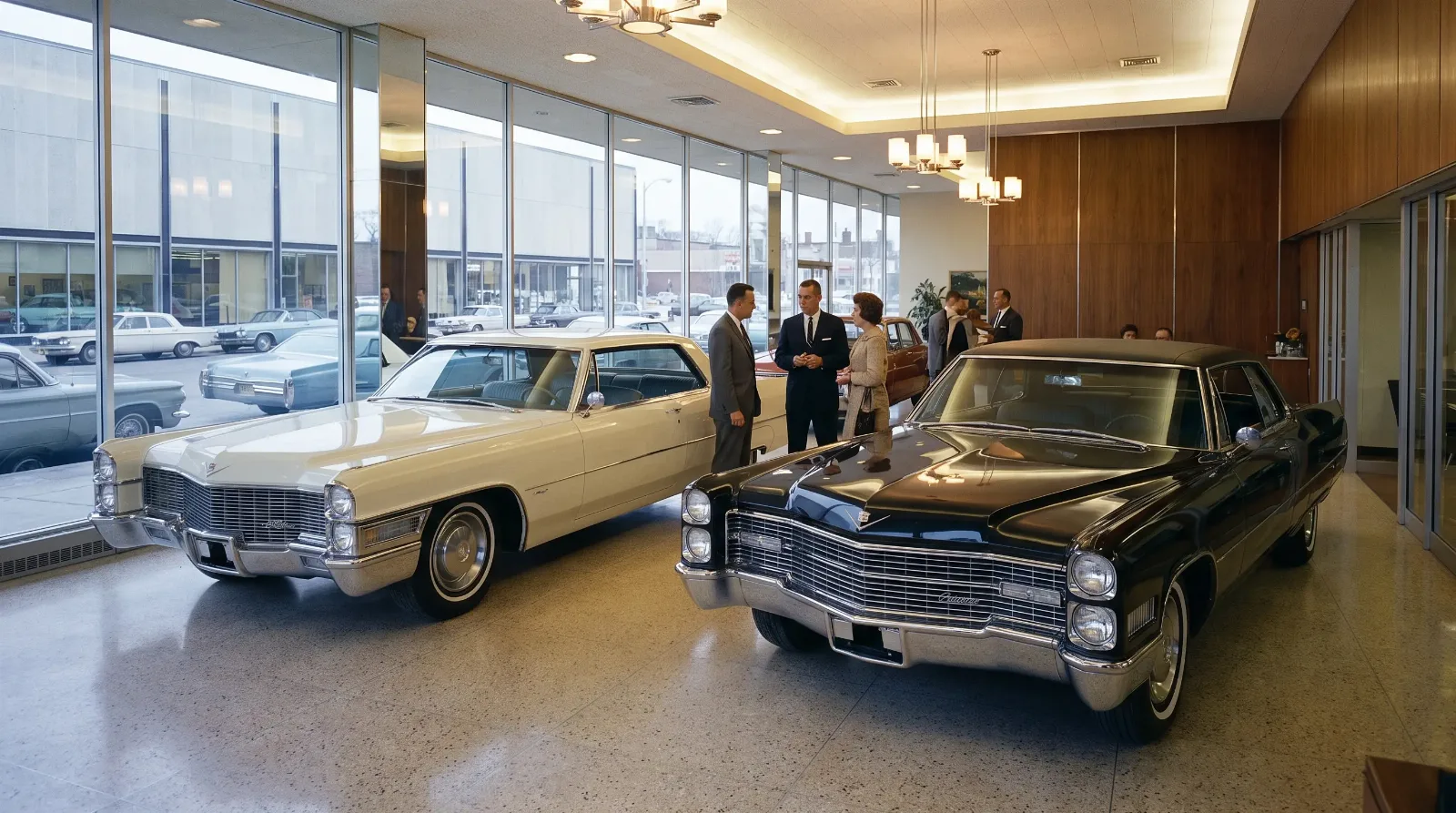
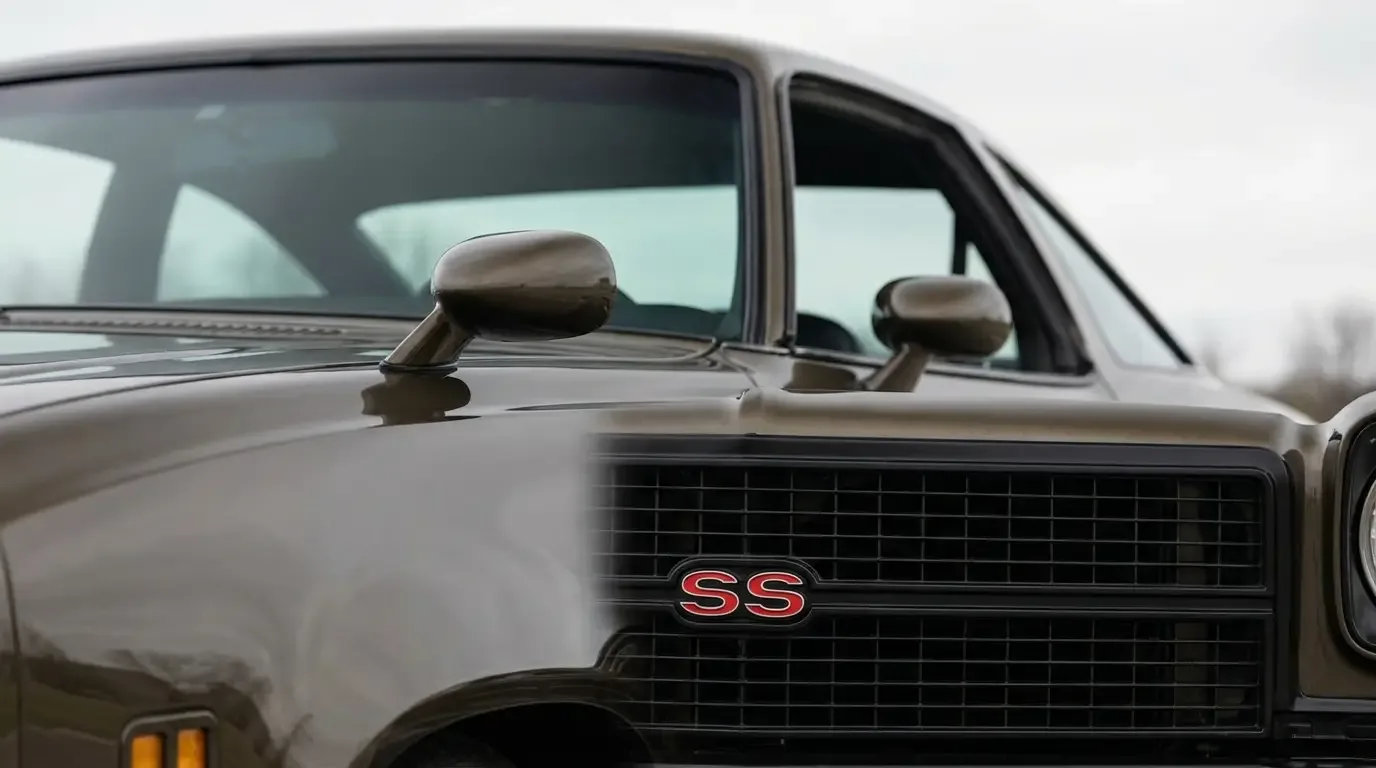
By the 1960s the ground moved under the traditional hot rod. Detroit started selling the speed itself. When a buyer could walk into a dealership and drive out in a big-block muscle car with a factory warranty, the reason to spend two years modifying a prewar Ford changed. Why chop and channel a twenty-year-old coupe when a new Pontiac or Chevrolet came fast off the showroom floor? Hot rodding did not die, but it split into branches.
Drag racing pulled a big share of the energy off the street and onto sanctioned strips, with the NHRA, founded by Wally Parks in 1951, giving it rules, safety standards, and national events. What had been outlaw street races became a structured sport with classes, elapsed times, and traveling championships. The show-car world went its own way toward wild custom paint and chrome under builders like George Barris and Ed "Big Daddy" Roth, whose creations were meant to stop a crowd rather than a clock. And the flathead itself faded as the small-block Chevy V8, introduced in 1955, became the cheap, powerful, easy swap that made the old flathead look slow. A generation of hot rods got a new heart, and the small-block became the default engine for anyone building for the street.
The traditional prewar hot rod never disappeared. It became a deliberate choice, a style you build on purpose rather than the only affordable path to speed. By the 1970s and 1980s a revival was underway, with enthusiasts deliberately building period-correct cars to honor the lakes-and-salt era even as glossy street rods with modern drivetrains sold alongside them. That is roughly where the hobby sits today, split between period-correct traditional builds, high-dollar street rods, and everything in between. If you want to see how that long history shows up in the cars people actually own and sell now, the range of hot rods for sale tells the story better than any timeline.
Sources and notes
- Period hot-rod press, including early Hot Rod magazine coverage of dry-lakes and Bonneville racing.
- Timing-association and event records from the dry lakes and Bonneville Speed Week.
- Marque and engine references for the Ford flathead V8 and the early small-block Chevrolet V8.
- Kustom and hot-rod history accounts covering postwar Southern California builders and shops.
- Show and registry records documenting traditional builds and their modifications.
Related Reading
Article
The Classic Hot Rod Story
Article
Hot Rod, Street Rod, Rat Rod: What's the Difference
Article
How a Hot Rod Is Built: The Techniques
Article
The Deuce Coupe: The Definitive Hot Rod
Article
The Dry Lakes: Where Hot Rodding Was Born
Article
Bonneville Speed Week and Land-Speed Hot Rods
Article
The Model A as a Hot Rod Platform
Article
The So-Cal Speed Shop and the Postwar Boom
Article
How Hot Rod Magazine Spread the Culture
External
/hot-rods-for-sale
Have a
Classic Car
for Sale?
Reach thousands of serious classic car collectors across the US.
Sell It Here →
Are You a Classic Car Dealer?
List your full inventory and connect with targeted classic car buyers.
Join as a Dealer →

About the author
Jim Vasquez
Southern California hot rod and custom car builder with roots in the traditional kustom kulture scene.
More in History & Heritage
Comments
Be the first to comment on this article.