
Ask a room full of rodders to picture a hot rod and most of them see the same car. Fenderless, sitting low in front, a bright grille shell pointed at the horizon. That car is a 1932 Ford, and back in my garage in Milwaukee we never once called it a '32. We called it a deuce, plain and simple. The name comes from the "2" in the year, and it has stuck for the better part of a century because no other body has held the throne this long. Sit at any swap meet long enough and you will hear the same argument I have been having for thirty years: why did this one car take over the whole hobby? The answer starts with what Henry Ford did in 1932 and what a generation of kids did to those cars afterward.
History & Heritage
8 min read
The Deuce Coupe: The Definitive Hot Rod
Why the 1932 Ford deuce became the one hot rod everyone pictures, from the grille shell to the body styles and the chop.
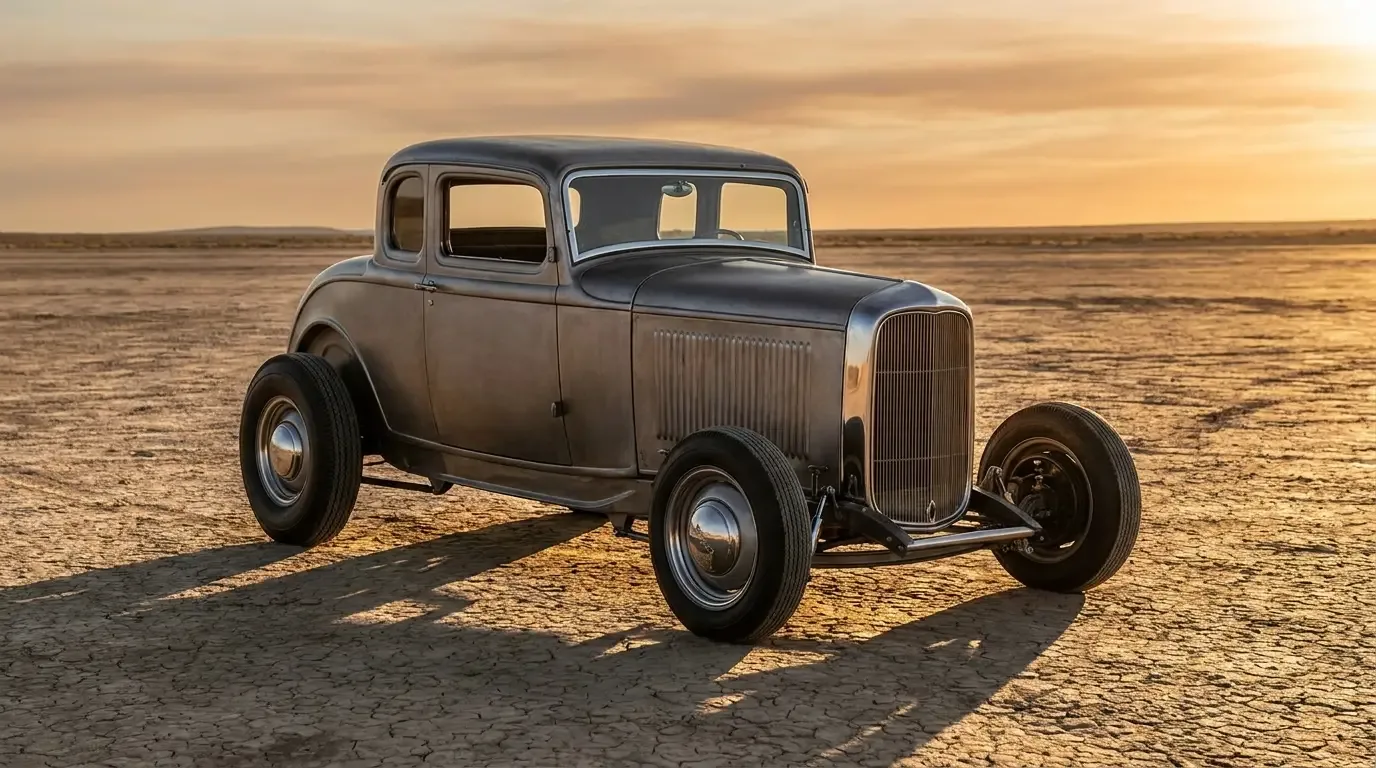
Why the 1932 Ford became the icon
The deuce landed at the exact right moment. For 1932 Ford introduced its flathead V8 in an affordable car for the first time, and that put eight cylinders under the hood of something a working man could buy. Before that, cheap cars meant four-cylinder power. After it, a used Ford was the fastest cheap thing on the road. By the late 1940s those cars were a decade old, worn out, and dirt cheap on used lots. A returning serviceman with tools and time could buy one for pocket money and start hopping it up. That combination, a stout V8 chassis you could actually afford, is the whole reason the car became the raw material for a movement. You can read the fuller arc in our hot rod history coverage, but the short version is simple. The deuce was everywhere, it was cheap, and it already had the engine everybody wanted.
Ford built the 1932 line for a single model year before the styling changed again, which kept the shape distinct and recognizable. Production numbers for the year run to a few hundred thousand cars across all body styles, and only a fraction of those were the closed coupes and open roadsters rodders prized. That scarcity of the good body styles is part of why original steel deuces command the money they do today.
The grille shell that makes the car
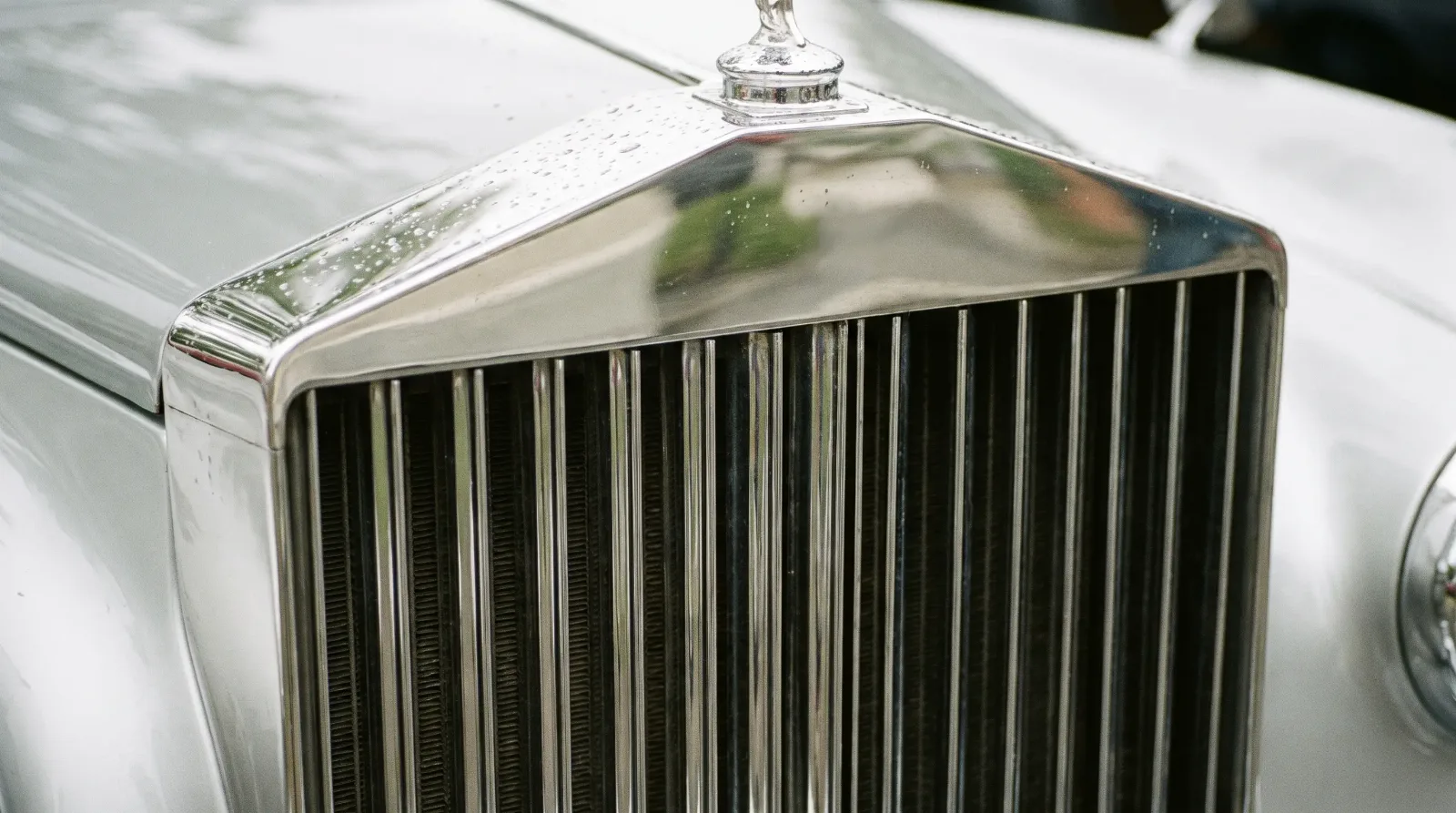
Walk any show and you can spot a deuce from fifty feet by the front of it. The 1932 grille shell is tall, narrow at the top, and gently pointed, with a slightly rolled edge that catches light. Ford moved the radiator behind a proper shell that year instead of leaving it exposed, and the shape is so clean that builders have been reproducing it, chopping it, and filling it ever since. When a rodder talks about the "face" of a car, on a deuce that is the grille shell doing the talking.
Part of why the shell matters is what sits behind it. On a highboy, the body rides on top of the frame rails and the whole car stands tall and proud, so the grille shell reads as the leading edge of a purposeful stance. Drop the body over the rails instead and you get a different look entirely, and that is the argument I still get into with fellas at the swap meet building their first car. If you have not sorted out the difference, our piece on The Dry Lakes: Where Hot Rodding Was Born shows where that tall, stripped stance actually came from, out on the hardpan where drag and weight were the enemy.
The reproduction industry around the shell is enormous now. You can buy a new stamped steel shell, a filled one with no radiator cutout for a smooth look, or a chopped version already shortened for a lowered top. That availability is a blessing and a curse. It means anybody can build a deuce, and it also means half the "1932 Fords" at a show are fiberglass or aftermarket steel wearing that famous face.
Three-window, five-window, or roadster
When people say deuce coupe they are usually picturing one of three body styles, and the choice tells you a lot about the builder. Each one has a different personality and a different price.
| Body style | Character | Notes |
|---|---|---|
| 3-window coupe | The elegant one | Doors hinged at the rear, cleaner rear quarters, generally the most valuable closed body. The show-car choice. |
| 5-window coupe | The everyman | Extra window on each side of the roof, more of them built, more affordable, the traditional hot-rodder's coupe. |
| Roadster | The purist's car | No fixed roof, folding top or none at all. The dry-lakes body. Highest desirability among traditionalists. |
The three-window is the pretty one. Its doors hinge at the back and the roofline is a touch more graceful, and a chopped three-window is about as good as a closed hot rod gets. The five-window has an extra pane of glass on each side of the roof and was built in larger numbers, so it costs less and became the workingman's rod. The roadster is the one the old lakes racers ran, open to the sky, and among traditional builders it sits at the top of the heap. None of them is wrong. I have built all three in my time and I would still drive any of them home tonight, snow be damned.
"Fellas ask me which one to build all the time. I tell them a five-window, every time, if it is your first. Costs less, there are more of them out there, and nobody at the show is going to sneer at a clean chopped five-window. Save the three-window for when you know exactly what you want."
Gary Nowak
The chop, the stance, and the traditional recipe
A stock deuce is a tall, upright little car. What turns it into the shape burned into everybody's memory is the chop, where you cut the roof pillars down and lower the top by three or four inches. On a three-window especially, a good chop transforms the car. The proportions tighten up, the glass shrinks, and the whole thing looks fast standing still. A bad chop, where the angles do not flow and the rear glass looks squashed, is one of the fastest ways to ruin a good body, so it is not a job for a first-timer with a cutoff wheel.
The traditional deuce recipe is well established by now. Highboy stance with the body on top of the rails, a dropped front axle, a flathead or an early V8, steel wheels with baby moons or bright caps, and either bare steel, black, or a period color. Keep it simple and period-correct and the car reads right to anyone who knows the history. Load it up with billet and modern touches and the old guys will still call it a nice car, but they will not call it a real deuce. For the wider story of how these cars grew from cast-off Fords into a national obsession, our the hot rod story feature lays out the whole thread.
Why the deuce still owns the throne
The cult status is real and it has not faded. The Beach Boys put "Little Deuce Coupe" on the radio in the sixties and cemented the name in the language. American Graffiti gave the yellow deuce coupe a starring role and showed a new generation what the car meant. Decades of magazine covers and show wins did the rest. The deuce is the one hot rod that non-car people recognize, which is exactly why it stays valuable and why builders keep coming back to it.
Today a clean, well-built deuce is a serious car in both effort and money. Original steel roadsters in particular trade for figures that would have stunned the lakes racers who started all this. But the appeal was never really about the investment. It is about a shape that got everything right in one model year and a generation of kids who figured out that this cheap old Ford was the best canvas anyone ever built. If you are hunting for one, plenty of unfinished cars turn up as project hot rods for sale, and a deuce project is about the most rewarding one you can take on.
Sources and notes
- Period hot-rod press and vintage magazine features on 1932 Ford builds and body styles.
- Ford flathead V8 engine references and early production history.
- Museum, registry, and show records documenting original steel deuce coupes and roadsters.
- Builder interviews and shop knowledge on chopping, stance, and traditional deuce construction.
Related Reading
Have a
Classic Car
for Sale?
Reach thousands of serious classic car collectors across the US.
Sell It Here →
Are You a Classic Car Dealer?
List your full inventory and connect with targeted classic car buyers.
Join as a Dealer →

About the author
Gary Nowak
Lifelong Midwest rodder who has been building and driving traditional pre-war hot rods since the 1970s.
More in History & Heritage
Comments (1)
P
Paul Bergmann
2 weeks ago
My neighbor has run one of these as a driver for eleven years. No trailering, no shows, just enjoying the car. That perspective doesn't get enough coverage.