
Chrysler spent two decades and a great deal of money trying to build a car that could take buyers away from Cadillac. The car was the Imperial, and by most commercial measures it failed. It never came close to Cadillac's volume, and the nameplate was retired, revived, and retired again. Yet as a collector proposition today, that same commercial failure is exactly what makes a good Imperial interesting, because scarcity and a strong engineering story are the two things the market rewards long after the sales race is over.
History & Heritage
6 min read
How Imperial Tried to Be Chrysler's Cadillac-Fighter
Chrysler Imperial history: how the 1955-66 marque out-engineered Cadillac with the Hemi and body-on-frame yet never matched its sales, and what it means to buyers.
The Imperial's arc is a useful case study in why prestige is hard to buy, and it fits into the classic luxury car's full history as the clearest example of a challenger that had the product but never the perception. Here is how the attempt played out, and what it means for anyone weighing one now.
Spinning off a separate marque
Imperial had been Chrysler's top model since 1926, but in 1955 the company made it a stand-alone marque, physically and administratively separate from Chrysler, precisely so it could be cross-shopped against Cadillac and Lincoln rather than filed under a lesser brand. The logic was sound on paper. Cadillac's advantage was partly that it was Cadillac, a name that stood alone. Chrysler wanted the same clean association for its flagship.
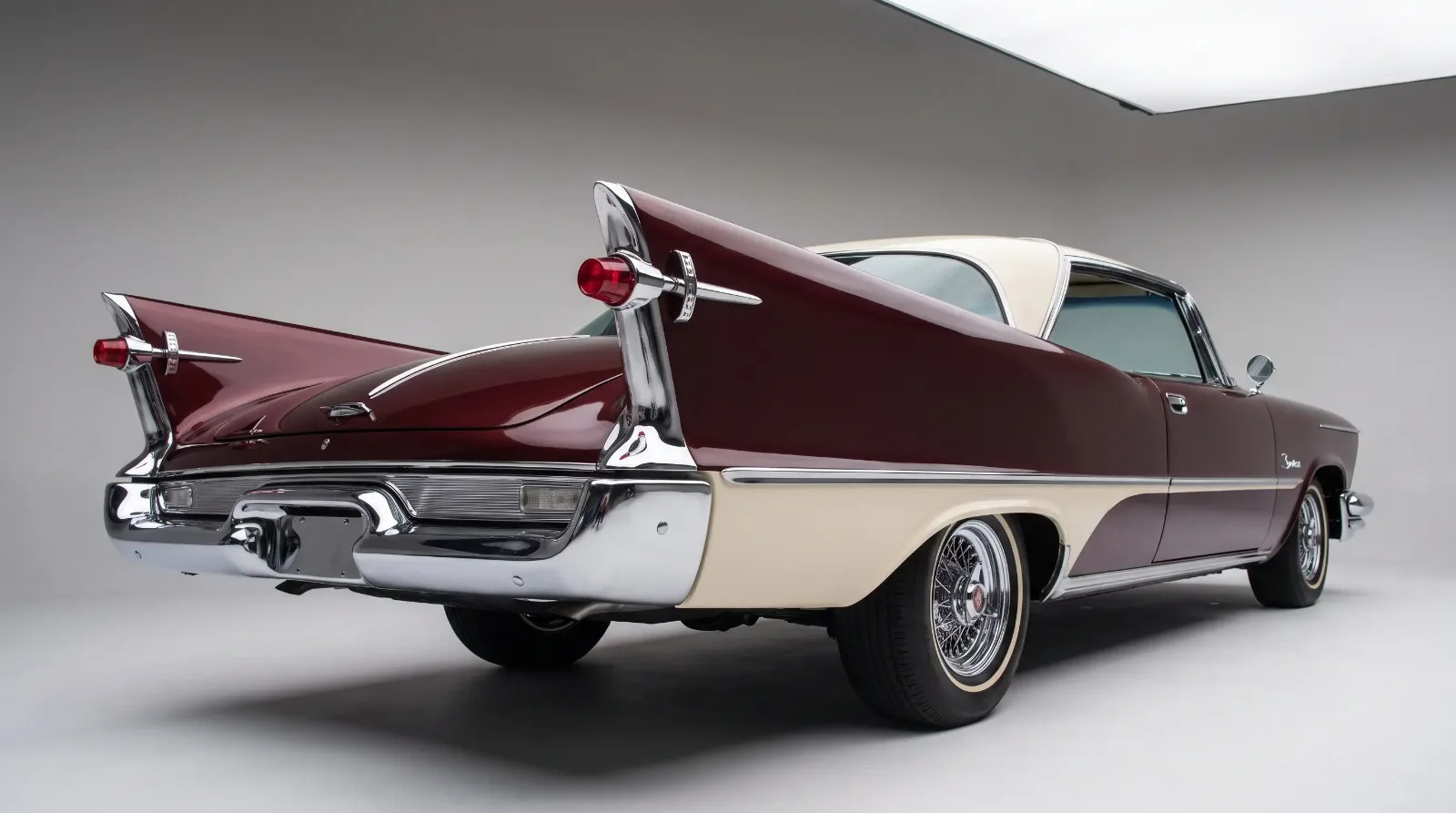
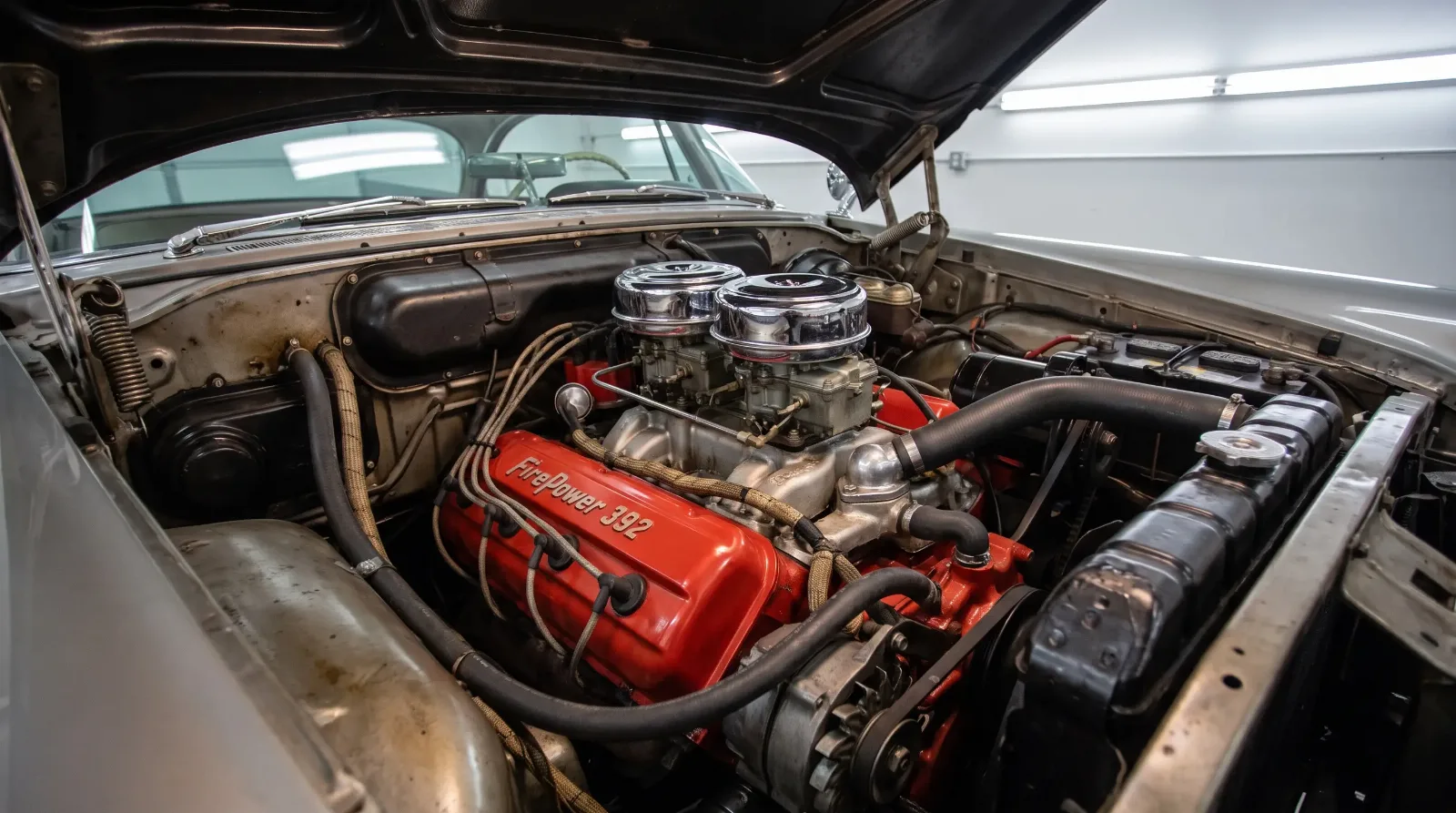
The early cars looked the part. Virgil Exner's styling gave the 1955 and 1956 Imperials a distinctive identity, including the freestanding "gunsight" taillights perched on top of the rear fenders, a detail that still reads as unmistakably Imperial. Under the hood sat Chrysler's Hemi V8, a genuine engineering advantage, with the 1955 cars carrying a 331 cubic inch version making around 250 horsepower.
The engineering case was real
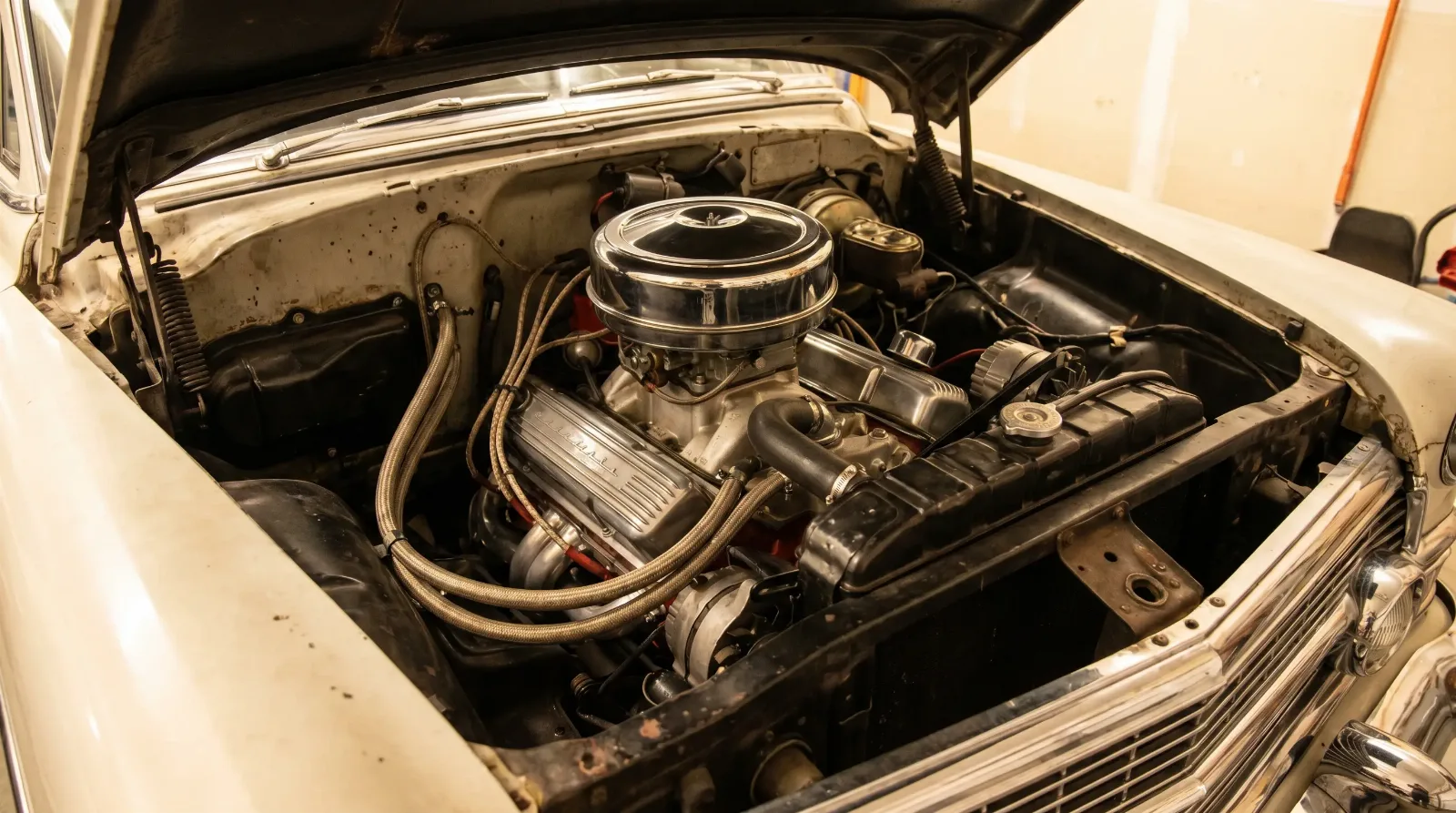
This is the part the sales figures obscure. The Imperial was, in several respects, a better-engineered car than its Cadillac rival. The Hemi was a stronger, more advanced engine. Chrysler's torsion-bar front suspension, introduced across the line late in the decade, gave the big Imperials handling and ride composure that GM's cars struggled to match. And Chrysler made a decision that still matters to collectors: when the rest of its lineup went to unit-body construction in 1960, Imperial kept separate body-on-frame construction through 1966 to preserve a heavier, more isolated feel.
None of that translated into showroom dominance, but it does translate into a driving experience today. A well-sorted late-1950s or early-1960s Imperial is a more substantial car than its reputation suggests, and buyers scanning the classic luxury cars for sale often overlook it precisely because it never had Cadillac's cachet.
The powertrain story reinforces the point. The first-generation Hemi was heavy and costly to build, and Chrysler replaced it after 1958 with the big wedge-head V8s, the 413 cubic inch engine becoming the Imperial's standard motor into the 1960s. The wedge made comparable power more cheaply and remains far easier to service today, which matters when you are budgeting the ownership of a two-ton flagship. Paired with the torsion-bar front end, it gave the early-1960s cars a composure that reviewers of the day noticed even when buyers did not follow.
The numbers that decided it
The commercial verdict was never in doubt. Imperial's best year was 1957, when it moved somewhere in the range of 37,000 cars on the strength of an all-new, heavily finned Exner design. That was a genuine high point, and it still fell well short of Cadillac, which was selling well over 100,000 cars a year through the same period. In most years the gap was wider still.
The top of the range went further upmarket with the Crown Imperial limousines, hand-built in Italy by Ghia from 1957 through the mid-1960s. These were extremely low volume, often just a handful per year, and they are the blue-chip end of the Imperial market today. For everything below them, values have historically trailed comparable Cadillacs, which is the collector opportunity and the collector warning in a single sentence.
Within the range, the LeBaron name marked the top trim, borrowed from the prewar coachbuilder and used to signal the most formal, best-equipped Imperials. The 1957 restyle, sold under the confident slogan "Suddenly it's 1960," pushed the fins to their tallest and gave Imperial its most dramatic year, though the rushed engineering that came with Chrysler's late-1950s styling leadership also brought build-quality problems that dented the brand's reputation just as it needed to look flawless. That combination, spectacular design undermined by uneven assembly, is the recurring theme of the Exner-era cars, and it is exactly what a buyer has to inspect for now.
| Point | Detail |
|---|---|
| Became separate marque | 1955 |
| Signature styling | Exner "gunsight" taillights, 1955-56 |
| Engine | Hemi V8, 331 cid ~250 hp (1955) |
| Best sales year | 1957, roughly 37,000 units |
| Body-on-frame retained | Through 1966, while Chrysler went unibody in 1960 |
| Ghia limousines | Crown Imperial, 1957 to mid-1960s |
What it means for a buyer today
The Imperial market rewards patience and documentation. Driver-quality 1955 to 1963 cars have long been available for meaningfully less than equivalent Cadillacs, and that discount is the whole thesis: you are buying comparable or superior engineering at a lower entry point, in exchange for accepting a name the wider market never fully embraced. The risk is liquidity. When you sell, that same perception gap works against you, so parts scarcity and condition matter more than usual.
"The Imperial lost the sales war and, in a way, that is the buy signal. You are paying for the badge Cadillac earned, not the one Imperial did, and the engineering underneath often argues the other way. Just go in knowing the exit is thinner."
David Mercer
Chrysler kept the Imperial name alive on and off into the 1990s, but the serious argument for the marque as a Cadillac fighter belongs to the 1955 to 1966 cars, when the product genuinely competed even as the sales never did. The next chapter tracks how that competition spilled under the hood, as the luxury makers stopped competing on chrome and started competing on power. Read on: next: The 1950s-60s Luxury Car Horsepower Race.
Related Reading
Have a
Classic Car
for Sale?
Reach thousands of serious classic car collectors across the US.
Sell It Here →
Are You a Classic Car Dealer?
List your full inventory and connect with targeted classic car buyers.
Join as a Dealer →

About the author
David Mercer
Classic car market analyst with two decades of experience tracking collector car valuations, auction results, and investment trends.
More in History & Heritage
Comments
Be the first to comment on this article.