
When the American auto industry converted back to civilian production after 1945, it faced a market unlike any before it. Nobody had built a new car for consumers in nearly four years, wartime savings had piled up, and buyers wanted to spend. That collision of pent-up demand and postwar optimism reshaped the luxury car, and the shape it took can be summed up in three words the industry actually used: longer, lower, wider.
History & Heritage
6 min read
The Postwar Luxury Boom and the “Longer, Lower, Wider” Era
The postwar luxury car era explained: pent-up demand, OHV V8s, tailfins, and the longer, lower, wider design philosophy that reshaped American luxury.
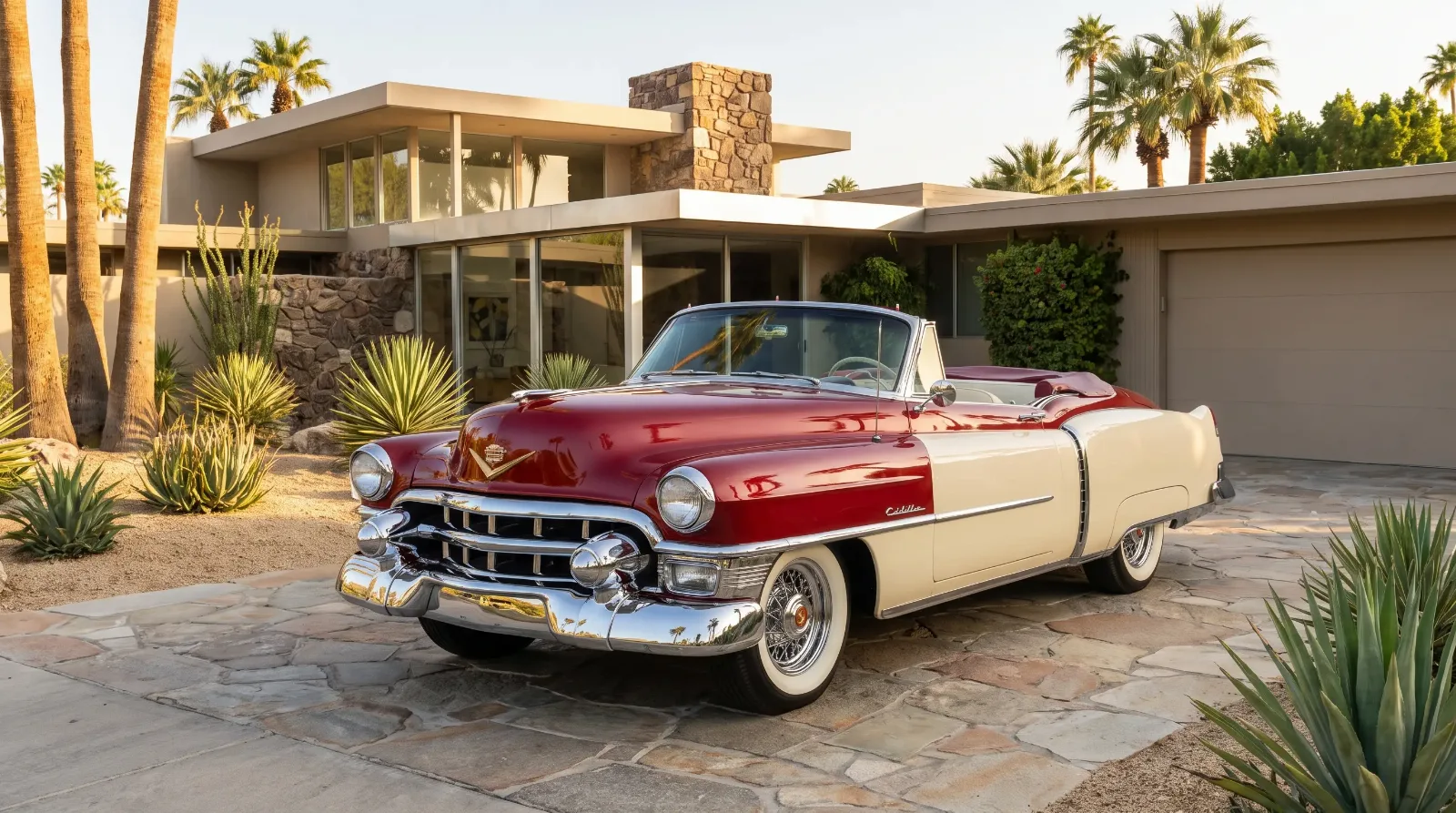
This era is the hinge between the coachbuilt classics of the prewar decades and the personal luxury coupes that came later, which is why it sits near the center of the complete history of the classic luxury car. The cars stopped being restrained artifacts and became statements of surface, chrome, and scale.
A seller's market rebuilds the segment
For the first few postwar years, manufacturers sold everything they could build, often lightly warmed-over 1942 designs. The genuinely new cars arrived at the end of the decade. The 1948 Cadillac introduced the tailfin, drawn by Harley Earl's studio from the twin-boom tail of the P-38 Lightning fighter. The 1949 model year brought new overhead-valve V8 engines, the Cadillac 331 and the Oldsmobile Rocket 303, compact high-compression designs that made the old flatheads look dated overnight.
These engines mattered because they gave the styling something to lean on. A big, low, wide car needed power to move its mass, and the new short-stroke V8s supplied it while leaving room to grow. The horsepower race that defined the 1950s luxury field started here, in the engineering choices of 1949.
What "longer, lower, wider" actually meant
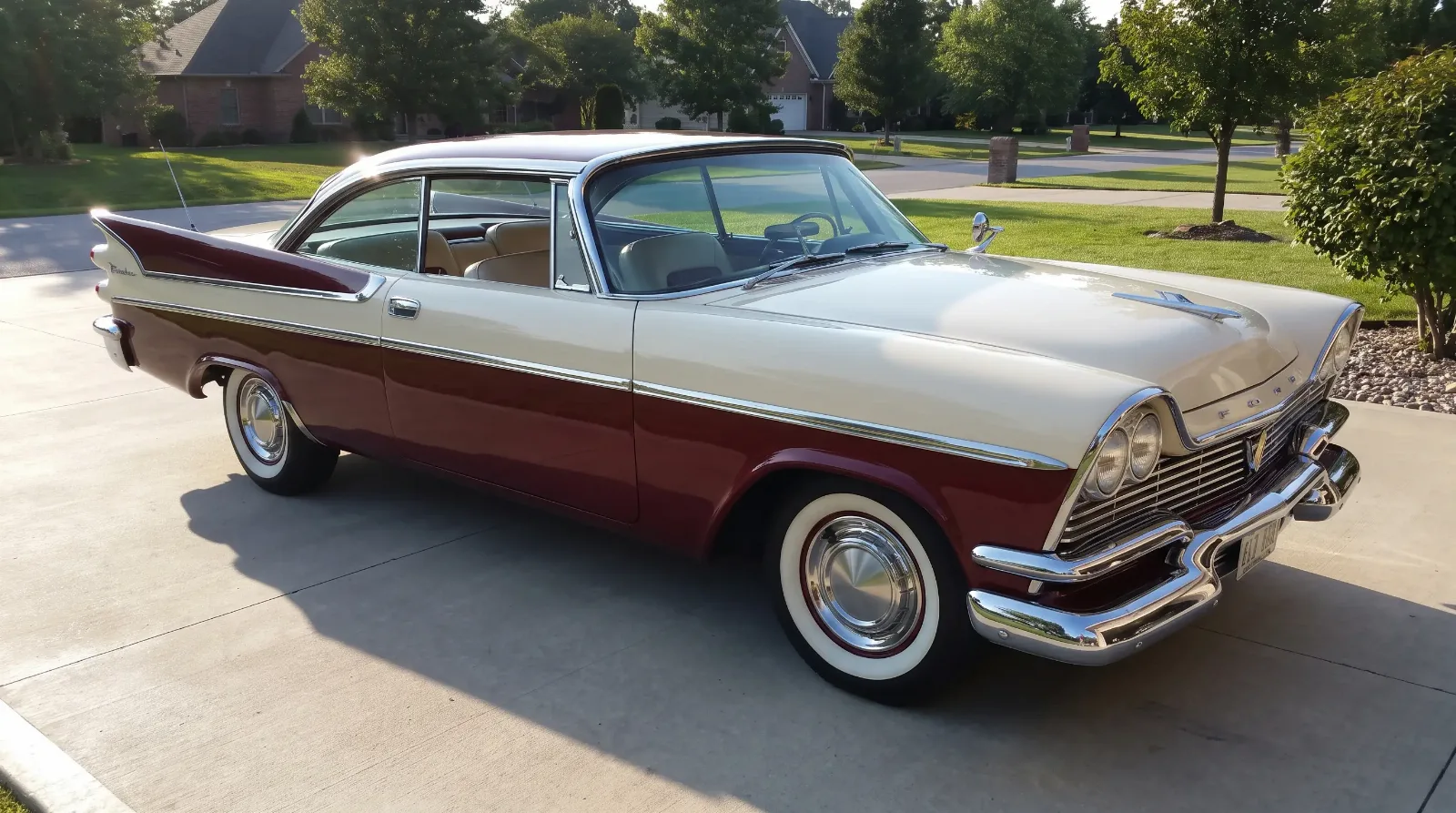
The phrase was a design philosophy, associated above all with Harley Earl at General Motors, and it was literal. Each model cycle stretched the wheelbase, dropped the roofline, and widened the track. The reasoning was partly aesthetic and partly commercial: a longer, lower car looked more expensive and more modern, and it made last year's model look short and tall by comparison, which encouraged trade-ins. This was the annual model change working as intended, an idea Alfred Sloan had built into GM's strategy years earlier. Styling, not engineering, became the thing that dated a car, and the luxury buyer was expected to feel the difference most keenly.
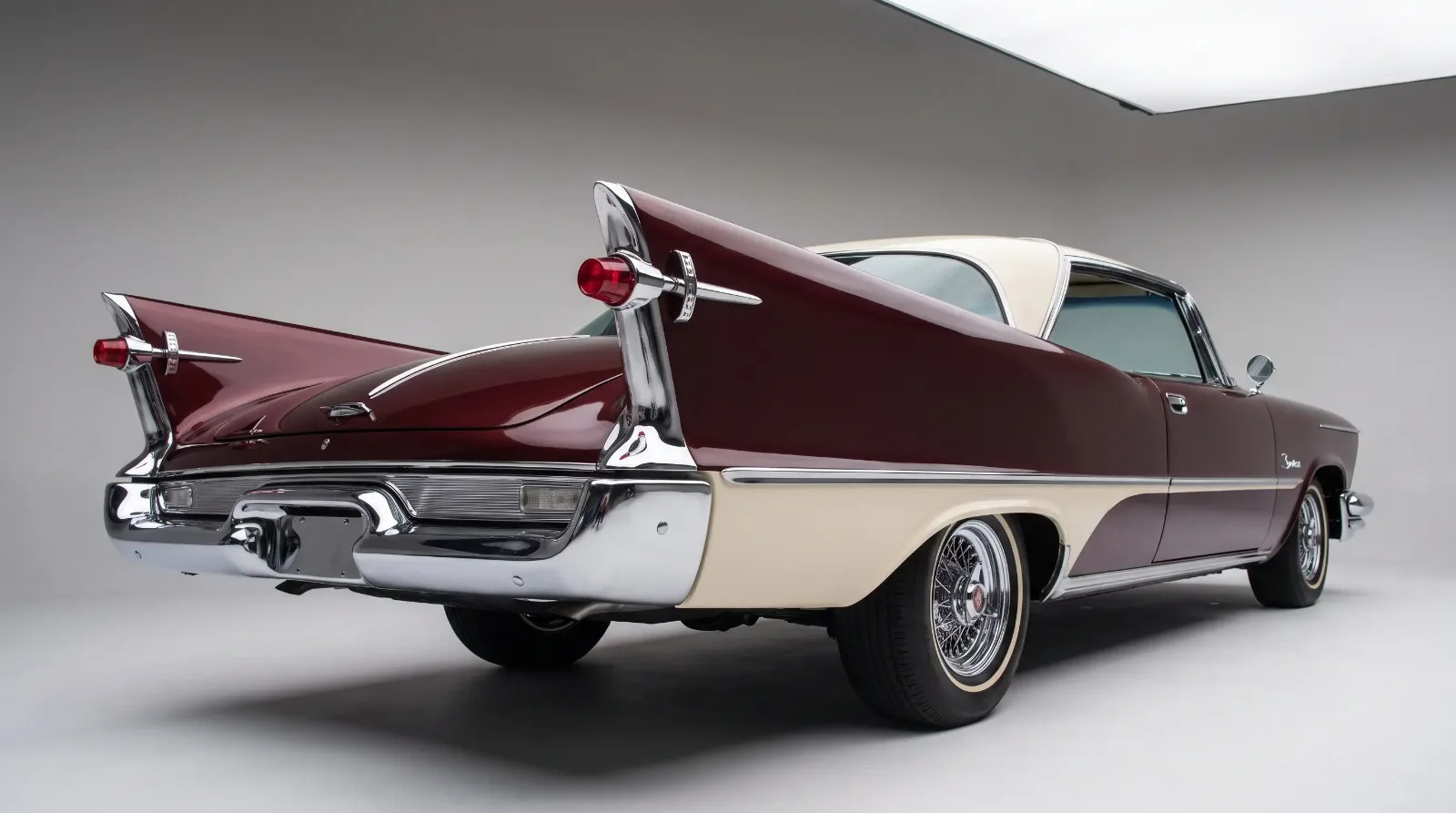
The visual vocabulary followed. The pillarless hardtop, introduced on cars like the 1949 Buick Riviera and Cadillac Coupe de Ville, gave the open, airy look of a convertible with a fixed roof. Wraparound windshields appeared mid-decade. Two-tone and even three-tone paint, acres of chrome, and steadily taller tailfins became the grammar of American luxury, reaching a peak with the enormous fins of the 1959 Cadillac.
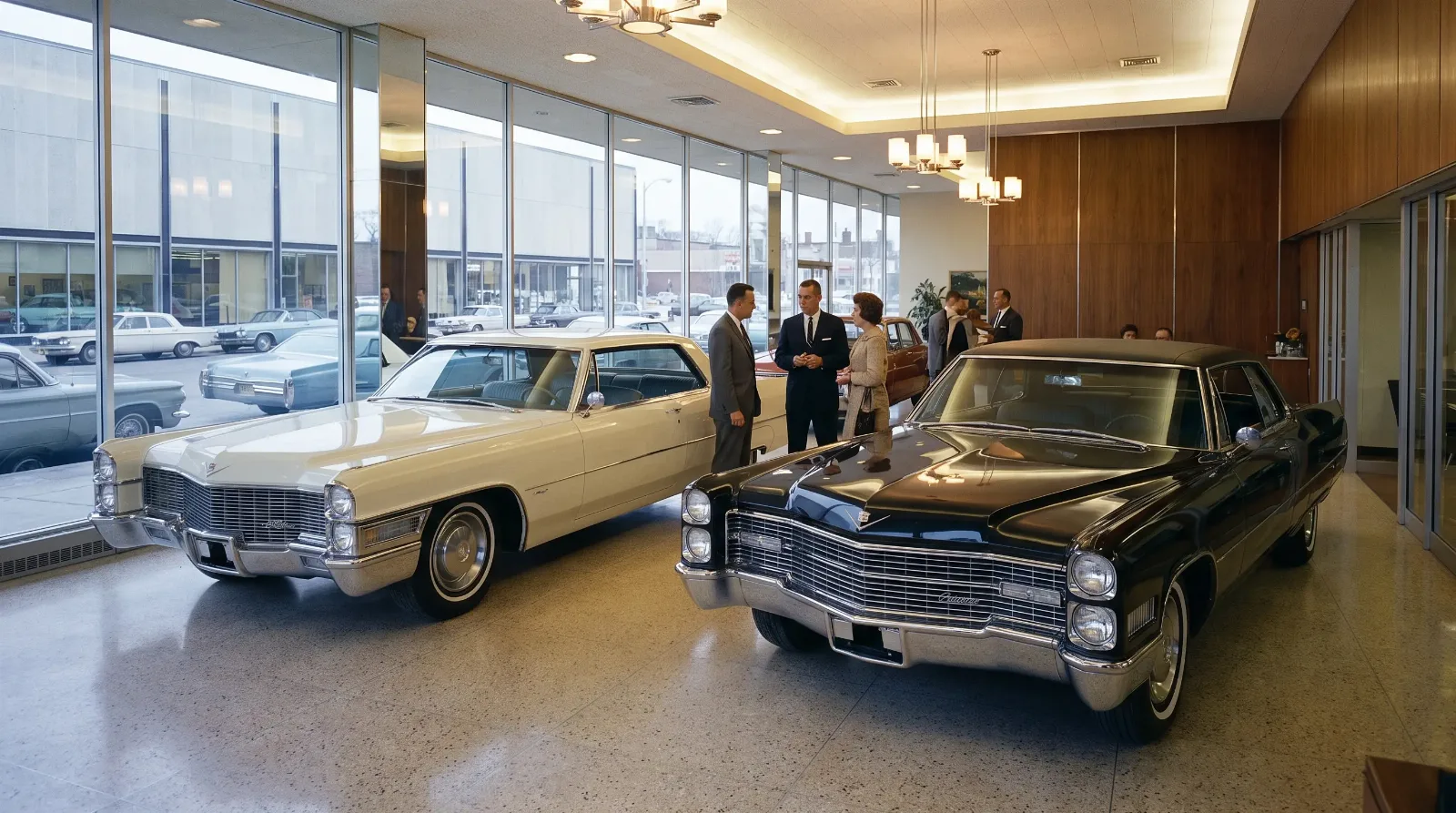
The industry also learned to sell scarcity within abundance. The 1953 Cadillac Eldorado arrived as a limited, expensive convertible built in tiny numbers, a halo car meant to draw buyers into showrooms. Lincoln answered a few years later with the 1956 Continental Mark II, a deliberately understated and extremely costly coupe that lost money on every unit by design. These low-volume flagships sat above the regular range and did the work of prestige while the volume cars did the work of profit, a two-tier strategy the segment has used ever since.
Comfort and convenience become the sell
Beneath the sheet metal, the postwar luxury car sold itself on ease of use as much as prestige. The automatic transmission moved from novelty to expectation, GM's Hydra-Matic having led the way before the war. Power steering reached production early in the 1950s, followed quickly by power brakes, power windows and seats, and factory air conditioning as the decade wore on.
These features added weight, which fed back into the demand for more power, which the new V8s were happy to supply. The result was a car substantially heavier and more complex than its prewar ancestor, and buyers accepted the trade because the payoff was effortless, quiet, air-conditioned travel across a country that was busy building interstate highways. Factory air conditioning is a useful marker of how fast the segment moved. It was a rare, costly option early in the decade and a near-expectation on a top luxury car by its end, and its spread tracks the broader shift from mechanical prestige to sheer comfort as the thing buyers paid for. Survivors from this era turn up regularly at auction today, and the well-optioned examples are the ones collectors chase.
| Development | Approx. timing | Significance |
|---|---|---|
| Postwar tailfin | 1948 | Cadillac, inspired by P-38 Lightning |
| OHV V8 engines | 1949 | Cadillac 331, Olds Rocket 303 |
| Pillarless hardtop | 1949 | Buick Riviera, Cadillac Coupe de Ville |
| Wraparound windshield | mid-1950s | Panoramic glass styling |
| Peak tailfins | 1959 | Cadillac's largest fins |
The excess and its limits
The style could not expand forever. By the late 1950s some observers found the cars overwrought, and the 1958 recession dented sales of the most extravagant models. The 1959 Cadillac now reads as the high-water mark of the whole approach, the point where longer, lower, and wider had gone about as far as taste and physics allowed. The 1958 recession was a warning the industry heard. Quad headlights, newly legal that year across most states, gave designers one more toy at exactly the moment buyers were starting to question the whole formula, and by the early 1960s the fins were already shrinking. The extravagance had a shelf life, and the segment spent the next decade learning restraint again.
"The prewar luxury car asked you to admire how it was made. The postwar car asked you to admire how much of it there was. That is a real shift in what the word luxury meant, and the sheet metal records it honestly."
Sarah Whitfield
The boom did not last unchallenged. Even as Cadillac's fins reached their peak, a rival across town was mounting its most serious attempt to build a car that could beat it at its own game. The segment's story turns next to Chrysler's ambitious, expensive, and ultimately frustrated effort. Read on: next: How Imperial Tried to Be Chrysler's Cadillac-Fighter.
Related Reading
Have a
Classic Car
for Sale?
Reach thousands of serious classic car collectors across the US.
Sell It Here →
Are You a Classic Car Dealer?
List your full inventory and connect with targeted classic car buyers.
Join as a Dealer →

About the author
Sarah Whitfield
Third-generation classic car collector specializing in pre-war American and European coachbuilt automobiles. Researcher and concours enthusiast.
More in History & Heritage
Comments
Be the first to comment on this article.