
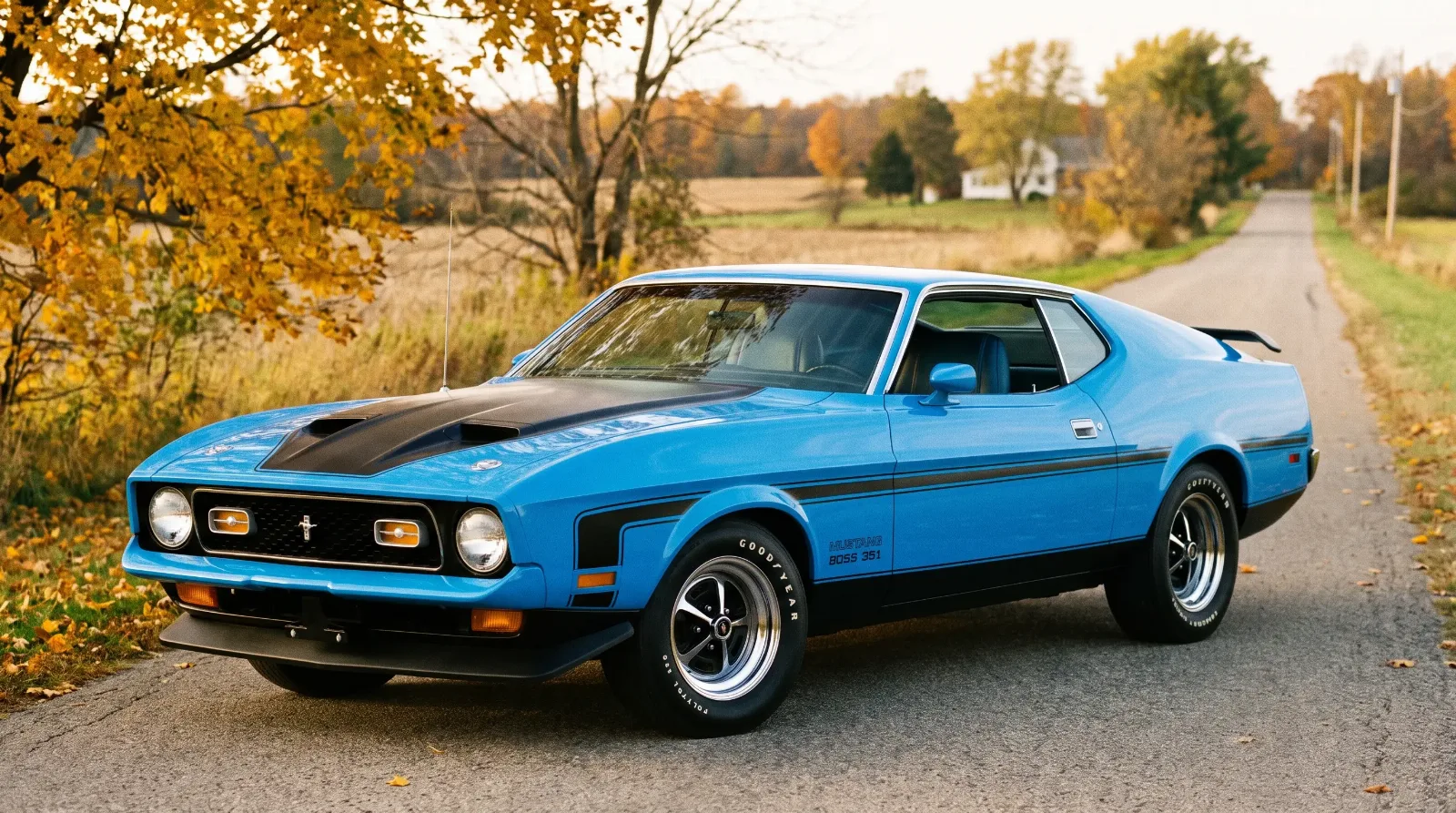
The American muscle car is usually told as a domestic story. Detroit, Woodward Avenue, drag strips off the interstate. But the formula it proved, a big engine in an affordable mid-size body sold to a young buyer, did not stay inside the borders. It traveled. And in a few markets the copies got so good they now outrun their American ancestors at auction.
History & Heritage
6 min read
How American Muscle Influenced Global Performance Cars
How American muscle's cheap-power formula spread worldwide, from the Falcon GTHO Phase III and Holden Monaro to the Capri and today's global Mustang.
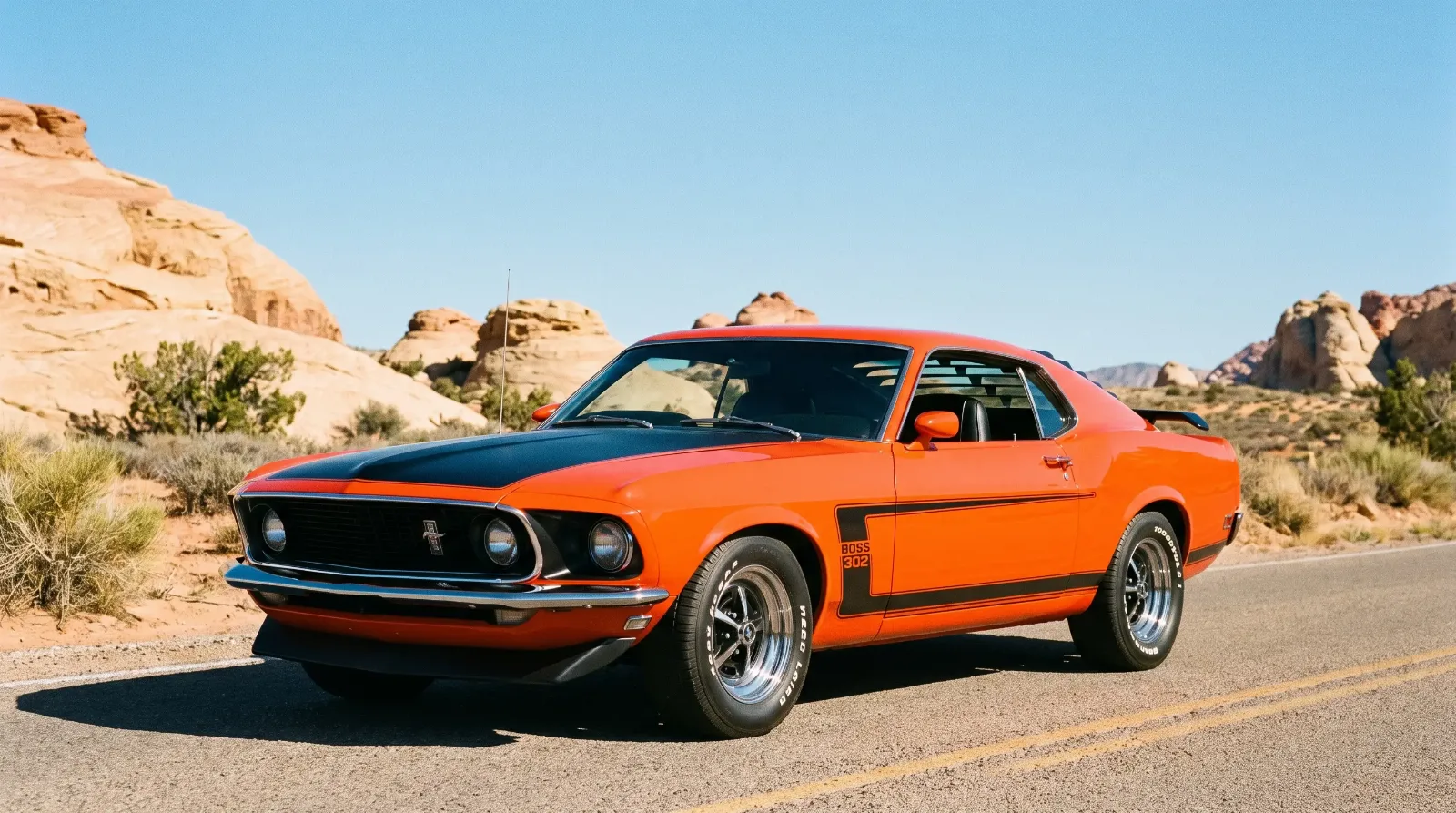
If you track collector values across regions, the fingerprints are everywhere. The muscle idea became a template that Australia, Europe, and eventually Japan borrowed, adapted, and in some cases perfected. Here is where the money and the influence actually went.
The formula was an export, not just a car
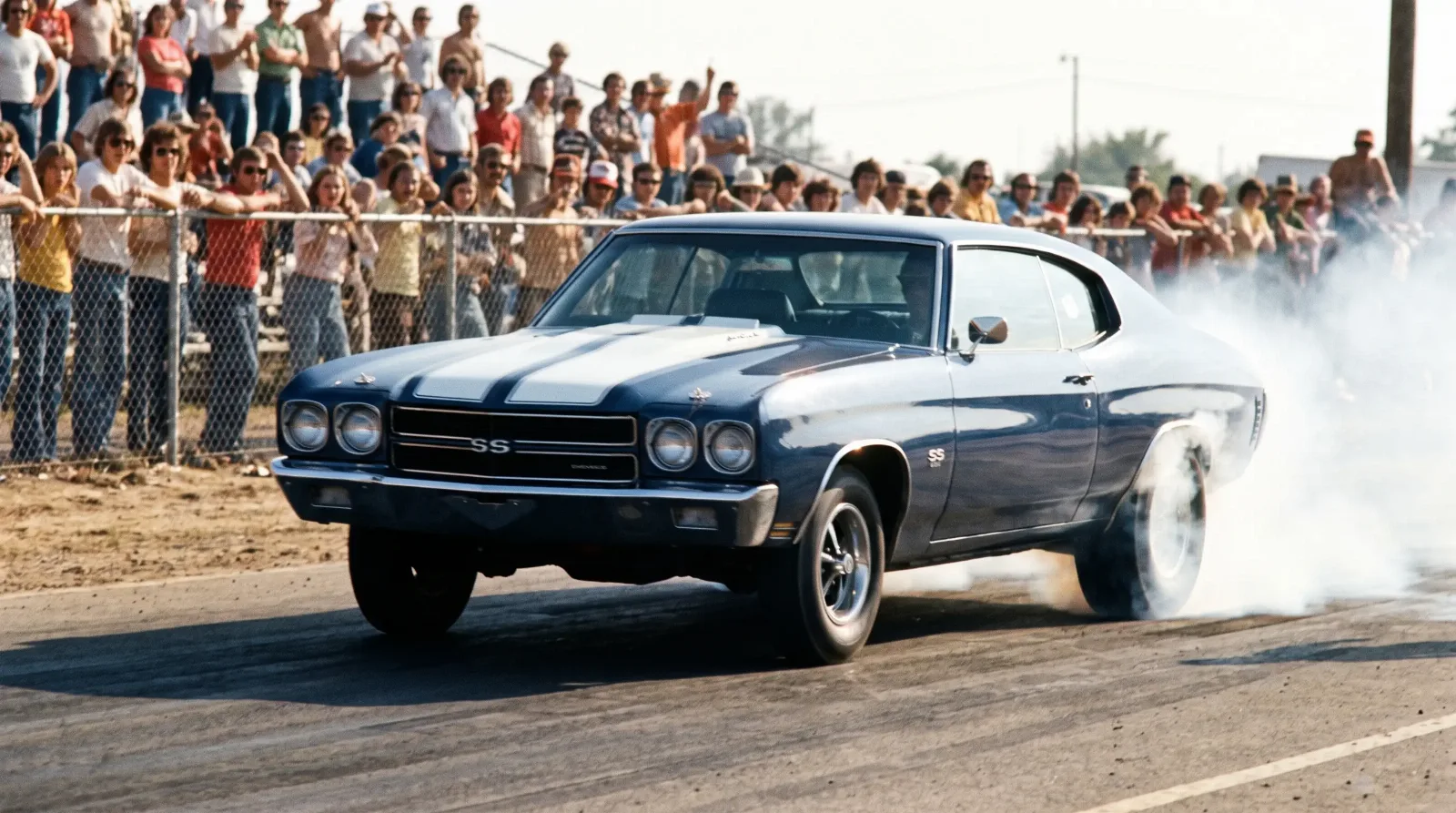
The core American insight was economic, not just mechanical. Take an engine you already build, drop it into a lighter body you already build, skip the expensive engineering, and sell speed cheap. That recipe travels well because it is fundamentally about cost and marketing as much as horsepower. Any manufacturer with a big engine and a mid-size sedan could run the same play.
The other export was cultural. The idea that a performance car could be a mass-market product for ordinary buyers, not a coachbuilt exotic, was genuinely American, and it reset expectations globally. For the origins of that recipe on home soil, start with the muscle car history guide.
Australia built the clearest copy
No market ran the American playbook more faithfully than Australia. Ford Australia and Holden fought their own horsepower war through the late sixties and early seventies with big-engined mid-size sedans built for the local touring car championship. The Ford Falcon GTHO, the Holden Monaro, the Torana. These were muscle cars in everything but passport.
The 1971 Falcon GTHO Phase III is the standout. Powered by a 351 Cleveland and built to win at Bathurst, it was widely described in period as the fastest four-door production sedan in the world. It is also a blue-chip collectible now. Documented Phase III cars have crossed the block for figures past one million Australian dollars, which puts them in the same conversation as the rarest American Hemi cars.
| Market | Muscle-influenced car | Era |
|---|---|---|
| Australia | Ford Falcon GTHO Phase III | 1971 |
| Australia | Holden Monaro GTS 350 | 1968-71 |
| South Africa | Ford Capri Perana V8 | 1970-72 |
| Europe | Ford Capri (V6 performance models) | 1969 onward |
"The Australian cars are the clearest proof the formula worked anywhere. A documented Phase III now trades in seven figures locally. That is not nostalgia pricing. That is a market recognizing the same scarcity and significance we price into a 1971 Hemi car."
David Mercer
The idea reached Europe and beyond
Europe took the concept and bent it to its own roads. Ford Europe built the Capri and openly pitched it as the car you always promised yourself, a long-hood coupe for the everyman, which was the pony car idea translated for narrower streets and smaller engines. South Africa went further and stuffed American V8s into the Capri body to build the Perana, a genuine muscle car by any definition.
The deeper influence was on how European makers thought about marketed performance. The notion of advertising horsepower to a mass audience, of building a badge and an option package around speed, spread into the segment that would eventually give us the hot hatch and the affordable sports sedan. The American muscle car did not invent the fast European car. It helped make performance a mainstream selling point rather than a niche one.
Japan learned the lesson differently
Japan did not copy the big-engine formula directly. Displacement taxes and narrow roads made a 454 impractical. What Japanese makers took was the underlying principle, that affordable performance sold to ordinary buyers could build a brand and a following. The early Nissan Skyline GT-R of 1969 and the performance versions of the Toyota and Datsun ranges applied the muscle idea through smaller, high-revving engines and clever engineering rather than raw cubic inches.
The result matured into a distinct performance culture, but the starting insight was the same one Detroit proved. Speed did not have to be exclusive. It could be a mass-market product with a badge, an option sheet, and a young buyer. From a collector standpoint, the best of those early Japanese performance cars now follow the same appreciation curve the American and Australian cars did a decade earlier. Documentation, originality, and scarcity drive the money, exactly as they do for a numbers-matching Chevelle.
The modern revival and the auction data
The influence did not end when the original era did. The modern muscle revival, the reborn Dodge Challenger and Charger, the current Mustang, sells globally in a way the originals never did. The Mustang in particular is now exported to markets across Europe, Asia, and Australia, closing a loop that started sixty years ago. The template proved durable enough to survive the emissions era, the fuel crises, and two generations of buyers.
From a valuation standpoint, the global spread has been good for the whole category. Australian muscle has its own strong collector base and record prices. American cars draw international bidders at the major sales. Cross-border demand tends to firm up values because it widens the buyer pool for any given car. The segment is no longer priced by one country's nostalgia alone. When a rare American car can attract a serious bidder from Sydney, Munich, or Tokyo, the floor under its value gets a good deal harder, and that is a direct result of the formula having traveled so far in the first place.
The through-line is the 1964 breakthrough that started all of it, and you can read the full story of that first car. Everything downstream, the Australian Falcons, the South African Peranas, the modern global Mustang, traces back to a single idea proven on American roads. Cheap power for the many. It turned out to be one of the most exportable ideas the car industry ever had.
Related Reading
Have a
Classic Car
for Sale?
Reach thousands of serious classic car collectors across the US.
Sell It Here →
Are You a Classic Car Dealer?
List your full inventory and connect with targeted classic car buyers.
Join as a Dealer →

About the author
David Mercer
Classic car market analyst with two decades of experience tracking collector car valuations, auction results, and investment trends.
More in History & Heritage
Comments
Be the first to comment on this article.