
Some cars are remembered for how they drove. One Lincoln is remembered for a single afternoon in Dallas. The 1961 Lincoln Continental convertible that carried President John F. Kennedy on November 22, 1963, is among the most photographed automobiles in American history, and it entered that history through tragedy rather than design. Understanding the car, and what happened to it afterward, matters because it shaped how a generation saw the Lincoln name.
History & Heritage
6 min read
JFK's Lincoln and the Assassination That Shadowed the Marque
The 1961 Lincoln Continental SS-100-X that carried President Kennedy in Dallas: its origins, why it was rebuilt, and the shadow it cast on the marque.
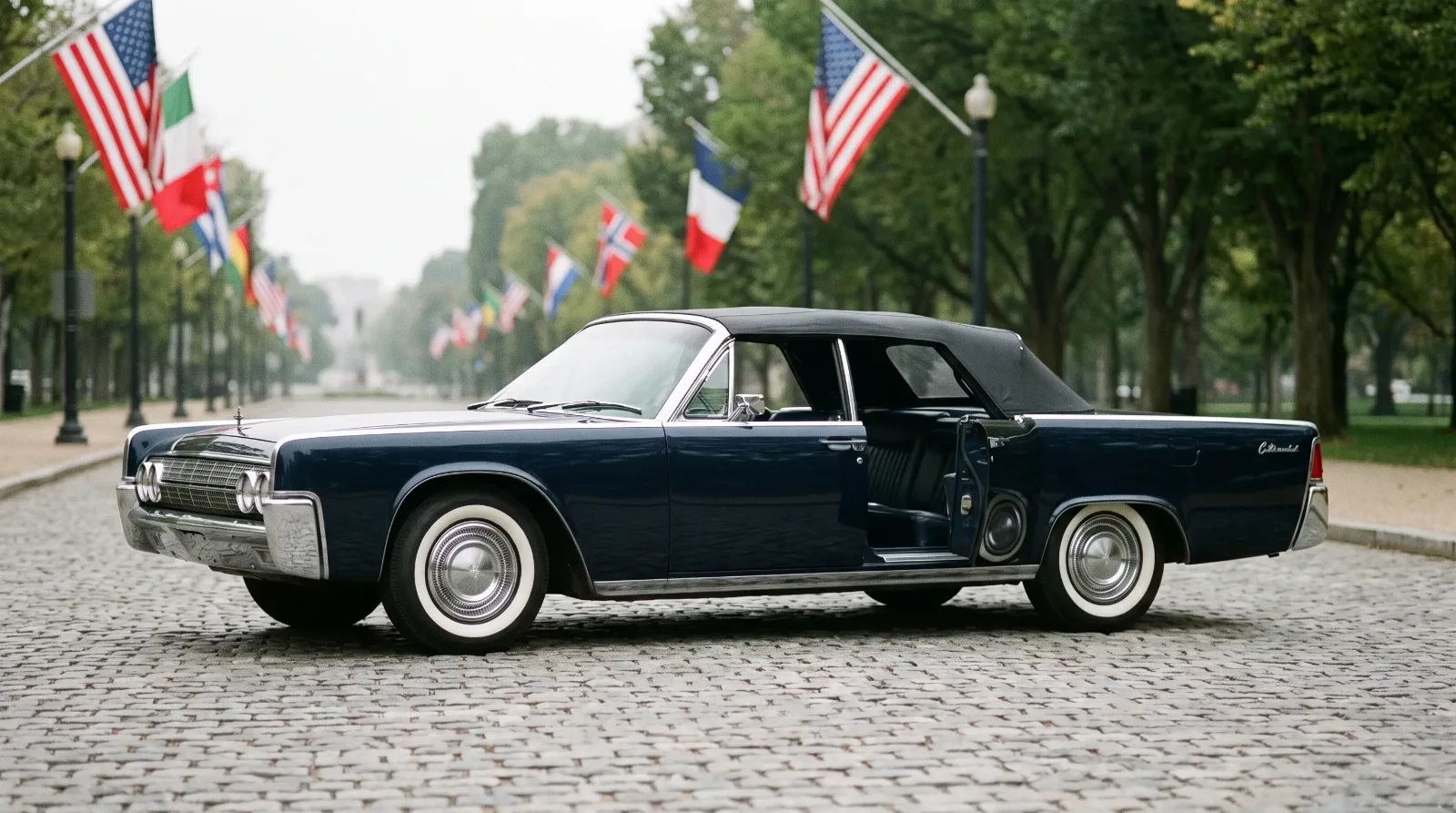
This is a difficult chapter to write about with the right tone. The car was the setting for a national trauma, not the cause of it, and the people involved deserve to be treated as people. What follows is the factual record of the vehicle itself, its origins, and the long shadow it cast, told as part of the Cadillac vs Lincoln luxury war and the way each marque became bound up with the American presidency.
The car called SS-100-X
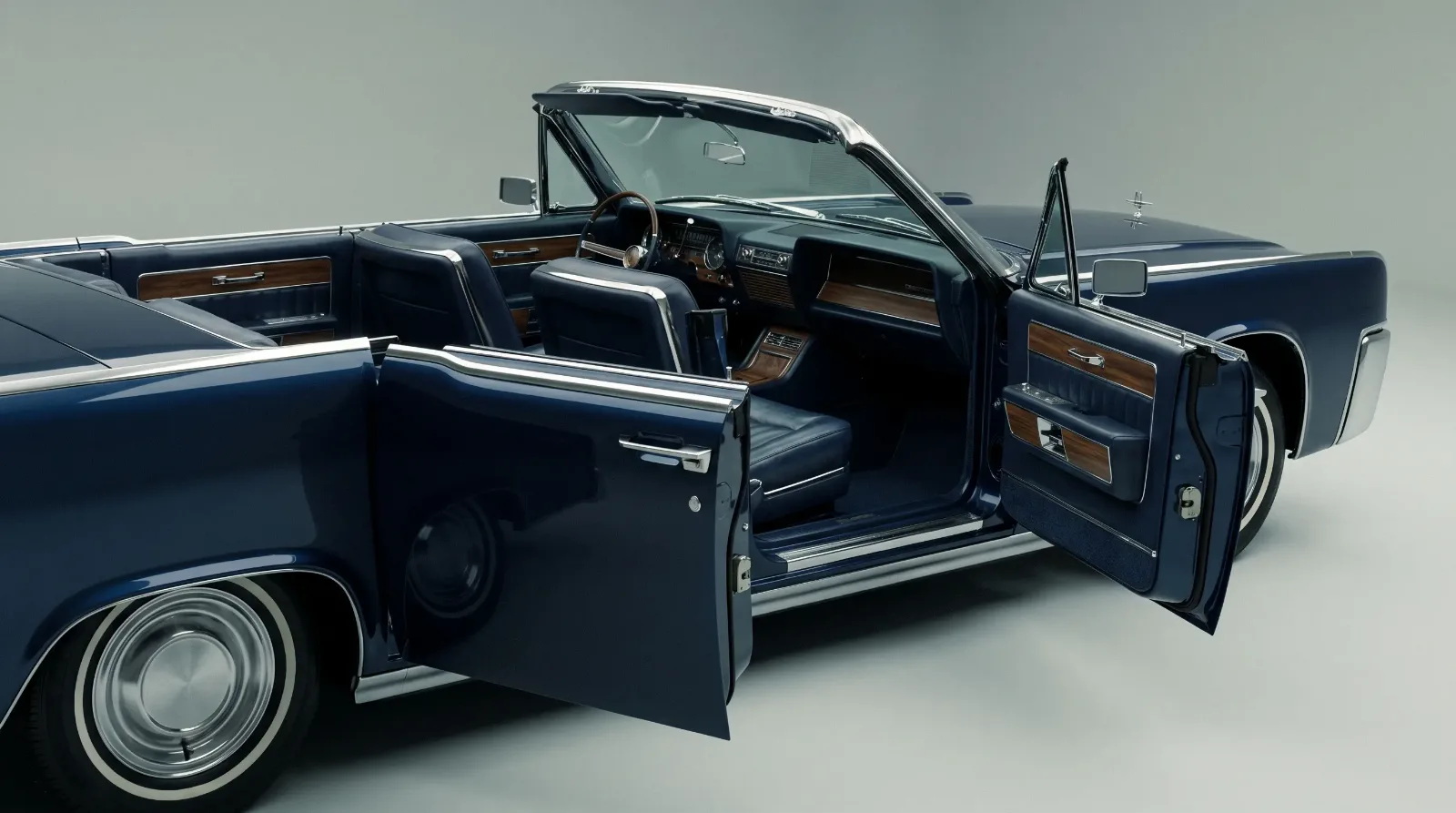
The presidential limousine began as a 1961 Lincoln Continental four-door convertible. It was not used as delivered. Ford turned the car over to the Cincinnati coachbuilder Hess and Eisenhardt, which stretched the wheelbase and rebuilt it into an open parade car fitted with removable roof sections, auxiliary seating, and grab handles for the Secret Service. Finished in dark blue and delivered in 1961, it was assigned the Secret Service code name SS-100-X.
By the standards of later state cars it was lightly protected. The removable top was not armored, and on the day in Dallas the car was open, a common practice at the time when a president wanted to be seen by crowds. That openness is part of why the events of that November are so seared into memory. The vehicle was built to display a president, not to shield one.
| Detail | SS-100-X presidential limousine |
|---|---|
| Base vehicle | 1961 Lincoln Continental convertible |
| Coachbuilder | Hess & Eisenhardt, Cincinnati |
| Delivered | 1961 |
| Original finish | Dark blue |
| Later service | Rebuilt and armored, used into 1977 |
| Current home | The Henry Ford museum, Dearborn, Michigan |
November 22, 1963
President Kennedy was assassinated while riding in SS-100-X through Dealey Plaza in Dallas. The facts of that day belong to the historical record and to the families affected, and they are not the subject of this piece. What concerns the car's history is what the moment did to a machine that had, until then, been simply a well-appointed Lincoln doing ceremonial work.
In an instant the vehicle stopped being a car and became evidence, then a symbol. Photographs and film of it circulated worldwide. For many Americans the shape of that open Continental became inseparable from the loss itself, and that association would follow the model and the marque for years.
Why the car was not retired
The decision to keep the car in service surprises many people who assume it was scrapped or hidden away. In practice, building a presidential limousine was expensive and slow, and the Secret Service chose to rebuild the existing vehicle rather than start over. The car went through an extensive program that added a fixed, armored roof, heavier protection, and a new black finish. In that rebuilt form it served several administrations before finally being retired in the late 1970s.
That practical decision has its own quiet weight. The same chassis that carried Kennedy went on to carry his successors, transformed into something far more heavily protected than the open car of 1961. The change in the vehicle mirrored a change in the country's sense of what a president's safety required.
The rebuild was substantial. Beyond the fixed roof and armor, the car received a titanium-reinforced structure, heavier glass, and revised systems to support the added weight, work carried out over roughly a year before it returned to duty. Presidents including Lyndon Johnson, Richard Nixon, and Gerald Ford rode in the rebuilt car. By the time it left service in the late 1970s, it bore little visual resemblance to the open blue Continental that had been delivered in 1961, and that transformation is itself a record of how the office changed.
"The car did nothing wrong, and yet for years the Lincoln name carried the memory of that day. History does not always assign its shadows fairly, and this was one of those times."
Patrick Walsh
The shadow over the marque
Lincoln did not seek this place in history, and the association was painful rather than promotional. A luxury brand generally wants its cars linked to occasions of arrival and success. Instead, the 1961 Continental became tied to a moment of national grief, and the company navigated that reality with care in the years that followed. The car's role was never used as a selling point, and it never should have been.
Over time the story settled into something more complicated than a simple stain. The 1961-to-1969 Continental is now widely admired as one of the finest American designs of its era, praised for its clean lines and rear-hinged doors, and that admiration exists alongside the memory of Dallas rather than erasing it. The marque's presidential history, both Lincoln's and Cadillac's, is part of the larger classic luxury car story.
How the car is remembered now
Today SS-100-X sits in The Henry Ford museum in Dearborn, displayed with sober context rather than spectacle. Visitors stand in front of it quietly. It is not treated as a curiosity but as an artifact of a specific and painful day, and the museum's handling of it reflects that seriousness. For anyone studying how automobiles intersect with national history, it is one of the most significant vehicles in the country.
The car's story is a reminder that objects can carry meanings their makers never intended. A Lincoln built to show a president to the crowds became, instead, a permanent witness to his loss, and then served on in a form no one at the 1961 factory could have imagined. To return to the beginning of how these two marques came to define American luxury and American statecraft, read next: Cadillac vs Lincoln.
Related Reading
Have a
Classic Car
for Sale?
Reach thousands of serious classic car collectors across the US.
Sell It Here →
Are You a Classic Car Dealer?
List your full inventory and connect with targeted classic car buyers.
Join as a Dealer →

About the author
Patrick Walsh
Automotive journalist covering classic car shows, events, and the enthusiast community across North America.
More in History & Heritage
Comments
Be the first to comment on this article.