
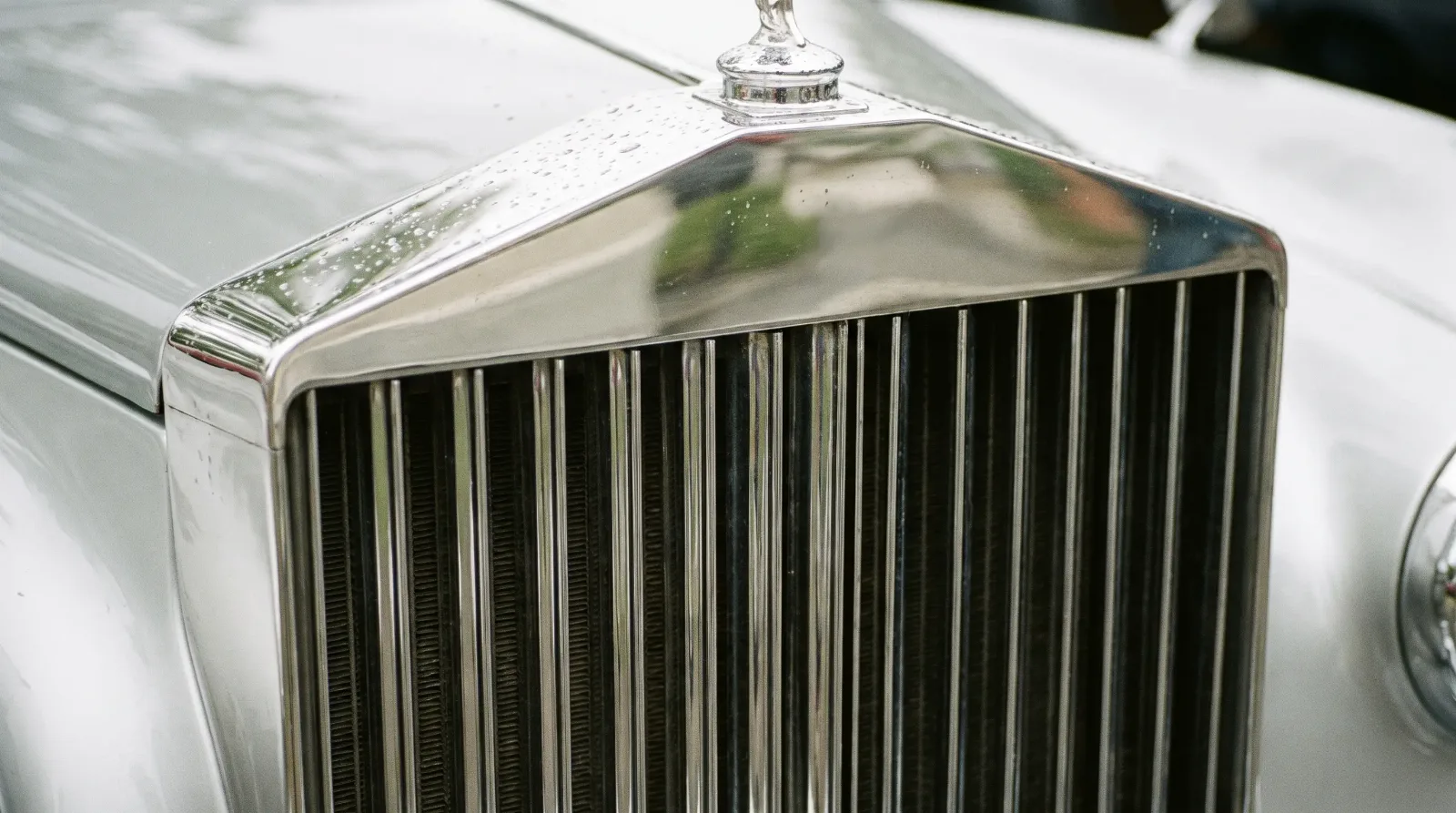
For most of its history, Rolls-Royce was two very different businesses wearing one revered name. One built the finest motor cars in the world in small numbers. The other built aircraft engines, a far larger and more capital-intensive enterprise that ultimately dwarfed the car division in scale. For decades the arrangement held. Then, at the start of the 1970s, the aerospace side collapsed under the cost of a single engine program, and the two halves of Rolls-Royce were pulled apart. The motor car business survived, but only by becoming a separate company.
History & Heritage
6 min read
When Rolls-Royce Motors Split from Aerospace
The Rolls-Royce Motors history split: how the 1971 RB211 receivership divided the cars from the aero-engine business and shaped the 1998 sale.
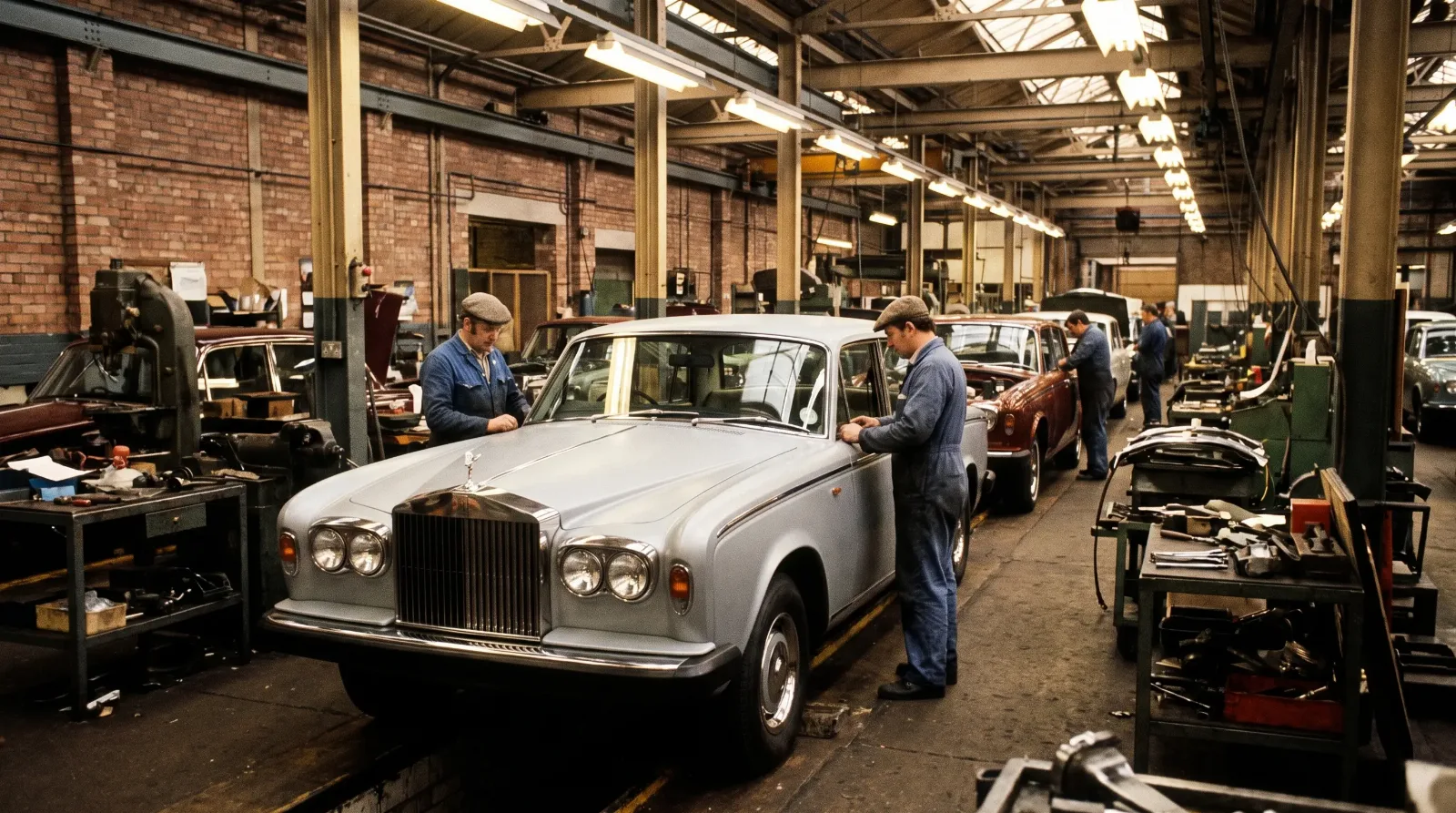
The split is one of the more misunderstood episodes in luxury car history, partly because the exact dates get muddled in the retelling. It is worth setting out carefully, because the separation shaped everything that came after for both Rolls-Royce and Bentley. For the wider context, this fits into how the segment got here, but the specifics of 1971 deserve their own account.
Two businesses under one name
Rolls-Royce Limited had made aero engines since the First World War, and by the postwar decades the aircraft-engine business was the company's center of gravity. The motor cars, magnificent as they were, represented a relatively small share of turnover. The Merlin engine of the Second World War and the jet engines that followed made Rolls-Royce a strategic national asset in Britain, which is precisely why what happened next drew in the government.
The car division, meanwhile, operated from Crewe and built both Rolls-Royce and Bentley motor cars, the two marques having shared engineering since Rolls-Royce acquired Bentley in 1931. To the public the name meant the cars. To the British economy, it meant the engines. That gap in perception matters for understanding the crisis.
The RB211 and the 1971 receivership
The trigger was the RB211, an advanced turbofan engine Rolls-Royce contracted to supply for the Lockheed L-1011 TriStar airliner. The engine's development ran badly over budget, driven partly by difficulties with its ambitious carbon-fiber fan blade technology. The costs outran the fixed-price contract, and the company could not absorb the losses.
In February 1971, Rolls-Royce Limited entered receivership. This was a national shock. To keep the strategically vital aero-engine business alive, the British government nationalized it, forming a state-owned company to continue the engine work. The motor car division, profitable in itself but caught in the wreckage of the parent, had to be dealt with separately.
It is easy now to underestimate how serious this was. Rolls-Royce was not merely a proud name, it was a pillar of British engineering employment and prestige, and its failure made front-page news. The receivership was not caused by the cars, which continued to sell and to make money. It was caused by a fixed-price contract for an unproven engine, signed by the aerospace side, that the company could not deliver within budget. The cars were, in effect, an innocent party dragged down by an aviation gamble, and the rescue had to find a way to save the engines for the nation while letting the car business stand on its own.
The motor car business becomes its own company
The car division was reconstituted as a separate entity, Rolls-Royce Motors, and was floated as an independent public company in 1973. That flotation date is the point most often muddled, and it should be stated with care. The receivership of the parent came in 1971, and the separate flotation of the car business followed two years later, in 1973. The nationalized aero-engine business had by then been reorganized as a state-owned firm, leaving the cars to stand on their own as a publicly listed company.
What is not in doubt is the outcome. From this point, the cars and the aircraft engines were owned by entirely different companies. Rolls-Royce Motors carried on at Crewe building the Silver Shadow and its successors, along with the Bentley models that shared their engineering. The precision of period documentation matters here, and it is exactly the kind of detail that repays checking against the historical record.
"The thing collectors often miss is that the name and the cars parted ways in 1971. After that, Rolls-Royce the motor car was a licensee of Rolls-Royce the engine maker, and that quiet legal fact set up the ownership drama that unfolded a quarter century later."
Sarah Whitfield
What the split set in motion
Rolls-Royce Motors remained independent only until 1980, when it was acquired by the engineering group Vickers. The cars continued at Crewe under that ownership for most of two decades. Then, in the late 1990s, the ownership question reached its famous climax. When the car business was sold in 1998, Volkswagen acquired the Crewe factory and the Bentley marque, while BMW secured the rights to the Rolls-Royce name and badge, because those had stayed with the aero-engine lineage all the way back to 1971.
| Milestone | Year | What happened |
|---|---|---|
| Rolls-Royce buys Bentley | 1931 | Marques share engineering thereafter |
| RB211 receivership | 1971 | Aero business nationalized |
| Rolls-Royce Motors floated | 1973 | Cars become a separate company |
| Acquired by Vickers | 1980 | New corporate parent |
| VW and BMW split the assets | 1998 | Bentley to VW, RR name to BMW |
Why the separation still matters
The 1971 crisis explains a paradox that puzzles many enthusiasts. How did the same 1998 sale hand Bentley to one German company and Rolls-Royce to another? The answer runs straight back to the split. Once the name stayed with the engines and the cars became a licensee, the brand and the factory could be sold separately, and eventually they were.
For the collector, the practical takeaway is that a Crewe-built car from the 1970s or 1980s sits on the far side of a corporate fault line that most owners never think about. The engineering continuity is real, the ownership continuity is not. The story of how these marques met new rivals continues in next: When Mercedes-Benz and Jaguar Entered the American Luxury Conversation.
Related Reading
Have a
Classic Car
for Sale?
Reach thousands of serious classic car collectors across the US.
Sell It Here →
Are You a Classic Car Dealer?
List your full inventory and connect with targeted classic car buyers.
Join as a Dealer →

About the author
Sarah Whitfield
Third-generation classic car collector specializing in pre-war American and European coachbuilt automobiles. Researcher and concours enthusiast.
More in History & Heritage
Comments
Be the first to comment on this article.