
The American luxury market of the 1950s had a settled hierarchy. Cadillac sat at the top, Lincoln and Imperial argued over second place, and Packard was sliding toward the end of its independent life. Into that closed conversation came a small number of European cars, arriving through a handful of East Coast importers who understood something Detroit did not yet take seriously. Mercedes-Benz and Jaguar never sold in Cadillac numbers. They did not need to. What they offered buyers was a different idea of what a luxury car was for, and by the middle of the decade that idea had begun to spread among people whose opinions carried weight.
History & Heritage
6 min read
When Mercedes-Benz and Jaguar Entered the American Luxury Conversation
How Mercedes-Benz and Jaguar reshaped the American luxury market in the 1950s and 60s, selling engineering and road manners over size and chrome.
For readers following the story so far, this is the moment the American definition of luxury stopped being a purely domestic argument.
The market these cars walked into
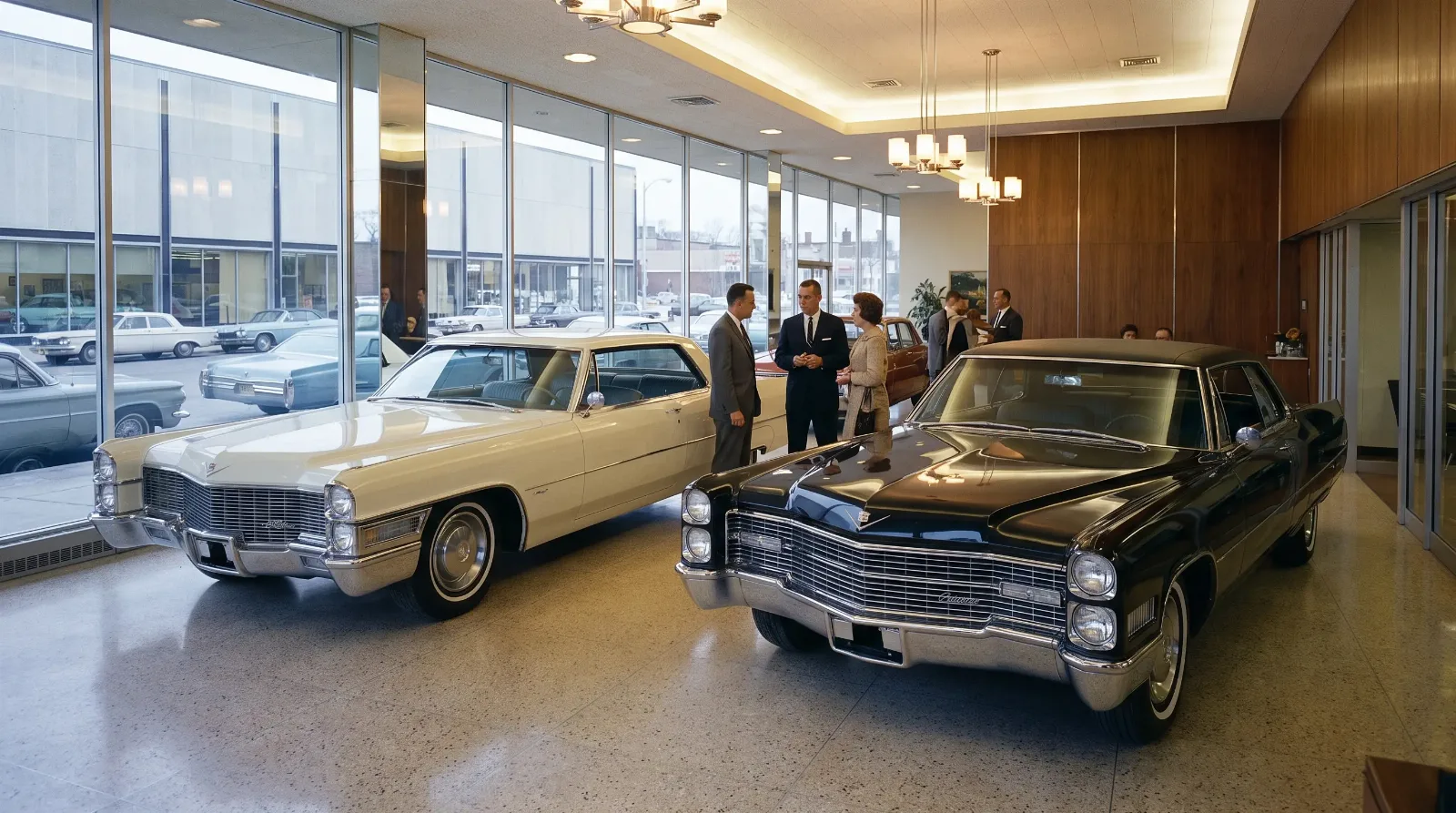
Postwar American luxury measured itself in length, weight, and brightwork. A 1955 Cadillac was long, soft, and quiet, and it wore its status where everyone could see it. That formula sold extremely well, and there was nothing wrong with it on its own terms. But it left an opening. There was no domestic car that treated handling, braking, and high-speed stability as luxury attributes rather than sporting afterthoughts.
European manufacturers had spent the prewar decades building cars for roads and driving conditions that had no American equivalent. Autobahns and Alpine passes ask different questions than a boulevard does. When those cars reached the United States, they answered a question a certain kind of buyer had not known to ask, and once asked it could not be unasked.
Max Hoffman and the Park Avenue showroom
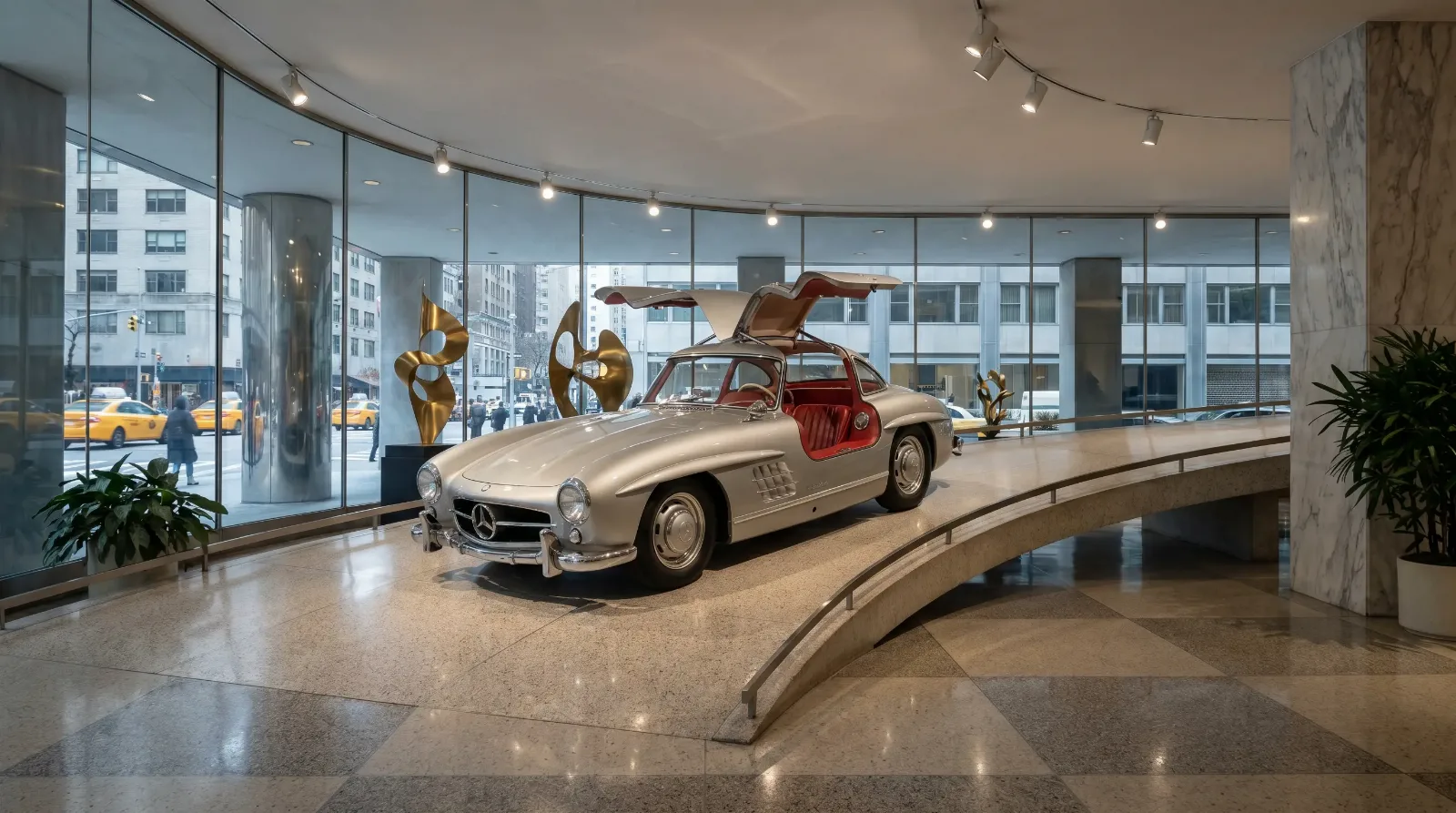
Almost none of this happens without Max Hoffman. An Austrian émigré who set up in New York after the war, Hoffman became the American importer for a remarkable list of marques at one time or another: Mercedes-Benz, Jaguar, Porsche, BMW, Alfa Romeo. His showroom on Park Avenue was designed by Frank Lloyd Wright, with a curved ramp that displayed the cars like objects in a gallery. That was the correct instinct. He was selling these machines to Americans as considered purchases, not as transportation.
Hoffman did more than move metal. He fed demand back to the factories. The Mercedes-Benz 300SL Gullwing, the road car that grew out of the racing coupe, existed as a production model in large part because Hoffman told Stuttgart he could sell it in America. He placed the order that made the business case. An importer shaping a manufacturer's product plan was unusual, and it tells you how seriously the factories took the American opening once they understood it was real.
What Mercedes-Benz actually sold
Mercedes did not arrive in America as a status brand in the Cadillac sense. It arrived as an engineering brand. The 300 series sedan, the large car known in Germany as the Adenauer after the chancellor who used one, carried an overhead-cam six and a build quality that felt different from a domestic body-on-frame car. The 300SL added a fuel-injected engine and a top speed that embarrassed nearly everything on American roads.
The distribution history matters here because it shaped how slowly the brand grew. From 1957 the Studebaker-Packard Corporation held the American distribution rights for Mercedes-Benz, an arrangement that lasted until Mercedes-Benz of North America was established in 1965 to handle its own affairs. That transition, from a struggling domestic partner to a dedicated factory operation, is roughly the point at which Mercedes stopped being an importer's curiosity and started becoming a fixture. The cars that built the reputation were sold in the thousands, not the hundreds of thousands, but they were sold to the right people.
Jaguar's value proposition
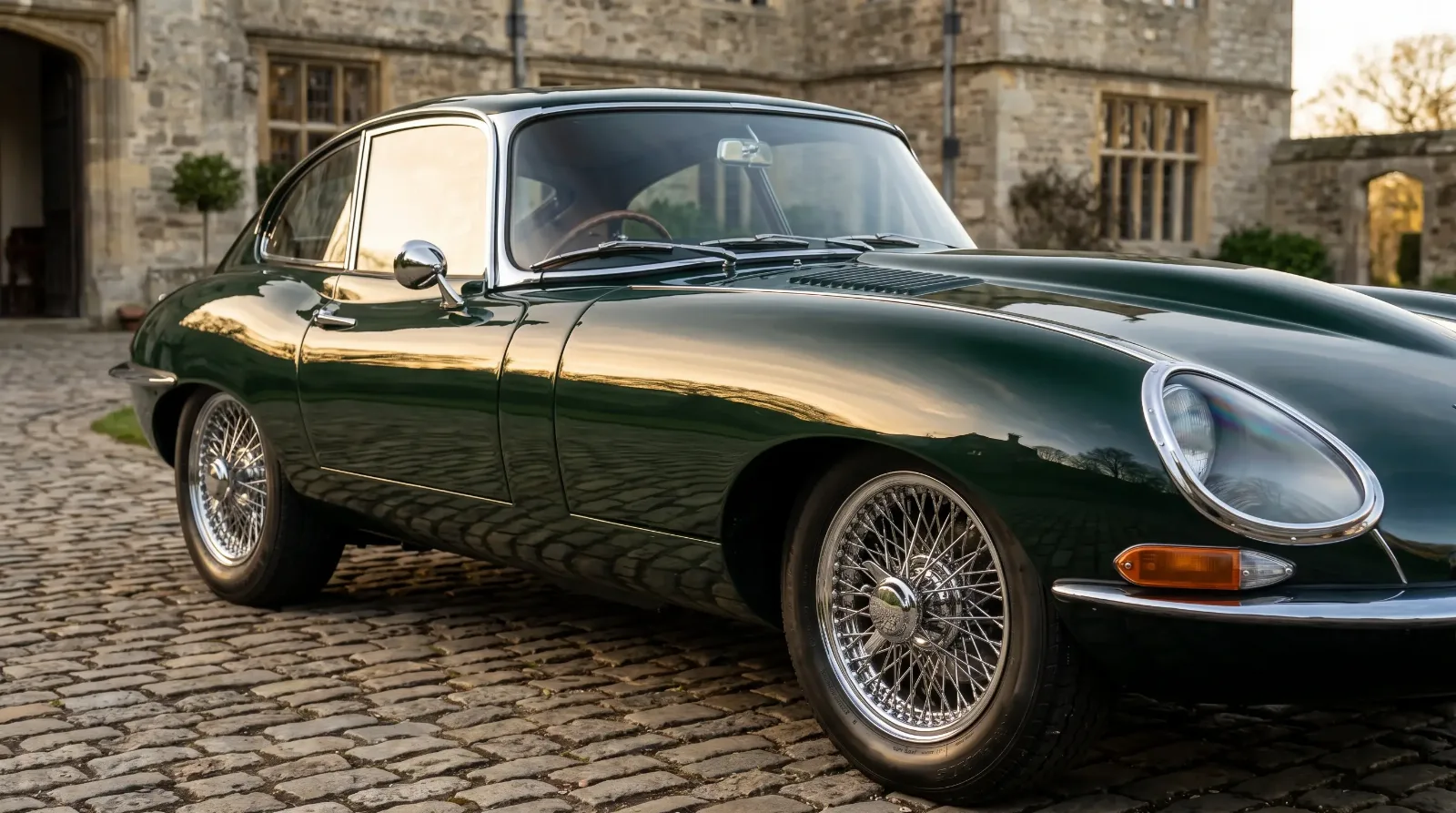
Jaguar came at the market from a different angle. William Lyons built cars that looked expensive and were not, at least not relative to what they appeared to be. The XK120 of 1948 gave buyers a genuinely fast sports car with lines that could stop a room, and it did so at a price that undercut the obvious comparisons. The saloons followed the same logic. A Mark VII or Mark IX offered wood, leather, and pace for money that bought far less presence from a domestic manufacturer.
Then came the E-Type in 1961, and the argument was effectively over. Whatever one thought of Jaguar build quality, and there was plenty to say about it, the car established that European engineering-led design could be aspirational in America on its own terms. Enzo Ferrari reportedly called it the most beautiful car ever made. Whether he said exactly that or not, the sentiment stuck because the car earned it.
"Detroit was selling the impression of luxury and doing it beautifully. Stuttgart and Coventry were selling the substance of it, and they were content to sell far fewer cars to make the point. Both approaches were valid. Only one of them changed what the next generation of American buyers expected."
Sarah Whitfield
How the conversation shifted
The change was slow and then it was permanent. Through the 1950s the imports were a minority taste, the province of coastal buyers, enthusiasts, and people who traveled enough to know what a European car felt like on a fast road. By the late 1960s that taste had moved inland and upward. The engineer, the surgeon, the architect who might once have bought a Cadillac as a matter of course now had a genuine alternative, and increasingly chose it.
What Mercedes-Benz and Jaguar did to the American luxury market was not to outsell Detroit. It was to redefine what the word covered. Luxury stopped meaning only size and softness and started, for a growing share of buyers, to mean the way a car stopped, steered, and held a line at speed. That shift set the terms for everything that came after, and Detroit spent the following two decades trying to answer it.
The coachbuilt world that defined luxury before all of this was already gone by the time these cars arrived. next: The Death of True Coachbuilt Luxury.
Related Reading
Have a
Classic Car
for Sale?
Reach thousands of serious classic car collectors across the US.
Sell It Here →
Are You a Classic Car Dealer?
List your full inventory and connect with targeted classic car buyers.
Join as a Dealer →

About the author
Sarah Whitfield
Third-generation classic car collector specializing in pre-war American and European coachbuilt automobiles. Researcher and concours enthusiast.
More in History & Heritage
Comments
Be the first to comment on this article.