
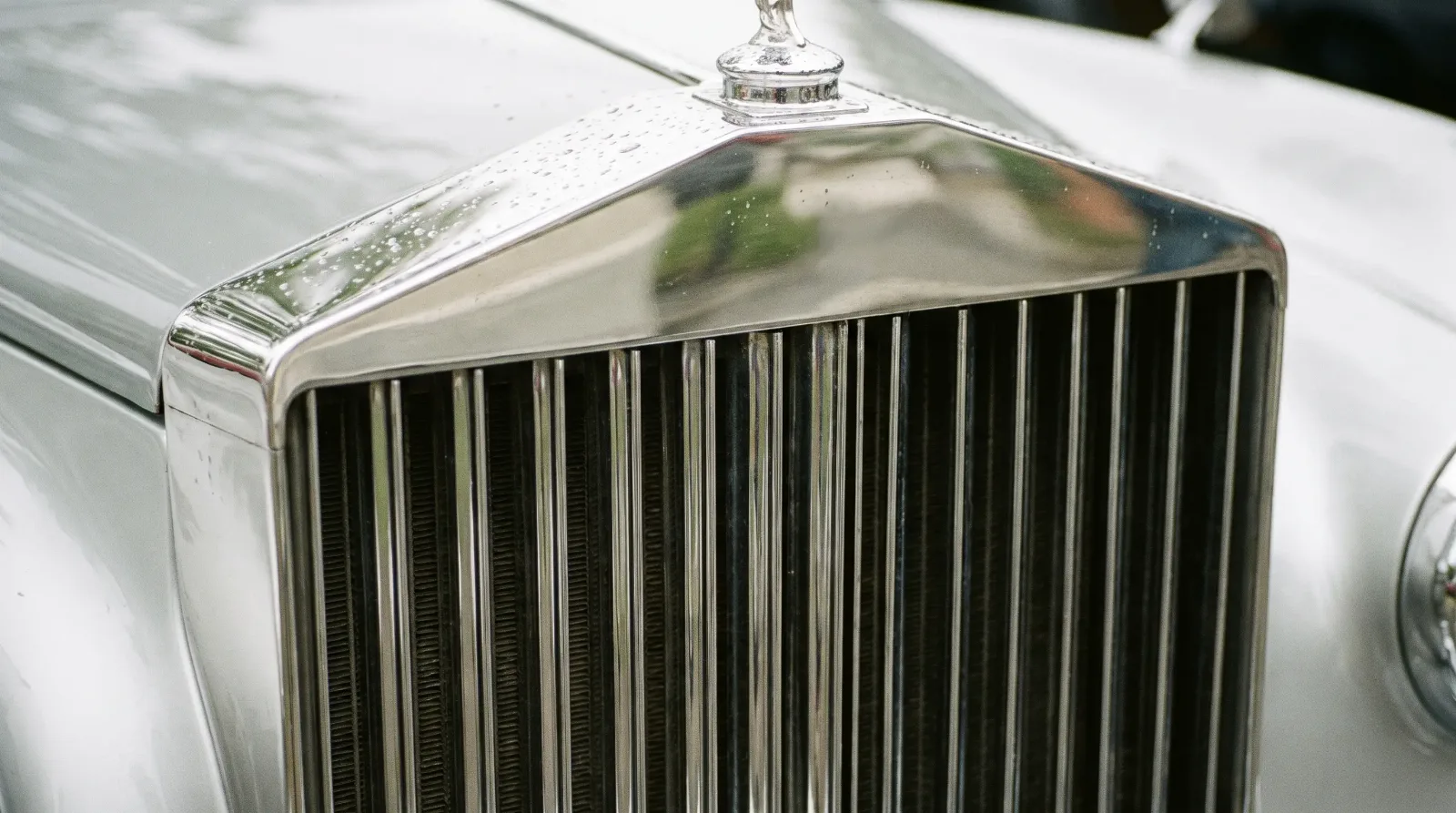
For most of the last century, Rolls-Royce and Bentley have been sister marques, built in the same factory from many of the same parts, distinguished mostly by grille and temperament. That arrangement was not planned. It began with a bankruptcy, a quiet act of corporate capture, and a decision by Rolls-Royce to absorb a rival it had come to respect. The prewar decade is where the two names became one company, and it explains why a Derby Bentley and a contemporary Rolls-Royce feel like cousins.
History & Heritage
6 min read
Rolls-Royce and Bentley's Shared Prewar Heritage
Rolls-Royce Bentley history in the prewar years: how the 1931 receivership, the Derby Bentleys, and shared engineering fused two rival British marques.
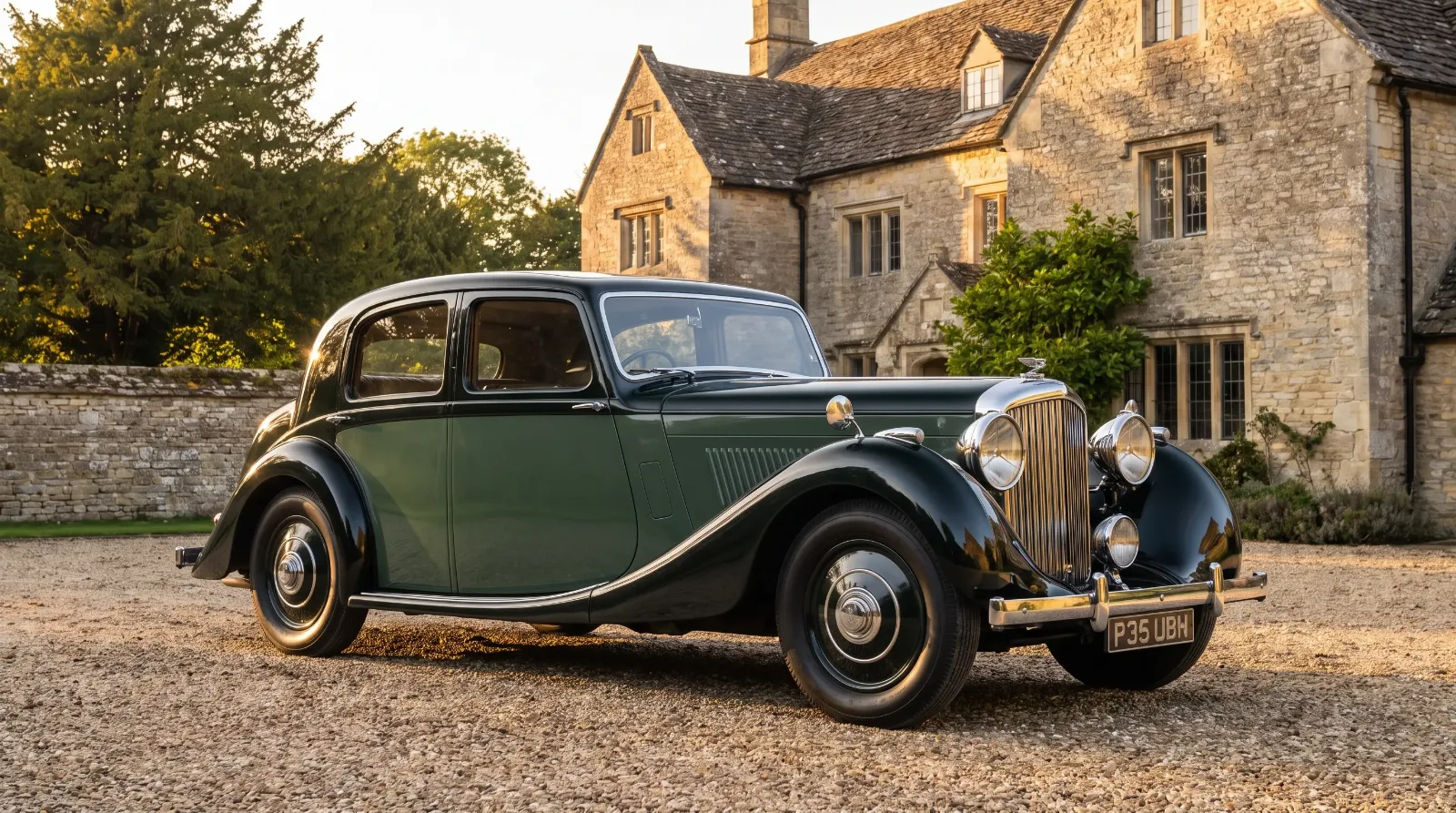
If you have been following the story so far, you know the American luxury makers built their reputations on engineering firsts and corporate hierarchy. The British approach was different: two founder-led firms, each with a distinct philosophy, that collided during the hardest years of the industry and emerged fused.
Two founders, two philosophies
Rolls-Royce was formed in 1906 from the partnership of Charles Rolls, a salesman and aristocrat, and Henry Royce, an obsessive engineer. The 1907 Silver Ghost earned the company its reputation for refinement, and the marketing claim "the best car in the world" was widely repeated rather than merely asserted. Royce built for silence and durability above all else. Speed was secondary.
Bentley Motors, founded in 1919 by Walter Owen Bentley, took the opposite view. W.O. built large, fast sporting cars and proved them at Le Mans, where the "Bentley Boys" won five times in the 1920s, including four years running from 1927 to 1930. A Bentley of that period was a racing machine dressed for the road. Where Rolls-Royce whispered, Bentley roared.
The 1931 receivership
Racing is expensive and the Depression was merciless. Bentley Motors ran short of money and went into receivership in 1931. Rolls-Royce moved to acquire it, working through a holding company so that its interest stayed hidden until the deal was done, and reportedly outmaneuvered Napier, another suitor, in the process. Bentley the man found himself an employee of the company that had bought his firm, a subordinate position he never fully accepted.
The purchase was shrewd. Rolls-Royce gained a sporting nameplate to sit below its own without diluting the senior marque, much the way the American makers used companion brands. The two names would now share engineering while keeping separate characters, at least on paper.
W.O. Bentley's contract bound him to the new owner but gave him little authority over the cars that carried his name, and he left within a few years. Henry Royce himself died in 1933, the same year the first Rolls-Royce-built Bentley appeared, so both founding engineers were gone or going just as the merged identity took shape. The character of the postwar cars owed more to the engineers who stayed at Derby than to either of the men whose names were on the badges, which is part of why enthusiasts still argue about what a "real" Bentley is.
The Derby Bentleys
The first Bentley built under Rolls-Royce ownership arrived in 1933, the 3½ Litre, assembled at the Derby works. These cars are known as Derby Bentleys, and they were marketed with the phrase "the silent sports car," a description that captured exactly what Rolls-Royce had done: taken Bentley's sporting intent and filtered it through Royce's insistence on refinement. The engine was closely related to contemporary Rolls-Royce practice.
The 3½ Litre grew into the 4¼ Litre in 1936, and a Mark V was developing when the war stopped everything in 1939, so few of that model left the factory. All of these were coachbuilt cars. Rolls-Royce and Bentley supplied a rolling chassis, and firms such as Park Ward, Vanden Plas, and Mulliner clothed them to order, which is why no two survive quite alike. A handful of the most aerodynamic Derby Bentleys, the streamlined cars built for high-speed continental touring, are among the most valuable prewar British cars of any kind today, a reminder that on a coachbuilt chassis the body maker's ambition sets the ceiling on value. The collector market treats the best-bodied examples accordingly, and browsing the current the classic luxury car story alongside period auction records shows how much the coachbuilder's name moves value on these chassis.
| Model | Years | Notes |
|---|---|---|
| Rolls-Royce Silver Ghost | 1907 onward | Established "the best car in the world" |
| Bentley Le Mans wins | 1924, 1927-1930 | Five victories, the "Bentley Boys" era |
| Bentley receivership | 1931 | Acquired by Rolls-Royce via nominee |
| Bentley 3½ Litre (Derby) | 1933-1936 | "The silent sports car" |
| Bentley 4¼ Litre | 1936-1939 | Larger Derby engine |
What the merger set in motion
The prewar fusion established the pattern that ran for the rest of the century. After the war, production moved to Crewe, and the two marques grew closer still. The Bentley Mark VI of 1946 and its Rolls-Royce Silver Wraith relative introduced factory-built standard steel bodywork, ending the era in which every car was coachbuilt to order and beginning the slow slide toward the badge-engineered pairs of later decades. The Crewe factory, built during the war to make aircraft engines, became the home of both marques and reinforced how completely their production had merged. From that point a Bentley and its Rolls-Royce twin differed mainly in radiator shell and trim, the sporting distinction W.O. had drawn now reduced to a matter of grille shape.
"A Derby Bentley is the clearest artifact of that marriage. It has W.O.'s appetite for speed and Royce's horror of noise, and the tension between those two ideas is exactly what makes the car interesting to study."
Sarah Whitfield
By the time the war ended, Bentley the marque had been a Rolls-Royce product for over a decade, and the sporting identity W.O. had built survived mostly as a grille and a temperament. The two names would not truly diverge again for two generations. The segment's story now returns to America, where the postwar boom rewrote what a luxury car was supposed to look like. Read on: next: The Postwar Luxury Boom and the “Longer, Lower, Wider” Era.
Related Reading
Have a
Classic Car
for Sale?
Reach thousands of serious classic car collectors across the US.
Sell It Here →
Are You a Classic Car Dealer?
List your full inventory and connect with targeted classic car buyers.
Join as a Dealer →

About the author
Sarah Whitfield
Third-generation classic car collector specializing in pre-war American and European coachbuilt automobiles. Researcher and concours enthusiast.
More in History & Heritage
Comments (1)
V
Vince Calabrese
3 weeks ago
Been watching this segment for two years waiting for prices to soften. Still waiting.