
For roughly the first half century of the automobile, the finest cars left the factory as bare chassis. A buyer chose the mechanical platform from Duesenberg, Packard, Rolls-Royce, or Cadillac, then sent it to a coachbuilder who wrapped it in a body built to order. LeBaron, Fleetwood, Brunn, Murphy, Rollston, and Derham in America, Park Ward and Mulliner in Britain, Figoni et Falaschi and Saoutchik on the continent. That system produced the most beautiful cars the industry ever made. Then, over a compressed span of years, it ended almost completely. The reasons were partly economic and partly a matter of how cars were built, and once both forces lined up the practice had no way to survive.
History & Heritage
6 min read
The Death of True Coachbuilt Luxury
Why true coachbuilt luxury cars vanished: the Depression removed the customers and unibody construction removed the separate chassis they were built on.
This is one chapter in the complete history of the classic luxury car, and it is the one that explains why nothing quite like those cars was ever made again.
What coachbuilding actually was
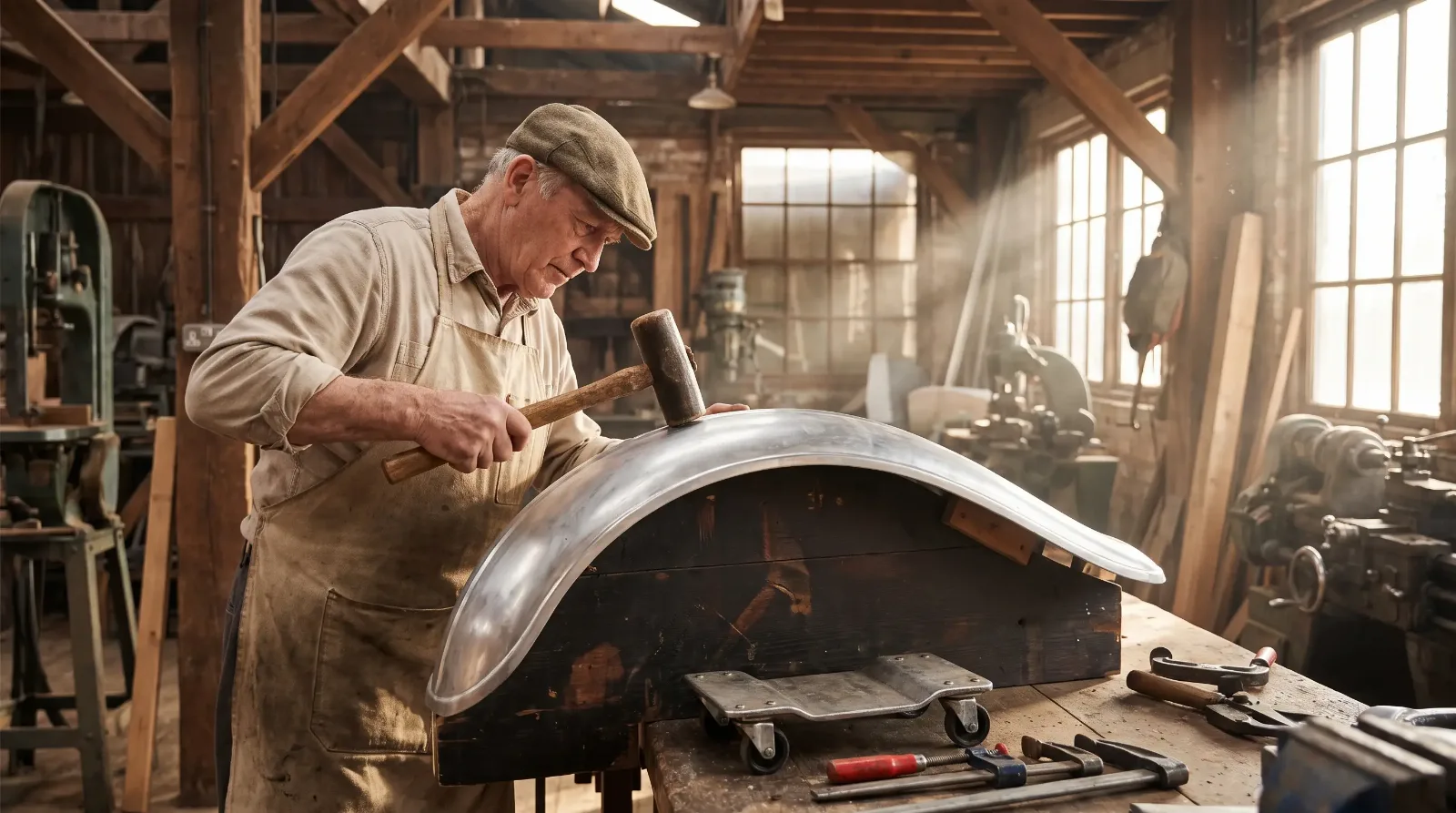
The distinction matters, because the word gets used loosely now. True coachbuilding meant a separate business, the coachbuilder, building a unique or near-unique body on a chassis supplied by a different company, the manufacturer. The chassis maker sold you an engine, frame, running gear, and firewall. Everything you saw and touched came from the coachbuilder: the body panels, the doors, the interior, the fittings. A wealthy buyer could commission a body no one else owned, specified down to the wood, the hardware, and the shape of the fenders.
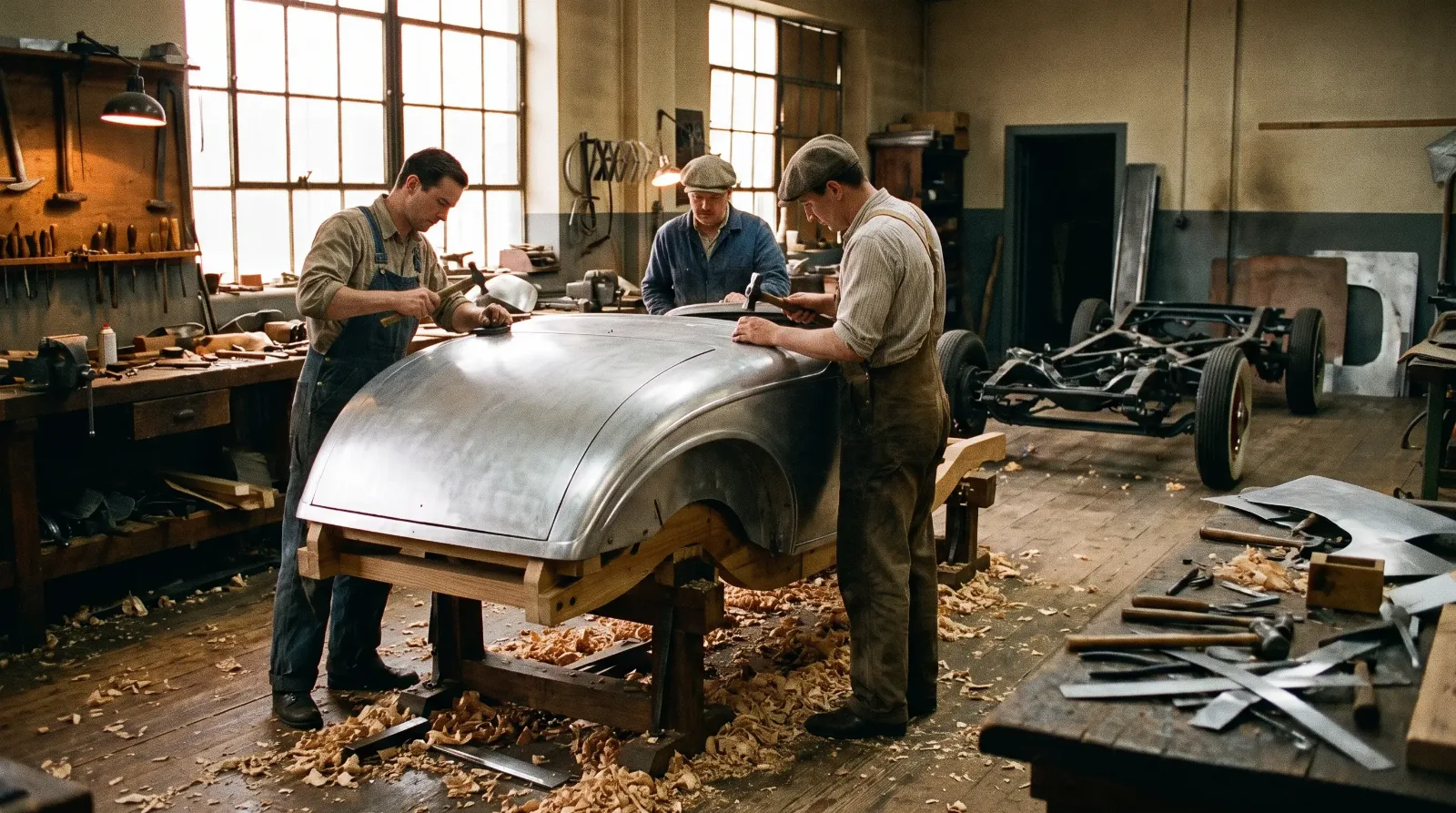
This was slow, expensive work done largely by hand. A single body could take months. The craftsmen were skilled in ways that took years to develop, hammering compound curves over wooden bucks, fitting wood framing, doing the lead work that smoothed the joints. The economics only worked when there were enough buyers rich enough to pay for it, and enough chassis makers willing to sell rolling platforms without bodies.
The Depression removed the customers
The first blow was financial. The coachbuilt car was a product of concentrated prewar wealth, and the Depression destroyed a great deal of that wealth outright. The men who commissioned Duesenbergs and custom-bodied Packards in 1929 were, in many cases, not commissioning anything by 1933. The market for a hand-built body priced like a house simply thinned out.
The chassis makers felt it first and worst. Duesenberg ended production in 1937 as the Cord empire collapsed. Pierce-Arrow closed in 1938. Marmon, maker of a remarkable V16, was gone by 1933. Every one of these firms had been a customer base for the coachbuilders as much as a rival, and as they disappeared the supply of premium bare chassis dried up alongside the demand for custom bodies.
Unibody construction removed the chassis
The second blow was structural, and it was the one that made recovery impossible. Coachbuilding depended on the separate body-on-frame layout. You needed a self-supporting chassis that could roll and drive without a body, so the coachbuilder had something to build on. Unitary construction, the monocoque body where the structure and the skin are one welded steel shell, does away with the separate frame entirely. There is no rolling chassis to send anywhere. The body is the structure.
Once manufacturers moved to unibody construction, the coachbuilder had nothing to work with. You cannot hand a custom body shop a monocoque and ask for something different, because the shell you would replace is holding the whole car together. Mass production of pressed-steel bodies did the rest. The Pressed Steel Company and its equivalents could stamp a complete body in minutes for a fraction of what a hand-built one cost, and to a consistency no hammer-and-buck shop could match.
Europe held on, then let go too
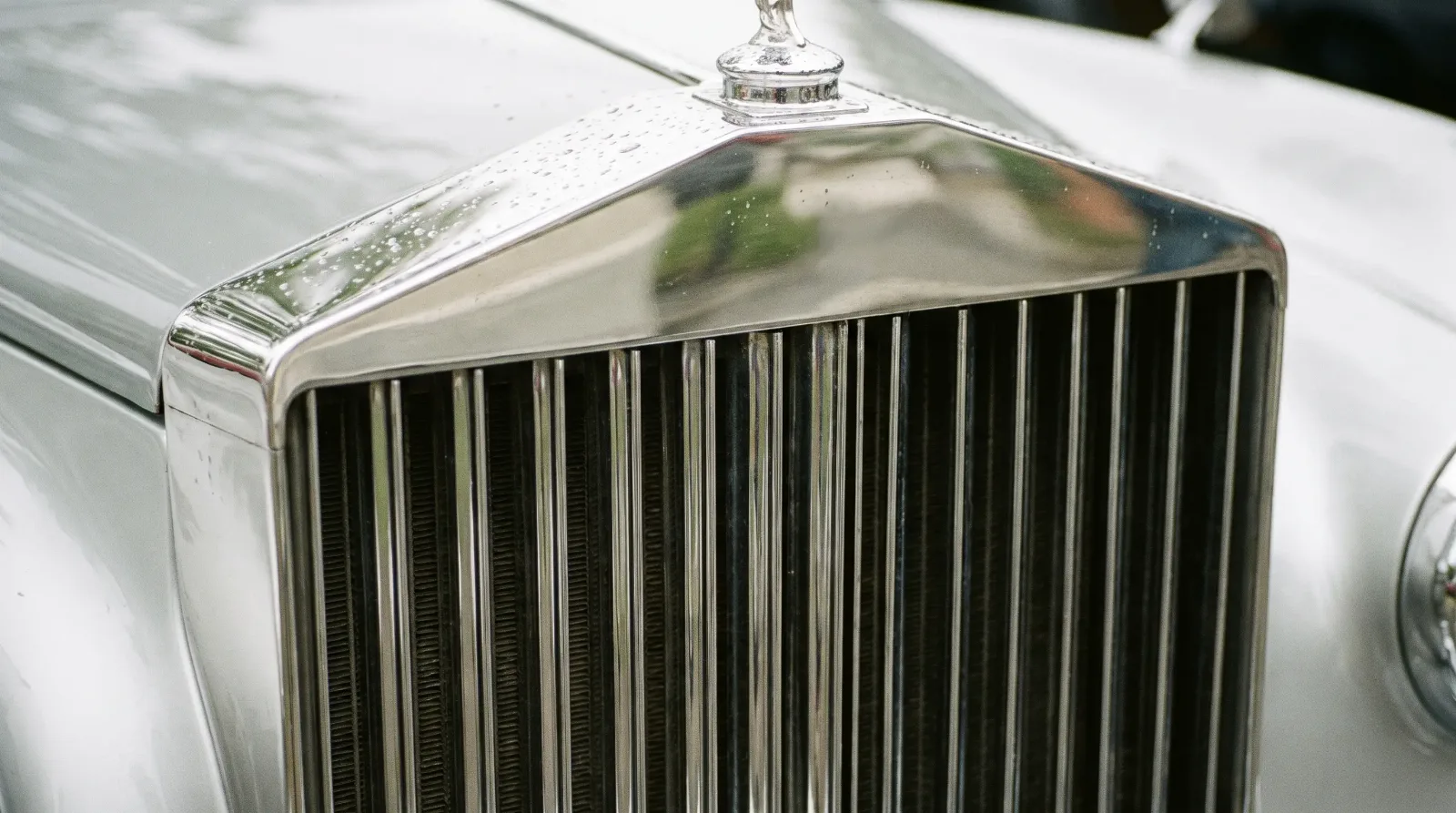
The practice lingered longer in Britain than in America, mostly because Rolls-Royce and Bentley kept supplying separate chassis after Detroit had abandoned the idea. Through the 1950s a buyer could still order a Rolls-Royce or Bentley chassis and send it to Park Ward, H.J. Mulliner, or James Young for a bespoke body. The Silver Cloud, introduced in 1955, was among the last cars to offer this in any meaningful volume, and even then most buyers took the standard steel body.
The end came with the Silver Shadow in 1965. It was a monocoque, and with it the last mainstream separate-chassis luxury car disappeared. Rolls-Royce coachbuilding did not vanish, but it changed into something else, a matter of specially trimmed variants of a fixed structure rather than genuinely different bodies on a common frame. A handful of firms, Derham in Pennsylvania among them, carried on into the 1960s doing conversions and limited work, but the world that had sustained them was already gone.
"People assume the coachbuilders were killed by taste, that the public simply stopped wanting bespoke bodies. That is not what happened. The customers were removed by the Depression and the chassis was removed by the engineers. Once there was no frame to build on, no amount of demand could have brought the craft back. The car itself had changed shape."
Sarah Whitfield
What was lost, and what it means for collectors
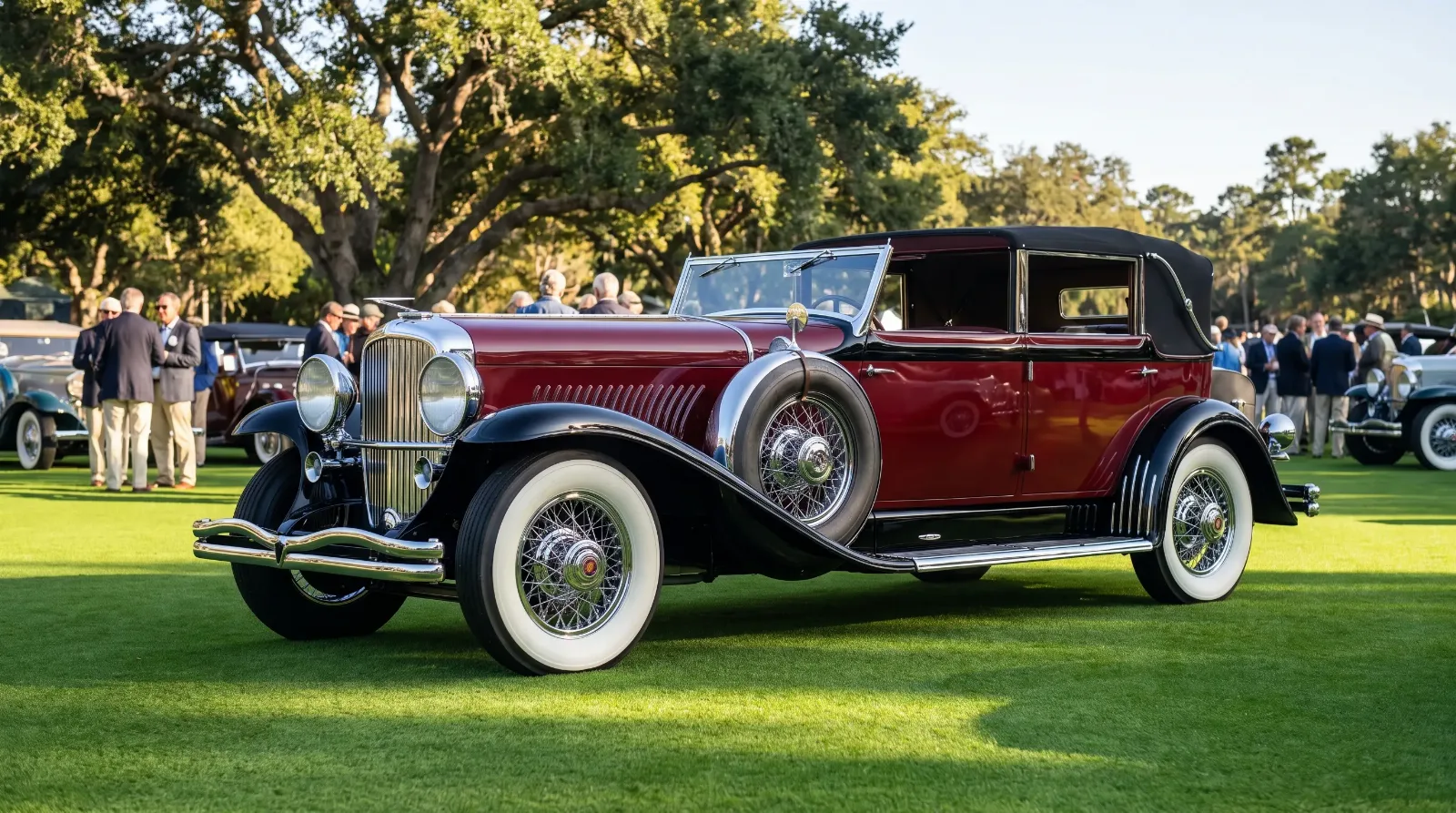
The result is that genuinely coachbuilt luxury cars occupy a fixed and shrinking population. Nothing new will ever be added to the category in the original sense, which is a large part of why the surviving examples command the money they do. A Murphy-bodied Duesenberg or a Figoni et Falaschi teardrop is not just rare. It represents a way of building cars that cannot be repeated, because the industrial conditions that made it possible no longer exist.
Modern manufacturers use the word coachbuilt again in their marketing, and they are not entirely wrong to, since a few builders will still craft a unique body over a modern platform for enormous sums. But it is a revival, not a continuation. The unbroken tradition ended when the separate chassis did. For the full arc of how the segment reached this point, see the complete classic luxury car story. And for a look at who actually owned these cars when they were new, next: Famous Owners of Classic Luxury Cars Through History.
Related Reading
Have a
Classic Car
for Sale?
Reach thousands of serious classic car collectors across the US.
Sell It Here →
Are You a Classic Car Dealer?
List your full inventory and connect with targeted classic car buyers.
Join as a Dealer →

About the author
Sarah Whitfield
Third-generation classic car collector specializing in pre-war American and European coachbuilt automobiles. Researcher and concours enthusiast.
More in History & Heritage
Comments (1)
B
Bobby Szymanski
3 months ago
The part about rebuilding vs. replacing is important. In some segments, period-correct rebuilds are valued over replaced-with-original components. Know your market.