
A car appraisal is an opinion with a number attached, and other people act on that number. An insurer writes an agreed-value policy on it. An estate divides assets by it. A donor files it with the IRS. When the number turns out to be wrong, or someone believes it is, the appraiser is the one who gets the letter. Appraiser E&O insurance, short for errors and omissions, is the policy that answers that letter. This piece covers how it works, what it costs, and the uncomfortable fact that almost nobody publishes what it costs for car appraisers specifically.
Ownership & Lifestyle
8 min read
Errors and Omissions Insurance for Car Appraisers
How appraiser E&O insurance works for car appraisers: claims-made policies, retroactive dates, tails, and why published premiums are real estate figures.
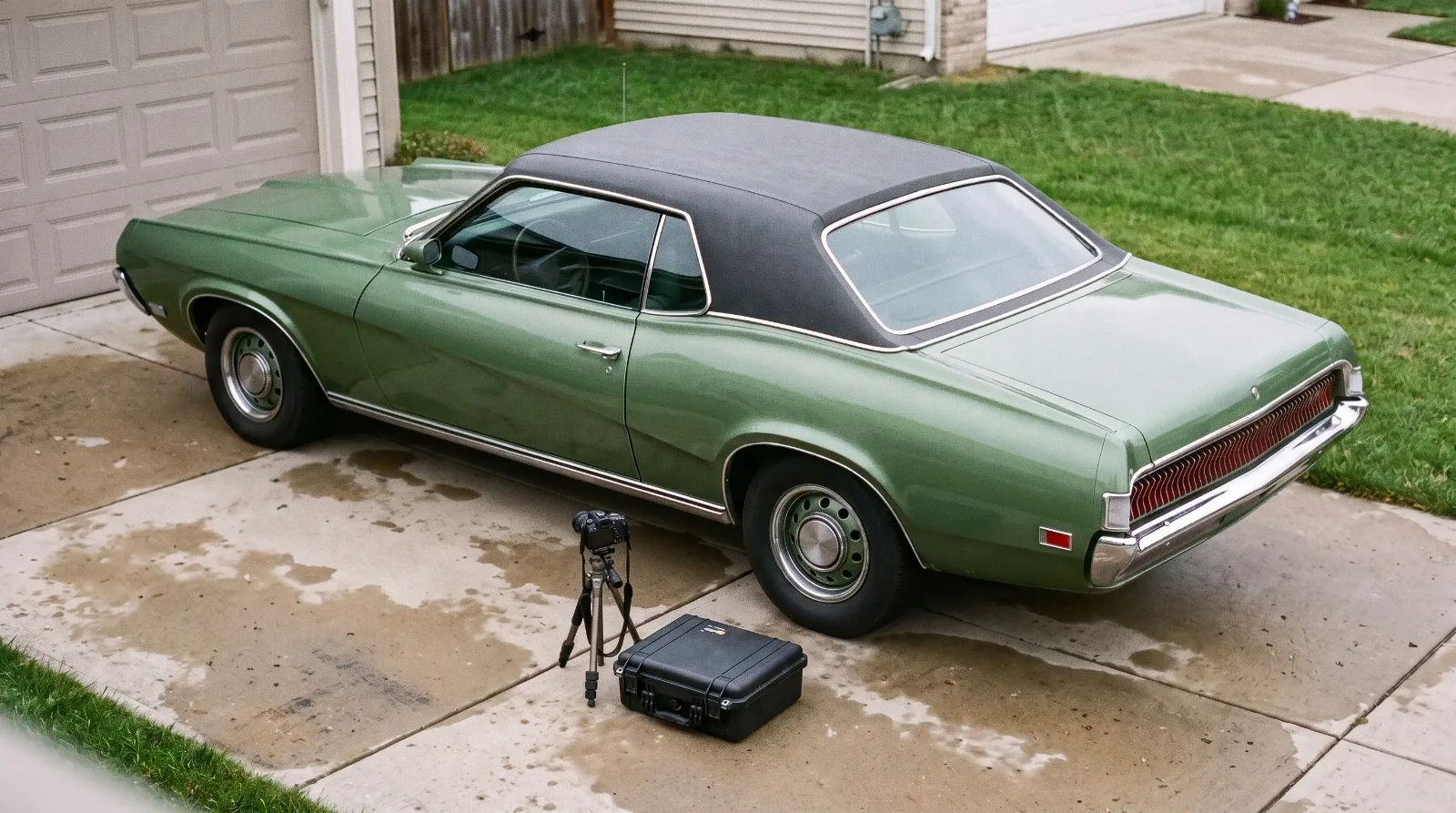
If you are still deciding whether to start working as a classic car appraiser, put this policy on the list next to the credential and the report template. It is a cost of doing business, not an optional extra.
What appraiser E&O insurance covers
E&O is professional liability. The Hartford describes appraiser E&O as covering claims of negligence, inaccurate advice, misrepresentation, or failure to protect confidential information. A valuation mistake is the obvious example. It pays defense costs and settlements when a client, or a third party who relied on your report, says your work cost them money.
Look at where car appraisals go and the exposure is clear. The International Automotive Appraisers Association lists the uses its members see: buying and selling, stated or agreed value insurance, legal disputes, charitable contributions, estates and disputed total-loss values. Every one of those has a counterparty with money at stake. A total-loss dispute is adversarial by design. A donation appraisal goes to the IRS. An estate valuation can set one heir against another.
E&O does not cover everything. It is not general liability, so it does not pay when a client trips over your camera case in their garage. The Hartford notes that appraisers may also need general liability, commercial property, workers' compensation and cyber cover. And E&O is not a defense against fraud. It covers mistakes, not intent.
Claims-made policies, retroactive dates and tails
This is the part most new appraisers get wrong, because it runs against how people think about car or home insurance.
Appraiser E&O is usually written on a claims-made basis. OREP, a broker that writes real estate appraiser E&O, explains it this way: the policy covers claims made while the policy is in force, for work done on or after the retroactive date, which is normally the date of your first policy. Let the policy lapse and you lose coverage for everything you did before. A new policy with a new retroactive date will not reach back to cover it.
| Term | What it means | Why it matters |
|---|---|---|
| Claims-made | The policy in force when the claim arrives responds, not the one in force when you did the work | You need continuous coverage for as long as old reports can be challenged |
| Retroactive date | The earliest work date the policy covers, usually your first policy's start date | Keep it when you switch carriers; a lapse resets it |
| Prior acts | Cover for work done before the current policy started | OREP warns some low-cost "insurtech" policies leave it out |
| Extended reporting period (tail) | Cover for claims that arrive after you stop practicing | A retiring appraiser buys one unless the policy gives it free |
My read: the retroactive date is the most valuable thing you own in this policy. Price shopping that breaks it is false economy. If a cheaper carrier will not honor your existing retroactive date, the saving is buying you a gap.
What appraiser E&O insurance costs, and what we could not find
Plainly: we found no published premium, limit or underwriting rule for collector car, automotive or personal property appraisers. Not from the trade associations, not from the brokers that serve them. The only rate card we could read is for real estate appraisers.
That card, an OREP advertisement carried by Working RE (undated, read 2026-10-19), quotes individual appraiser E&O at $650 a year for $1,000,000 per claim and $2,000,000 aggregate in most states, $573 at $500,000/$1,000,000, and $501 at $300,000/$600,000, with a standard deductible of $500 per claim and $1,000 aggregate. It says rates vary by state and that trainees qualify. An older OREP card in the same magazine listed $590 at the top limit, so treat any figure as a snapshot.
Treat those numbers as an order of magnitude, nothing more. Real estate appraisal is a much larger, state-licensed field. Car appraisers are a small pool, and the values at stake run from a driver-quality sedan to a car worth more than the house. A carrier may price that very differently. The Hartford lists the factors that move the premium: years of experience, claims history, deductible and whether you add prior-acts cover.
For inspectors, a generic start-up guide for pre-purchase inspection businesses puts first-year business insurance at $600 to $2,500 and names E&O, general liability and commercial auto (if a vehicle is used) as the lines needed. That is a total for several policies, not an E&O quote.
Premiums are a real cost, and they belong in your pricing. The arithmetic of how appraisers set fees has to carry the policy, the continuing education and the hours. Coverage terms vary by state and by carrier, so get quotes in writing and confirm terms with a licensed broker. This is not legal advice.
Gaps a car appraiser or inspector should ask about
Three questions are worth putting to any broker, because our search turned up no published answer to them.
First, the road test. An inspector who drives a client's car is in physical control of someone else's property. E&O covers professional mistakes, not a fender bender. Ask whether your general liability or auto policy, or a hired and non-owned auto endorsement, responds when you are driving a client's car. We found no source that settles it.
Second, limits. No source we read says what limits clients or states expect a car appraiser to carry. Personal property appraisers are not licensed by any US government agency, so there is no licensing board setting a minimum. The practical test is the most valuable car you will appraise and the most expensive dispute it could start.
Third, association programs. Some appraiser associations point members to arranged insurance programs, but the pages we tried were blocked or carried no figures. Ask the association directly and compare the terms against an open-market quote.
"A valuation is only as defensible as the file behind it. Insurance pays for the defense. The file decides whether you need one."
David Mercer
Lowering the odds of a claim
The cheapest claim is the one never made. Insurers price experience and claims history, so the habits that keep you out of trouble also show up in the premium over time.
The IRS rules deserve their own line, because donation appraisals are where the paperwork is strictest. The appraisal must be signed and dated no earlier than 60 days before the contribution, and the appraiser must meet the IRS "qualified appraiser" test: a recognized designation, or minimum education plus two or more years valuing that type of property. A report that misses a rule like that is exactly the kind of error an E&O policy exists for. Better to never need it.
My opinion, for what it is worth: buy appraiser E&O insurance before the first paid report, keep it continuous, and price it into every assignment. The market for car appraisal is small, the published data is thin, and the claims arrive late. Those are three reasons to be conservative, not one reason to skip it.
Sources and notes
- The Hartford: errors and omissions insurance for appraisers (read 2026-10-19)
- Working RE / OREP: three dangerous insurance mistakes appraisers should avoid (claims-made, retroactive date, tail)
- Working RE: OREP individual appraiser E&O rate card, real estate appraisers (undated, read 2026-10-19)
- International Automotive Appraisers Association: FAQs and appraisal uses
- IRS Publication 561: qualified appraisals, timing and fee rules (rev. 12/2025)
- ZenBusiness: starting a pre-purchase inspection business, cost estimates (updated 2026-07-28)
Related Reading

Have a
Classic Car
for Sale?
Reach thousands of serious classic car collectors across the US.
Sell It Here →
Selling a classic? Here's how: compare the places to sell classic cars
Are You a Classic Car Dealer?
List your full inventory and connect with targeted classic car buyers.
Join as a Dealer →
#pre-purchase inspection
#appraiser e&o insurance
#errors and omissions
#car appraiser
#professional liability
#claims-made policy

About the author
David Mercer
Classic car market analyst with two decades of experience tracking collector car valuations, auction results, and investment trends.
More in Ownership & Lifestyle

Comments
Be the first to comment on this article.