
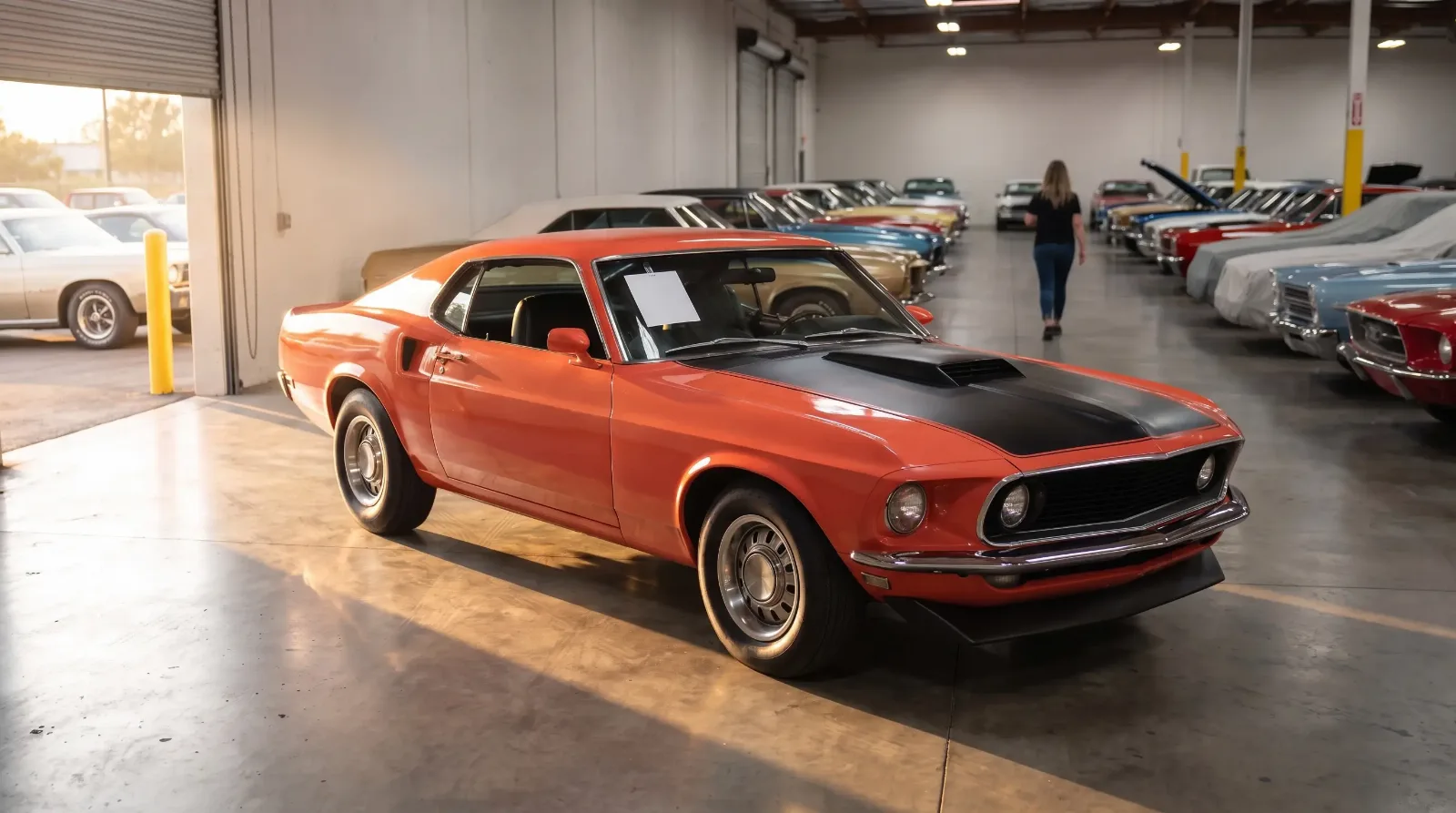
Two 1969 Ford Mustang Mach 1s can sit side by side on the same showroom floor, same color, same asking price, and be two different transactions. One belongs to the dealer. The other belongs to a man three counties away who has agreed to let the dealer sell it for a commission. Buying a consigned classic car changes who holds the title, who answers your offer, where your deposit sits and how much anyone in the building really knows about the car. None of that shows up in the photos. All of it affects risk.
Ownership & Lifestyle
8 min read
Consigned Car or Dealer-Owned Stock: What It Means for the Buyer
Consigned or dealer-owned? Who holds the title, who answers your offer and where your deposit sits when the car is consigned.
The consignment question is one step in a longer process, and the full walkthrough covers the rest. This piece stays with the consigned car and what it means for the person paying for it.
How to tell whether the car is consigned
Ask. It is the simplest question in the transaction and it is often not answered in the listing. Some dealers label consigned cars clearly. Others present stock and consignment the same way, and a few business models are consignment by design. WeBe Autos in Riverhead, on Long Island, for example, describes itself as a "marketing agent, not a dealer"; the cars it lists stay owned by their sellers, and it sets up appointments between buyers and owners. Classic Car Deals in Cadillac, Michigan, runs nationwide online consignment in which the car stays with the seller until it sells and the seller sets the price. In both cases you are buying from a private owner through an intermediary, whatever the website looks like.
Other signals help. A car shown at an address that is not the dealer's, a dealer who has to "check with the owner" on basic questions, or a title that is not in the dealer's name all point to consignment. Ask the dealer to state the ownership in writing, alongside the deposit terms. When you browse the Classic Cars Arena nationwide dealer directory, note which businesses describe themselves as consignment or brokerage houses before you call, so the first conversation starts in the right place.
| Issue | Consigned car | Dealer-owned stock |
|---|---|---|
| Title holder | The private owner | The dealer |
| Who sets the floor price | The owner, under the consignment agreement | The dealer, based on its own cost |
| Who answers your offer | The owner, relayed by the dealer | The dealer directly |
| History knowledge | What the owner has told the dealer | What the dealer learned when it bought the car |
| Where the deposit goes | Dealer account, trust account or the owner, depending on the agreement | Dealer account |
| Timing risk | Owner signature, lien payoff, owner changing his mind | Mostly the dealer's own paperwork |
| Main negotiating lever | Time left on the agreement, the owner's motivation | Days in inventory, the dealer's carrying cost |
Title, ownership and who signs
On dealer stock, the dealer holds the title or is entitled to it, and it signs the car over to you. On a consigned car, the owner holds the title. Depending on the state and the agreement, the owner may sign the title directly to you, or the dealer may handle the transfer under the consignment agreement, sometimes with a power of attorney from the owner. Which routes are allowed depends on state title rules, so ask which one this sale will use. What you need to know before you send money is which one applies, and whether the dealer has the title, or a copy of it, in the file today.
Ask for a photo of the front of the title with the owner's name visible and compare the VIN to the car. Ask whether there is a lien. An owner with a loan on the car cannot deliver a clean title until the lender is paid and releases it, which can add days or weeks. A lien is not a reason to walk away. It is a reason to get the payoff handled through the dealer or an escrow, so your money clears the lien before the balance goes to the owner.
Negotiating through an absent owner
The owner decides, and you will rarely speak to him. Every offer goes through the dealer, who has an interest in closing but not in the size of the discount, since a commission of 5% on a lower price is only slightly smaller than 5% on a higher one. That arithmetic cuts in your favor. The dealer will usually carry a reasonable offer to the owner and may advise the owner to take it.
What moves an owner is different from what moves a dealer. A dealer cares about days in inventory and floor-plan interest. An owner cares about the agreement and his own plans. Consignment agreements commonly run 60 to 90 days, so a car near the end of its term belongs to an owner who is about to either renew, pay to move the car, or take it home unsold. Ask how long the car has been listed. Bring sold comparables rather than asking prices, and bring inspection findings with repair estimates. A specific, documented offer is easier for the dealer to sell to the owner than a round number.
Deposits, funds and fees on both sides
The single most important question on a consigned car is where your money goes. Some houses route the buyer's funds through their own account and pay the owner after closing. Others have the buyer pay the owner directly. Classic Car Deals lists the first model: a deposit takes the car off the market (refundable if you inspect it and walk away, non-refundable if you buy without an inspection), the buyer sends funds to Classic Car Deals, and the company pays the seller, who then sends the title once the money has cleared. That arrangement puts one accountable business in the middle of the money, which is what you want.
Ask whether deposits and sale proceeds are held in a separate trust or escrow account rather than the dealer's operating account. Some states regulate how dealers handle consignment sales and how quickly the owner must be paid. California, for example, requires a written consignment agreement and payment to the owner within 20 days of the sale. Elsewhere practice varies, and the risk that matters to you is a dealer that collects your balance and then fails to pay the owner, leaving the title stuck with someone you never met. Get the deposit terms in writing: amount, hold period, refund conditions, who holds the funds and who will sign the title. The same questions apply to fees. On a consigned car, confirm in writing that the price you agreed is the price you pay, apart from tax and government charges.
What to ask before buying a consigned classic car
The dealer's knowledge of a consigned car is borrowed. It knows what the owner told it, plus whatever it saw when the car arrived. That is not dishonesty, but it limits what the dealer can stand behind. Ask the dealer to tell you which statements in the listing come from the owner and which it has checked itself. Ask whether you can speak to the owner directly, even briefly, about history and maintenance. Many owners are glad to, and a short call often tells you more than the listing does.
Then cover the timing. Ask how quickly the owner can sign once the deal is agreed, whether the owner is reachable this week, and what happens to your deposit if the owner withdraws the car. Owners do change their minds, especially when a strong offer makes them wonder whether they priced the car too low. The agreement between dealer and owner usually governs whether he can, and you are entitled to ask what it says on that point.
"With a consigned car you are buying from someone you have not met, through someone who does not own what they are selling. That is workable. It just means the paperwork has to do the work that trust would otherwise do."
Marcus Feld
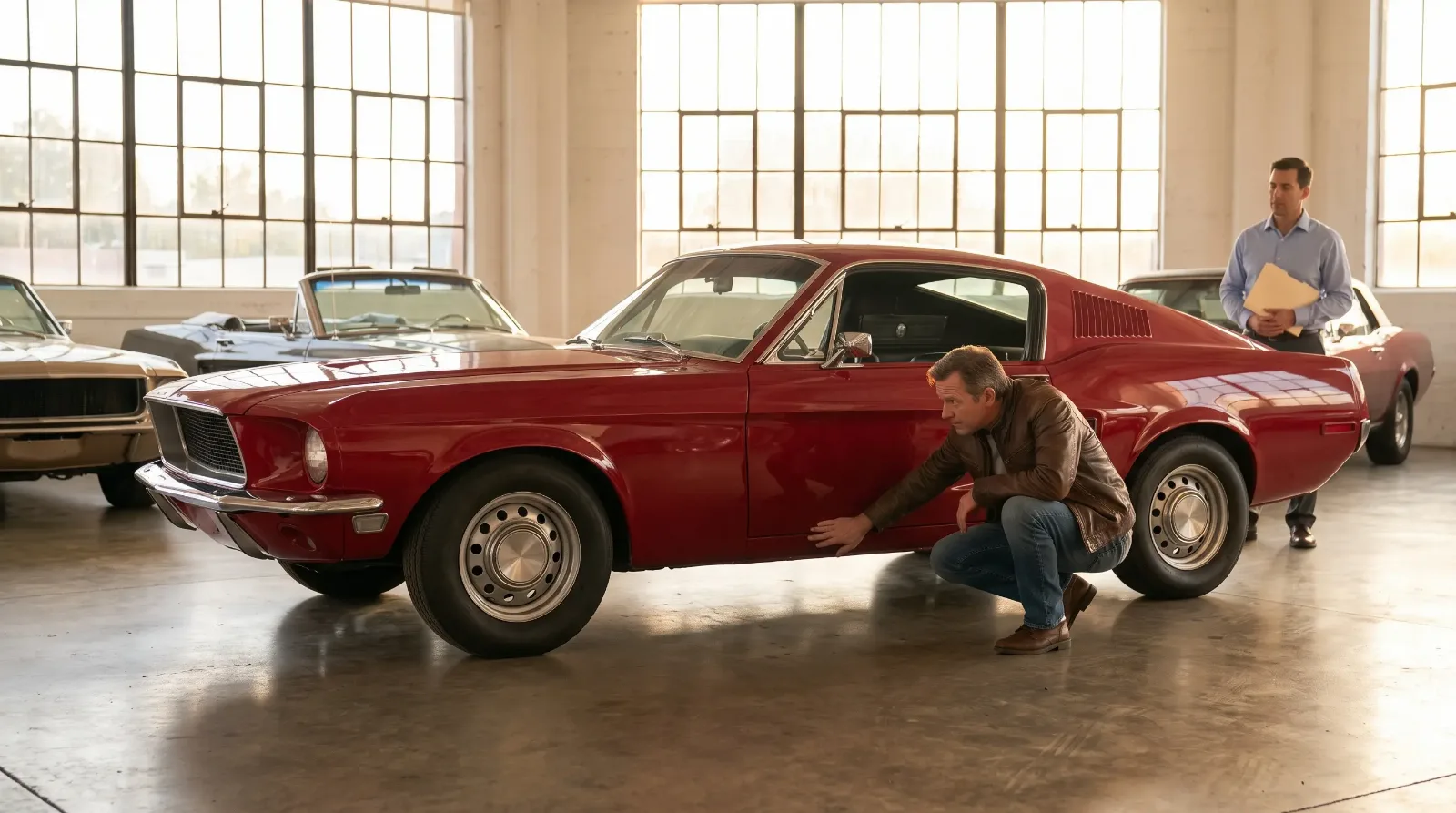
None of this makes consignment worse than stock. A well-run consignment house often has a lower margin built into the price, and an owner with a deadline can be easier to deal with than a dealer with patience. When you look through classic cars for sale from dealers, treat the ownership question as part of the description. If the car is close enough to see, plan a buying trip to the showroom and ask these questions face to face, with the title copy in your hand.
Sources and notes
Related Reading
Have a
Classic Car
for Sale?
Reach thousands of serious classic car collectors across the US.
Sell It Here →
Selling a classic? Here's how: the best sites to sell a classic car
Are You a Classic Car Dealer?
List your full inventory and connect with targeted classic car buyers.
Join as a Dealer →
#classic car dealers
#consignment
#title transfer
#negotiation
#deposits
#buying a consigned classic car

About the author
Marcus Feld
Accredited collector-car appraiser who reads the market through hammer prices, condition tiers and risk.
Find a classic car dealer near you
We profile classic car dealers across the United States: address, phone, specialties and the cars each one has for sale. Start with your state:
More in Ownership & Lifestyle
Comments
Be the first to comment on this article.