
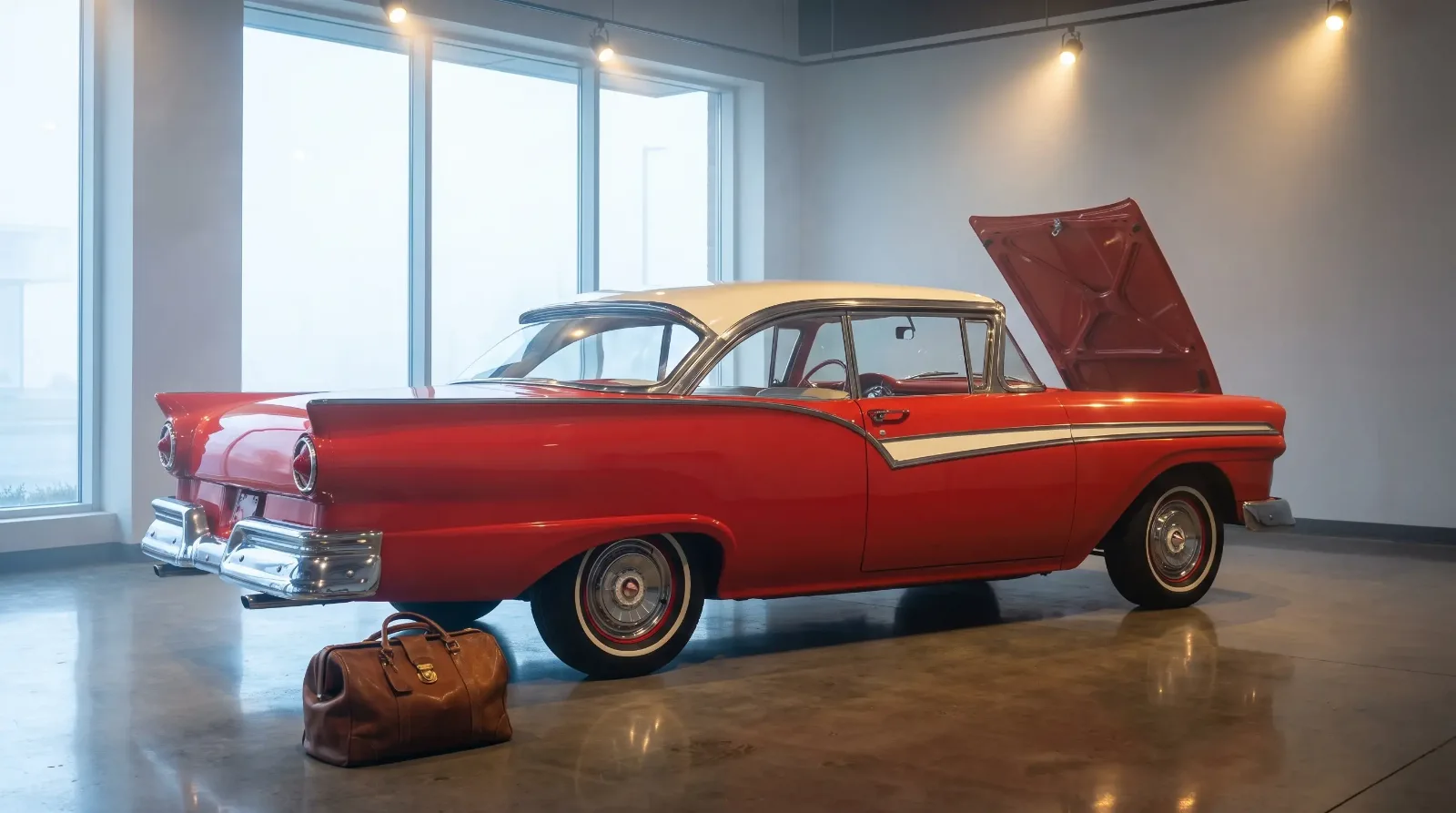
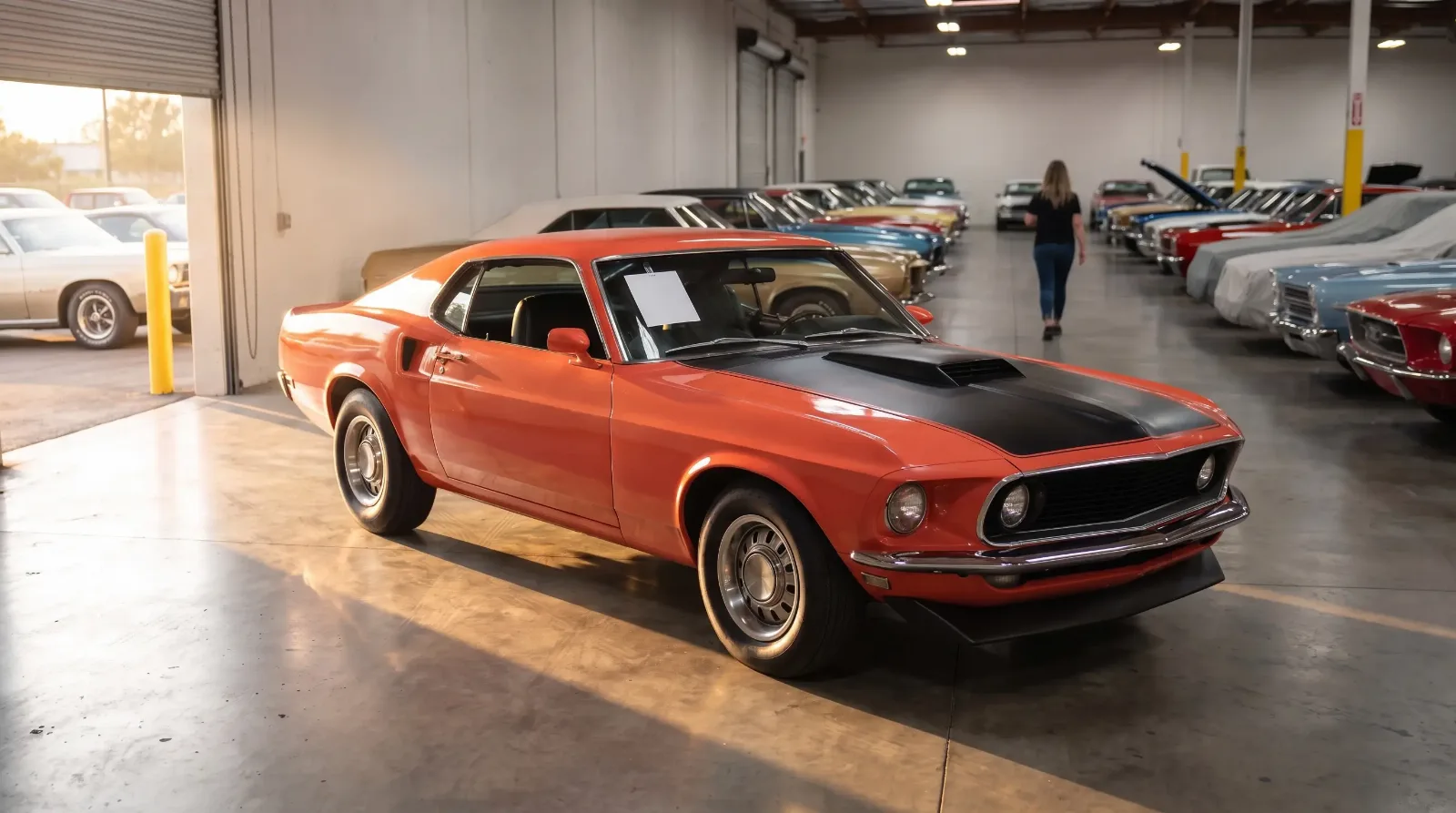
She had flown in on the first morning flight and taken a cab straight from the airport, and the 1957 Ford Fairlane 500 was waiting under the showroom lights exactly where the photos had put it, two-tone paint catching the glass of the front windows. The salesman had the hood up already. The engine was warm to the touch. She noticed that before she noticed anything else, and it changed the whole morning. Visiting a classic car dealer is the best way to learn the truth about a car, but only if the visit is planned so the car cannot hide anything, and so you are not deciding with an airline ticket burning a hole in your judgment.
Ownership & Lifestyle
7 min read
Planning a Buying Trip to a Classic Car Showroom
How to plan a buying trip to a classic car showroom: cold start, test drive, what to bring, walking away and getting the car home.
The trip is one piece of a larger process, from vetting the dealer to paying and titling the car, and our guide on how to buy a classic car lays that out in order. This article is about the day itself, and the days just before and after it.
Before you go: the appointment and a cold engine
Book a specific time and confirm it the day before. Many classic dealers keep cars in a back building or at an off-site storage lot, and some, especially brokers and consignment houses, show cars by appointment only because the cars live with their owners. If you are shortlisting from classic car dealers near you, a drive of a couple of hours lets you see two or three cars in one day, which is worth more than any single listing.
Then make one request in writing: ask the dealer not to start or move the car for at least twelve hours before you arrive. A cold engine tells you things a warm one will not. Hard starting, a lifter tap that fades after a minute, blue smoke on startup, a choke that does not work. A dealer who agrees and then greets you with a warm engine has told you something too, even if the explanation is innocent.
Use the days before the trip to settle the paperwork side. Ask for photos of the title and any documentation file, so you are not reading a build sheet for the first time under fluorescent light. Line up insurance so the car can be covered the day you buy it. Know how you would pay a deposit and the balance, and know what the dealer's deposit policy says before you sit across from anyone. A short written list of questions to ask the dealer keeps the conversation on the deal rather than on the paint.
What to bring to the showroom
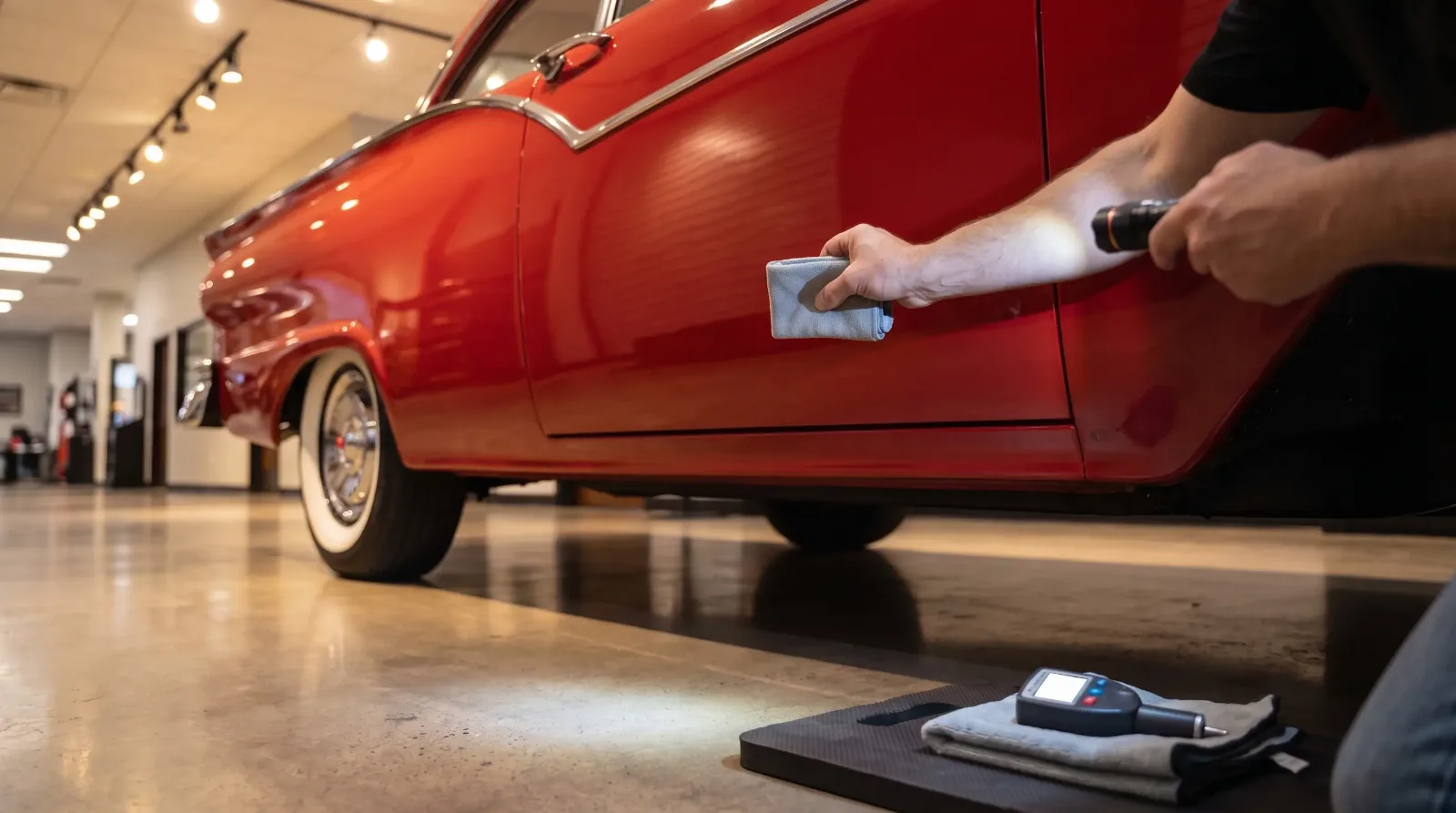
The kit is small and fits in a carry-on bag. What matters more is the person you bring. A friend who knows the model, or a hired inspector who meets you there, sees the car without the haze of wanting it. If you cannot bring either, plan to send an inspector after the visit and treat your own look as the first filter, not the final word.
At the showroom: cold start, drive, underside and paperwork
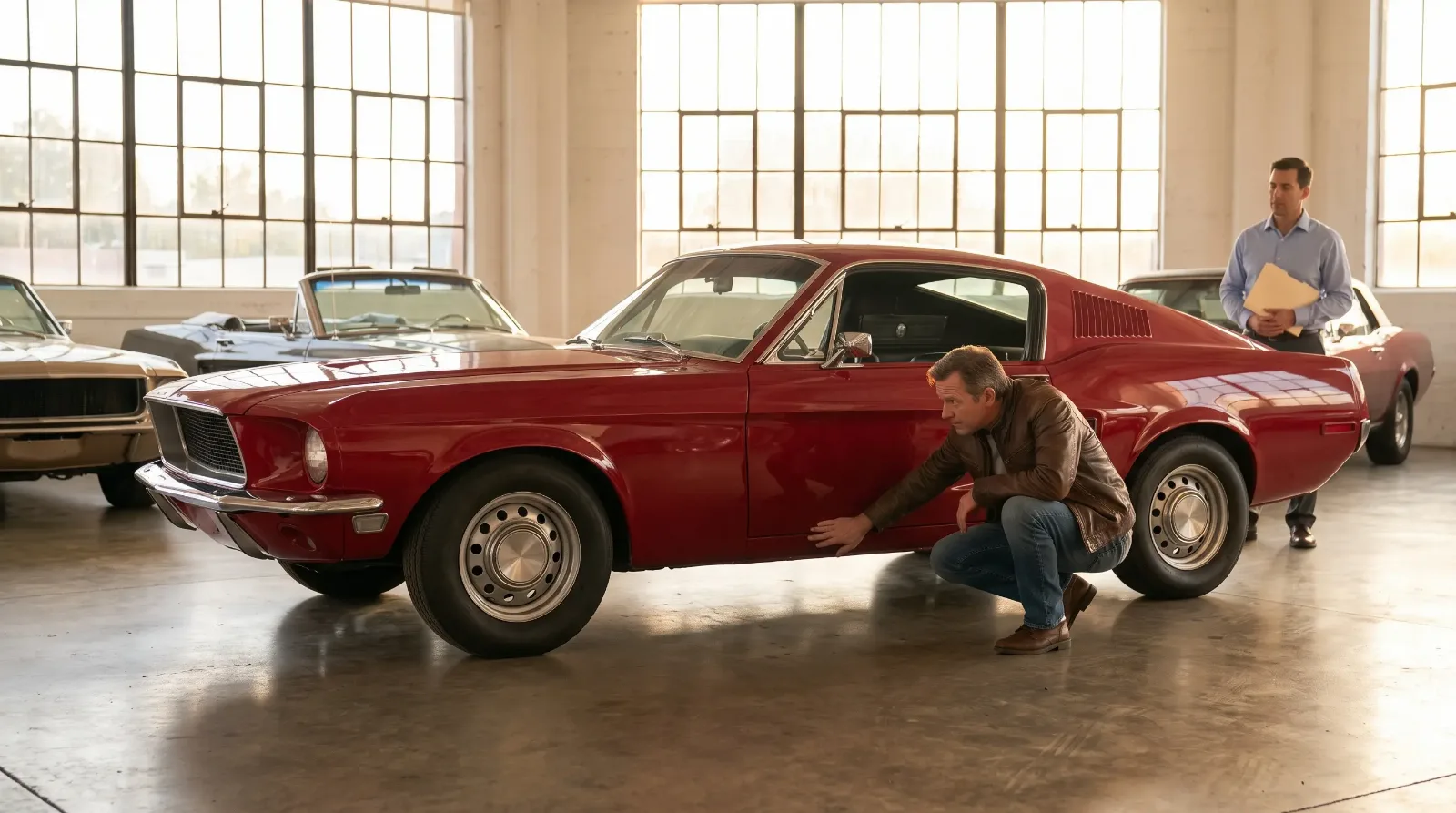
Start with the cold start, before anything else, while the dealer is still making coffee. Watch the exhaust, listen to the first thirty seconds and look at the gauges as they come up. Then walk around the car in daylight if you can, outside the showroom. Paint that glowed under display lights can look different in a parking lot at ten in the morning, where waves in the panels and slightly mismatched shades show themselves.
Drive it for longer than the salesman suggests. A trip around the block reveals very little. Twenty minutes, some highway if the car is meant for it, a few hard stops, a tight turn in each direction, and a stretch on rough pavement will tell you about brakes, steering, cooling and how the car feels to live with. Then get underneath, on a lift if the dealer has one. Look at floors, frame rails, rockers and the trunk pan. Look for fresh undercoating, which can be honest protection or a curtain.
Finish at a desk with the paperwork. Compare the VIN on the title, the car and the bill of sale, read the documentation file page by page, and ask for copies of anything that supports the price. If the car is consigned, ask who holds the title and who will sign it.
Deciding on the spot or walking away
Here is the quiet trap of a buying trip: the money spent getting there starts to feel like money spent on the car. It is not. A flight and a hotel are the cost of finding out, and sometimes what you find out is no. Walking away from the wrong car after a long trip is the trip working. Before you leave home, write down the faults that would end the deal, such as structural rust, a VIN that does not match or a smoking engine, and hold yourself to that list.
If the car passes, you do not have to decide in the showroom. Ask for a deposit that holds the car while you arrange an independent inspection or sleep on it, refundable on terms written into the receipt. If the visit leaves you unsure, keep looking through classic cars for sale from dealers; there is almost always another one.
"The best buying trips I have heard about end in one of two ways: a handshake with the paperwork already read, or a long lunch on the way to the airport and no regret at all. Both count as success."
Nora Beckett
Getting the car home after visiting a classic car dealer
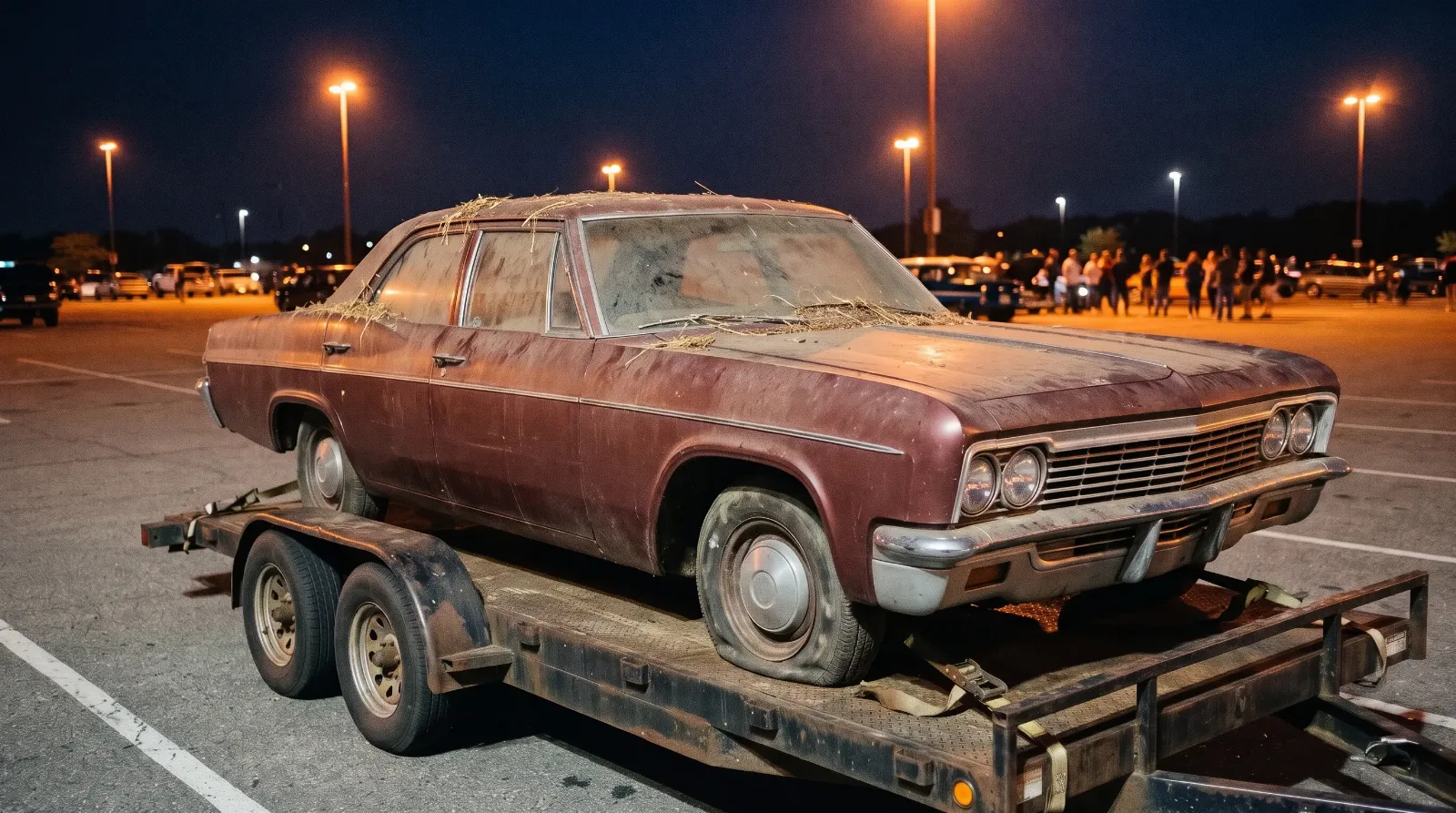
Driving home is the romantic option and sometimes the right one. It needs insurance in force before you turn the key, a way to make the car legal on the road, which may mean a temporary tag from the dealer, where its state issues one to out-of-state buyers, or a transit permit, so ask the dealer and your own DMV before you fly, and an honest view of whether a car that has sat on a showroom floor is ready for a long trip. Plan for old hoses and belts that may not like sustained highway speed, and have a roadside plan that covers a classic. Some dealers advise against the drive outright: Classic Car Deals, for one, tells buyers it recommends shipping or trailering an old car home rather than getting to know it on a long trip.
Shipping is the calmer choice for a long distance or a fragile car. Open carrier transport coast to coast runs roughly $1,400 to $2,500 depending on route and season, and enclosed transport about a third to a half more, with pickup windows that commonly run one to five business days. Settle the balance only after the paperwork is in order and the title is signed or held where you can verify it. Then the car is yours, whether it comes home under you or on the top deck of a truck.
Sources and notes
Related Reading
Have a
Classic Car
for Sale?
Reach thousands of serious classic car collectors across the US.
Sell It Here →
Selling a classic? Here's how: the best sites to sell a classic car
Are You a Classic Car Dealer?
List your full inventory and connect with targeted classic car buyers.
Join as a Dealer →
#test drive
#classic car dealers
#classic car transport
#visiting a classic car dealer
#buying trip
#cold start

About the author
Nora Beckett
Automotive features writer and photographer who tells the human stories behind the cars, from show fields to cross-country road trips.
Find a classic car dealer near you
We profile classic car dealers across the United States: address, phone, specialties and the cars each one has for sale. Start with your state:
More in Ownership & Lifestyle
Comments
Be the first to comment on this article.