
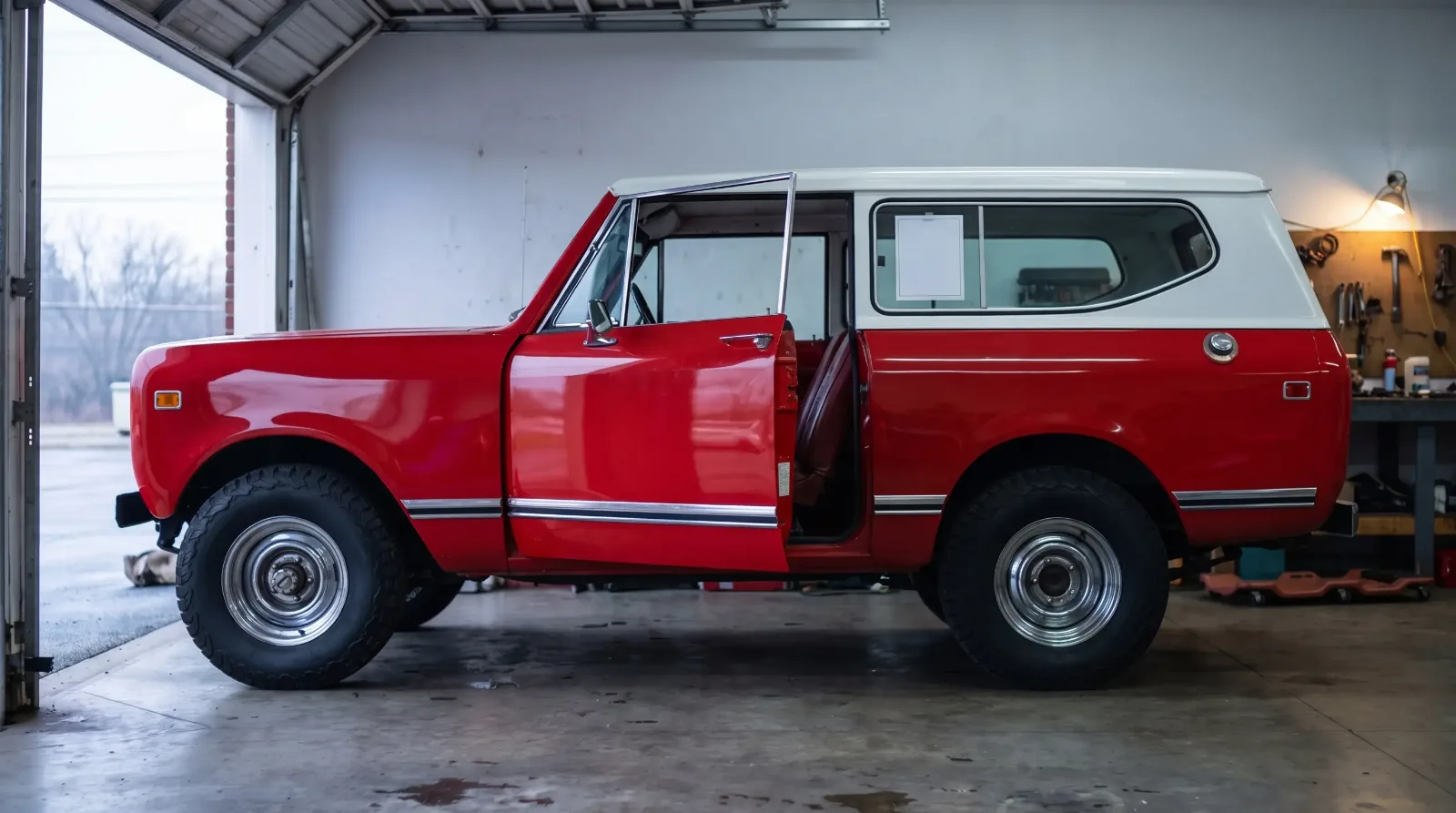
Picture a 1976 International Scout II on a dealer's floor, described in the listing as "restored, rust-free, all systems sorted." The window carries a federal form with one box checked: As Is, No Dealer Warranty. Which of those two documents decides what you are owed if the floors turn out to be patched with sheet metal and filler? The honest answer is that both of them do, in different ways. A classic car warranty is rare. What a buyer actually gets is shaped by the window form, by state law and by the words the dealer chose to put in the listing.
Ownership & Lifestyle
9 min read
As-Is Sales and Warranties on Classic Cars: What a Buyer Actually Gets
Most classic dealer sales are as-is. What the FTC Buyers Guide, implied warranties and the listing's own words still give you.
This piece goes deep on that one question. For the full sequence of vetting, inspection, payment and shipping, see our guide on how to buy a classic car from a dealer.
Why most classic dealer sales are as-is
A dealer selling a forty-year-old vehicle has no factory warranty to pass along and usually only a partial history of what was done to it. Parts wear on their own schedule. A car that left the lot healthy can lose a water pump the following month for reasons that have nothing to do with the sale. So most dealers price the car as-is and leave the mechanical risk with the buyer. That is not a trick. It is how the trade has worked for decades, and the price usually reflects it.
The record is clear on what "as-is" means in law. Under the Uniform Commercial Code, which nearly every state has adopted, a seller can exclude implied warranties with expressions like "as is" or "with all faults", unless state law says otherwise. You accept the car with its defects, known and unknown. What as-is does not do is excuse fraud. A dealer who hides a known frame repair, rolls back an odometer or lies in response to a direct question has not been protected by a box on a form. That distinction comes up again below, because it is where most real disputes land.
The FTC Buyers Guide on the window
The Federal Trade Commission's Used Car Rule requires dealers who sell more than five used vehicles in a twelve-month period to display a Buyers Guide on each used vehicle offered for sale. The rule draws no line at a particular model year, so a classic on a dealer's floor should carry one like any other used car. It applies in every state except Maine and Wisconsin, which enforce their own versions. The form tells you, in one checked box, whether the car is sold "As Is, No Dealer Warranty" or with a dealer warranty. If it is a warranty, the form must state whether it is full or limited, which systems are covered, for how long, and what share of parts and labor the dealer pays.
The guide also lists the major defects that can occur in used vehicles and asks you to get any promises in writing. Read the back as well as the front. In states that do not allow as-is sales, dealers display a different version of the form that discloses implied warranties instead. Private sellers are not covered by the rule at all, which is one of the quieter differences between buying from a dealer and buying from a neighbor.
Implied warranties and the states that limit as-is sales
When a dealer does not disclaim them, two implied warranties attach to the sale. The warranty of merchantability is the basic promise that the car does what a car is ordinarily expected to do. The warranty of fitness for a particular purpose applies when you tell the dealer what you need the car for and rely on the dealer's judgment in choosing it. For a dealer, these arise automatically, and they disappear only if they are disclaimed clearly, which on a used car means the As Is box on the Buyers Guide or equivalent written language.
Some states limit or bar as-is sales of used cars by dealers, and a few go further and require a short written dealer warranty. Before you count on that protection for a classic, read the details, because many of these laws carve out older cars. West Virginia, for example, generally bars warranty disclaimers but lets dealers sell a vehicle as-is once it is seven or more model years old. Mississippi lets a dealer disclaim implied warranties on a car more than six model years old or with over 75,000 miles, on a form set by the state attorney general. New York's used car lemon law requires a dealer warranty only on cars sold for at least $1,500 with no more than 100,000 miles. Massachusetts is the notable exception: its law makes implied warranties on consumer goods impossible to disclaim, and its used vehicle warranty law covers cars under 125,000 miles, with the term set by the car's age when the true mileage is unknown. Many classics have an odometer reading nobody can vouch for, so where you buy matters as much as what you buy. Outside Massachusetts, a lot of collector cars fall outside these statutes even in the states that have them.
There is one federal wrinkle worth knowing. Under the Magnuson-Moss Warranty Act, a dealer who gives a written warranty, or sells you a service contract within 90 days of the sale, cannot disclaim implied warranties on that car. The dealer can limit their duration to the length of the written warranty, but not erase them. So a short dealer warranty quietly brings implied warranties back into the deal for that period.
When the listing itself becomes a classic car warranty
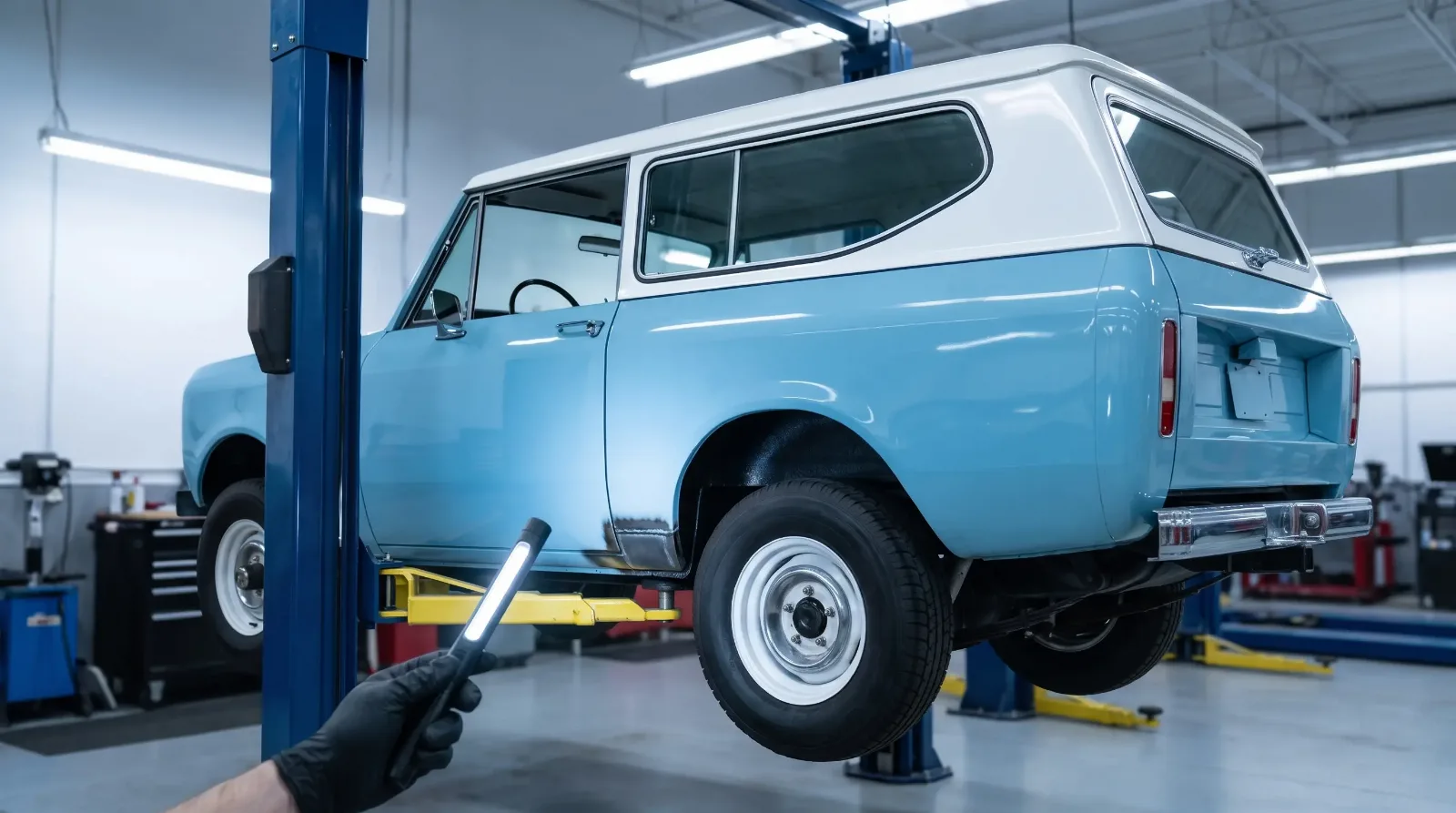
Here is the misconception I would most like to correct. Buyers assume that an as-is sale means the dealer's description carries no weight. It carries a great deal. Under the UCC, a statement of fact about the goods, or a description of them, that forms part of the basis of the bargain creates an express warranty, and the UCC says a disclaimer that cannot reasonably be read alongside such a promise does not operate, so a general as-is clause does not reliably cancel a specific factual promise. "Beautiful car" and "drives great" are opinion, the kind of sales talk courts treat as puffery. "Numbers matching," "rust-free," "original paint" and "frame-off restoration" are factual claims. They can be checked, and they can be wrong.
| Listing phrase | What it asserts as fact | What to ask for before you pay |
|---|---|---|
| Numbers matching | Engine, and often transmission and rear axle, are the units the car was built with | Photos of the stampings and date codes, and which numbers the claim covers |
| Rust-free | No corrosion in the structure or panels | Underside photos on a lift, floors, rockers and trunk pan |
| Frame-off restoration | The body was removed and the chassis restored | Restoration photos and receipts, the shop's name |
| Original paint | Factory finish, not a respray | Paint-meter readings panel by panel |
| Documented | Paperwork supports the history described | Copies of the documents themselves, not a summary |
The weakest link in these claims is usually the engine. Before you accept a dealer's description of an original drivetrain, read up on how numbers-matching claims are built and where they fail, then ask for the evidence that matches the words. Save a copy of the listing the day you agree a price, as a PDF and as screenshots, because listings get edited and removed. If a factual claim later proves false, that saved page is the document your attorney or your state attorney general's office will want first.
Dealer warranties and service contracts on older cars
Some dealers offer a short written warranty on classics, typically something like 30 days or a set number of miles on the engine and transmission. Read it the way you would read a factory document: which components, who decides what failed, where the repair must be done and at whose labor rate. A warranty that requires the car to come back to a shop 900 miles from your garage has value mostly on paper.
Third-party service contracts are a different product. Legally they are not warranties; they are contracts you buy, and most providers limit eligibility by vehicle age and mileage, which shuts out most cars that are decades old. The few plans that do cover collector cars tend to exclude wear items and pre-existing conditions, which on an old car covers a lot of ground. Agreed-value collector insurance, meanwhile, covers loss and damage, not mechanical failure. None of these replaces an inspection before the sale.
"Treat the listing as a document. Every factual word in it should be backed by paper or by something you can see on the car. If it is not, it is a claim, and claims are worth exactly what you can prove."
Tom Ramirez
One more variable is who wrote the description. On a consigned car, much of the history comes from the owner, and the dealer may only be passing it along. Ask who stands behind each claim before you rely on it; the specifics are covered in our guide to buying a consigned car. Whoever wrote it, get the important promises into the bill of sale, in plain words, signed by the party selling the car.
Sources and notes
- FTC: Dealer's Guide to the Used Car Rule
- FTC Consumer Advice: Buying a Used Car From a Dealer
- Cornell LII: 15 U.S. Code § 2308, implied warranties
- Cornell LII: UCC § 2-313, express warranties
- Cornell LII: UCC § 2-316, exclusion or modification of warranties
- National Consumer Law Center: Compendium of State Lemon and Warranty Laws for Used Cars (January 2026)
Related Reading
Have a
Classic Car
for Sale?
Reach thousands of serious classic car collectors across the US.
Sell It Here →
Selling a classic? Here's how: where to sell your classic car online
Are You a Classic Car Dealer?
List your full inventory and connect with targeted classic car buyers.
Join as a Dealer →
#buying a classic car
#classic car warranty
#as-is sale
#FTC Buyers Guide
#implied warranty
#express warranty
#service contracts

About the author
Tom Ramirez
Corvette researcher and historian based in Bowling Green, Kentucky. Two decades documenting Corvette production history from original factory records.
Find a classic car dealer near you
We profile classic car dealers across the United States: address, phone, specialties and the cars each one has for sale. Start with your state:
More in Ownership & Lifestyle
Comments
Be the first to comment on this article.