
A buyer finds a 1979 Pontiac Firebird Trans Am on a dealer's floor, priced at $45,000, and plans to put $10,000 down. The dealer offers to arrange the rest. The buyer's credit union says it does not lend on cars that old. A specialty lender quotes a monthly payment that looks pleasantly small. Classic car financing works differently from a loan on a three-year-old sedan, and the differences change which offer is cheapest. The lowest monthly payment is often the most expensive loan on the table, and the paperwork a lender demands can add cost and time before the car ever leaves the lot.
Ownership & Lifestyle
8 min read
Classic Car Financing: Dealer Financing vs a Bank or Specialty Lender
Dealer-arranged loans, collector lenders, credit unions, home equity or cash: how classic car financing works and how to compare the real cost.

This piece compares the ways to pay for a classic bought from a dealer. For the rest of the purchase, from vetting the seller to shipping, see our guide on how to buy a classic car. No figure below is a current offer from any lender. Rates and terms move, and each one should be confirmed with the lender in writing.
Where classic car financing comes from
There are five realistic sources, and they differ more in their rules than in their rates.
Dealer-arranged financing. Many classic dealers do not lend their own money. They pass your application to a collector-car lender they work with and handle the paperwork at their end. The convenience is real, since the dealer knows what the lender needs. The cost question is whether the dealer is paid for the referral or adds anything to the rate. Ask directly, and ask for the lender's name so you can compare its terms with what it offers you directly.
Specialty collector-car lenders. These lenders exist because mainstream banks struggle to value old cars. They lend against an appraised or agreed value rather than a book value, and they offer longer terms than a standard auto loan. J.J. Best Banc & Co. says its shortest term is 48 months and its longest 84 months, and Woodside Credit advertises longer terms on more expensive cars, up to 15 years on its highest-priced loans. Expect a larger down payment than on a new car: J.J. Best says it typically requires 10% to 20% of the purchase price, and up to 30% on hot rods, kit cars and modified vehicles.
Banks and credit unions. Many mainstream lenders cap used-car loans by vehicle age. Bank of America, for example, says it does not finance vehicles older than 10 years or with 125,000 miles or more, which rules out a 1979 car under a standard auto loan. Some credit unions run separate classic or collector programs with their own age and value limits. When they exist, they can be competitive, but they may require an appraisal and shorter terms.
Home equity. A home equity loan or line of credit can carry a lower rate than a vehicle loan, and the car itself carries no lien. The risk moves to your house. If the payments become a problem, the collateral is not the Trans Am.
Cash. No interest, no lien, no lender's insurance rules and the strongest negotiating position. The cost is the return that money would have earned elsewhere, and the loss of a cash reserve for the repairs that every classic eventually needs.
Typical terms and what drives the rate
Collector-car loans tend to share a shape. Terms run longer than on a used daily driver, which lowers the payment and raises the total interest. Down payments run higher. Most specialty lenders want an appraisal or at least detailed photos and documentation, and some set a minimum loan amount (J.J. Best's is $6,000), which can make a small loan on a cheaper car hard to place.
The rate itself follows familiar drivers, plus a few specific to old cars. Your credit score and debt-to-income ratio come first. Loan-to-value comes next: a larger down payment reduces the lender's risk and usually the rate. The term matters too: a longer loan lowers the payment but means more interest over its life, and some lenders also charge a higher rate for it. The car matters as well. A well-documented, stock example of a model with a deep resale market is easier collateral than a heavily modified one, because the lender can estimate what it would recover if it had to sell the car.
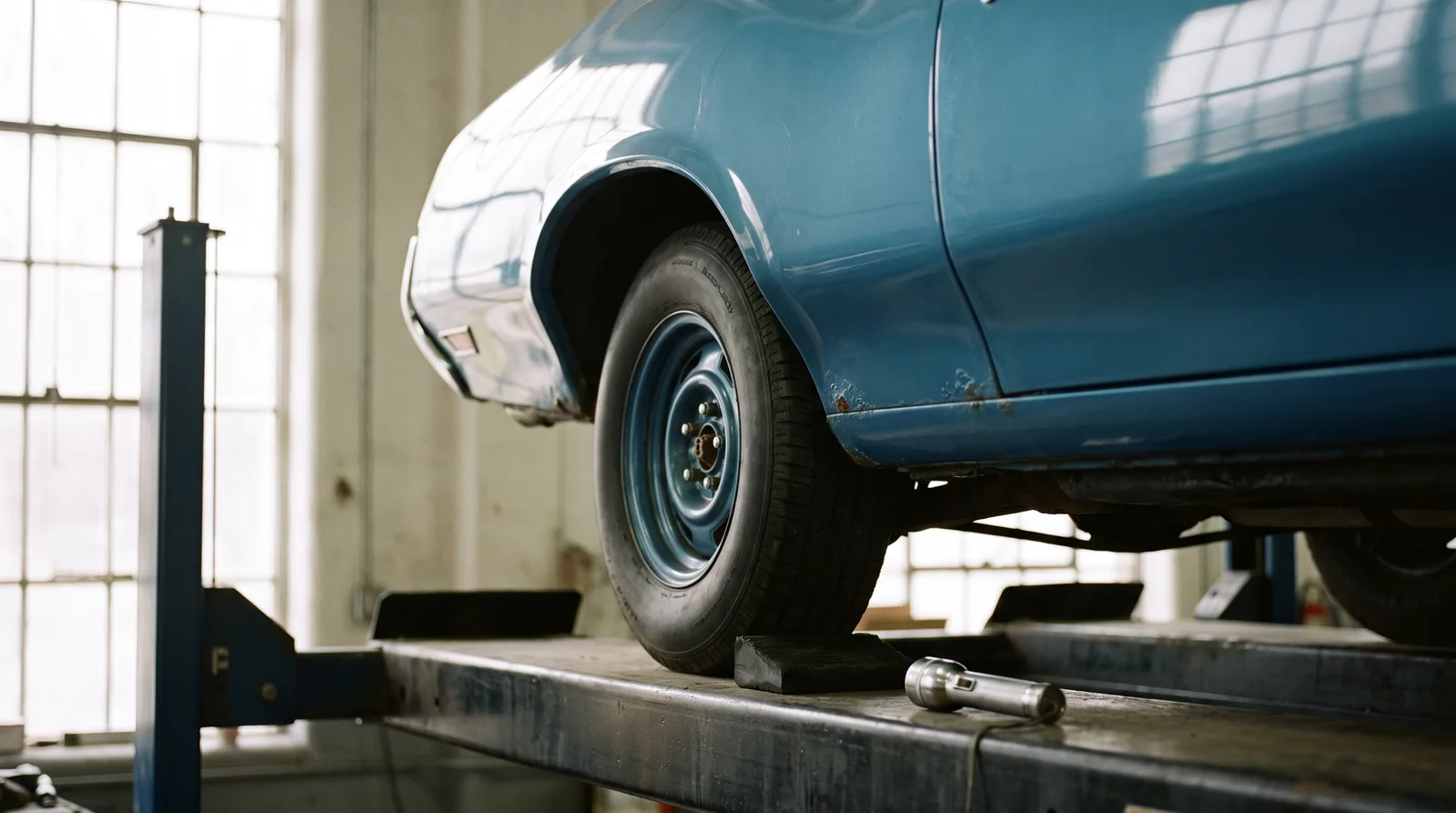
That last point is why lenders care about condition and paperwork. An appraisal that rates the car as a #3 when the price assumes a #2 creates a gap the lender will not fund, and you cover it with a larger down payment. Arrange an independent inspection before you commit to a loan, since a problem found after the loan closes is entirely yours.
Compare total cost, not the monthly payment
On the Trans Am, the buyer finances $35,000. The table below shows how term and rate change the cost. The rates are round, illustrative numbers chosen to show the arithmetic, not quotes or current offers from any lender. Payments are standard amortized figures, rounded to the dollar.
| Illustrative loan on $35,000 (example rates) | Monthly payment | Total paid | Total interest |
|---|---|---|---|
| 60 months at 9.0% | about $727 | about $43,593 | about $8,593 |
| 84 months at 8.0% | about $546 | about $45,823 | about $10,823 |
| 120 months at 7.5% | about $415 | about $49,855 | about $14,855 |
| 144 months at 8.5% | about $389 | about $55,947 | about $20,947 |
The 60-month loan carries the highest rate in the table and still costs the least. The 144-month loan has a payment only a little more than half as large and costs more than twice as much in interest. On a car that may need an engine refresh, paint or a top-end rebuild during those twelve years, the long loan also leaves the owner paying for the car while paying to keep it running. Ask each lender for the APR, the total of payments, every fee at origination, and whether there is a prepayment penalty. Then compare those four figures side by side.
"A twelve-year loan on a car nearly fifty years old is a bet that the car holds its value longer than you hold the debt. Sometimes that bet pays. The total-cost column tells you what you are wagering."
Marcus Feld
Insurance, timing and the dealer's role
Every lender on a classic will want insurance in place before funding, and most will specify agreed-value coverage at or above the loan amount. Collector policies come with use limits. Hagerty, for example, says the car can be used for club events, shows, tours and occasional pleasure driving but cannot be a daily driver, prefers enclosed storage, and requires every licensed driver in the household to have a regular-use vehicle. Some insurers also set annual mileage limits. If you plan to drive the Trans Am every day, say so when you shop for both the policy and the loan, because a policy that does not fit your use is a policy that may not pay.
Timing matters more than buyers expect. Get pre-approved before you place a deposit. A deposit that holds a car for a week is a week for inspection, not for a loan application that needs an appraisal and title paperwork from an out-of-state dealer. A lender that approves you in principle can usually close quickly once it has the inspection report, the bill of sale and the title details.
When a dealer offers financing, treat it as one quote among several. Get the dealer's offer in writing with the lender named, then ask that lender and at least one other source, such as a credit union with a classic program, for their own terms on the same loan. Many classic car dealers work with more than one lender and will arrange whichever you choose. If the dealer's figure wins on total cost, take it. If it only wins on monthly payment, you now know what the convenience costs.
For the Trans Am buyer, the cheapest sensible plan is probably the largest down payment that still leaves a repair reserve, the shortest term with a payment that fits comfortably, and agreed-value insurance arranged before funding. Everything after that is a question of how much extra interest buys how much flexibility.
Sources and notes
Related Reading
#buying a classic car
#classic car dealers
#agreed value insurance
#classic car financing
#collector car loans
#classic car loan terms

About the author
Marcus Feld
Accredited collector-car appraiser who reads the market through hammer prices, condition tiers and risk.
More in Ownership & Lifestyle
Comments
Be the first to comment on this article.