
The car is 900 miles away. The dealer says it is solid, the photos say it is solid, and you want to believe both of them. Don't. A classic car pre purchase inspection done by somebody who works for you, not for the seller, is the cheapest insurance in this hobby. When you can't fly out and crawl under the car yourself, the job is to hire the right set of eyes, tell them exactly what you need back, and tie your money to what they find.
Ownership & Lifestyle
8 min read
How to Arrange a Long-Distance Pre-Purchase Inspection on a Classic Car
Buying a classic from an out-of-state dealer? How to hire an independent inspector, what the report must show and how to tie your deposit to it.
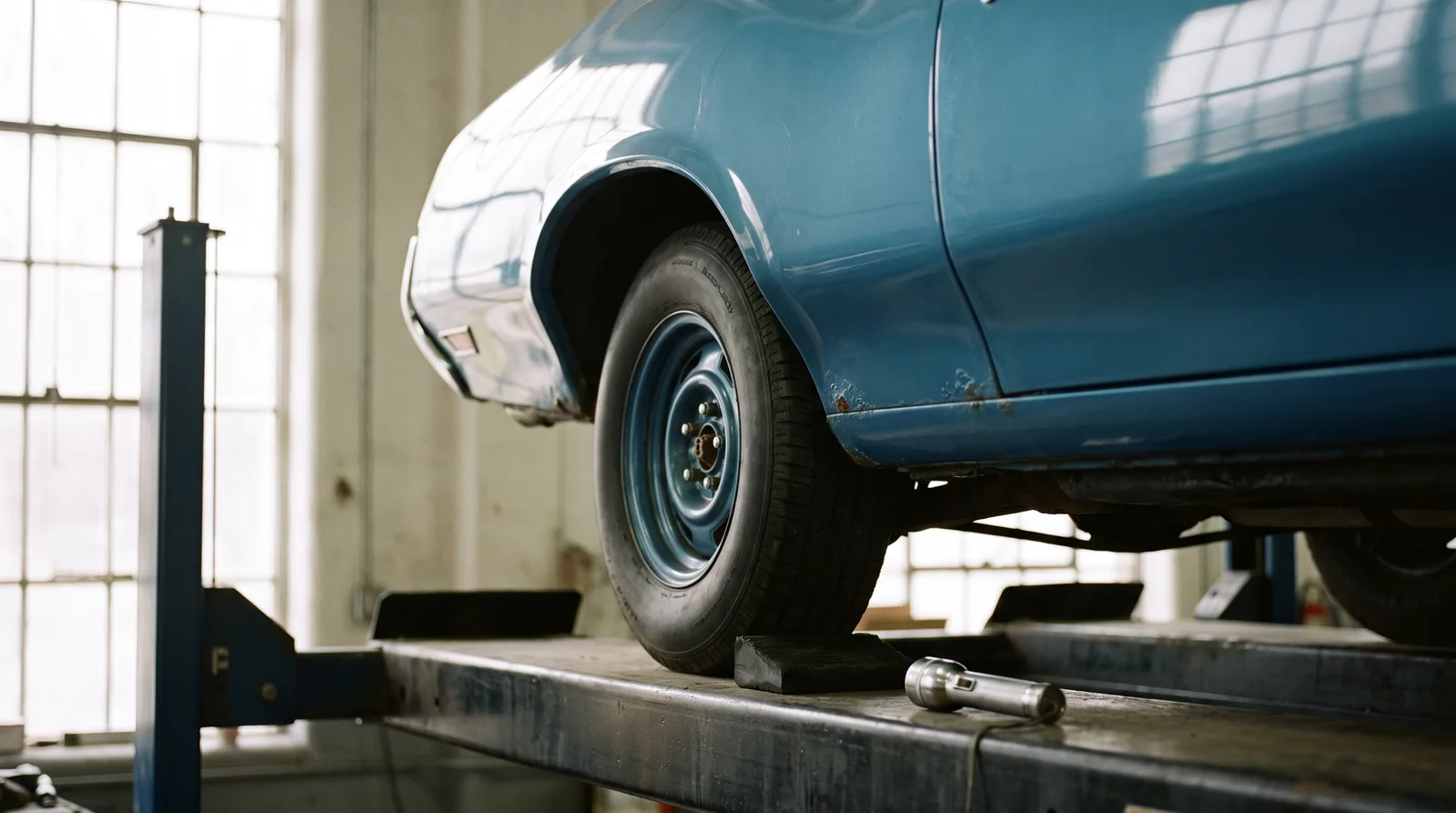
This is the remote version of the process. If you are earlier in the deal and still sorting out who you are buying from, read the guide to buying from a classic car dealer first. What follows assumes you have found the car, the dealer has passed your basic checks, and now you need someone to put it on a lift.
Finding an inspector you can trust from a thousand miles away
The inspector has three jobs. Know the car. Have no connection to the seller. Write it down. Plenty of people can do the first one. Fewer do all three.
Start with the marque club. Nearly every make and most popular models have a national club with regional chapters, and the chapter people know who in their area actually understands a Cutlass 442 or a split-bumper Camaro. Call or email the chapter contact, explain that you are buying out of state, and ask for two or three names. Club members tend to recommend the guy who found the bad frame on their own car, which is exactly who you want.
Second option, a specialist restoration or repair shop near the dealer. A shop that rebuilds the same family of cars knows where they rot and where they get faked. The catch is that local shops sometimes do work for the local dealer. Ask the shop straight out whether they have ever serviced, sold or repaired cars for that dealer. If the answer is yes, keep looking.
Third, the mobile inspection services. These outfits run a national network of inspectors and will send someone to the dealer's lot within a few days. They are fast and they produce a tidy report. The weakness is that the inspector may look at a modern Accord on Monday and your 1970 big-block on Tuesday. Use them when nothing better exists, and ask specifically for an inspector with classic experience.
Whoever you pick, never use the inspector the dealer suggests. Even an honest one has an incentive to keep getting referrals.
What the classic car pre purchase inspection report has to include
A paragraph that says "car is in good shape for its age" is worth nothing. You are paying for evidence. Put your requirements in an email before the inspector goes out, so there is no confusion about what you expect back. The full pre-purchase inspection checklist covers what to look at on the car itself. The table below is about what you need delivered, because you will be making a five-figure decision from your kitchen table.
| Deliverable | What to ask for | Why it matters remotely |
|---|---|---|
| Underside photos | Frame rails, floors, trunk drop-offs, rockers, rear frame kickups, shot on a lift with good light | Rust and old crash repair live here, and dealer galleries rarely show it |
| Compression or leak-down | All cylinders, readings written per cylinder, warm engine | Tells you whether "runs great" means a healthy engine or a tired one |
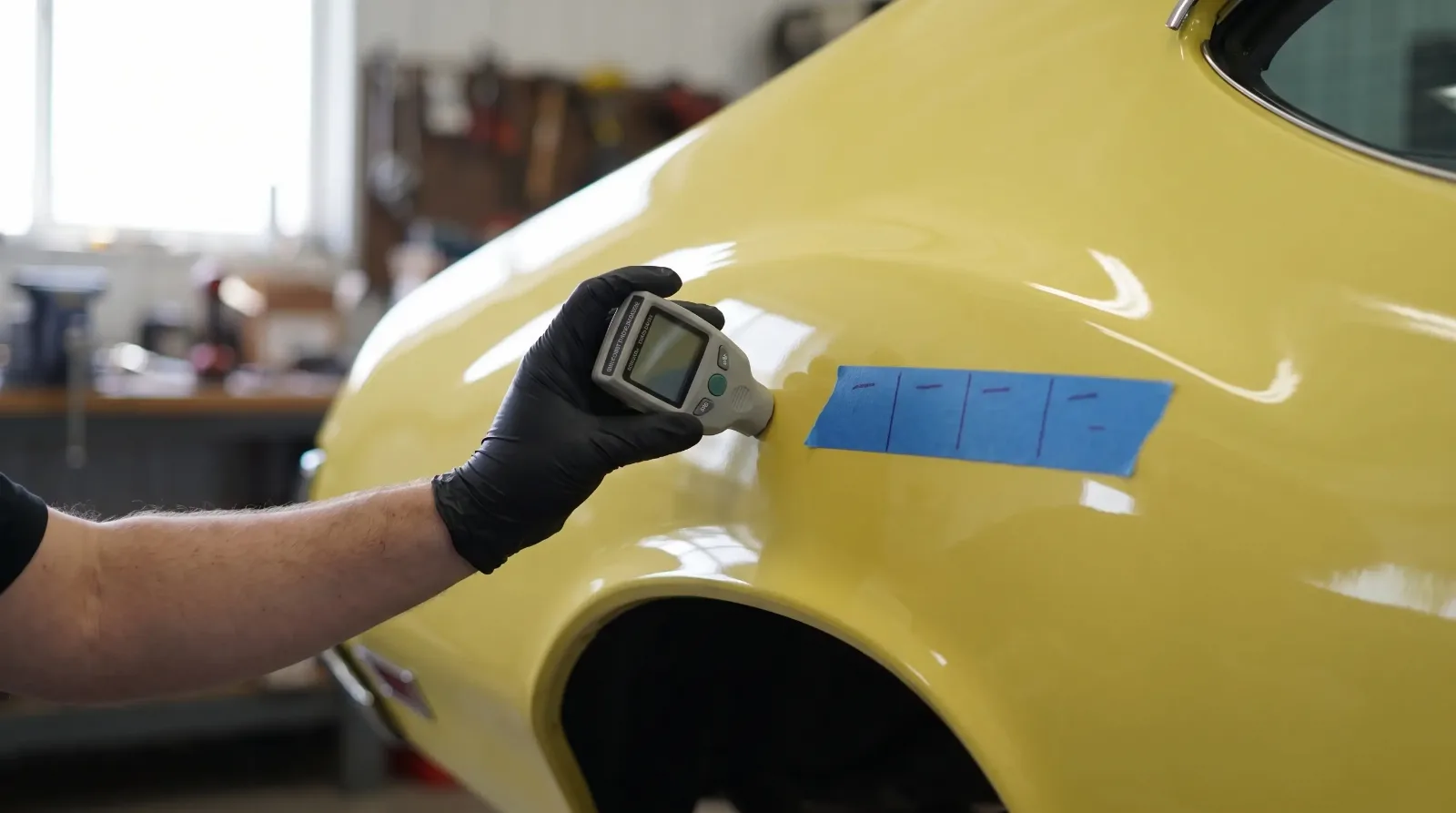
| Paint-meter readings | Readings on every panel, noted on a simple diagram | Thick spots show filler and repaired panels under fresh paint |
| VIN, frame and engine stamps | Close, sharp photos of the VIN plate, any frame stamp, engine pad and casting numbers | Lets you or a club expert check numbers against the listing claims |
| Cold start video | Engine not run that day, video from key-on through two minutes of idle, tailpipe in frame | Smoke, ticking and hard starts disappear once a car is warm |
| Drive video or notes | Shifts, braking, steering, temperature gauge after 15 minutes | Covers what a lift cannot |
Insist on the cold start. Tell the dealer, in writing, that the car must not be started before the inspector arrives. Then ask the inspector to put a hand on the radiator or exhaust manifold on camera before turning the key. I have watched more than one "cold start" video where the hood was already ticking from heat.
What it costs and how to schedule it with the dealer
Expect to pay more than you would for a modern used car check. One published comparison of national mobile inspection services lists classic-car inspections at $329 and $449, against roughly $220 to $250 for a standard modern car. A marque specialist who drives to the dealer, puts the car on a lift and runs compression or leak-down tests usually charges more, by the job or by the hour plus travel, so get the quote in writing before you book. Lift time at a third-party shop, if the dealer has no lift, can add another hour or two of labor.
Against a car priced at $45,000, that is pocket change. Against a car with a rotten frame, it is the best money you will spend all year.
Scheduling is where remote deals get sloppy. Call the dealer, tell them you are sending an independent inspector, and ask three things. Can the car go on a lift, theirs or a nearby shop's? Will someone be there to hand over keys and answer questions? Will they hold the car until the report is in? A dealer who hesitates on any of those has told you something. Then put the agreed date, time and the no-start rule in an email, and copy the inspector.
"The dealer who says 'sure, send whoever you want' is usually the dealer you can buy from. The one who says the car was just gone through by his guy is the one you need an inspector for most."
Mike Sullivan
Tie the deposit to the inspection
Most dealers will want a deposit to take the car off the market while your inspector gets there. That is fair. What matters is the wording. Get it in writing, and make sure it says the deposit is fully refundable if you decline the car after the inspection, for any reason, within a set number of days after you receive the report.
Some sellers build this into how they work. Classic Car Deals in Cadillac, Michigan, for example, says in its FAQ that a deposit holds a car for seven days, that a $500 deposit placed for a third-party inspection is refunded if you read the report and decide not to buy, and that a deposit placed with no inspection is non-refundable. The buyer then pays the balance to Classic Car Deals, which sends the paperwork. That is the kind of arrangement you want spelled out, whoever you are buying from.
When the report comes back bad
Bad news comes in three sizes. Small stuff, like a weeping rear main seal, worn bushings or a tired battery, is normal on a fifty-year-old car and belongs in a price conversation, not a walkaway. Get a repair estimate from the inspector or a shop, send it to the dealer with the relevant photos, and ask for a price adjustment or for the dealer to fix it before shipping.
Medium problems are ones that change what the car is. Low compression on two cylinders. Non-original engine on a car sold as numbers matching. Fresh paint over heavy filler on the quarters. These are not haggling points. Either the price moves a lot, enough to cover the real cost of the fix, or you walk.
Large problems end the deal. Frame rot, a VIN plate that has been disturbed, stamps that don't match the paperwork. Don't negotiate. Ask for the deposit back under the terms you wrote down, and if the dealer stalls, send a written demand that quotes the receipt. A car with a doubtful identity is not a bargain at any price, and you should read up on the scams buyers run into before you look at the next one.
Whatever the outcome, keep the report. If you buy the car, it is a baseline for your own mechanic. If you don't, it is a few hundred dollars that kept you from owning somebody else's problem.
Sources and notes
- The Supercar Registry forum: Olds original paint thickness
- Vehicle Inspectors: Pre-purchase inspection services compared
- Classic Car Deals: Frequently asked questions
- American Collectors Insurance: Classic car inspections, what you need to know before buying
- Federal Trade Commission: Put the brakes on phony online car sales
Related Reading
#pre-purchase inspection
#remote buying
#buying a classic car
#classic car dealers
#inspection report
#deposits

About the author
Mike Sullivan
Detroit-area muscle car enthusiast and restoration specialist with three decades of hands-on experience working on American iron.
More in Ownership & Lifestyle
Comments
Be the first to comment on this article.