
Most buyers walk into a dealer conversation with questions about the car. Is the engine original, has it been painted, does it run hot. Those matter, but they are only half the job. A 1968 Dodge Charger on a dealer's floor comes with a business arrangement attached: someone owns it, someone set its price, someone will hold your deposit, and someone will sign the title. The questions to ask a classic car dealer before you buy are mostly about that arrangement, because that is where the money is lost when a deal goes wrong, and it is the part a polished listing never mentions.
Ownership & Lifestyle
8 min read
Questions to Ask a Classic Car Dealer Before You Buy
Ownership, time in stock, title, paperwork, inspection, deposits and fees: the deal questions to put to a dealer, and the answers to worry about.
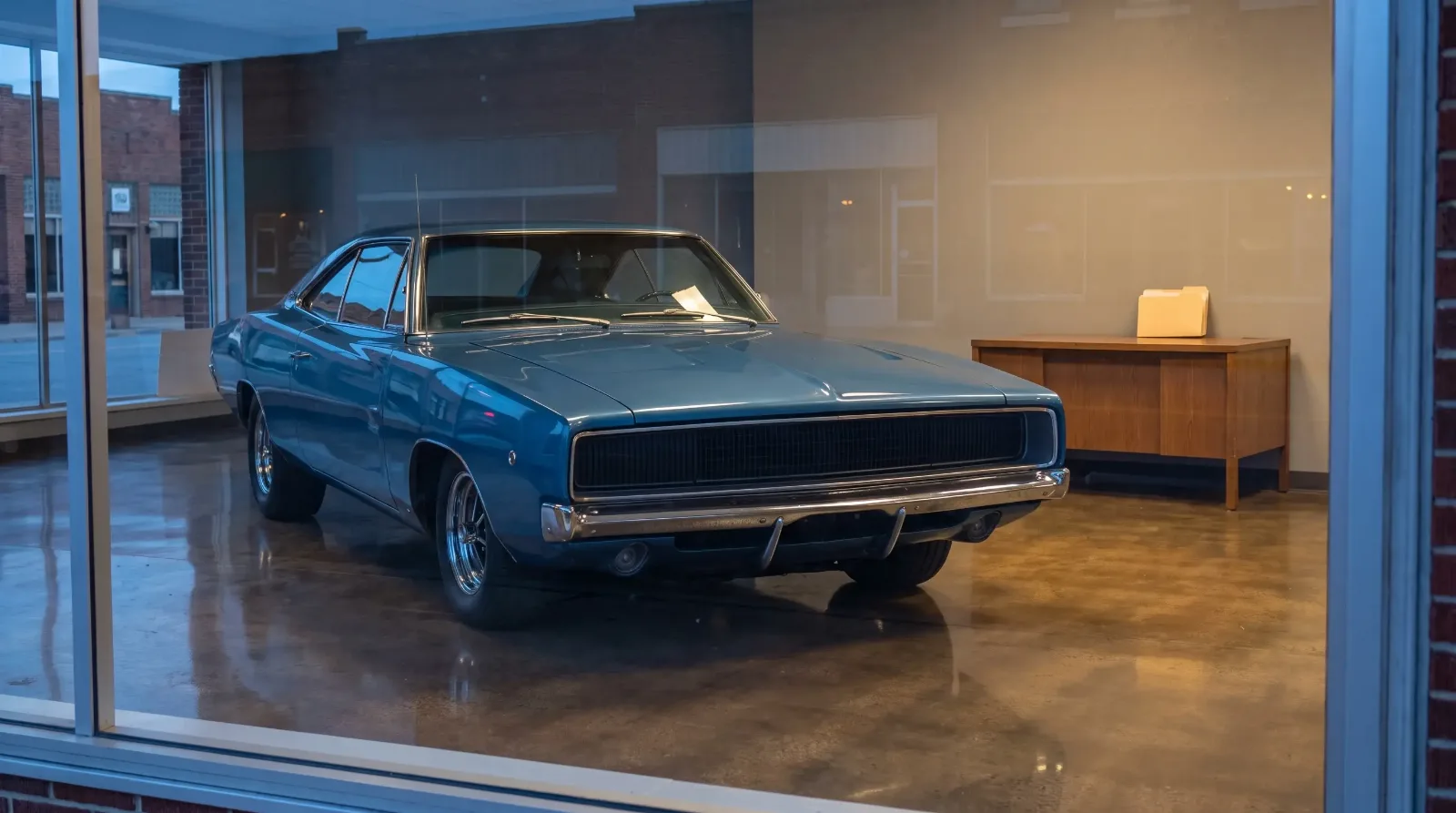
This piece covers the deal-side questions only. The full process, from vetting a dealer to shipping the car home, is in our guide on how to buy a classic car. What follows is the list I would put in an email before any money moves, along with what a straight answer looks like and what should make you slow down.
Who owns the car and how long it has been there
Start with ownership, because it shapes every other answer. Ask whether the car is the dealer's own stock or a consignment. A dealer that owns the car bought it with its own money, has a cost basis and can decide on a counteroffer on the spot. A consigned car belongs to a private owner who has set a floor price, and the dealer is working for that owner. Neither is a problem. Not knowing which one you are dealing with is.
Then ask how long the car has been in inventory. A dealer has no obligation to answer, and many will round the number, but the answer still tells you something. A car that arrived three weeks ago at a market-level price has little room to move. A car that has sat for seven months is costing the dealer money every week, or, on consignment, is testing the owner's patience. Either way, the asking price probably has room in it. If the dealer will not say, check when the car first appeared in its online listings. Archived listing dates are often easy to find.
Ask where the car came from. A dealer that bought it from a long-term owner with records is in a different position from one that bought it at auction last spring. If it came from an auction, ask which one and when, then look up the result. The difference between the hammer price and today's asking price is the dealer's margin plus whatever it spent on the car, and that leads to the next question.
What the dealer did to the car, and what is in the file
Ask exactly what work the dealer did after acquiring the car, with invoices. Fresh tires, a carburetor rebuild and a detail are normal reconditioning. A respray, new quarter panels or an engine swap are not small jobs, and you want to know who did them, when and why. A dealer that improved the car should be happy to show the receipts, since they support the price.
Then ask for a list of every document in the file, by name. On a Charger, that could include a fender tag decoding, a broadcast sheet, original sales paperwork, ownership history and restoration receipts. A list is better than a promise of "lots of paperwork," because you can compare it with what arrives. Ask whether the documents are originals or copies, and whether they transfer with the car.
Title questions belong here too. Ask whose name is on the title, which state issued it, and whether it carries any brand such as salvage or rebuilt. On a consigned car, the title will be in the owner's name, and you need to know who signs it at closing and when you receive it. If the car comes from a state that does not title older vehicles, ask what ownership document you will receive and confirm with your own DMV that it will register the car on that basis.
Inspection, deposit, fees and returns
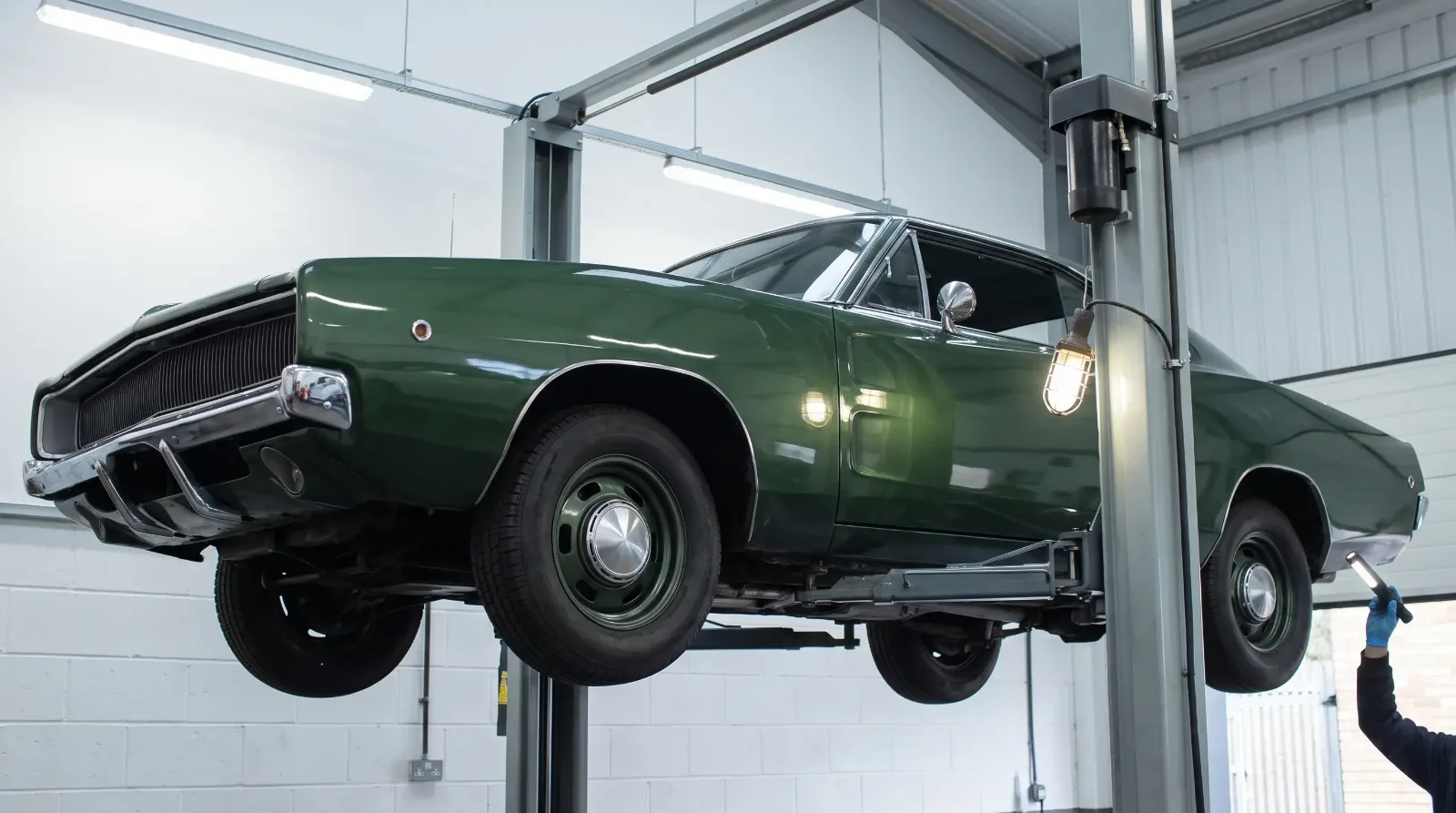
Ask whether you can send an independent inspector of your own choosing, and whether the car can go on a lift during the visit. The answer should be yes without hesitation. A dealer that only allows its own mechanic, or limits the inspector to a walk-around in the parking lot, is limiting what you can learn. If you cannot see the car yourself, the questions grow, and the process for buying a classic sight unseen covers that case in more detail.
Deposits deserve their own line of questions. Ask how much, how long it holds the car, under what conditions it is refunded, and who holds it. A well-run deposit policy states all four in writing. Classic Car Deals, an online consignment business in Cadillac, Michigan, says a good-faith deposit takes a car off the market for seven days, that its listed cars allow personal and third-party inspections, and that the buyer pays the balance to the company before paperwork and shipping are arranged. That kind of clarity is what you are looking for.
Ask for an out-the-door figure that includes every fee: documentation fee, any dealer prep charge, temporary tags, and whether the dealer will collect sales tax for your state. Documentation fees vary widely by state, and some states cap them: California, for example, limits a dealer's document processing charge to $85 or $70, depending on the dealer's arrangement with the DMV, while other states set no cap at all. Ask, too, about the return policy. Most classic cars are sold as-is, and many dealers offer no returns at all. That is normal, but you want it stated rather than assumed. Under the FTC's Used Car Rule, a dealer selling a car as-is must say so on the Buyers Guide, and any spoken promise is worth having written onto that form. Finally, ask whether the dealer helps with transport and, if so, whether it uses its own carrier or a broker.
Questions to ask a classic car dealer, and the answers to watch for
The table below collects the core questions, why each one matters and the kind of answer that should make you pause.
| Question | Why it matters | Red-flag answer |
|---|---|---|
| Is this your stock or a consignment? | Decides who negotiates, who holds funds and who signs the title | "Does it matter?" or a refusal to say |
| How long has it been in inventory? | Signals room in the price | "It just came in," when old listings show otherwise |
| Where did it come from? | Lets you check the auction or sale history | No source named at all |
| What work did you do, with invoices? | Separates reconditioning from major repairs | "Fully sorted," with no paper |
| Whose name and state are on the title? | Confirms the car can be transferred and registered | "Title is on the way" or a title in a third party's name |
| What documents are in the file? | Documentation carries value | A general promise instead of a list |
| Can my own inspector put it on a lift? | Independent inspection is the main protection | Only the dealer's mechanic, or no lift |
| Deposit amount, hold period, refund terms, who holds it? | Defines your exposure before inspection | Non-refundable, wired to a personal account |
| What is the out-the-door price? | Fees can add hundreds or more | Fees revealed only at signing |
| Any return policy, and do you help with transport? | Sets expectations for after the sale | Vague verbal promises not put in writing |
A straight answer is specific and checkable. A date, a name, an invoice, a dollar amount. It may not be the answer you hoped for, and that is fine. A dealer that tells you the car has been on the floor for nine months and the consignor is firm on price has given you useful information. An evasive answer is general, changes the subject or leans on reassurance: "We've been doing this a long time," "Everybody loves this car," "Don't worry about the title." Reassurance is not data.
"I don't score a dealer on whether every answer is good news. I score it on whether every answer can be checked. A dealer that gives you dates, invoices and names is a dealer you can do business with, even when the facts cut against the price."
David Mercer
Send the questions by email so the answers come back in writing. Most good dealers prefer it, since it saves them repeating themselves. When you are ready to put the list to work, find a classic car dealer whose stock matches what you want, or browse classic cars for sale from dealers and pick two or three cars to compare. Settle how to pay for it before you place a deposit, so the hold period is spent on inspection rather than on arranging a loan.
Sources and notes
- FTC: Dealer's guide to the Used Car Rule
- FTC Consumer Advice: Buying a used car from a dealer
- California Vehicle Code section 4456.5: Document processing charge
- Cornell LII: 49 CFR 580.17, Exemptions from odometer disclosure
- Classic Car Deals: Home page, buying process and deposit (archived October 2025)
Related Reading
#pre-purchase inspection
#buying a classic car
#classic car consignment
#classic car dealers
#classic car deposit
#dealer questions

About the author
David Mercer
Classic car market analyst with two decades of experience tracking collector car valuations, auction results, and investment trends.
More in Ownership & Lifestyle
Comments
Be the first to comment on this article.