
Ask two guys at a show what they think of a car and you can start a fight without meaning to. One sees a chopped coupe on a dropped axle, bias-plies, a flathead breathing through a pair of carbs, and says that is the real thing. The other sees an old body sitting over a modern chassis, disc brakes at all four corners, air conditioning, a fuel-injected crate motor, and says that is what he actually wants to drive. Both cars started life as the same kind of prewar Ford. They ended up in two different religions. That split is what the phrase hot rod vs restomod is really about, and it is worth understanding before you spend money on either one.
Car Features
8 min read
Hot Rod vs Restomod: Two Philosophies
Traditional period hot rod or classic body over a modern drivetrain? A clear look at the two philosophies, the value debate, and how to pick your side.
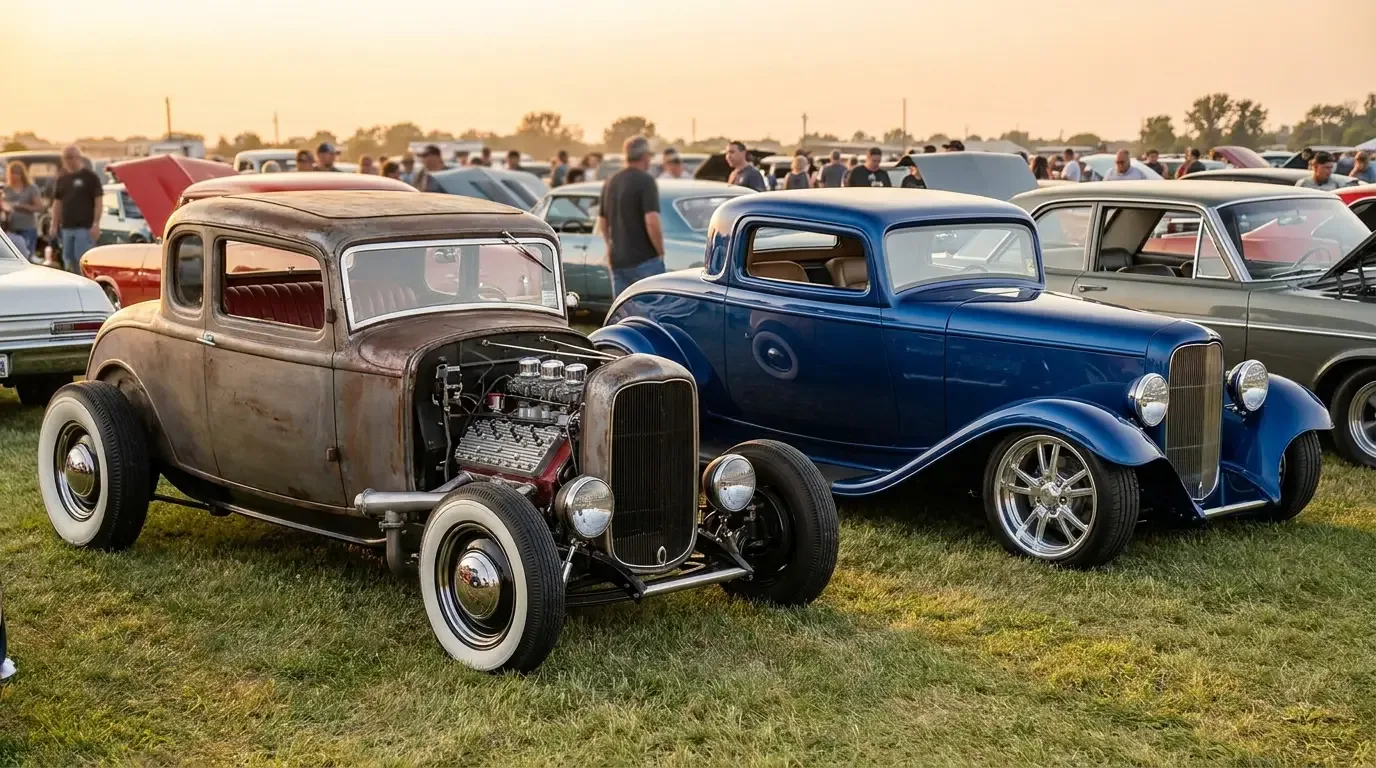
A traditional hot rod is a period build. It uses the parts, the techniques, and the look that were available and popular in a specific era, usually the late 1940s through the early 1960s. A restomod keeps the classic body but drops in modern running gear so the car drives like something built this decade. Neither approach is wrong. They answer different questions. This is the same family of distinctions that runs through the whole segment, and if you are still sorting out the basic labels, start with the difference between a hot rod vs street rod before you get into the restomod debate.
What makes a hot rod a hot rod
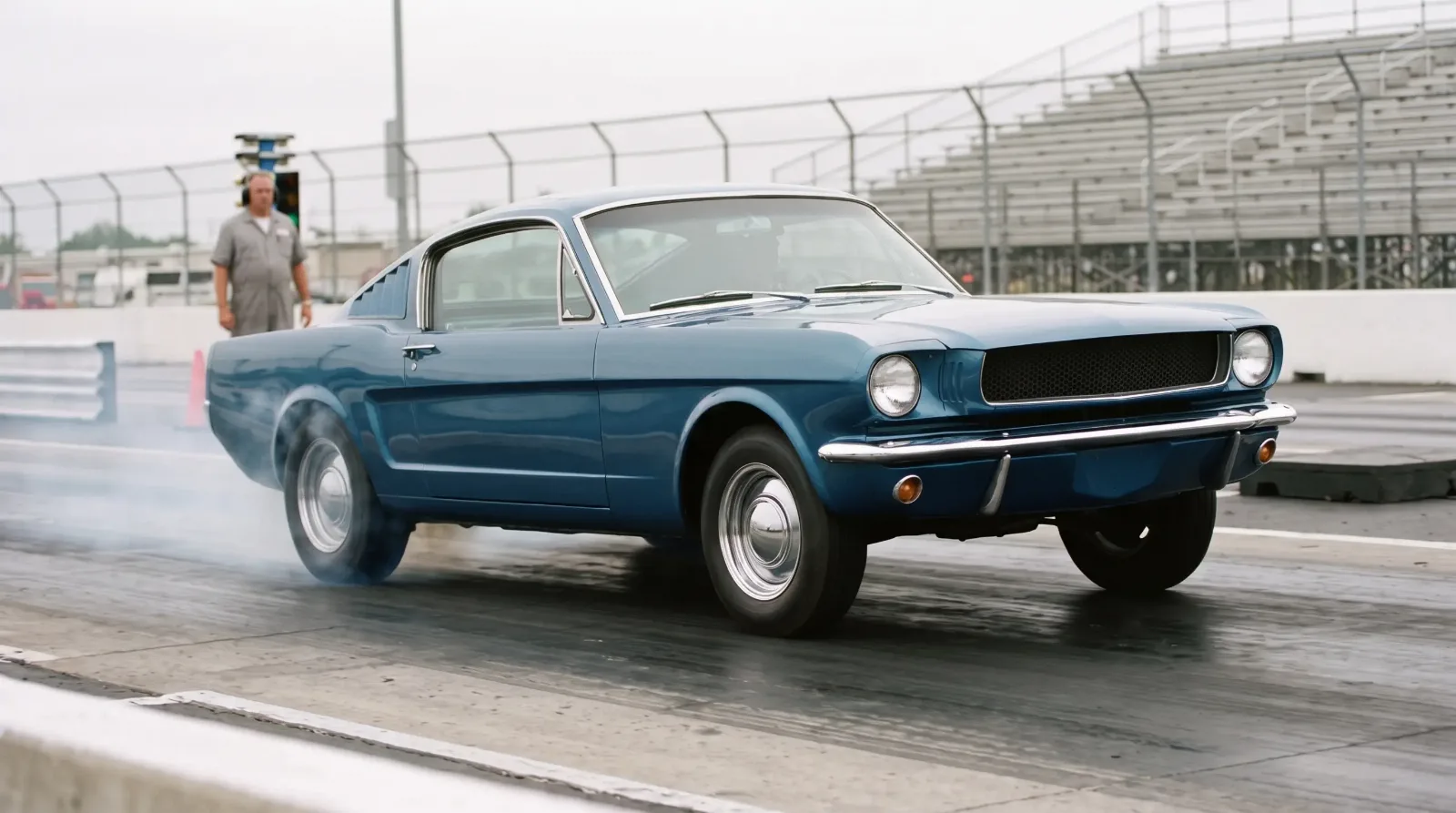
The traditional hot rod is built to look like it could have rolled out of a home garage in 1957. That is not an insult. It is the entire point. The builder chooses parts that fit the period. A flathead Ford V8 or an early Hemi, not a modern crate engine. A dropped and filled front axle, not a bolt-in independent front suspension. Steel wheels with caps and rings, or early mag-style wheels, wrapped in bias-look tires. The chop is done with a saw and lead, the gaps are worked by hand, and nothing about the stance was set by a computer.
The philosophy is honesty to the era. A traditional builder will fight you over a wrong-year taillight. The body sits low because the frame was Z'd or the axle was dropped, not because somebody dialed in airbags. The interior is tuck-and-roll, not billet. When it runs it sounds mechanical and a little angry, because that is what those engines do. You give up creature comforts. You get a car that means something specific to people who know the history, and you get the satisfaction of a thing built the hard way.
What makes a restomod a restomod
A restomod starts from a simple wish: I love how this old car looks, and I hate how the old ones drive. So the builder keeps the sheet metal and throws out almost everything underneath. Modern crate engine with fuel injection. Overdrive automatic or a modern manual. Four-wheel disc brakes. Rack-and-pinion steering. Coilovers or an independent rear. Then the comfort layer goes in: air conditioning, sound insulation, a real stereo, seats that support your back on a three-hundred-mile day.
The result is a car that looks decades old and drives like it was finished last year. It idles cold without drama, cruises at highway speed without screaming, and stops when a modern SUV does something stupid in front of you. For anyone who wants to actually use a classic body as a car, the restomod solves the real problems. The trade is that you are no longer looking at history. You are looking at a modern car wearing an old suit.
| Element | Traditional hot rod | Restomod |
|---|---|---|
| Engine | Period flathead or early Hemi | Modern fuel-injected crate V8 |
| Brakes | Drums, sometimes early discs | Four-wheel discs, power assist |
| Suspension | Dropped axle, leaf springs | Independent front, coilovers |
| Comfort | Minimal, no A/C | A/C, insulation, modern seats |
| Driveability | Demands attention | Point and go |
| Values it protects | Historical authenticity | Daily usability |
The value and purist debate
Money makes this argument louder. A correct, well-documented traditional build with the right period parts and a known history tends to hold interest with collectors who care about authenticity. A restomod is usually valued on the quality of its execution and the desirability of its components, not on originality. Prices in both camps swing hard with builder reputation and current taste, so treat any specific figure you hear with suspicion.
The purist objection to restomods is not really about brakes or air conditioning. It is about what the car says. A traditional hot rod is a link to a specific moment in American history, and every wrong-era part breaks that link. To the purist, a modern drivetrain under an old body is a costume. The counter-argument is just as fair: cars are meant to be driven, most people cannot enjoy a cranky period build on a modern road, and a car that stays in the garage is not preserving anything either.
"I have built both. The traditional car is a conversation with the guys who came before me, and I would not change a bolt. But when my wife wants to go three hundred miles to a show, we take the one with the crate motor and the cold air. Anybody who tells you one of those is the wrong answer has never done both."
Jim Vasquez
Where the lines blur
Real cars rarely sit at the pure end of either camp. Plenty of traditional builds hide a modern master cylinder or an electric fuel pump because the owner wants to make it home. Plenty of restomods keep a period paint scheme, a correct grille, and a stance that reads vintage from ten feet away. The honest question is not which label to claim. It is which decisions you are willing to defend, and to whom.
There is a middle path some builders take on purpose. Keep the period look and stance dead-on, so the car reads traditional at a glance, but update the parts you cannot see: better shocks, a hidden overdrive, quiet modern wiring. Stance is where a lot of that judgment gets made, because the way a car sits telegraphs its intent before the hood ever comes up. If you want to understand how those choices read, look at Highboy vs Lowboy: Hot Rod Stances Explained, because a wrong stance will out a car no matter what is under it.
Choosing your side, or refusing to
You do not have to pick a team to enjoy this hobby, but you should be clear with yourself about what you want from the car. If the appeal is the history, the technique, and the connection to the people who invented all of this, build traditional and accept that the car will ask something of you every time you drive it. If the appeal is the shape of an old car with none of the old headaches, build a restomod and stop apologizing for it. The Restomods world is a full corner of the classic-car hobby in its own right, with its own builders, values, and buyers, and it deserves the same respect a good traditional build earns.
The one path that satisfies nobody is the accidental middle: a car that is not authentic enough for the purists and not usable enough for the drivers, built without a decision at the center of it. Pick the question you are answering, build the car that answers it, and the debate stops being a threat and starts being just another thing to argue about in the parking lot at a show.
Sources and notes
- Period hot-rod press and how-to coverage from the traditional era through the modern hobby.
- Marque and engine references for flathead, early Hemi, and modern crate powertrains.
- Show and registry records documenting traditional builds versus restomod entries.
- Builder interviews on period-correct technique and modern drivetrain integration.
Related Reading
Have a
Classic Car
for Sale?
Reach thousands of serious classic car collectors across the US.
Sell It Here →
Are You a Classic Car Dealer?
List your full inventory and connect with targeted classic car buyers.
Join as a Dealer →

About the author
Jim Vasquez
Southern California hot rod and custom car builder with roots in the traditional kustom kulture scene.
Comments (2)
D
Don Metzger
3 months ago
Curious whether values have held since this was written. The market moves fast right now.
D
Dale Pruitt
2 months ago
Been watching this segment for two years waiting for prices to soften. Still waiting.