
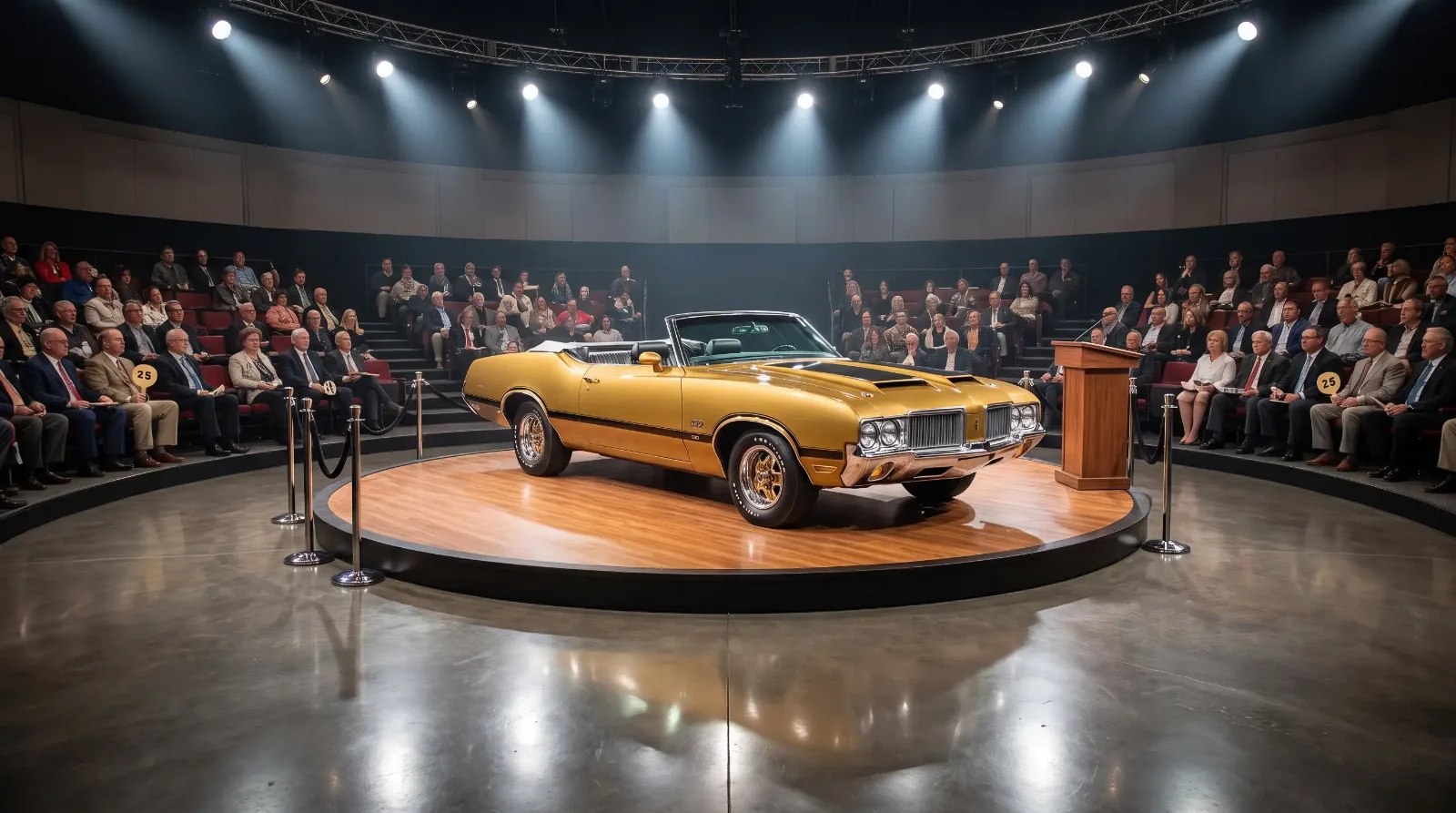
Two cars sit side by side at the same sale. Same model, same year, same claimed engine, and to the eye they are twins. One sells with confidence and a strong hammer. The other grinds toward a soft reserve and often a no-sale. The difference is a folder of paper. Documented muscle car value is not a soft factor in this market. It is frequently the single largest swing between two otherwise identical cars.
Market & Values
5 min read
Documented vs Undocumented Muscle Cars
Build sheets, window stickers and factory records can swing a muscle car's value significantly. Why documentation is the car, not a footnote.
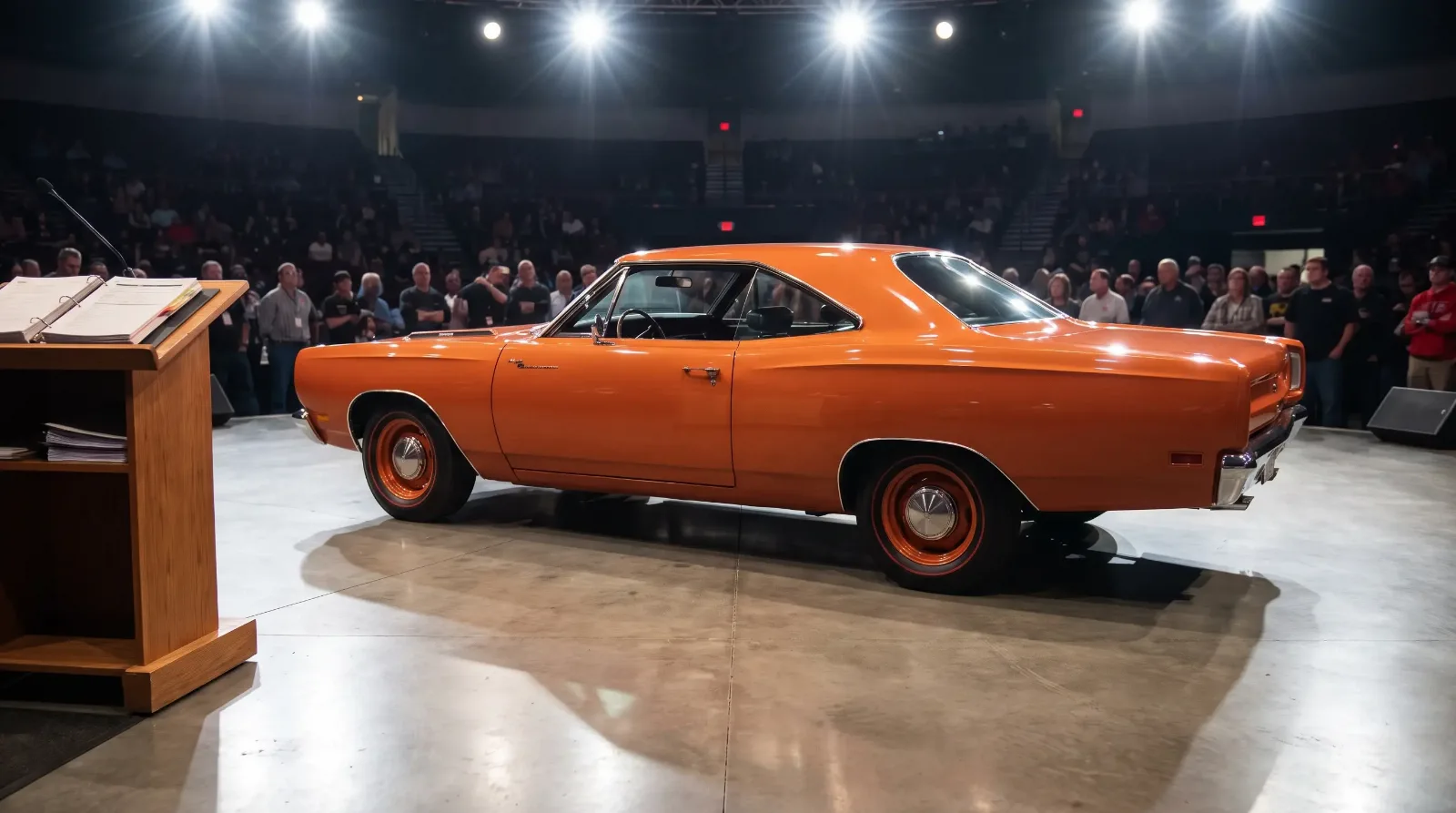
An appraiser puts it bluntly. A car is worth condition plus documentation plus liquidity, minus its downside risk. Documentation is the term that quietly controls the other three. Without it, condition is a claim, liquidity dries up, and the downside grows. With it, everything firms up.
What documentation actually means
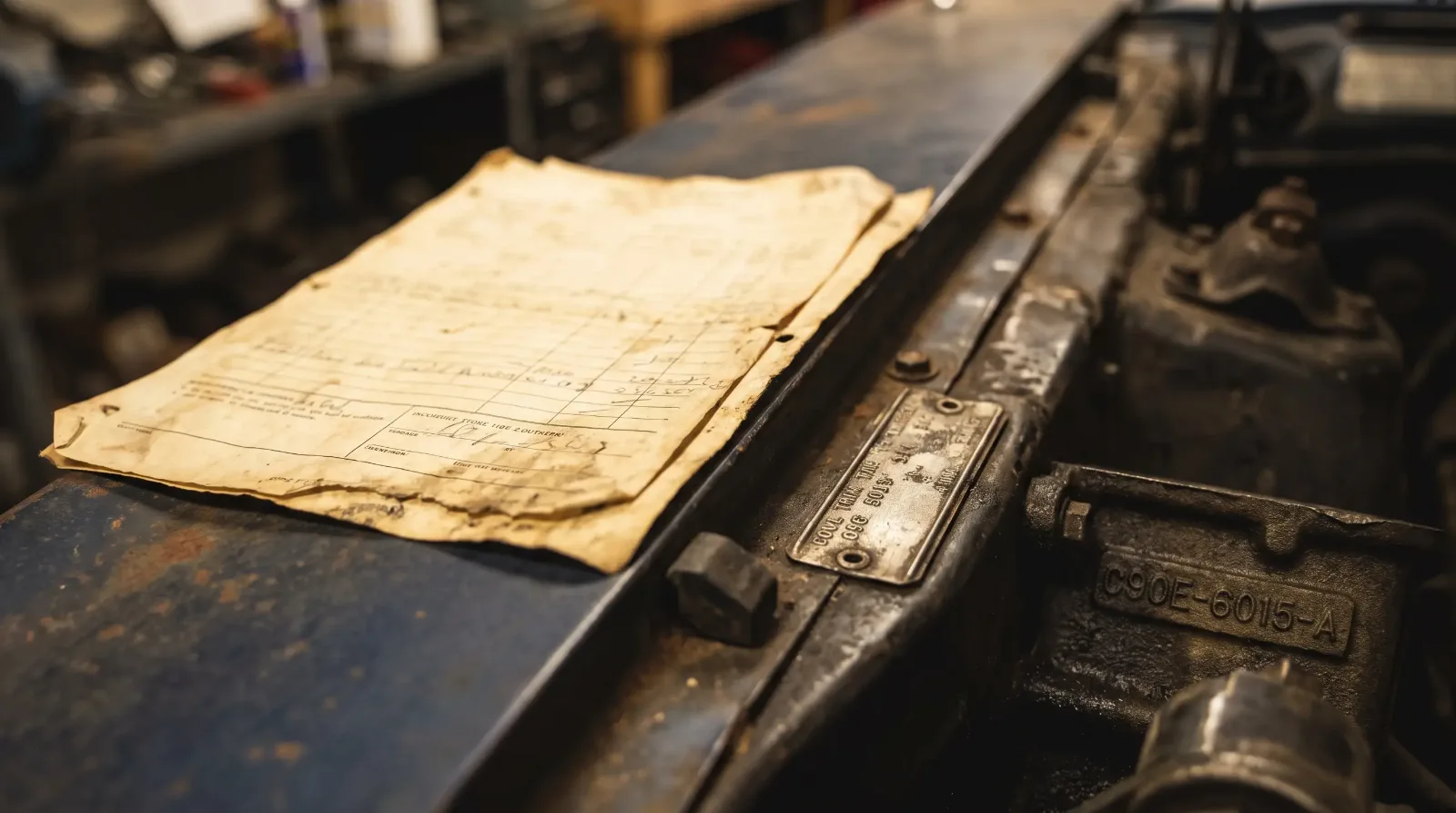
Documentation is not a stack of magazine clippings and old registrations. It is the specific paper trail that proves the car is what the seller says it is. The strongest examples carry factory build records, a broadcast sheet or build sheet, the original window sticker, dealer paperwork, and a continuous ownership history. The trim tag and drivetrain casting numbers back it all up.
The point of all of it is to remove doubt. A high-value muscle car lives or dies on whether the drivetrain, options, and colors it wears are the ones the factory installed. The paper answers that question before a buyer has to trust anyone. If you want the wider frame for how this feeds price, our pillar covers muscle car values in depth.
What the paper is worth in dollars
The premium is not small. On a car whose value depends heavily on a rare engine code or option, full documentation can account for a large share of the price, and its absence can cut the number substantially. The exact figure depends on how much of the car's value rests on claims that only paper can prove.
| Documentation level | What it proves | Effect on value |
|---|---|---|
| Full factory records + build sheet + sticker | Drivetrain, options, color, history | Top of the range, strong liquidity |
| Partial (tags, some records) | Core configuration, gaps remain | Solid but discounted from full |
| Matching numbers only | Drivetrain correctness | Base credibility, limited premium |
| Story and appearance only | Nothing verifiable | Priced as the doubt requires |
Notice the pattern. Each step down the ladder is a step further from certainty, and the market prices certainty. A matching-numbers car with no history is more credible than a story car, but it still cannot command what a fully documented example does, because the options and history remain unproven.
There is also a compounding effect worth understanding. The more a car's value depends on rarity, the more documentation is worth to it. A common car with a modest drivetrain gains little from a thick folder, because there is not much value to protect. A rare, high-option car lives or dies on the paper, because almost all of its premium over the base model rests on claims that only records can settle. In practice this means documentation matters most on exactly the cars where it is hardest to fake and most expensive to be missing. The premium and the risk both scale with the car.
Why undocumented cars carry hidden risk
An undocumented car is not automatically a fake. Plenty are honest. The problem is that the buyer cannot tell the honest ones from the built-up ones, and the market prices that uncertainty into every undocumented example. You are paying not just for a car but for the risk that it is not what it appears to be.
That risk has a name in this segment. The value gap between a real car and a look-alike gives someone an incentive to create the look-alike, and the absence of documentation is exactly the gap that lets a clone pass as genuine. The two questions are inseparable, which is why anyone weighing documentation should also read the full story on how clones and tributes fit the picture.
How to buy on the strength of paper
Read the documentation before you fall for the car. Confirm that the drivetrain codes match the tags and the records. Look for continuity in the ownership history rather than a convenient gap right where the important claims live. Treat missing paper as a price adjustment, not a footnote, and treat a seller's reluctance to produce it as an answer in itself.
The discipline is simple to state and hard to follow when a car is beautiful. Value the paper first and the metal second. A #2 car with a thin paper trail is not a #2 car when the check clears. It is a #3 with a good story, and the appraisal has to say so before the next buyer says it for you.
"Documentation is the cheapest insurance in this hobby and the most expensive thing to be missing. I have never seen a fully papered car sell soft, and I have never seen a story car sell without somebody in the tent doing the math on what it isn't."
Marcus Feld
In a market where two identical bodies can sell tens of thousands apart, the paperwork is the car. Buy the documentation, and the metal comes with it. Buy the metal alone, and you inherit every question the seller could not answer.
Related Reading
Have a
Classic Car
for Sale?
Reach thousands of serious classic car collectors across the US.
Sell It Here →
Are You a Classic Car Dealer?
List your full inventory and connect with targeted classic car buyers.
Join as a Dealer →

About the author
Marcus Feld
Accredited collector-car appraiser who reads the market through hammer prices, condition tiers and risk.

Comments
Be the first to comment on this article.