
A classic luxury car spends most of its life parked, and how it is parked decides what it is worth when the cover comes off. Storage sounds like the boring end of collecting, the part nobody photographs, but it protects the single most valuable thing about one of these cars, its condition. A car stored badly loses grade quietly, month by month, until a five-figure gap opens between what the owner thinks he has and what a buyer will pay. That gap is entirely avoidable.
Market & Values
6 min read
Storage and Preservation of a Luxury Classic
Storing a classic luxury car protects its condition and its value. Climate control, fuel, tires, rodents, and the storage habits that defend the grade.
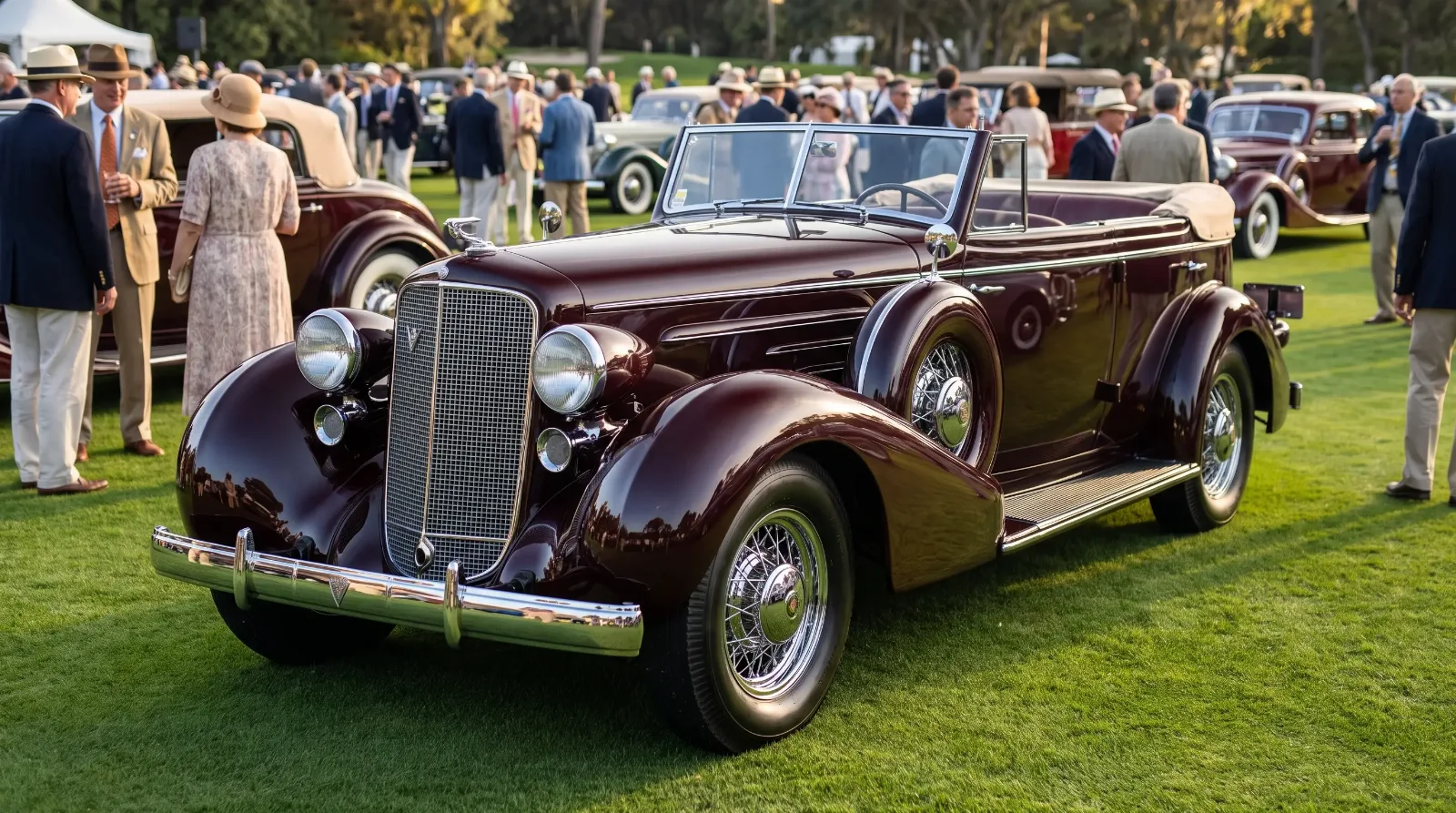
I watch preserved cars change hands, and the ones that sat right sell for real premiums over cars that were merely garaged and forgotten. The difference is not luck. It is a handful of disciplines applied consistently. If you are thinking about the whole arc of ownership, the collector's guide frames it, and storage is the chapter that quietly determines your return.
Climate is the whole game
Moisture is the enemy that never sleeps. Humidity rusts frames and floors from underneath, blooms mildew across leather and headliners, and corrodes electrical connections you will not find until a system quits. A luxury classic carries more of everything that moisture attacks, more brightwork, more leather and wood, more complex wiring, so the stakes are higher than on a simpler car.
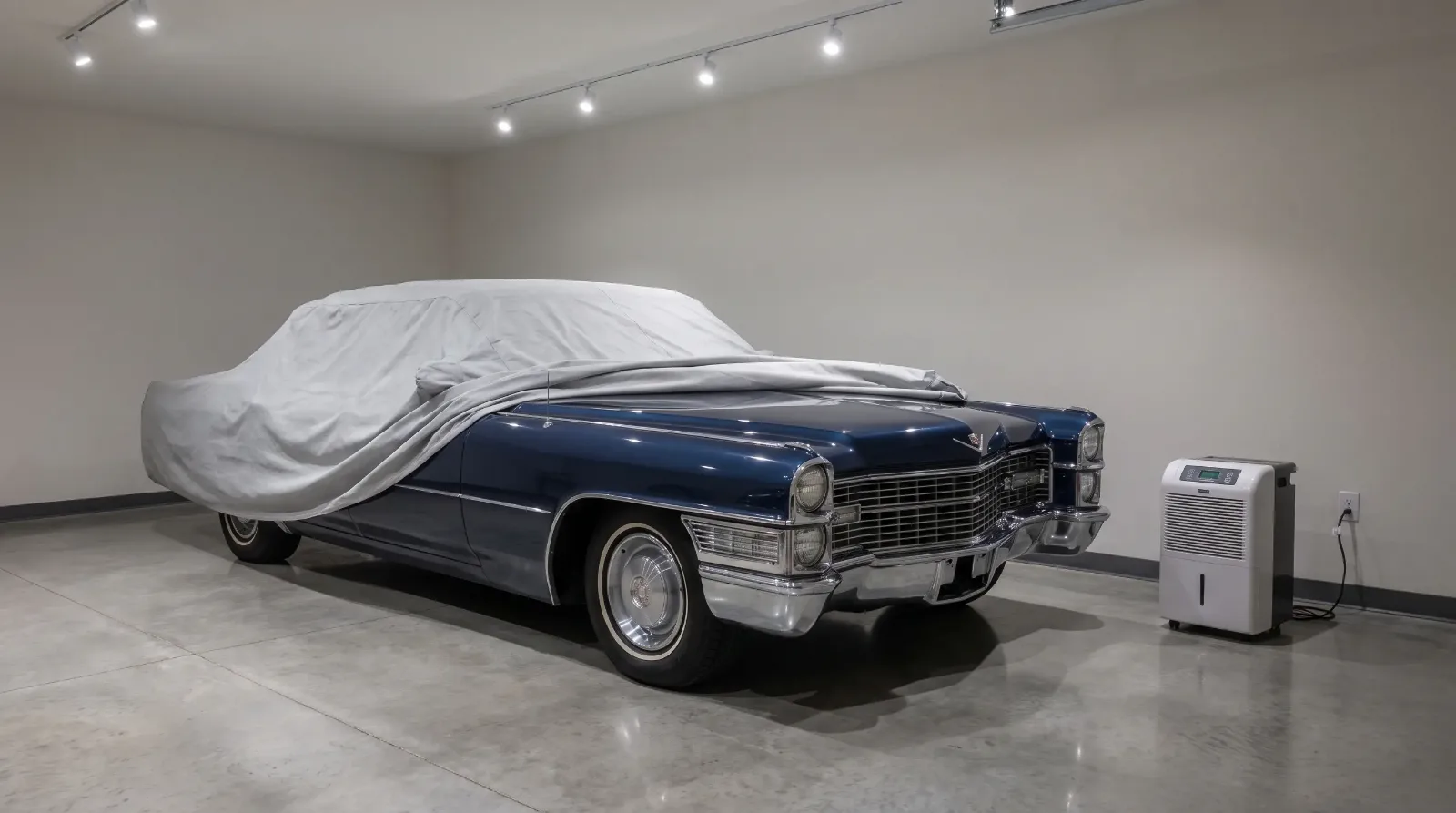
The target is a dry, stable space. A sealed garage with a dehumidifier holding relative humidity in a moderate band does more good than any wax. Concrete floors wick water, so a barrier under the tires or a sealed floor helps. Avoid big temperature swings, because the daily heat-and-cool cycle drives condensation onto cold metal. The car cover matters too. A breathable cover in a dry space keeps dust off, while a waterproof cover in a damp space traps moisture against the paint and does more harm than good.
What long storage does to the car
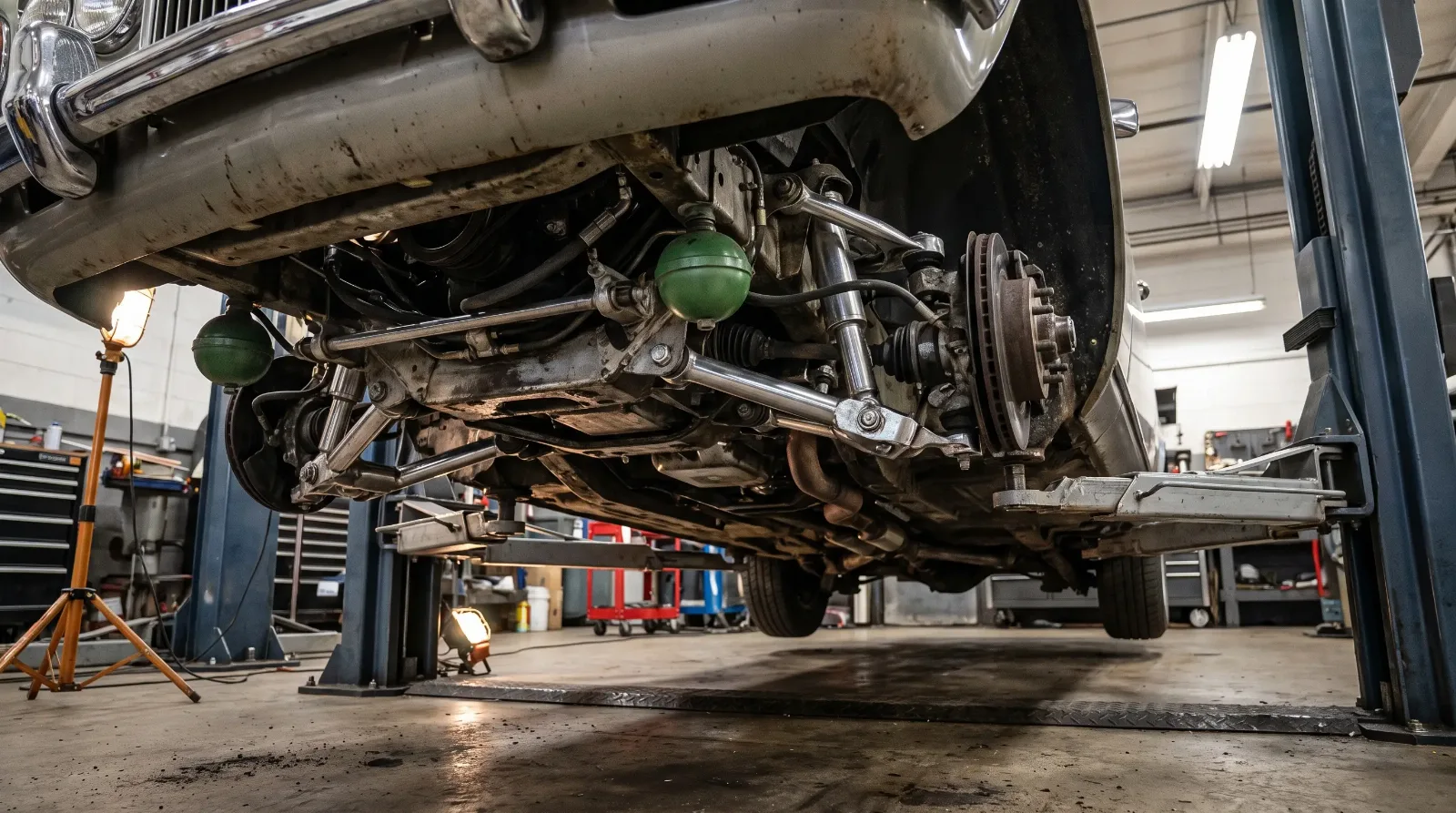
Cars are built to move, and sitting still creates its own damage. Tires develop flat spots where they carry weight in one position for months, and the old bias-ply or aging radials on a classic take a set that a short drive will not always work out. Fluids settle and degrade. Brake fluid absorbs moisture and corrodes lines and cylinders from the inside. On the hydraulic and self-leveling systems these cars often use, seals dry out when they are not exercised, which is how a car emerges from storage sitting on the ground.
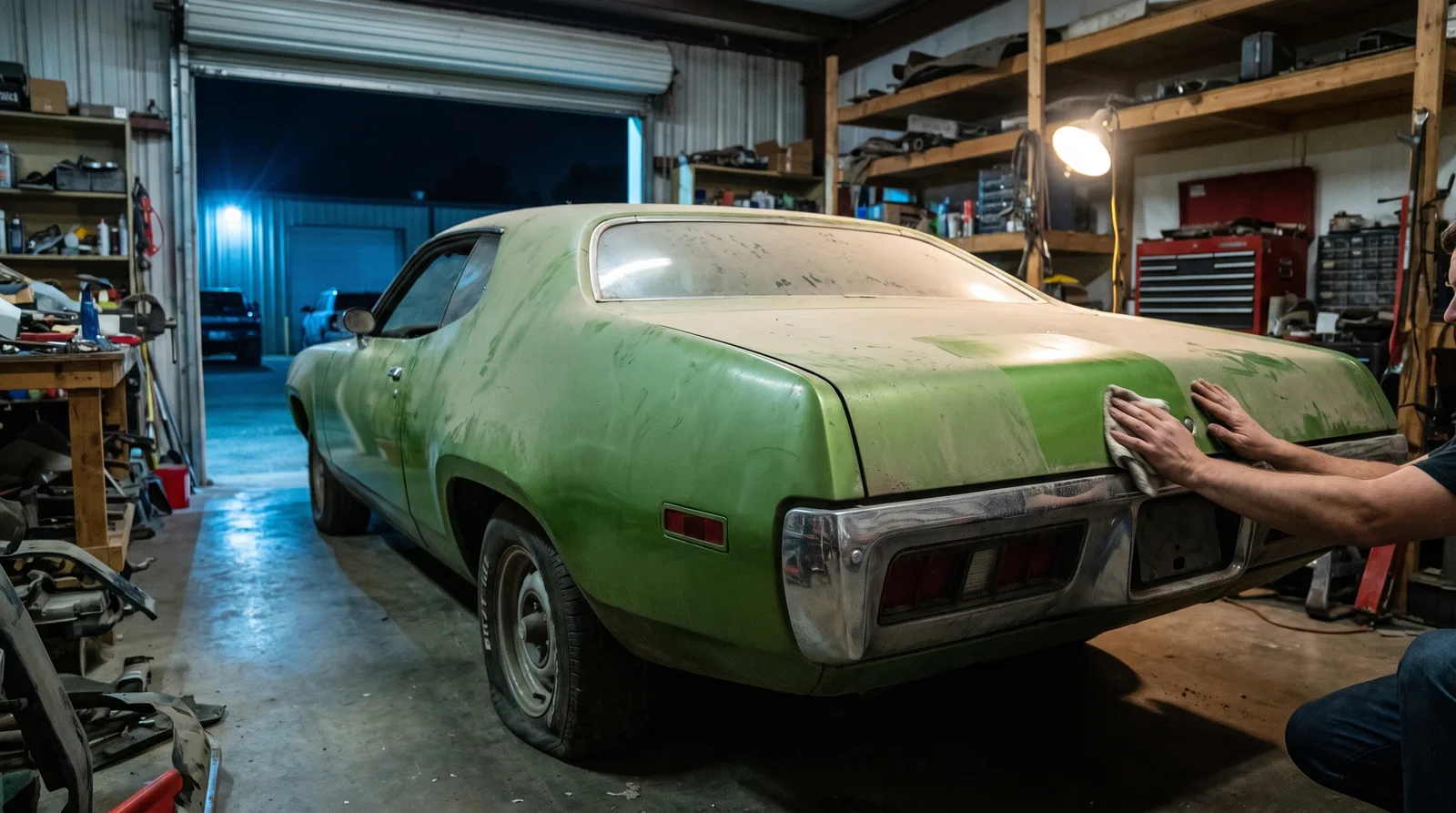
Then there is the biology. Rodents treat a stored car as a house, nesting in the airbox, chewing wiring looms, and fouling upholstery that costs a fortune to redo. Battery goes flat and can freeze or sulfate. None of this is dramatic on any given day, which is exactly why it wins. The damage is cumulative and invisible until you try to wake the car up.
🔧 Inspection Priorities
- Moisture control. A dehumidifier and a breathable cover in a dry space prevent the rust and mildew that quietly downgrade a car. This is the highest-value habit in storage.
- Fuel stabilization. Treat the fuel or store the system dry. Varnished carburetors and corroded fuel systems are a costly wake-up bill.
- Tire loading. Inflate to a higher storage pressure or move the car periodically to fight flat-spotting on aging tires.
- Rodent exclusion. Block entry points and check the airbox and cabin. Chewed wiring and fouled upholstery are among the worst storage losses.
- Battery care. A maintainer keeps the battery healthy and preserves any electronics that hate sitting flat.
Doing it right, by the numbers
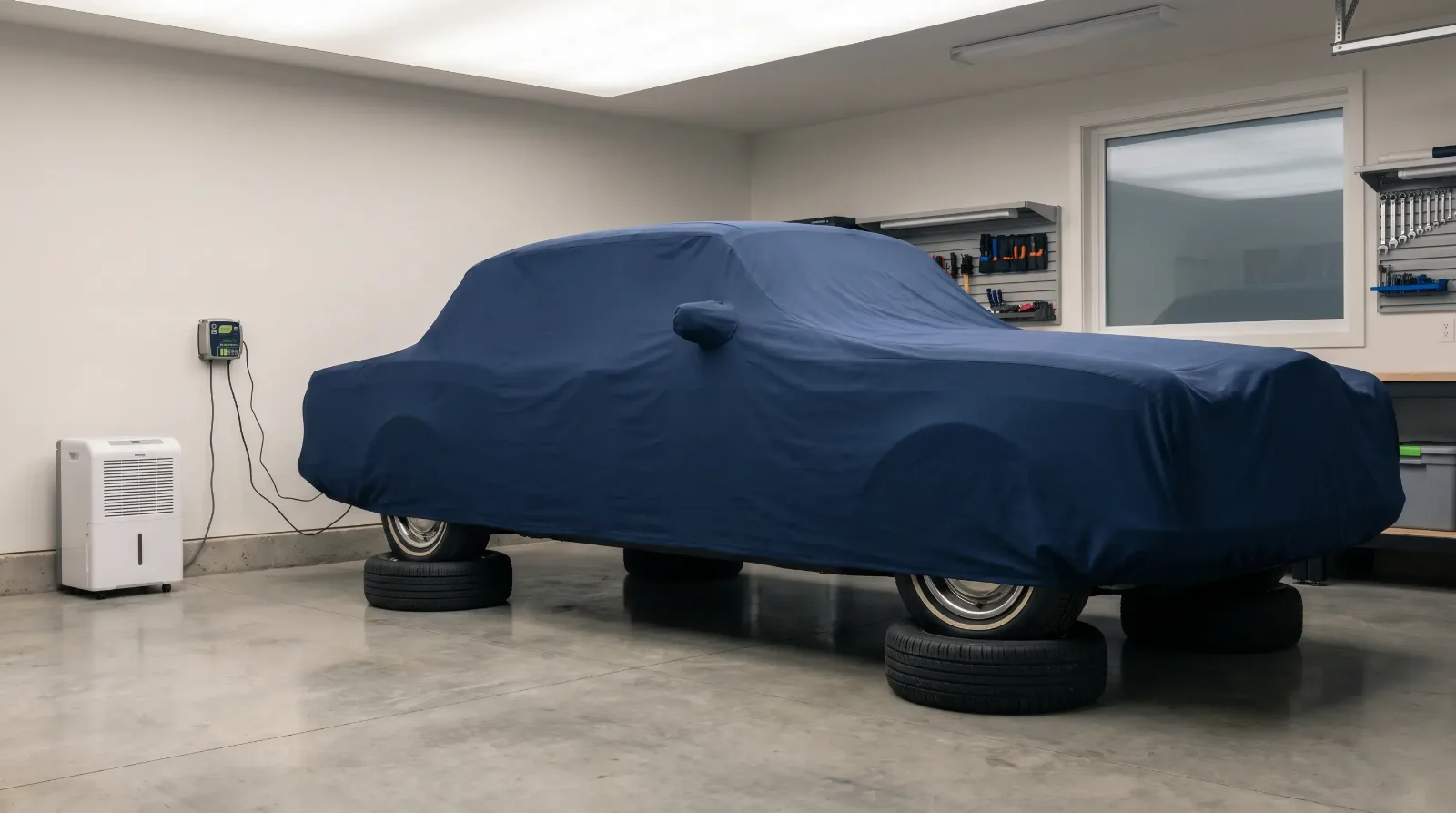
Good storage is cheap relative to what it protects. A quality battery maintainer, fuel stabilizer, a breathable cover, and a dehumidifier are a modest outlay, call it a few hundred dollars in gear, against a car whose value runs from tens of thousands into six figures. Climate-controlled storage at a facility costs more, commonly in the $150 to $500 a month range depending on the market and whether it is heated and humidity-managed, but for a high-value car with no suitable home garage it is cheap insurance on the grade.
Compare that to the downside. A season of moisture can turn a strong car into one needing interior work, brake work, and fuel-system attention, easily several thousand dollars of recommissioning, and it can knock a condition tier off the car's value, which on an expensive marque is a far larger number than the repairs themselves. That math is why the market pays for a well-kept car and punishes a neglected one. Preservation is not a cost. It is the cheapest way to defend the money already in the car.
"The most expensive storage is the free kind, the car shoved in a damp barn and forgotten. I have appraised too many of those. The owner remembers a clean car and the market sees rust, mildew, and a fuel system full of varnish. A few hundred dollars of gear and a dry space protect condition, and in this segment condition is the entire number."
David Mercer
Waking the car back up
How you take a car out of storage matters as much as how you put it away. Do not just turn the key and drive. Check the fluids, look for leaks and rodent evidence, bring the brakes up carefully, and inspect the tires before you trust them at speed. On cars with complex hydraulics, let the system come up to pressure and watch that it holds before you rely on it. A car that was stored properly wakes up easily. A car that was stored badly shows you the bill on the first drive.
Storage is where the patient owner protects his position, and the buyer who understands it pays for a car that was clearly kept right. When you are ready to shop preserved examples, the current classic luxury cars for sale are the place to compare how condition tracks with price. And once a car is out of storage and in front of you, the next skill is reading exactly how good it really is, so continue with next: Condition Grading for Classic Luxury Cars.
Related Reading
Have a
Classic Car
for Sale?
Reach thousands of serious classic car collectors across the US.
Sell It Here →
Are You a Classic Car Dealer?
List your full inventory and connect with targeted classic car buyers.
Join as a Dealer →

About the author
David Mercer
Classic car market analyst with two decades of experience tracking collector car valuations, auction results, and investment trends.

Comments
Be the first to comment on this article.