
Every classic has a parts problem eventually. On an orphaned luxury marque, the parts problem is the whole project. When the company that built your car no longer exists, there is no factory classic centre, no warranty pipeline, no one remanufacturing trim on demand. Packard and Imperial are the two American luxury names that teach this lesson hardest. Packard folded as a real carmaker in the mid-1950s. Imperial, Chrysler's standalone luxury marque from 1955 to 1975, was killed twice. Packard and Imperial parts sourcing is a discipline, not a phone call, and knowing how it works decides whether one of these cars is a joy or a stalled shell in your garage.
Market & Values
7 min read
Sourcing Rare Parts for Orphaned Luxury Marques: Packard and Imperial
How to source rare parts for orphaned marques like Packard and Imperial, why one is easier than the other, and how the club network keeps them running.
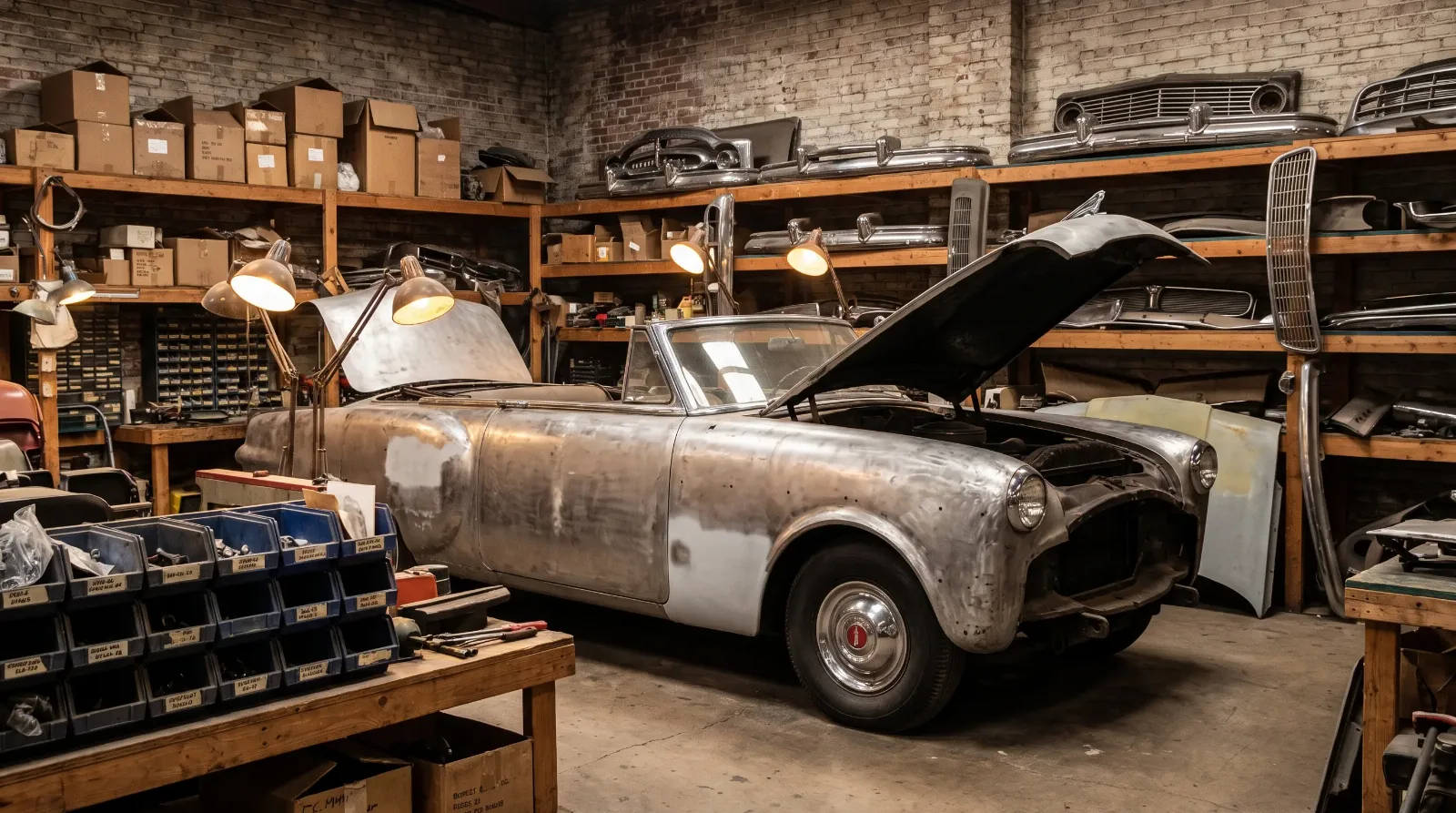
The good news is that both marques have something better than a factory: an organised, decades-old owner community that has kept the supply lines alive. The bad news is that the two cars sit in different places on the difficulty scale, and you need to understand why before you buy. One shares a great deal with a surviving parent company. The other shares almost nothing with anyone still in business.
Why Imperial is easier than it looks
Imperial was Chrysler's luxury flagship, and that parentage is the buyer's advantage. Under the sheet metal, an Imperial shares a large share of its mechanical hardware with big Chryslers of the same years: engines, transmissions, brakes, and much of the running gear are Mopar parts with real catalogue support. The RB and B-block V8s, the TorqueFlite transmission, the suspension components, these you can source through the deep Chrysler restoration aftermarket that also feeds the muscle-car world.
Where Imperial bites is everything that made it an Imperial rather than a New Yorker. The unique body panels, the freestanding headlamps and taillamps of certain years, the distinctive brightwork, the interior trim, and the model-specific glass are Imperial-only and were built in modest numbers. A mechanical rebuild is affordable. Making the car correct and complete on the outside and inside is where the hunt begins. That split, cheap drivetrain and scarce cosmetics, is the pattern for most orphaned American luxury, and it belongs in your budget from day one.
Why Packard is the harder road
Packard has no surviving parent to lean on. The independent Packard ended in the mid-1950s, the 1957 and 1958 cars were badge-engineered Studebakers, and after that the name was gone. That means the genuine senior Packards, the prewar classics and the early-1950s cars collectors actually want, are supported almost entirely by specialists and the club network rather than by any shared modern supply chain. Mechanical parts for the straight-eight and the later V8 exist, but through a smaller pool of vendors, and body, trim, and interior pieces often come down to New Old Stock, reproduction, or fabrication.
This is not a reason to avoid Packard. The marque is one of the great American luxury names and the community is unusually knowledgeable. It is a reason to buy the most complete car you can find, because a Packard missing its correct trim is a longer and dearer project than the purchase price suggests. The full framework for weighing that decision sits in the collecting and restoring guide.
| Source type | Best for | Reality check |
|---|---|---|
| Marque clubs (Packard Club, Imperial community) | Knowledge, member vendors, provenance | The first call; members often know where a part is |
| Marque specialists (Packard/Mopar vendors) | Mechanical, reproduction, NOS | Fewer for Packard than Imperial |
| Chrysler aftermarket (Imperial only) | Engine, trans, brakes, suspension | Deep and affordable; cosmetics excluded |
| Swap meets & NOS hunts | Trim, glass, model-specific pieces | Slow; scarcity sets the price, not you |
🔧 Inspection Priorities
- Model-specific trim and brightwork. On both marques the cosmetics are the scarce part. A missing piece can be a multi-year search. Confirm the car is complete before you commit.
- Correct glass and lenses. Curved windshields and unique lamp lenses for low-volume luxury cars are frequently unobtainable new. A single crack is a real problem.
- Interior completeness. Correct hides, wood, and instruments are far cheaper to preserve than to recreate. Prioritise a car with an intact interior.
- Drivetrain shared vs unique. On an Imperial, confirm which parts are shared Chrysler and which are Imperial-only, because that ratio sets your true cost.
Reproduction, NOS, and fabrication
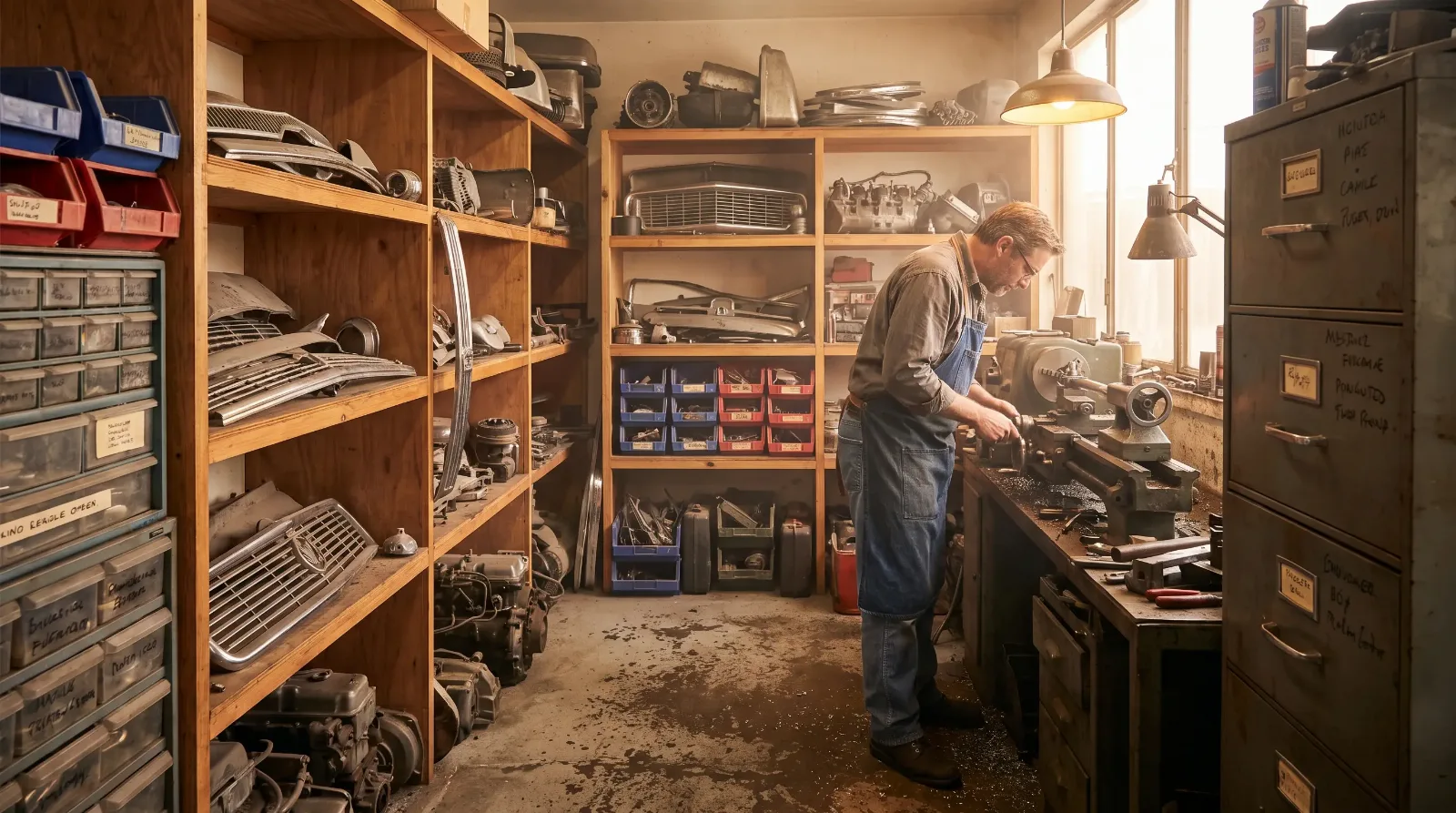
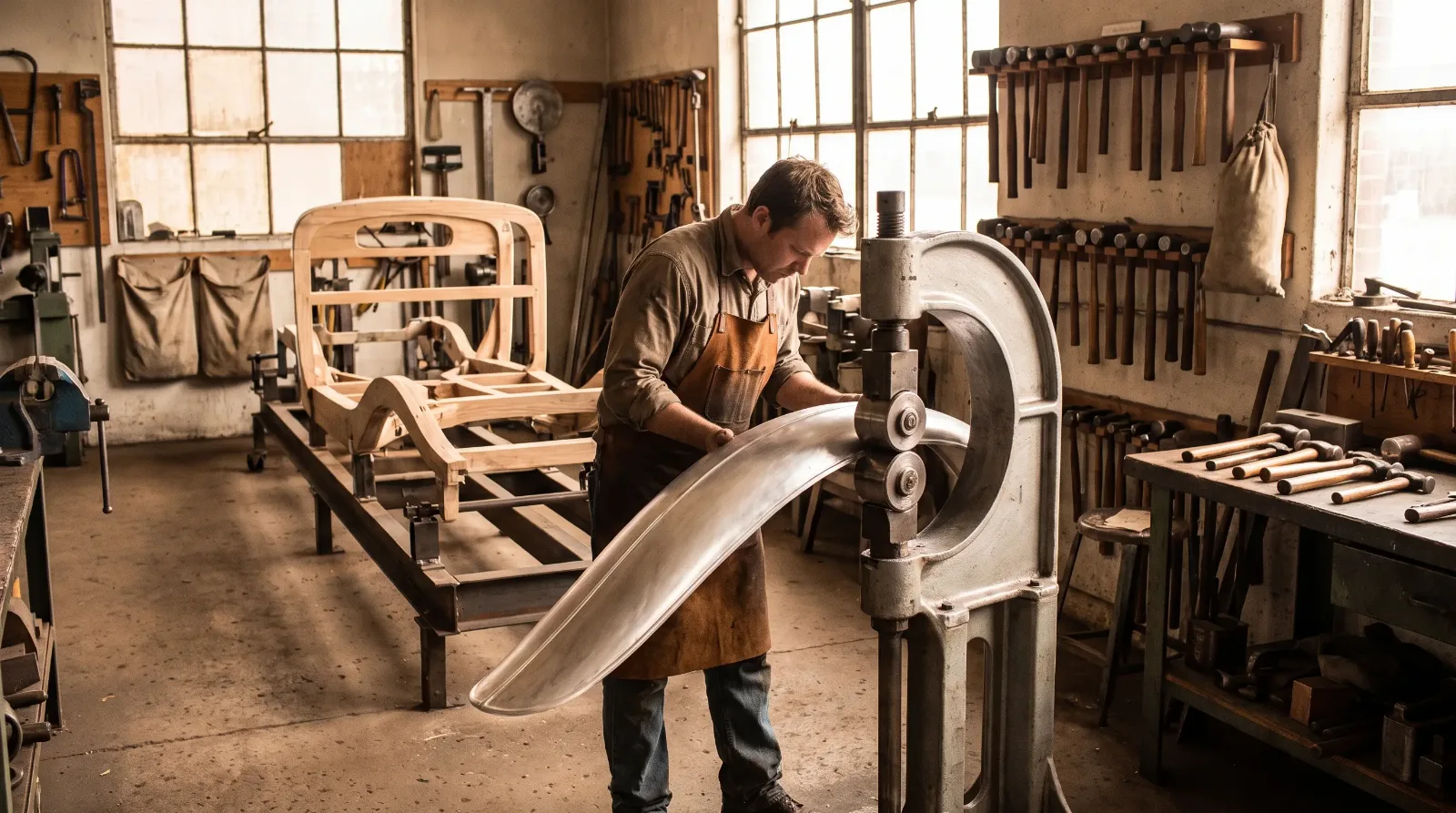
When the shelf is empty, orphaned-marque parts come from three places, and knowing which one you are dealing with tells you the cost and the wait. New Old Stock is genuine factory-era stock that never got used, ideal when you can find it but priced by scarcity and often gone. Reproduction parts are newly made copies, common for high-demand items like weatherstrip, trim, and some mechanical pieces, and their quality ranges from excellent to disappointing depending on the vendor. Fabrication is the last resort: having a piece made one-off by a specialist, which is how you solve a truly unobtainable part but also the slowest and dearest route.
The mistake buyers make is assuming every part falls into the first category. On a senior Packard, some pieces will only ever be reproduction or fabrication, and the price reflects a run of one rather than a factory batch. Price the likely route for any part you know you will need before you buy the car, because a $200 catalogue part on a common car can be a $2,000 fabricated one on an orphaned marque.
How to build a sourcing strategy that works
The buyers who succeed with orphaned marques all do the same thing: they join the community before they buy the car, not after. The club is the map. Members know which vendor has the part, which reproduction is correct, and which car for sale is complete versus stripped. Treat that network as part of the asset, because with an orphaned marque it effectively is.
"With an orphaned marque you are not buying a car, you are buying a car plus a network. On an Imperial the drivetrain is easy because Chrysler still stands behind those parts. On a senior Packard, the club and the specialists are the factory now. Value the network, because it sets your real cost."
David Mercer
Sourcing rare parts is a solvable problem when you go in with the right posture. Understand which pieces are shared and which are marque-only, price the scarce cosmetics before you buy, and lean on the community that has kept these cars alive for decades. Once the parts question is settled, the next challenge on many of these cars is the hand-formed bodywork itself, covered next: next: Coachbuilt Body Restoration.
Related Reading
Have a
Classic Car
for Sale?
Reach thousands of serious classic car collectors across the US.
Sell It Here →
Are You a Classic Car Dealer?
List your full inventory and connect with targeted classic car buyers.
Join as a Dealer →

About the author
David Mercer
Classic car market analyst with two decades of experience tracking collector car valuations, auction results, and investment trends.
Comments
Be the first to comment on this article.