
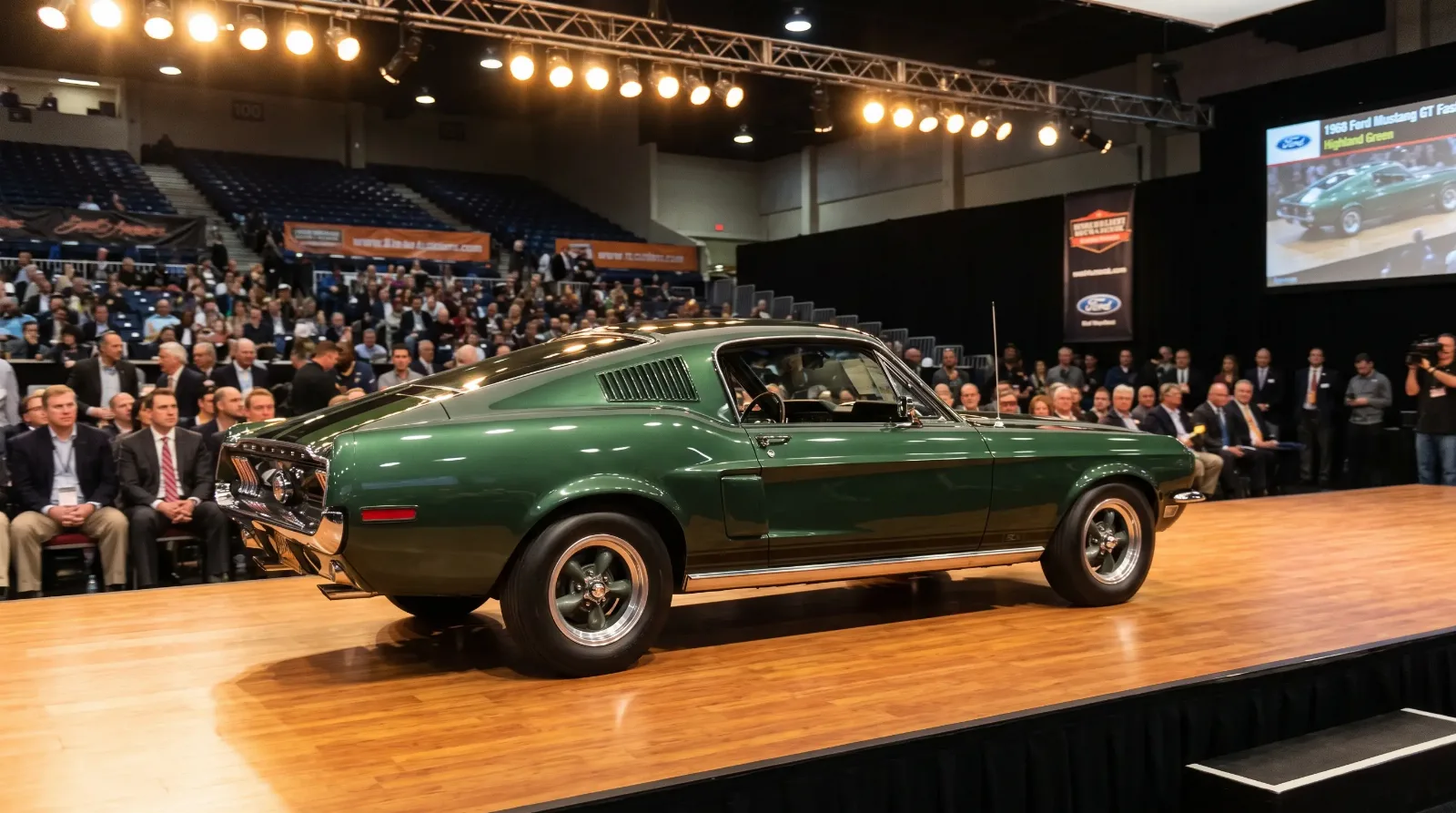
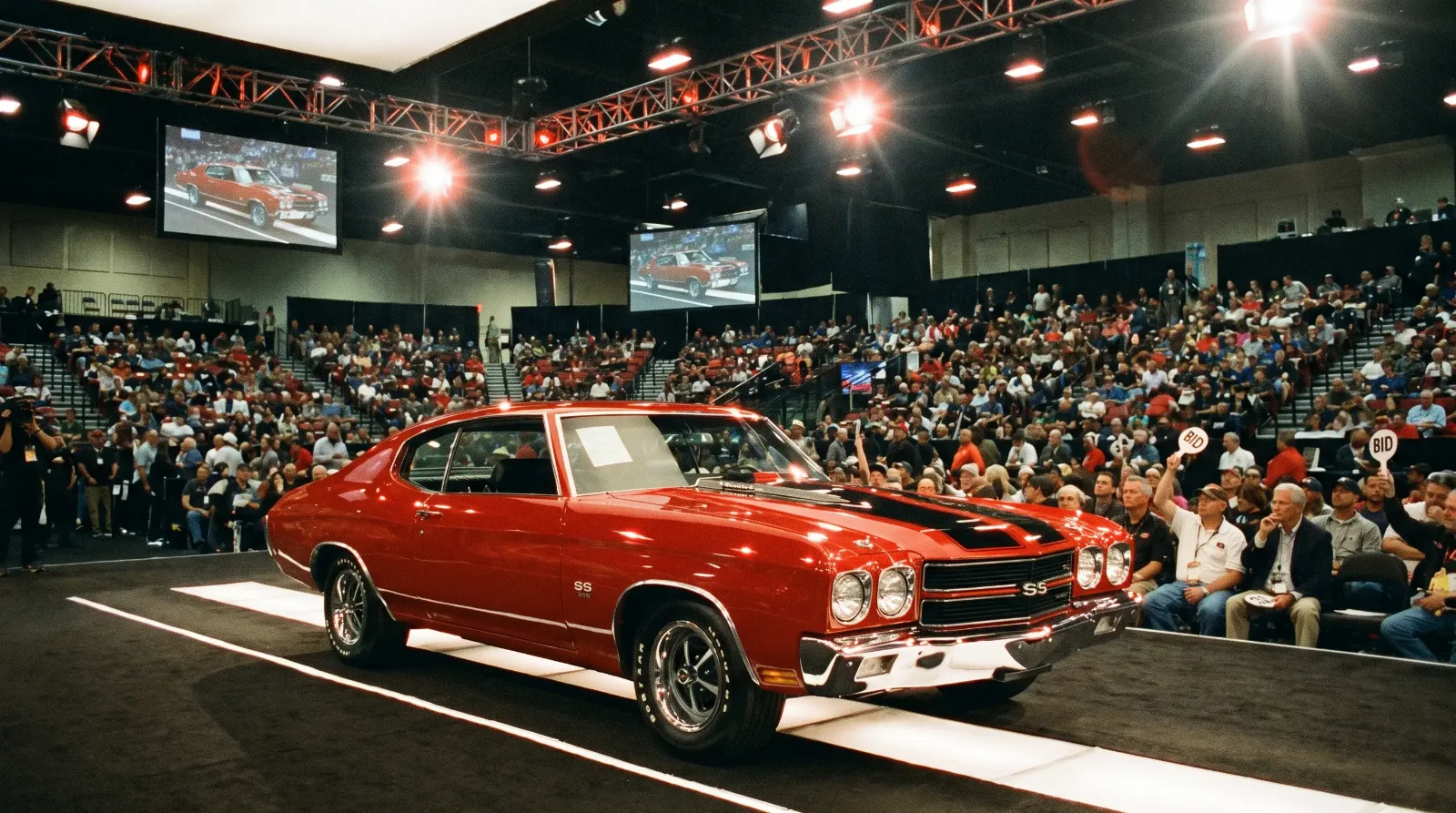
The green Mustang crossed the Mecum Kissimmee block in January 2020 and the room went quiet the way rooms do when everyone knows they're watching something they'll talk about for years. It was the actual Highland Green 1968 Ford Mustang GT fastback from Bullitt, the one Steve McQueen drove through the hills of San Francisco, and it sold for around $3.4 million. A regular 1968 GT fastback, a very nice one, might bring $80,000 on a good day. The difference was one man's hands on the wheel and a piece of film history bolted to the story.
Market & Values
6 min read
Famous Celebrity-Owned Muscle Cars
Why celebrity owned muscle cars sell for multiples of ordinary cars. The stars who bought American iron and how to tell real provenance from a story.
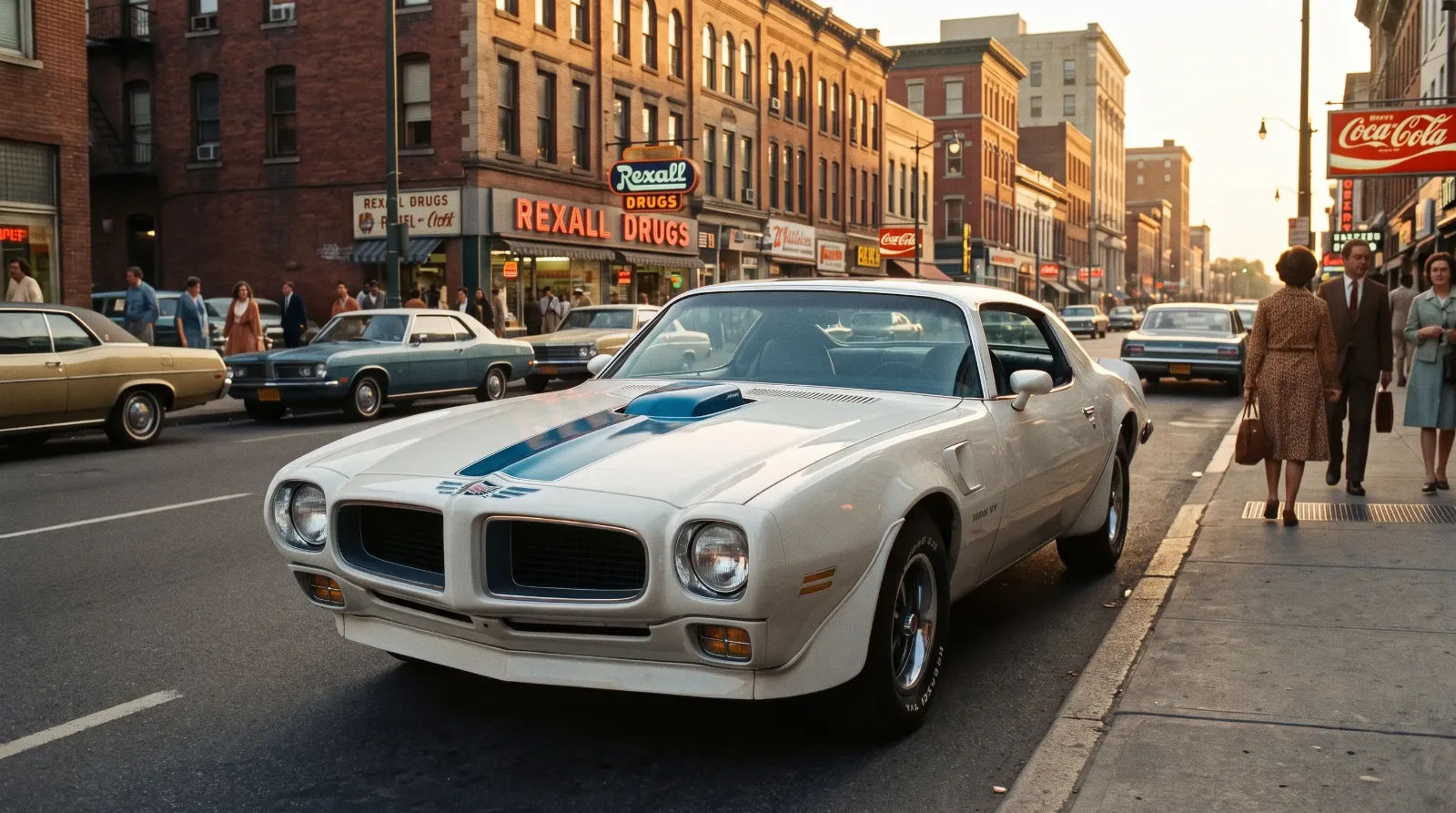
That auction told you everything about why celebrity owned muscle cars occupy their own strange corner of the market. The metal is the same. The paint is the same. What changes is the story, and in this hobby the story is a real, measurable part of what people pay for. I've spent years talking to owners, and the ones who chase provenance aren't buying a car. They're buying a connection to a moment.
Why a name changes the price
Provenance is the collector word for who owned it and whether you can prove it. On an ordinary car it barely registers. On a car tied to someone famous it can multiply the value several times over, and the multiplier depends entirely on how documented and how meaningful the connection is. A car a star owned for a few months is worth a bump. A car a star was photographed in, raced, or made famous on screen is a different animal.
The key word there is documented. A verbal claim that a celebrity once owned a car means almost nothing at auction, because the market has been burned too many times. Bills of sale, registration records, period photographs, and letters are what turn a good story into a bankable one. For the wider framework of what pushes any muscle car's value up, the pillar has the complete rundown.
The stars who bought American iron
Steve McQueen sits at the center of this world, and not just because of Bullitt. The man genuinely loved cars and bikes, drove them hard, and had the credibility that no marketing department can manufacture. Anything tied to him carries what auction folks quietly call the McQueen premium, and it's real. Paul Newman was the same kind of owner, a serious racer whose garage meant something because he actually used what was in it.
Among living collectors, Tim Allen has built one of the more respected muscle car collections in Hollywood, with documented big-block Chevrolets that he talks about with real knowledge rather than borrowed enthusiasm. Jay Leno's garage is famous enough to be its own institution. The pattern that holds across all of them is authenticity. The premium attaches most strongly to celebrities who were genuine enthusiasts, not to those who simply had a car parked in a driveway for a photo.
When the story is worth paying for
Not every celebrity connection is worth chasing, and this is where newcomers get hurt. The value only holds if the provenance is airtight and the fame is meaningful to the car. A minor celebrity's daily driver adds little. A car that a major star made culturally famous, and that comes with paper to prove it, is where the real premium lives. Everything in between is a judgment call.
"You're not just buying the car, you're buying the afternoon somebody spent watching a movie and deciding that machine was the coolest thing they'd ever seen. That feeling has a price, and at the right auction it's a big one."
Patrick Walsh
The same logic scales down from movie legends to regional heroes and racers. A local drag star's documented car carries a premium in its home market that it might not carry three states away, which is one reason provenance and value are so tied to geography. The Chevelle world has its own version of this, and the crossover between fame and one particular model is worth reading in read the full story.
How to buy a car with a story
If a provenance premium is what's drawing you to a car, treat the paperwork as more important than the paint. Ask for the chain of ownership in writing. Ask for period photographs that clearly show the same car, not a similar one. Be honest with yourself about whether you're paying for documented history or for a hopeful legend, because the market has a long memory and resale punishes stories that don't hold up.
The premium also lives on top of the car's underlying grade, which means condition still matters enormously. A famous name will not rescue a rough car, and the auction houses sort exactly this out through their grading, which you can see in read the full story. Get both right, the story and the steel, and you own something the next buyer will fight for. Get only the story, and you own an expensive anecdote.
When the celebrity car goes quiet
There's a side of this market nobody advertises, and it's worth understanding before you chase a name. Fame fades, and the premium fades with it. A car tied to a star who was huge in 1972 and forgotten by now carries far less of a bump than the number a nostalgic seller hopes for. The names that hold their value are the ones that stayed culturally alive, the McQueens and the Newmans, the figures whose appeal reaches a new generation of buyers rather than a shrinking one.
That's the quiet risk in provenance buying. You aren't just betting on the car, you're betting on how long the world keeps caring about the person attached to it. I've watched cars with genuine, documented celebrity history struggle at auction because the fame no longer moved anybody in the room. The lesson from those sales is simple. The story has to still mean something to the people bidding, not just to the seller telling it, and the safest premiums are the ones built on names that time hasn't touched.
Related Reading
Have a
Classic Car
for Sale?
Reach thousands of serious classic car collectors across the US.
Sell It Here →
Are You a Classic Car Dealer?
List your full inventory and connect with targeted classic car buyers.
Join as a Dealer →

About the author
Patrick Walsh
Automotive journalist covering classic car shows, events, and the enthusiast community across North America.
Comments
Be the first to comment on this article.