
Every muscle car that crosses a major auction block arrives with a pre-sale estimate printed next to the lot number, usually a range like $70,000 to $90,000. Buyers treat that range as a fact. It is not a fact. It is an opinion, produced by a specialist who has weighed the same four things an appraiser weighs before a check clears: condition, documentation, liquidity, and downside. Understanding how that number gets built tells you more about what a car is worth than the number itself.
Market & Values
6 min read
How Auction Houses Set Muscle Car Estimates
Auction estimates are an opinion, not a fact. Here is how houses build muscle car pre-sale ranges from comps, condition and documentation.
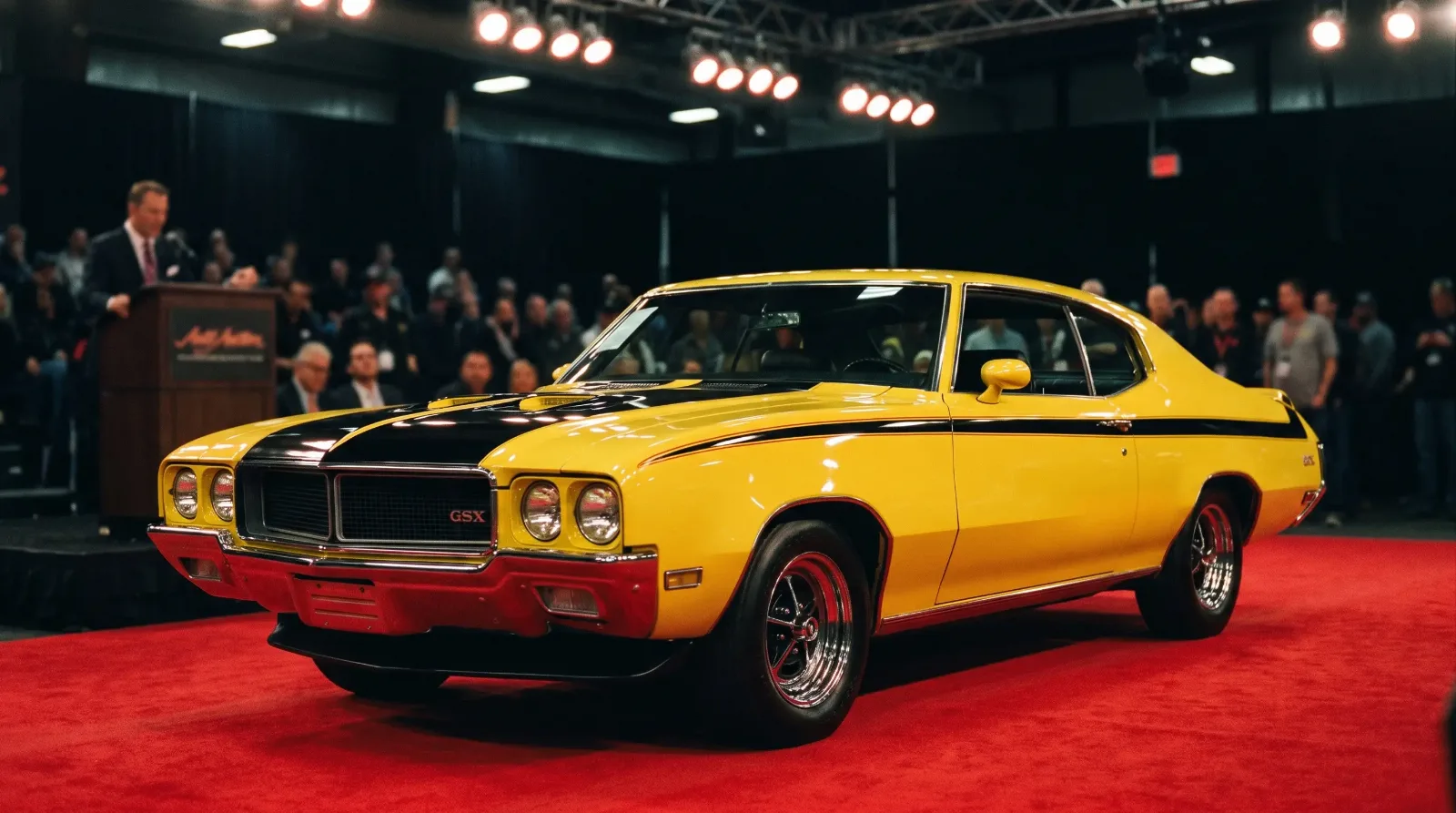
The estimate is a marketing tool and a risk tool at the same time. Set it too high and the car draws no bids and no-sales on the block, which stains it for the next attempt. Set it too low and the consignor is unhappy even after a strong hammer. The specialist is threading that needle in public, and the range you see is the visible edge of a private calculation. For the wider context on how these cars are priced, our muscle car values explained guide covers the collectibility drivers that feed straight into every estimate.
What an estimate actually is
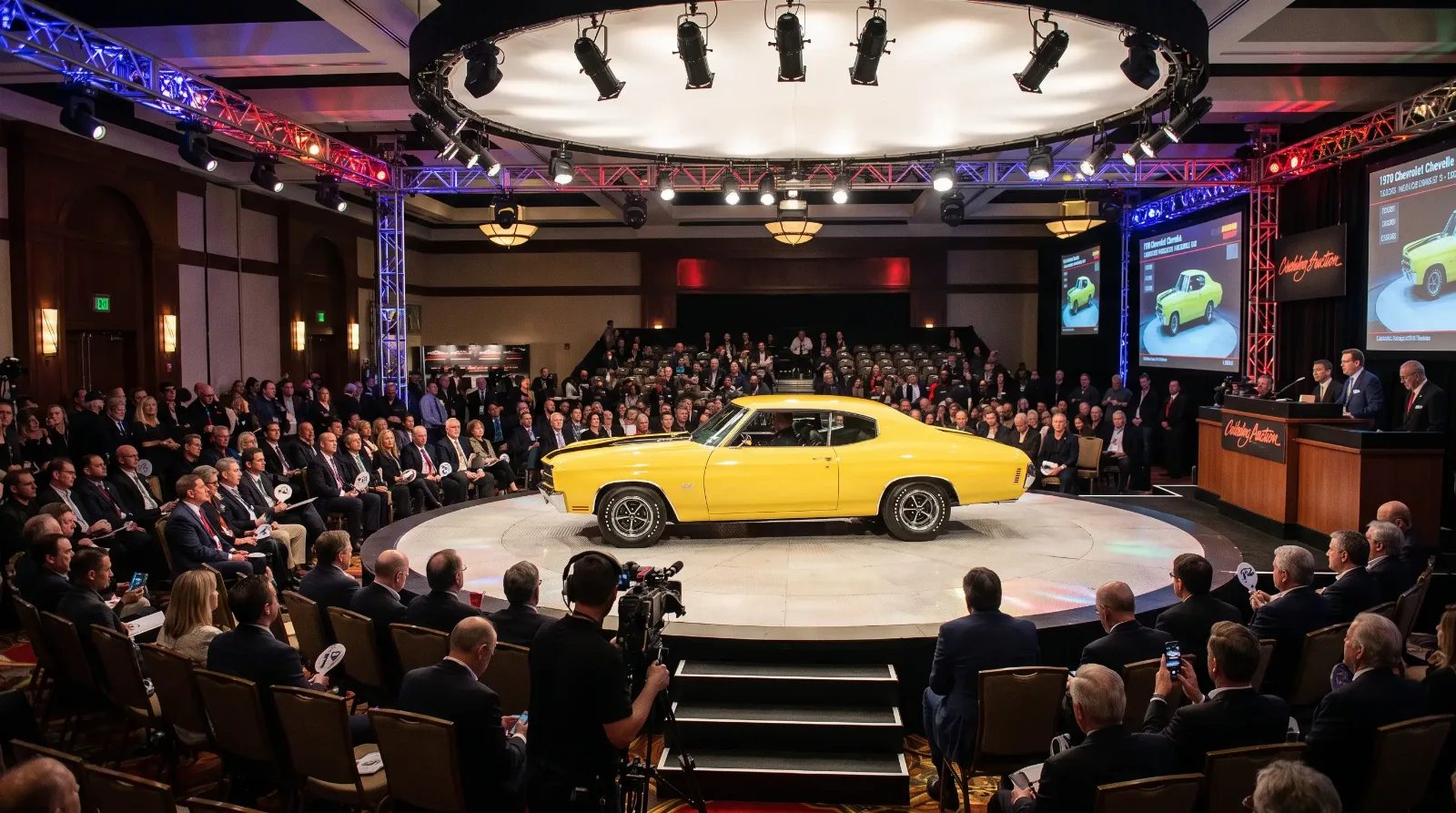
An auction estimate is a professional forecast of hammer price, not the price with fees, and not an appraisal for insurance. Those are different documents built for different purposes. The pre-sale range is the house telling the room where it expects real bidding to land, based on what comparable cars have done recently and what condition this specific example is in.
The range itself carries information. A tight band, say $85,000 to $95,000, signals a car with plenty of recent comparable sales and little ambiguity about condition or history. A wide band, $60,000 to $100,000, is the specialist admitting uncertainty. Something about the car, thin paperwork, an unusual color, a restoration of unknown quality, makes the outcome harder to call. Read the width of the estimate as a confidence score, because that is what it is.
Comps do most of the work
The foundation of every estimate is comparable sales. The specialist pulls what similar cars have hammered for over the last twelve to twenty-four months, adjusts for the differences, and lands on a range. A 1970 Chevelle SS454 LS6 with documentation gets priced against other documented LS6 cars, not against LS5 cars and not against clones. The closer the comp, the tighter the estimate.
The problem with muscle cars is that the best examples are thin on the ground. When only a handful of a given configuration sell each year, the comp set is small and every outlier drags the average. One emotional bidding war at a televised sale can lift the perceived value of an entire model, and the next estimate reflects that even if the sale was an anomaly. Good specialists discount the outliers. Weaker ones anchor to the headline number and set estimates the market cannot support.
| Estimate driver | What raises the range | What lowers it |
|---|---|---|
| Comparable sales | Multiple recent strong results | Thin or stale comp data |
| Condition tier | #1 concours or documented survivor | #3 driver with older work |
| Documentation | Build sheet, broadcast sheet, provenance | Numbers-matching claim with no paper |
| Rarity of spec | Rare engine, one-year option, low build count | Common drivetrain, mass-produced trim |
| Market timing | Rising segment, active bidders | Softening demand, seasonal lull |
Condition and documentation move the number
Two identical cars on paper can carry estimates that differ by half, and the reason is almost always condition and documentation. Appraisers grade condition on a tier scale, roughly #1 for concours down to #4 for a rough driver, and each step down knocks a predictable slice off the range. A car photographs as a #2 and turns out to be a #3 in person more often than the reverse, which is why serious bidders inspect before they trust an estimate.
Documentation is the multiplier. A big-block muscle car with a matching-numbers engine and no paperwork to prove it is a different asset than the same car with a build sheet, a window sticker, and a clean ownership chain. The estimate reflects the gap because the market does. The rarer and more valuable the configuration, the more the documentation matters, since that is exactly where clones and restamped numbers concentrate.
"A #2 car with a thin paper trail is not a #2 car when the check clears. It is a #3 with a good story, and the estimate has to say so. The number you see on the block already priced in the missing documents, even if the catalog never mentions them."
Marcus Feld
Where estimates go wrong
Estimates fail in a few repeatable ways, and knowing them protects you. The most common is stale comps in a moving market. If a segment has run up fifteen percent since the last comparable sale, an estimate built on old data reads low, and the car blows past the high end on the block. The reverse happens when a segment softens and the house has not caught up. The estimate looks reasonable and the car no-sales because bidders have moved on.
The other failure is the consignor's ego. A house that wants the consignment will sometimes float a high estimate to win the car, then quietly hope a reserve protects everyone. When the reserve is not met, the lot passes, and a no-sale at a public auction is a mark that follows the car. A passed lot is harder to sell next time, because the room remembers. Sellers who want to avoid that outcome should understand the trade-offs a consignor faces before the gavel before they agree to an estimate.
Reading an estimate as a buyer
Treat the estimate as the starting point of your own homework, not the conclusion. If the low end looks cheap, ask why. Thin documentation, an older restoration, or a segment that is quietly softening will all pull an estimate down for reasons the catalog glosses over. If the high end looks rich, the house may be chasing a recent headline sale that will not repeat.
Build your own view from the same inputs the specialist used. Find the real comps, grade the condition honestly, verify the paperwork, and decide what liquidity looks like if you ever want to sell. The estimate is one professional's forecast. Yours can be better, because you are only pricing one car and you can inspect it. For a clear example of how a single factor can reshape an entire segment's numbers, read the full story on why documented Hemi cars sit at the very top of the market and set the ceiling everything else is measured against.
Related Reading


Have a
Classic Car
for Sale?
Reach thousands of serious classic car collectors across the US.
Sell It Here →
Are You a Classic Car Dealer?
List your full inventory and connect with targeted classic car buyers.
Join as a Dealer →

About the author
Marcus Feld
Accredited collector-car appraiser who reads the market through hammer prices, condition tiers and risk.


Comments
Be the first to comment on this article.