
Self-leveling and hydraulic suspension is the feature that made these cars ride the way their badges promised, and it is also the system that scares off the most buyers and the most mechanics. When it works, the car sits level under load and glides over surfaces that would upset a conventional chassis. When it fails, it drops on one corner in a parking lot and the repair estimate reads like a small paint job. The gap between those two states is where a lot of value in this segment is won or lost.
Market & Values
6 min read
Restoring Hydraulic and Self-Leveling Suspension Systems
Hydraulic and self-leveling suspension restoration on classic luxury cars: what fails, real cost ranges, and why a working system carries a resale premium.
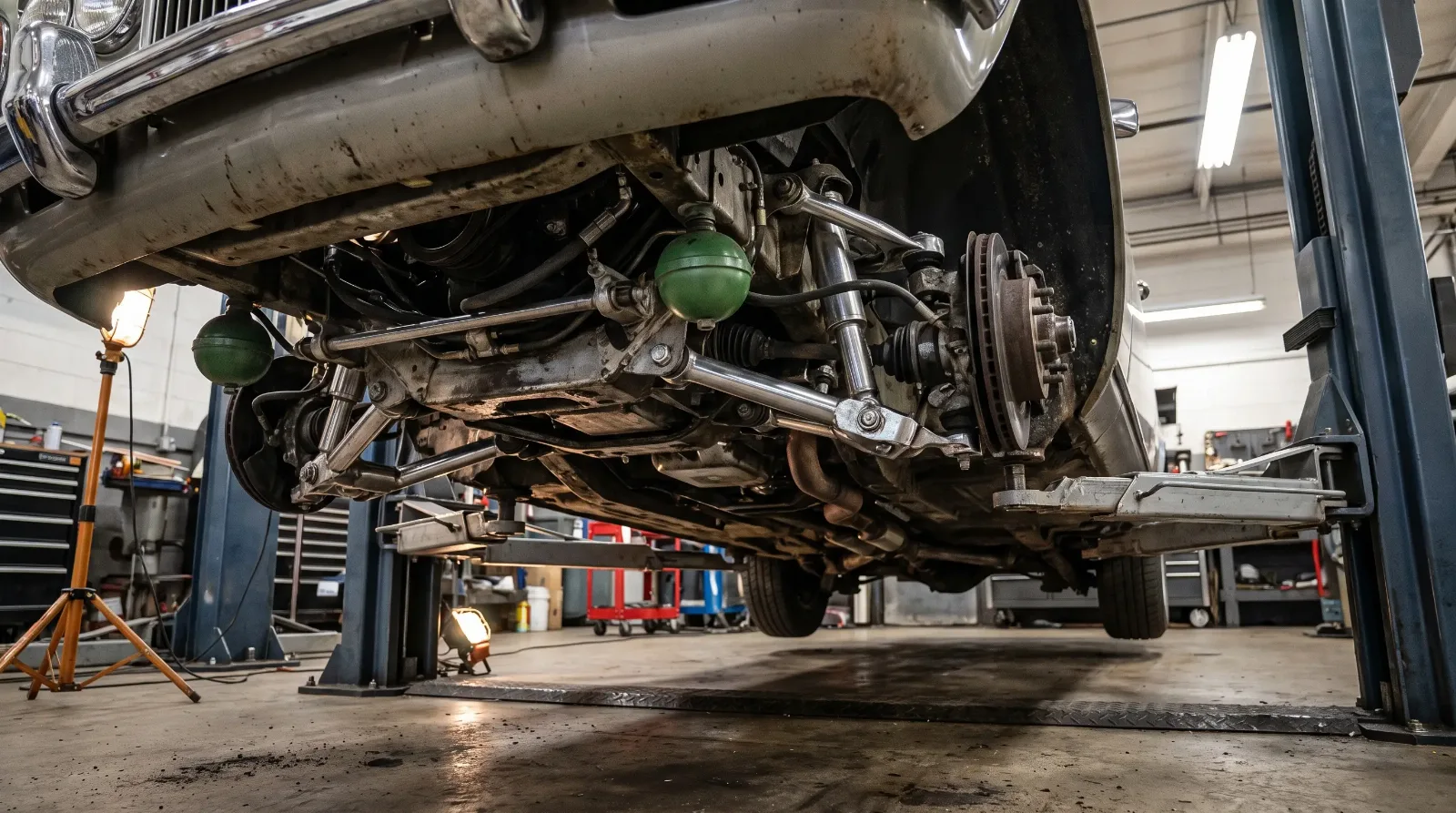
I track what these cars sell for, and a documented, sorted hydraulic system moves the number more than almost any cosmetic detail. Buyers who understand the system pay up for a working one and walk hard on a dead one, because they know what the fix costs. Before you shop, it pays to understand what you are actually buying into. The wider context sits in the restoration story, and this system is one of its most expensive chapters.
Why luxury makers went hydraulic
A conventional spring holds one ride height. Load the trunk or fill the back seat and the tail sinks, the headlights point at the trees, and the ride gets choppy. Luxury engineers hated that, so they built systems that pump the car back to a set height no matter the load. Citroen's hydropneumatic system, introduced on the DS in 1955, is the famous example, using gas-filled spheres as springs and a high-pressure pump to manage height and damping.
The idea spread across the top of the market. Rolls-Royce licensed Citroen's high-pressure hydraulics for the Silver Shadow, launched in 1965, running it for both self-leveling and the brakes. Mercedes-Benz used hydropneumatic self-leveling on the 600 and the 450SEL 6.9. American makers tried air-based leveling, most notoriously the 1957 Cadillac Eldorado Brougham, whose air suspension was troublesome enough that many surviving cars were converted to coils. Each approach solved the same problem, and each created its own restoration headache decades later.
What actually fails
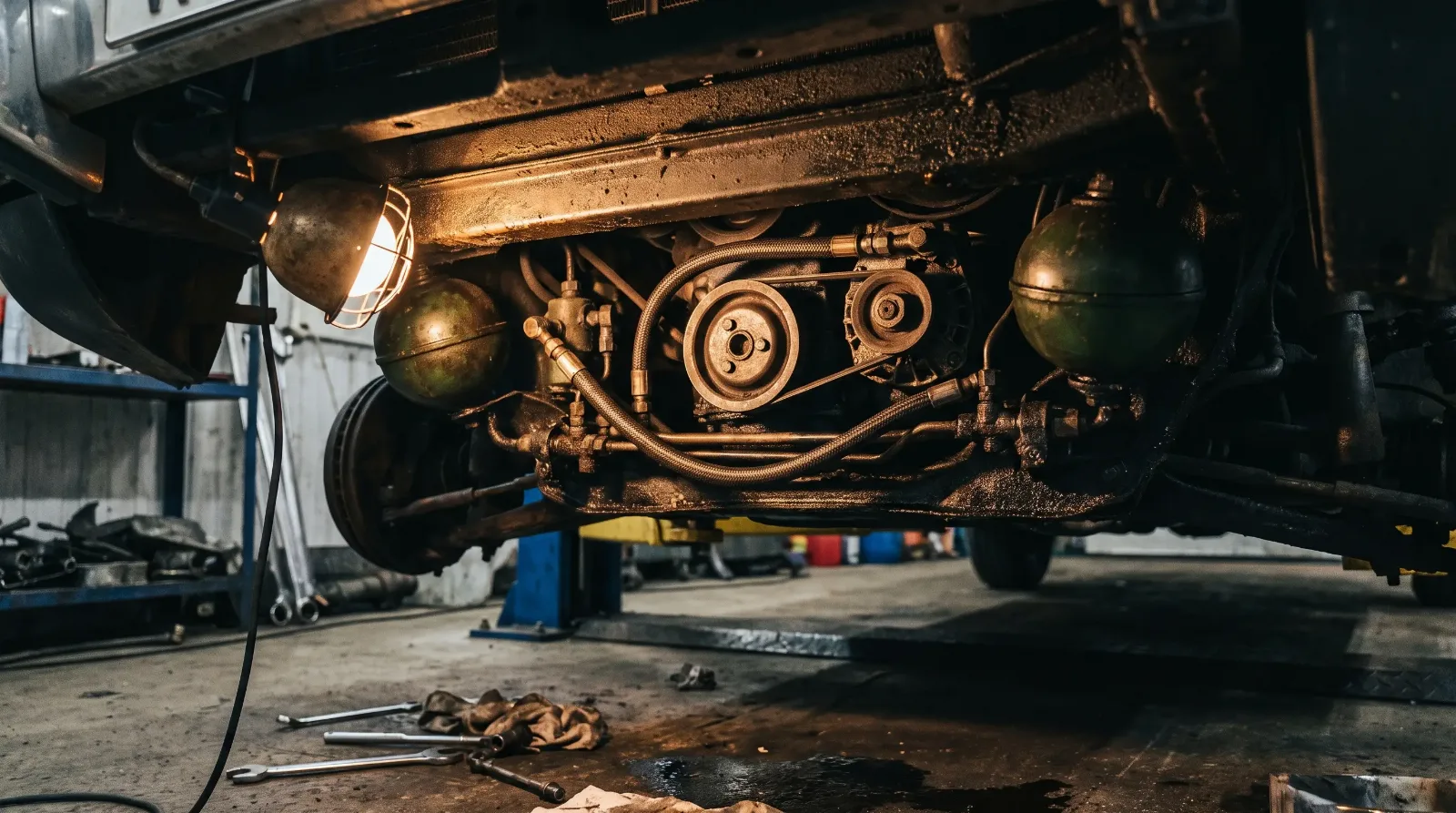
These systems fail in predictable places, and knowing them tells you how deep a given car's problems run. The gas-filled spheres or accumulators lose their nitrogen charge over time, and once the charge is gone the ride goes hard and the leveling gets lazy. Seals in the rams, pumps, and valves dry out and weep, especially on a car that sat, which is how you get the classic overnight sag on one corner. The fluid itself matters more than people expect. Citroen's later cars use LHM green mineral fluid, the earlier ones a different red fluid, and mixing or using the wrong one destroys seals throughout the system.
The pumps and height-control valves are the expensive components, and on marque-specific systems they are not shelf items. A rebuild is specialist labor, and a shop that does not know the exact system will cost you twice, once to guess and once to fix the guess. This is precisely the kind of complex system that separates a luxury restoration budget from a muscle-car one.
🔧 Inspection Priorities
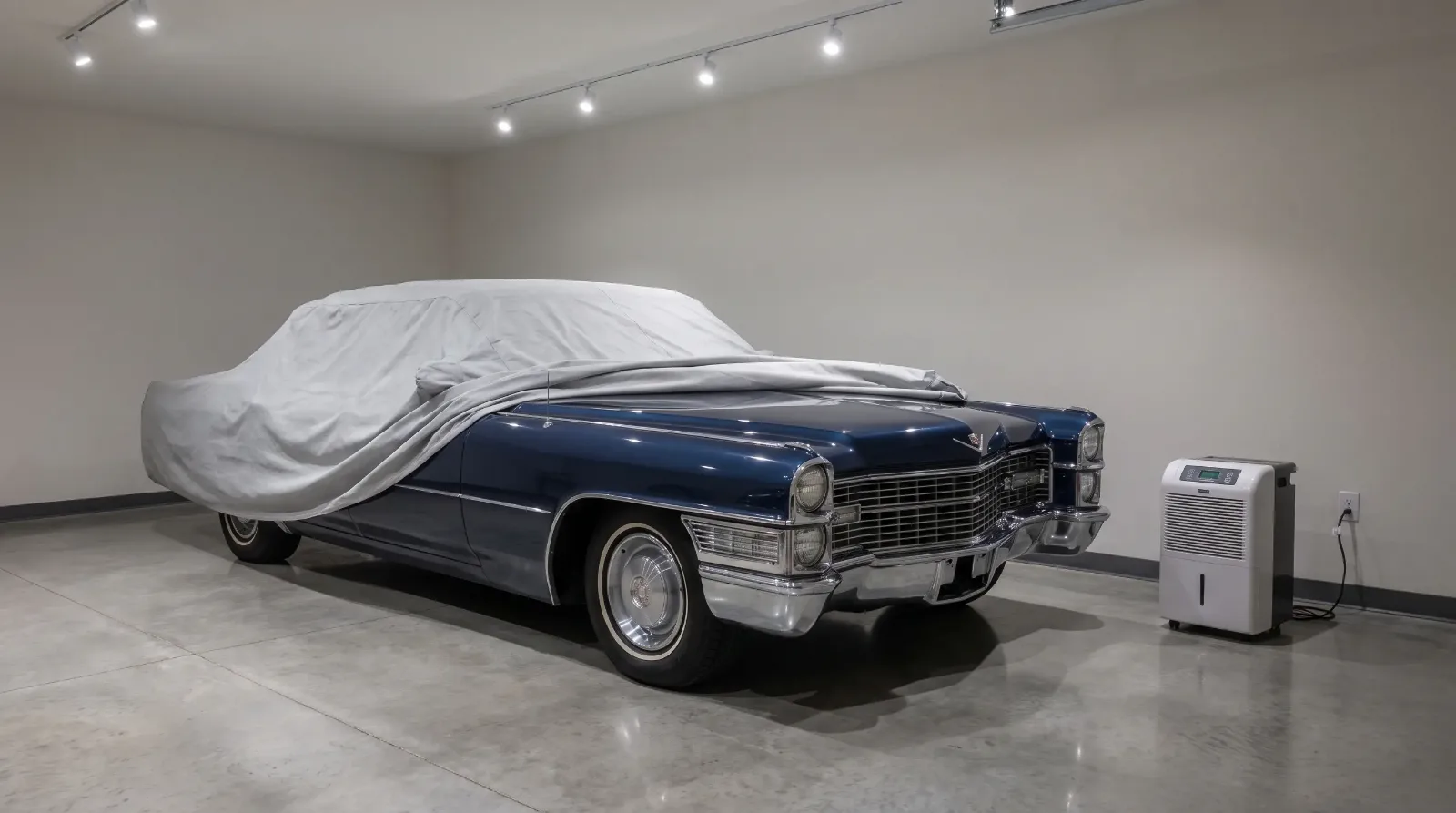
- Overnight sag. Park the car level and check it the next morning. A corner or an end that has dropped points to failed seals or a leaking sphere. This is the most telling free test you can run.
- Ride harshness. A hard, crashy ride on a car built to float usually means spheres that have lost their gas charge. Budget to recharge or replace them.
- Fluid type and condition. Confirm the correct fluid is in the system. Wrong or contaminated fluid means seals throughout may already be compromised.
- Wet components. Look for weeping at the pump, valves, rams, and lines. Seepage is cheap to spot now and expensive to chase later.
- Brake interaction. On systems that share hydraulics with the brakes, a tired suspension is also a brake-safety question. Treat it as one job, not two.
What a proper restoration costs
Numbers move with the marque, the shop, and how much of the system has been neglected, so treat these as approximate and get a quote against the actual car. Recharging or replacing a set of accumulator spheres is often the entry-level job, commonly in the $600 to $2,000 range depending on how many the car uses and whether they can be recharged or must be replaced. A full system rebuild, pumps, valves, rams, seals, and fluid, on a car that has been sitting climbs well beyond that, frequently into $5,000 to $12,000 or more at a marque specialist once labor is counted.
That spread is the whole point. A car with a maintained, documented hydraulic system carries a premium precisely because the buyer avoids that bill. A cheap example with a dead system is not cheap. It is the finished car's price minus a repair you have not paid for yet, and often the sag on one corner is the most honest thing about the listing. The market has learned this, which is why documentation on suspension work reads as real money at resale.
"A luxury classic with a proven hydraulic system sells for a premium, and it should. The buyer who understands the segment knows the alternative is a five-figure specialist rebuild he has not paid for yet. The car that sags overnight in the seller's driveway is telling you exactly what it will cost, if you know how to listen."
David Mercer
Restore, or convert
Some owners give up and convert a troublesome system to conventional coils, and the 1957 Cadillac air-suspension cars are the textbook case. It solves the reliability problem. It also changes what the car is, and for a collector-grade example that originality matters at resale. My read is that a correct, working system almost always holds more long-term value than a conversion, even though the conversion is cheaper up front. The exception is a driver you never intend to sell or judge, where reliability beats provenance.
Hydraulic suspension is the system that most rewards patience and most punishes a bargain. Understand it before you buy, price the fix before you fall for the sticker, and treat a working system as the asset it is. Once the car rides right, keeping it that way through long storage is its own discipline, so continue with next: Storage and Preservation of a Luxury Classic.
Related Reading
Have a
Classic Car
for Sale?
Reach thousands of serious classic car collectors across the US.
Sell It Here →
Are You a Classic Car Dealer?
List your full inventory and connect with targeted classic car buyers.
Join as a Dealer →
#restoration cost
#classic luxury cars
#Silver Shadow
#self-leveling suspension
#hydraulic suspension

About the author
David Mercer
Classic car market analyst with two decades of experience tracking collector car valuations, auction results, and investment trends.

Comments
Be the first to comment on this article.