
Chrome is the first thing people notice on an old luxury car and the last thing most buyers understand. It looks like paint, so folks assume it works like paint, a coat you spray on and buff out. It is nothing like that. Replating is a series of metal-finishing steps that happen in tanks of hot chemistry, and the part that eats your budget is not the chrome at all. It is everything that has to happen to the base metal before the shiny layer ever goes on.
Market & Values
7 min read
Chrome and Trim Restoration: What Replating Really Involves
Chrome replating on a classic car is triple plating over prepped metal. Steel vs pot metal, real cost ranges, and how to keep the brightwork bill down.
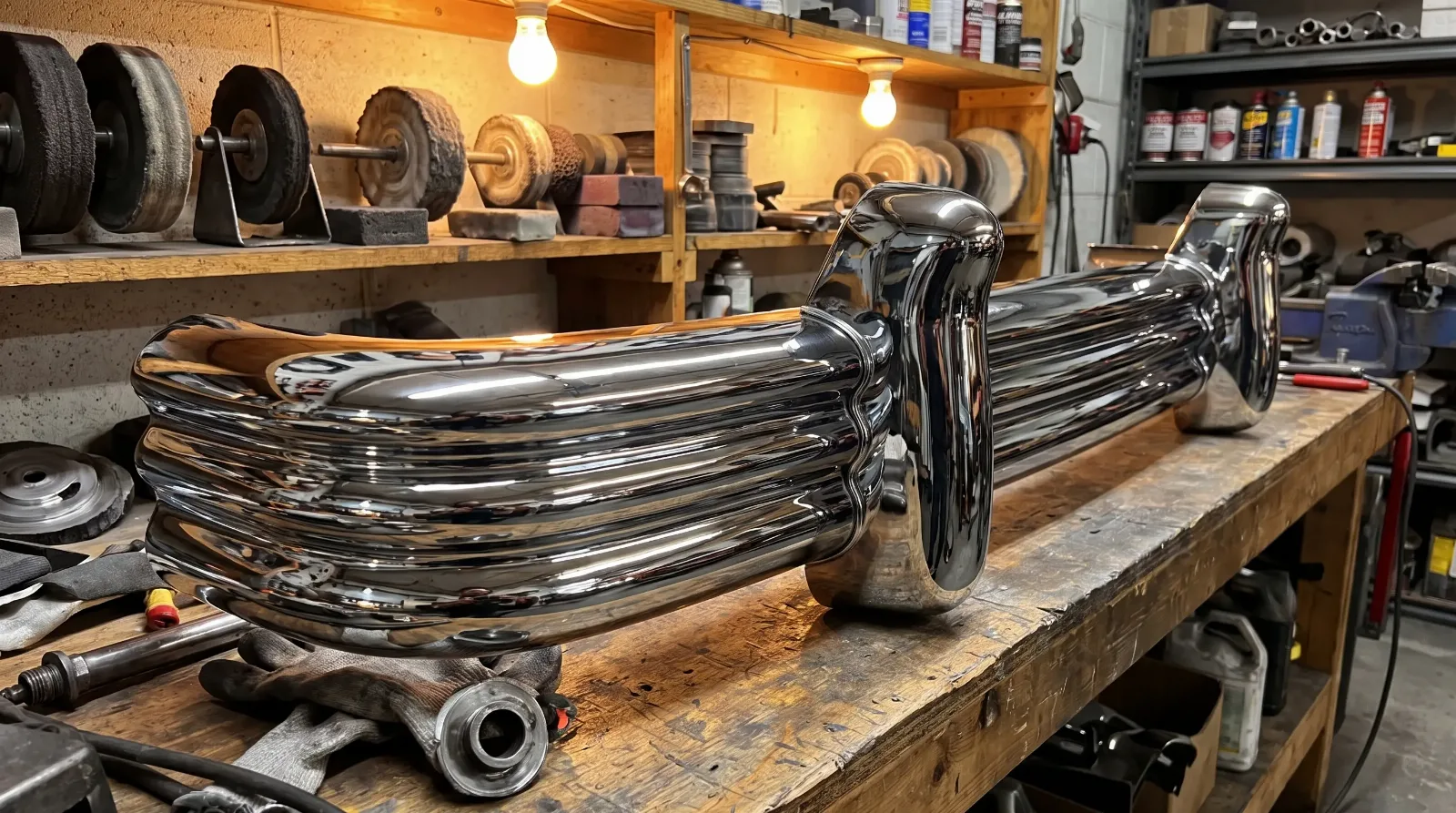
I have sent enough bumpers and grilles out to platers to know where the money hides, and it is worth walking through before you write a check for a car with dull, pitted brightwork. The finish tells you how the car was stored and how honest the seller is being. A big luxury classic wears more plated metal than almost anything else on the road, so on these cars the bill is bigger too. If you want the wider picture of what a restoration costs, the collecting and restoring guide covers the whole car. This is the chrome piece of it.
What replating actually is
Show-quality chrome is not one plating. It is three layers stacked on clean base metal. First copper, which fills and levels and takes the polishing. Then nickel, which does most of the corrosion protection and gives the depth you see when you look into good chrome. Then a thin flash of chrome on top for the hard, bright, blue-white surface. When people say "triple plating," that is what they mean. Skip the copper and nickel and you get the cheap chrome that clouds and peels inside a year.
Between each layer the part gets polished, because chrome hides nothing. Every scratch, every low spot, every bit of pitting under the old plating reads straight through the new finish. That is why the prep, the stripping, the straightening, and the hand polishing, is where the labor hours pile up. The plating tanks are almost the easy part. The metalwork in front of them is the job.
Steel bumpers versus pot metal
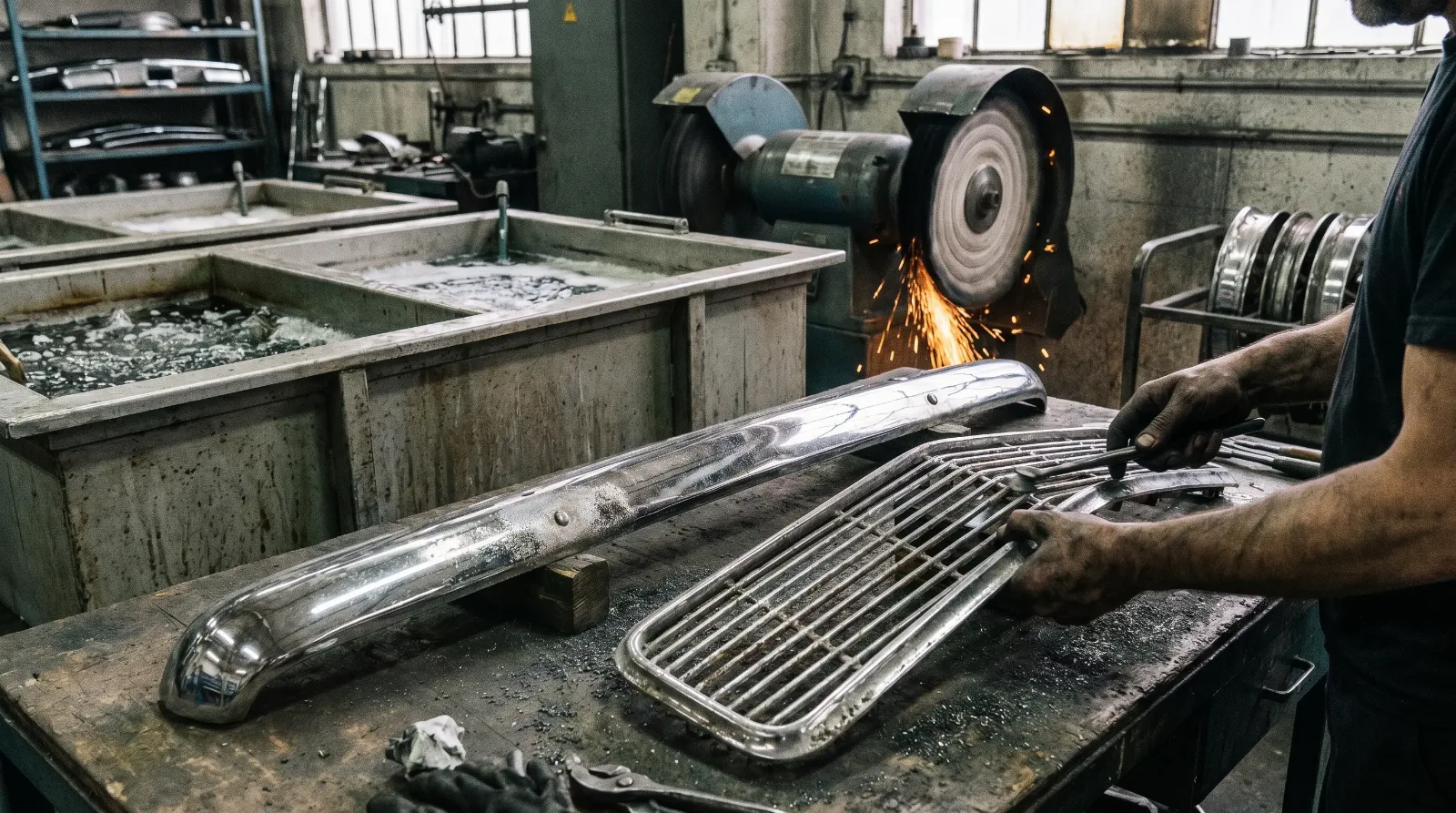
Here is the split that decides your bill. Steel replates cleanly. A straight steel bumper strips, gets any dents worked out, polishes, and goes through the tanks without drama. Pot metal is the problem child. Most small trim, grille surrounds, headlight bezels, handles, and a lot of interior brightwork on cars from the 1930s through the 1960s was cast in zinc die-cast, which the trade calls pot metal, and it does not age well.
Pot metal pits from the inside out. As it corrodes it swells, and the old chrome lifts off in blisters. To replate it right, the plater grinds out every pit, builds the surface back up with heavy copper, and files and polishes it back to the original shape by hand before the nickel and chrome ever go on. That is slow, skilled work. A grille with dozens of pitted teeth can take more hours than the rest of the car's brightwork combined, and badly swollen pot metal sometimes cannot be saved at all.
🔧 Inspection Priorities
- Pot metal pitting. Grilles, bezels, and handles that are bubbling or pitted mean heavy copper build-up and hand filing. This is the most expensive brightwork to restore, budget accordingly.
- Bumper dents and waves. Straightening steel before plating is separate labor. A wavy bumper that also needs replating stacks two bills, not one.
- Missing or crumbling trim. Some marque-specific pot metal castings have no reproduction. If a piece is gone or beyond saving, you are hunting used parts or paying to fabricate.
- Wrong metal already plated. Chrome flaking off stainless or aluminum tells you a previous owner cut corners. Assume other shortcuts hide elsewhere on the car.
What the work really costs
Prices move with the plater, the region, and how bad the metal is, so treat these as rough ranges and get a real quote on your actual parts. A straight steel bumper for show-quality triple plating commonly runs somewhere in the $500 to $1,000 range per bumper, more if it needs straightening first. Smaller pot metal pieces, bezels and handles and trim, often land around $150 to $500 each depending on pitting. A heavily pitted grille is the wild card and can run well into four figures on its own.
Add it up across a big luxury classic and the total brightwork bill frequently reaches $8,000 to $20,000 or more for a full, do-it-right job. That is not the platers gouging you. It is the sheer amount of plated metal these cars carry and the hand labor each piece demands. A muscle car might have two bumpers and some trim. A prewar or midcentury luxury car can have a grille, multiple bumpers, guards, window surrounds, and a catalog of small castings, every one of them a separate line item. It is one of the reasons these cars cost more to bring back than their muscle-era cousins, a point the story of the classic luxury car comes back to more than once.
"People see a dull bumper and think, a few hundred bucks, no big deal. Then the plater calls and tells you the pot metal grille is swollen and needs to be built back up by hand, and suddenly one piece costs more than the paint job. The chrome is never the expensive part. It is the metal underneath, and on a luxury car there is a lot of it."
Mike Sullivan
How to keep the bill down
You do not have to send everything out at once, and you should not send anything out blind. Sort the brightwork into what is straight steel, what is pitted pot metal, and what is stainless or aluminum that only needs polishing. That last pile costs a fraction of plating and a lot of buyers pay to chrome parts that just needed a buffing wheel. Knowing the difference is the single easiest way to save money on a job like this.
Chrome is expensive because it is honest. It shows every shortcut, so the only way to good brightwork is doing the metal right underneath. Price it before you buy a car with tired trim, because that dull grille might be a cheap polish or a five-figure rescue, and the only way to know is to look close. Once the brightwork is sorted, the next system that scares buyers off is under the car, so continue with next: Restoring Hydraulic and Self-Leveling Suspension Systems.
Related Reading
Have a
Classic Car
for Sale?
Reach thousands of serious classic car collectors across the US.
Sell It Here →
Are You a Classic Car Dealer?
List your full inventory and connect with targeted classic car buyers.
Join as a Dealer →

About the author
Mike Sullivan
Detroit-area muscle car enthusiast and restoration specialist with three decades of hands-on experience working on American iron.

Comments
Be the first to comment on this article.