
Two pieces of paper decide more about a Chevelle's value than almost anything under the hood. One is a flimsy carbon copy that a line worker tossed under a seat spring or behind the dash pad on the way down the assembly line. The other is a small metal card the dealer stamped and handed to the original buyer with the keys. Neither one was meant to survive fifty years. Most didn't. The ones that did are the difference between a car with a story and a car with a claim.
Market & Values
6 min read
The Build Sheet and Protect-O-Plate: A Provenance Story
How to read a Chevelle build sheet and Protect-O-Plate, why they matter for provenance, and how they change what a documented car is worth.
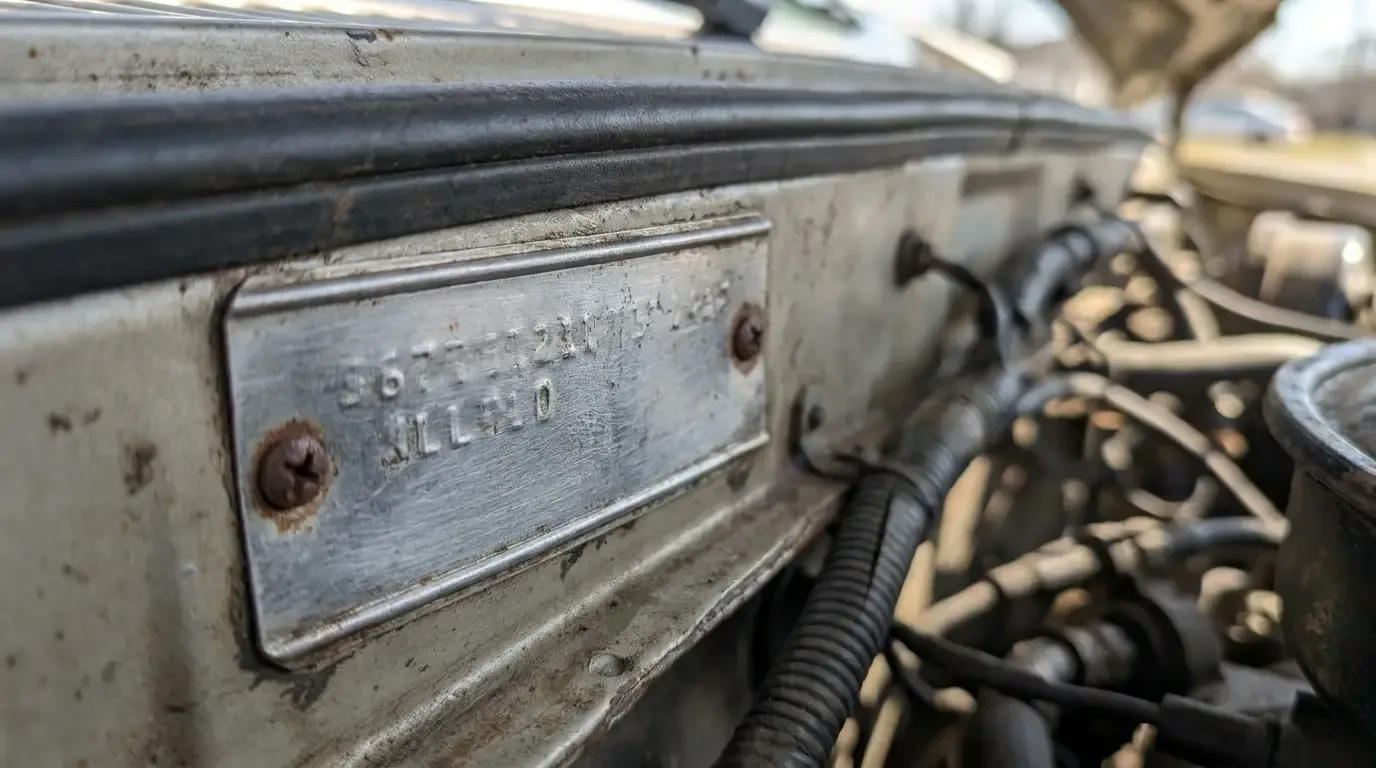
I get asked constantly whether a build sheet or a Protect-O-Plate actually changes what a Chevelle is worth, and the honest answer is yes, materially, because they are the closest thing GM left behind to a factory affidavit. Here is how they work and what to actually check.
What a build sheet really is
The build sheet, sometimes called a broadcast sheet, was an internal Fisher Body and GM Assembly Division document generated for each car as it moved down the line. It listed the RPO option codes, the paint and trim codes, the scheduled build date, and routing information for the plant. It was never meant to go home with the customer. It was shop floor paperwork, and after the car was built the sheet frequently got left inside the body, tucked under a seat, behind a kick panel, or above the gas tank, wherever a worker happened to set it down.
That is exactly why finding one is significant. A build sheet recovered from inside an unmolested car is primary factory documentation that was never handled by an aftermarket seller or a restoration shop. It lists option codes in the plant's own shorthand, and when you cross-reference those codes against GM's published RPO lists for the model year, you get a option-by-option snapshot of exactly how that VIN left the factory. That is a very different thing from a seller's word that a car is "believed to be" numbers matching.
Reading the codes without getting fooled
The codes on a Chevelle build sheet are not always intuitive, and they shift meaning across years, which is where a lot of casual buyers get into trouble. An engine code that means one thing on a 1968 sheet is not automatically the same on a 1970 sheet, and the plant of origin (Fremont, Kansas City, Baltimore, Framingham, Atlanta, or Van Nuys depending on the year) changes the sheet's format and some of its abbreviations. I don't decode a Chevelle sheet from memory. I go back to the factory RPO tables for that specific model year and that specific plant before I say anything definitive about what a car left the line with.
🔧 Inspection Priorities
- Confirm the sheet came out of the car, not a folder. A sheet with grease staining, fold creases matching typical under-seat storage, and period paper stock is a different piece of evidence than a loose sheet a seller says "came with the car" from an unknown source.
- Match the VIN derivative and body style codes on the sheet to the trim tag. These should agree. If they don't, you may be looking at a sheet from a donor car, sometimes an honest mixup, sometimes not.
- Cross-check the paint and trim codes against the cowl tag. Both documents should describe the same car. A mismatch here is one of the more common red flags on cars represented as numbers matching.
- Verify option codes against the correct model-year RPO list. Codes are not universal across years. Using the wrong year's key produces confident-sounding nonsense.
The Protect-O-Plate: the dealer's half of the story
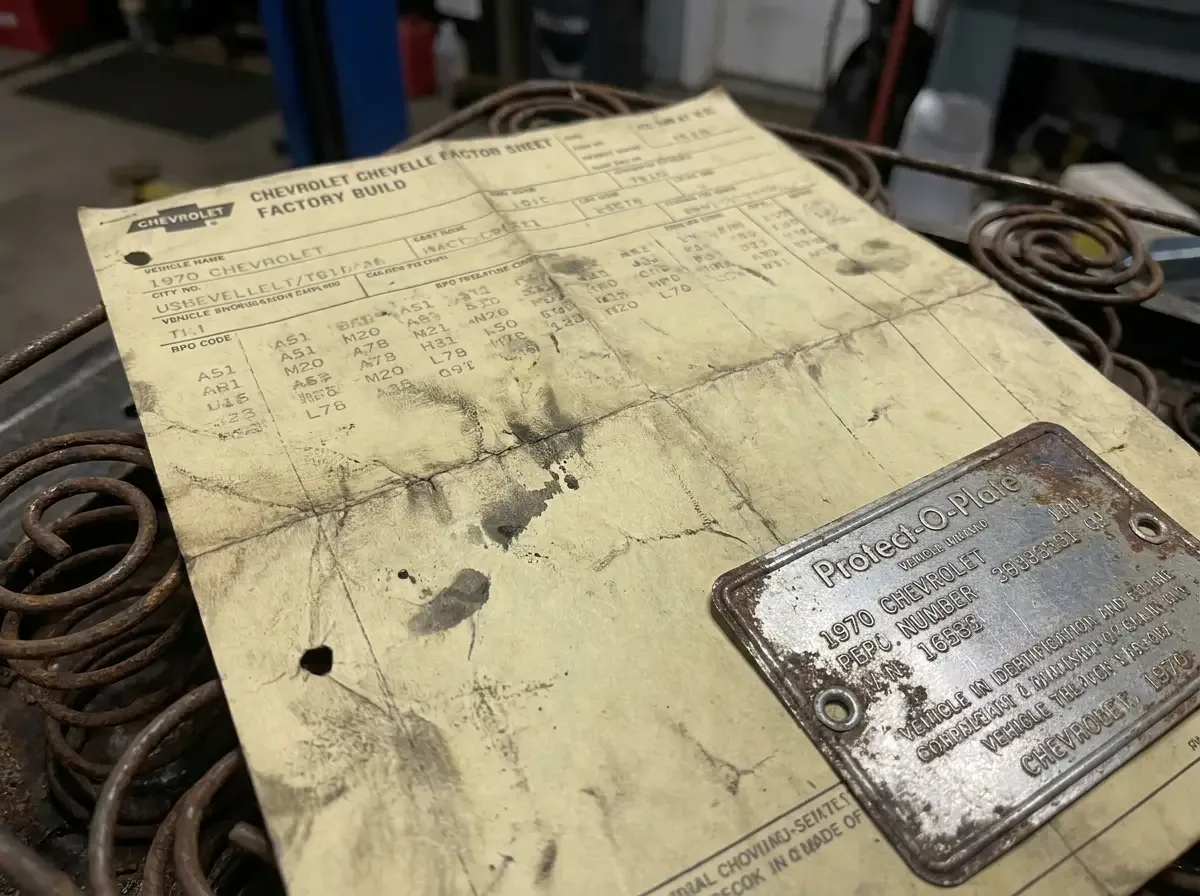
Where the build sheet is the factory's record, the Protect-O-Plate is the dealership's. GM issued these small embossed metal cards starting in the 1960s, stamped with the VIN and key warranty information, and dealers used them to imprint warranty paperwork the way an old-fashioned credit card imprinter worked. The original owner kept the card in the glovebox, and it typically traveled with the car's factory literature rather than staying bolted to anything.
A surviving Protect-O-Plate confirms the VIN against a document generated at the point of sale, independent of the assembly line. When a build sheet and a Protect-O-Plate both survive with the same car and both agree with the trim tag, you have three independent sources telling the same story, which is about as strong as documentation gets on a fifty-year-old muscle car with no factory build records released to the public in the way NCRS members enjoy for Corvettes.
Why documentation moves real money
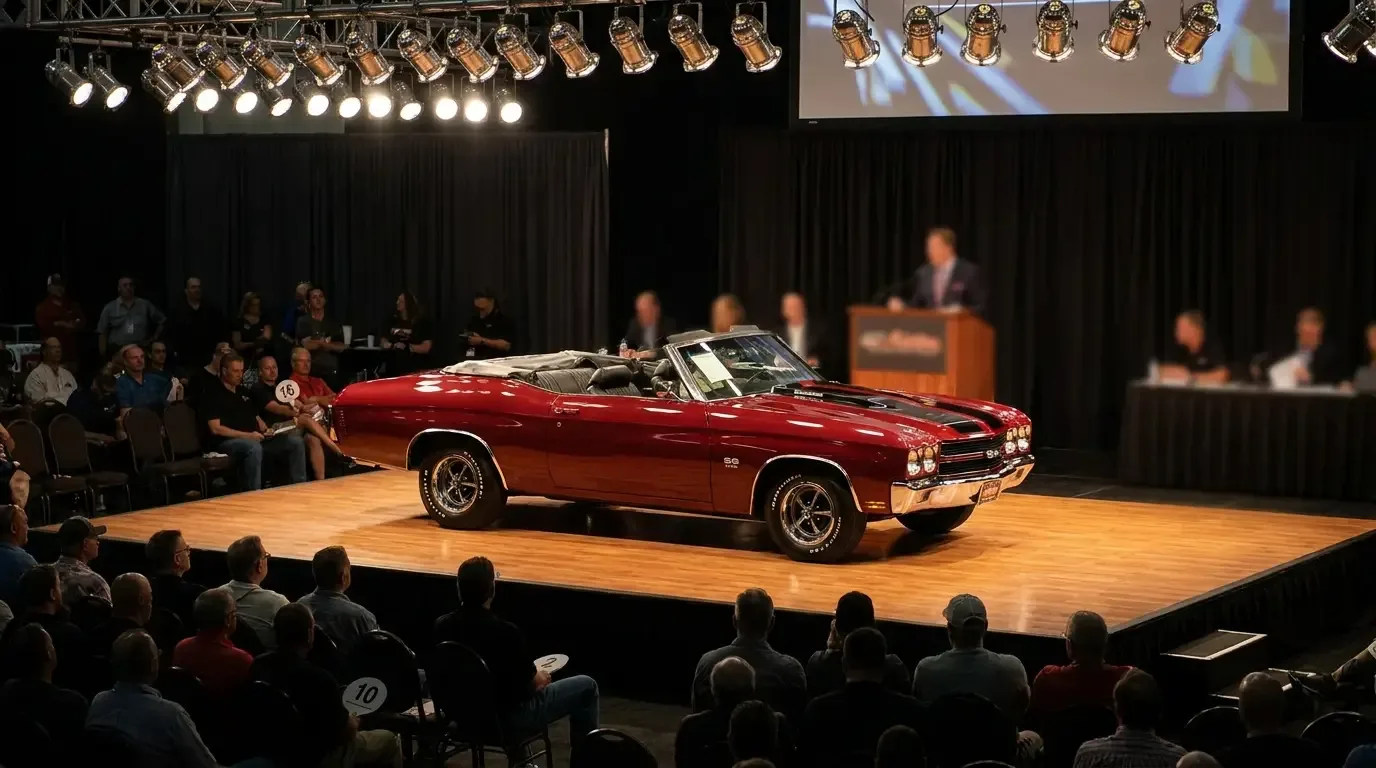
None of this is academic. In the current market, a Chevelle SS with a documented build sheet and matching Protect-O-Plate consistently draws a premium over an equivalent car with only a seller's story, particularly on big-block combinations where numbers-matching claims are common and paperwork-backed claims are not. Buyers have gotten sharper about this over the past decade, largely because the reproduction and fraud problem in the muscle car market got sharper first. A car with real paperwork removes an entire category of doubt at the moment you're deciding whether to write a check.
"I don't care how good the story sounds at a swap meet. If there's no sheet and no plate, it's a story. The tank sticker mindset that Corvette people live by needs to apply to Chevelles too, and it mostly hasn't, which is exactly why the paperwork that does survive is worth more than people realize."
Tom Ramirez
If you're building out your understanding of what actually separates a genuine collectible from a good-looking clone, this documentation question sits underneath most of the collectible Chevelle story. And if the provenance angle interests you, the next logical step is looking at a Chevelle package that depended on exactly this kind of factory paper trail to get taken seriously by collectors at all: next: The Heavy Chevy.
Sources and notes
- Protect-O-Plate Decoding and Warranty Book Information, impalas.org
- What Is A General Motors Protect-O-Plate?, GM Authority
- Protect-O-Plates Contain Info On Your Classic Car, Second Chance Garage
- 1966 Chevelle Protect-O-Plate Introduction, chevellestuff.net
- Chevelle Body Assembly Plants, chevellestuff.net
- Protecto Plate discussion, Team Chevelle forum
Related Reading
Have a
Chevrolet Chevelle
for Sale?
Reach thousands of serious classic car collectors across the US.
Sell It Here →
Are You a Classic Car Dealer?
List your full inventory and connect with targeted classic car buyers.
Join as a Dealer →

About the author
Tom Ramirez
Corvette researcher and historian based in Bowling Green, Kentucky. Two decades documenting Corvette production history from original factory records.
Related Listings - Chevrolet Chevelle

Comments
Be the first to comment on this article.