
For most common classics, buying a finished car is cheaper than restoring one. The reason is not mysterious: the previous owner absorbed the labor at a loss, and you can collect the benefit. The math behind that claim deserves a closer look, because the exceptions matter.
Restoration & Tech
6 min read
Buy Restored or Restore Yourself? The Math Behind Buying Finished
Why buying a finished classic usually costs less than restoring one, what to check on a restored car, and the cases where doing the work yourself still wins.
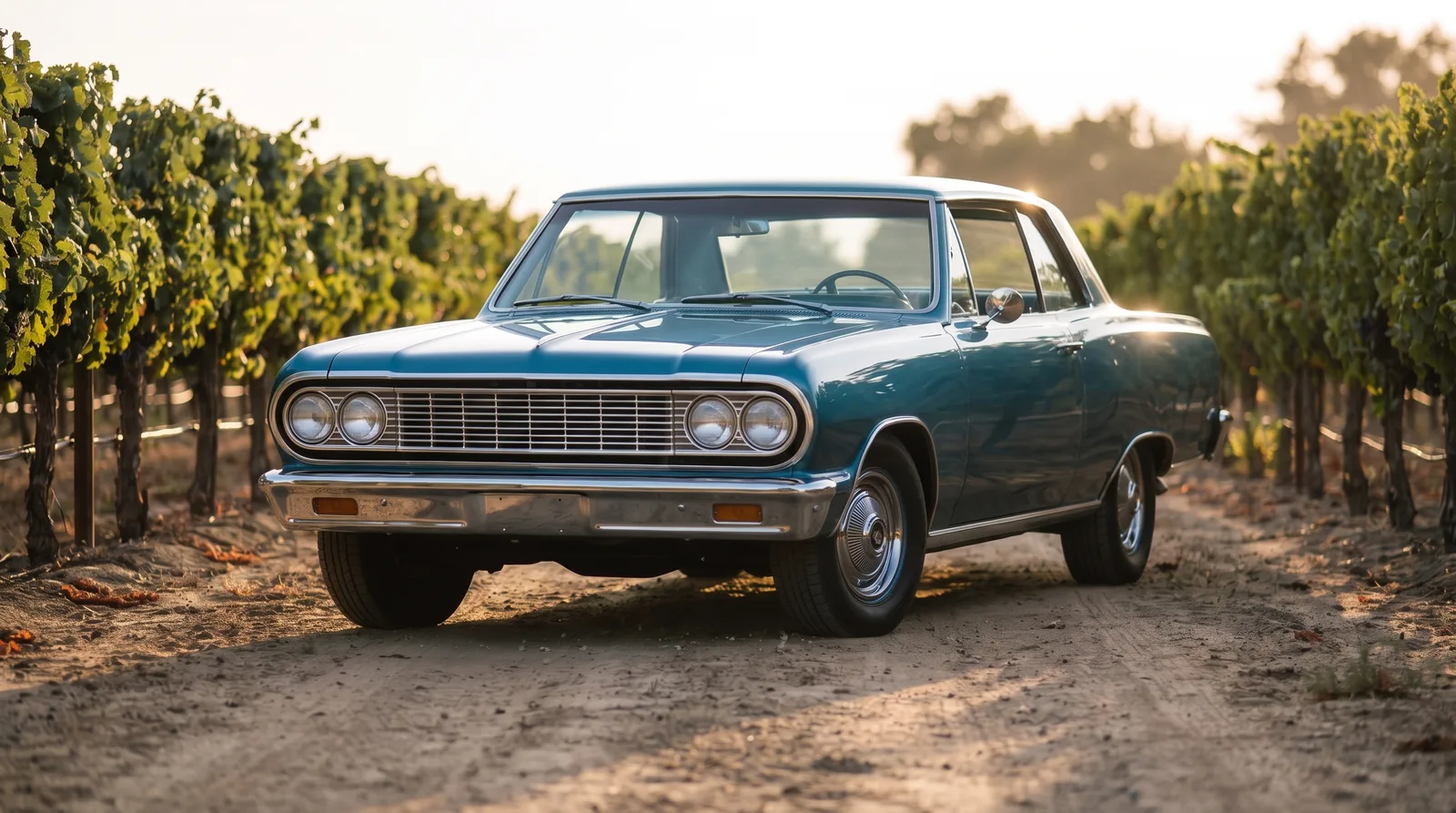
What the previous owner already paid for
A restored car in the market is a sunk cost. The seller spent, say, $90,000 and is asking $65,000 (a hypothetical example). You pay the market, not the invoice. That asymmetry is the strongest argument for buying finished, and it works on every popular model in the tiers where supply is deep.
| Path | Typical cost (2026 USD) | Time | Risk |
|---|---|---|---|
| Buy finished #3 car | Current market price of a comparable car, often well below what restoring it would cost | Weeks | Low to moderate, depends on inspection |
| Buy running project, light restoration | Purchase price plus the work still needed | Several months | Moderate |
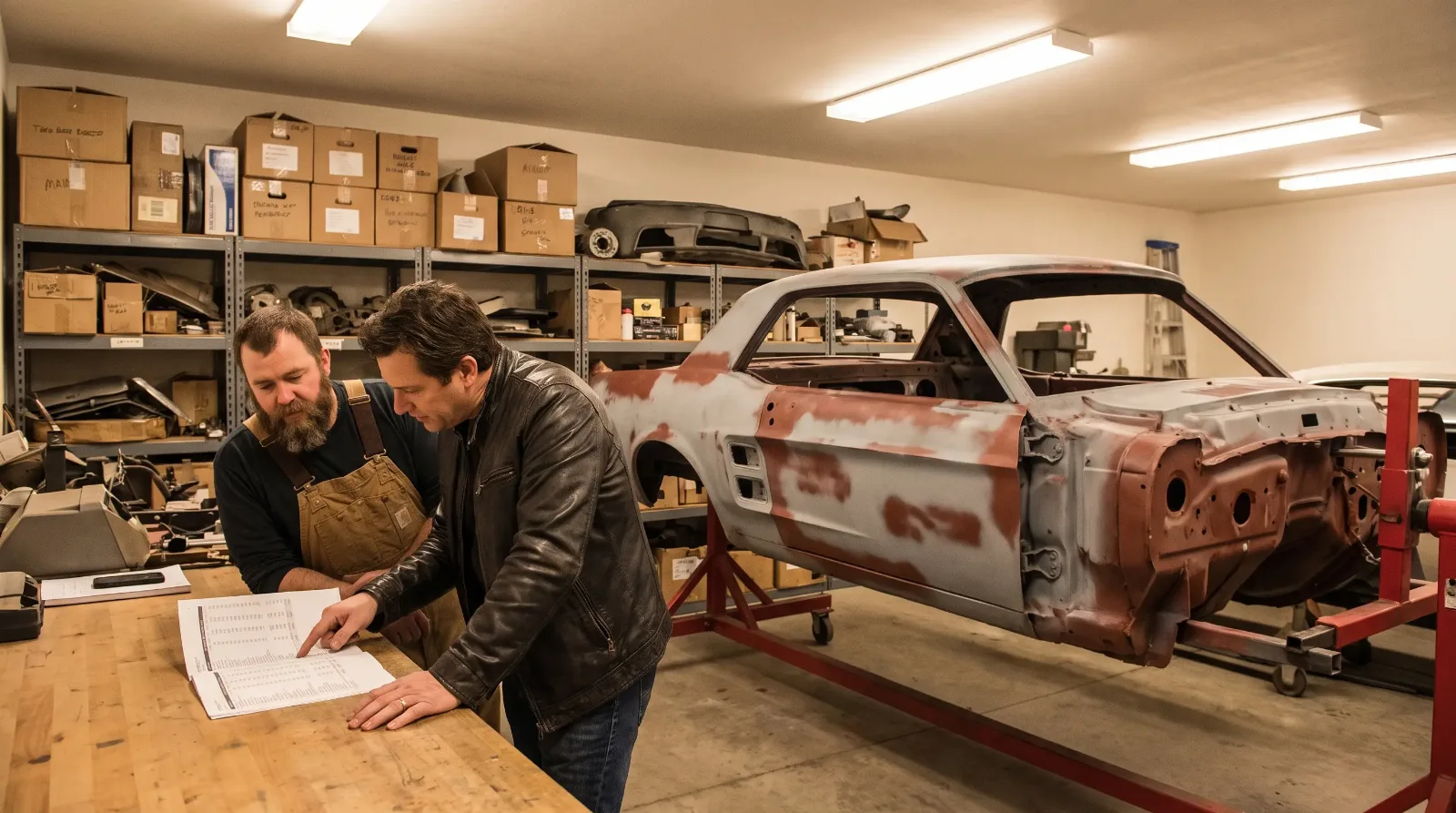
| Buy rough car, full restoration | Purchase price plus roughly $45,000 to $100,000 for a professional driver-level restoration (shop estimates, 2026) | Often years | High |
Treat the table as a framework, with the restoration range being the typical 2026 shop estimate for a common American classic. For any specific model, find the three or four most recent comparable sales and run your own version. The ratio matters more than the absolute numbers. If the full restoration path costs clearly more than the finished car, the decision usually writes itself. A fair view of the real price of restoring helps you set that ratio.
Condition tiers and what you are really buying
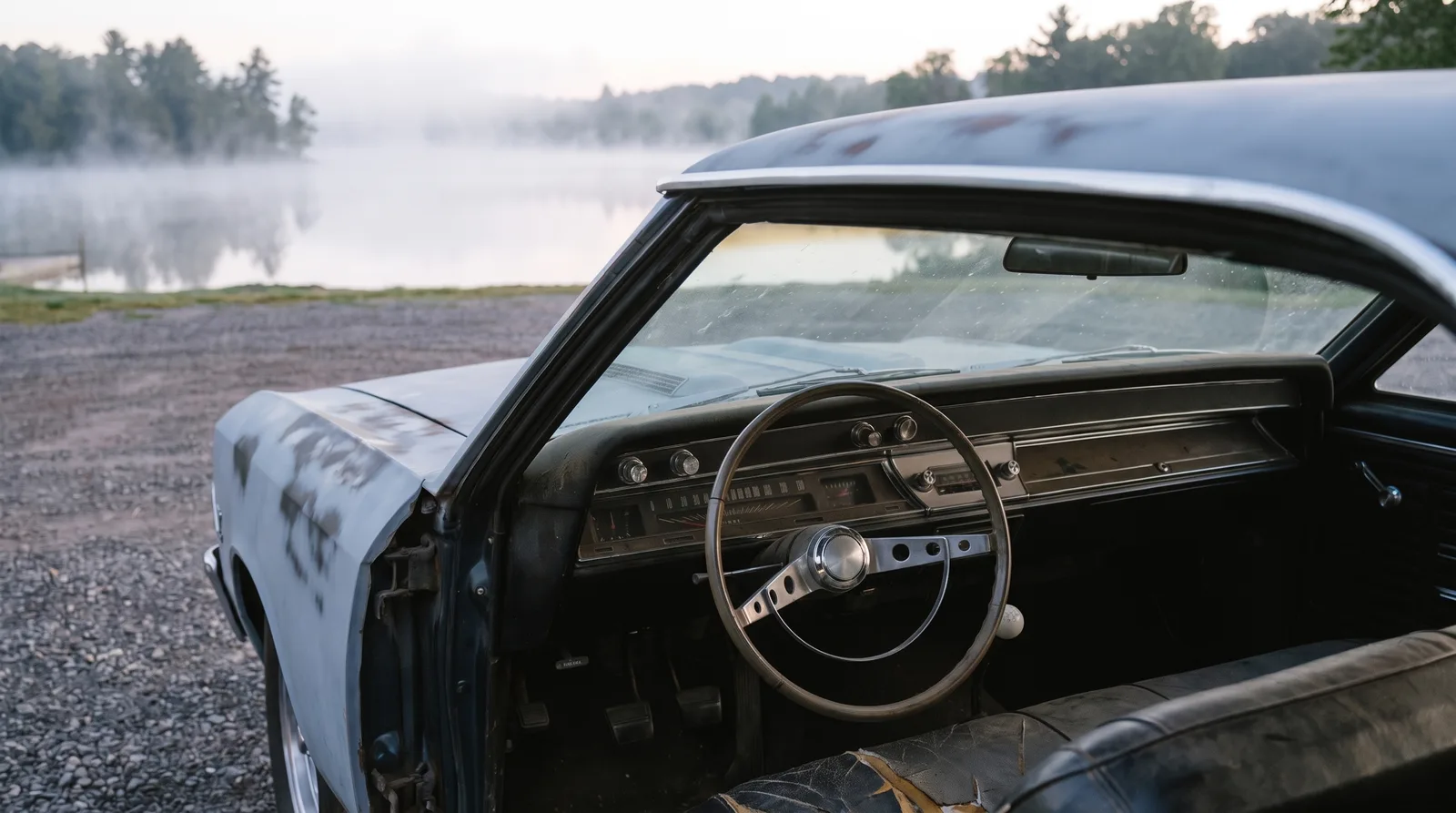
A car advertised as restored is a claim, not a grade. Appraisers use condition tiers. Hagerty's scale has six grades: #1 concours, #2 excellent, #3 good (what owners call a driver), #4 fair, #5 project and #6 parts. A car sold as a restoration may sit anywhere in that range depending on who did the work and how long ago. A ten-year-old restoration that was driven for ten years is a different asset from a two-year-old one.
Documentation is the second filter. Photos during the work, invoices from the shops, and parts receipts turn a claim into evidence. Without them, an appraiser discounts the car. A thin paper trail on a #2 car turns it into a #3 car with a good story, and the price should follow.
Inspect before you pay
Pay for a pre-purchase inspection by someone who knows the model. A good inspection takes a few hours and usually costs a few hundred dollars, which is trivial next to the price of the car. Look for filler and paint thickness variation, undercoating that hides repairs, mismatched panel gaps, fresh paint on the underside and engine bay, and signs that parts were swapped to look original. A shiny car with cheap work underneath is the most expensive way to buy finished.
Ask where the work was done and by whom. A known shop with a reputation is worth more than a private builder with a story. Ask for the build photos. Check the number plates, trim tags and casting dates against what the model should have.
When restoring yourself still wins
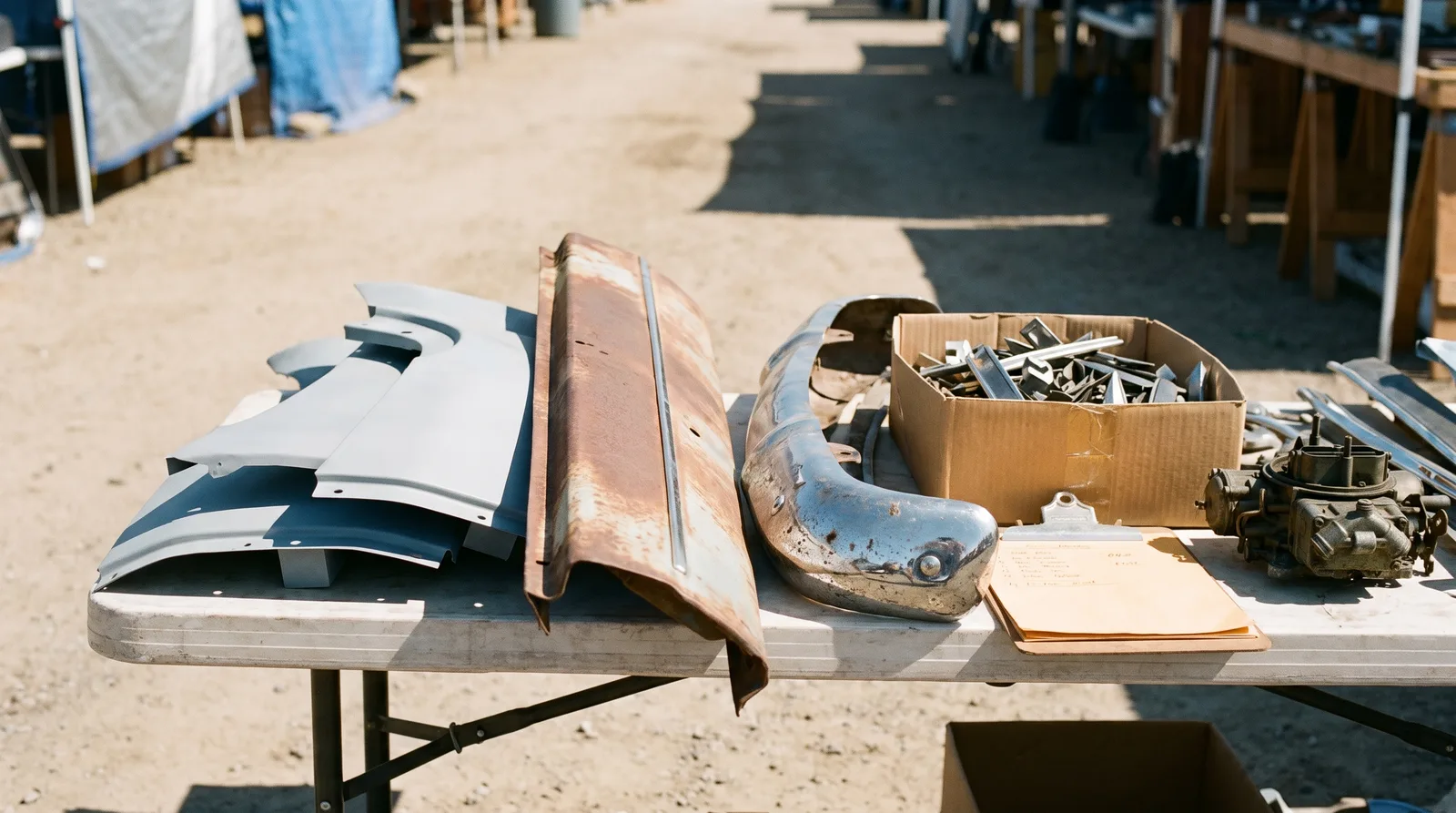
There are cases where finished cars are not the answer. The model is rare and almost none are for sale. You want specific options or colors that do not exist on the market. You enjoy the work, have the space and tools, and your time is not billed. Or you already own the car and the sunk cost is behind you. In these cases the comparison changes, and it is worth understanding what lies in the hidden costs before committing.
"Buying finished means paying for someone else's result. Restoring means paying for your own process. Only one of those has a price you can see before you sign."
Marcus Feld
Where to find the better buys
Restored cars sell through several channels, and the price differs by channel. Dealers add margin but often offer inspection access and documentation. Auction results are public and make useful comps, though auction fees and the buyer's premium, often 10 percent or more depending on the house, change the real cost. Private sales between enthusiasts tend to be the cheapest, and the seller often has the full build history. Club classifieds and marque registries are good sources, since the cars are usually known to the community.
Be wary of two situations. One is the car restored by a shop that has since closed, with no records. The other is the freshly finished car sold by someone who has owned it for a few months. Both can be fine, but the questions need to be harder. A car that has been properly driven and sorted after restoration is often a better buy than one that has never left the shop.
What the buyer should negotiate
Condition issues found during inspection are bargaining points, not deal breakers. A list of small defects, such as paint chips, worn seals, a weeping gasket or a slow leak, justifies a measured discount. Larger discoveries, such as concealed rust or incorrect components, should change the price by the cost of correction plus a premium for the trouble. Put the findings in writing and ask the seller to respond in writing.
Run the comparison
Pick the model, the tier and the budget. Price a finished car at the tier you want, then price a restoration to the same tier with quotes. Include the purchase price of the project car, storage, transport and a contingency. If the finished car is cheaper, and in most mainstream cases it is, look at restored classics for sale and compare. Be strict about documentation and condition, and do not pay a restored-car price for a repainted car with an unknown history.
The exposure is lower on the buy side, the downside is capped by what you pay, and you can start driving the car this season. That alone is worth something the spreadsheet does not capture.
It also helps to leave room in the budget after the purchase. Even a well-restored car needs a first-year allowance for fluids, tires, a tune and the small repairs that appear once a car is used again. Setting aside a reserve of a few percent of the purchase price keeps a good buy from turning into a disappointment.
Sources and notes
- RACQ, the costs of restoring a classic car, supports the point that restoration costs almost always exceed the restored value and that buying restored is usually more affordable
- Allstate Canada, should you buy restored or buy to rebuild, supports the cost comparison, the need for restoration records and photos, and independent inspection
- American Collectors Insurance, classic car pre-purchase inspections, supports the typical cost of an inspection (a few hundred dollars) and what inspectors check
- Wikipedia, buyer's premium, supports the general range of auction buyer's premiums (roughly 10 to 30 percent at major houses)
Related Reading
Have a
Classic Car
for Sale?
Reach thousands of serious classic car collectors across the US.
Sell It Here →
Are You a Classic Car Dealer?
List your full inventory and connect with targeted classic car buyers.
Join as a Dealer →

About the author
Marcus Feld
Accredited collector-car appraiser who reads the market through hammer prices, condition tiers and risk.
More in Restoration & Tech
Comments
Be the first to comment on this article.