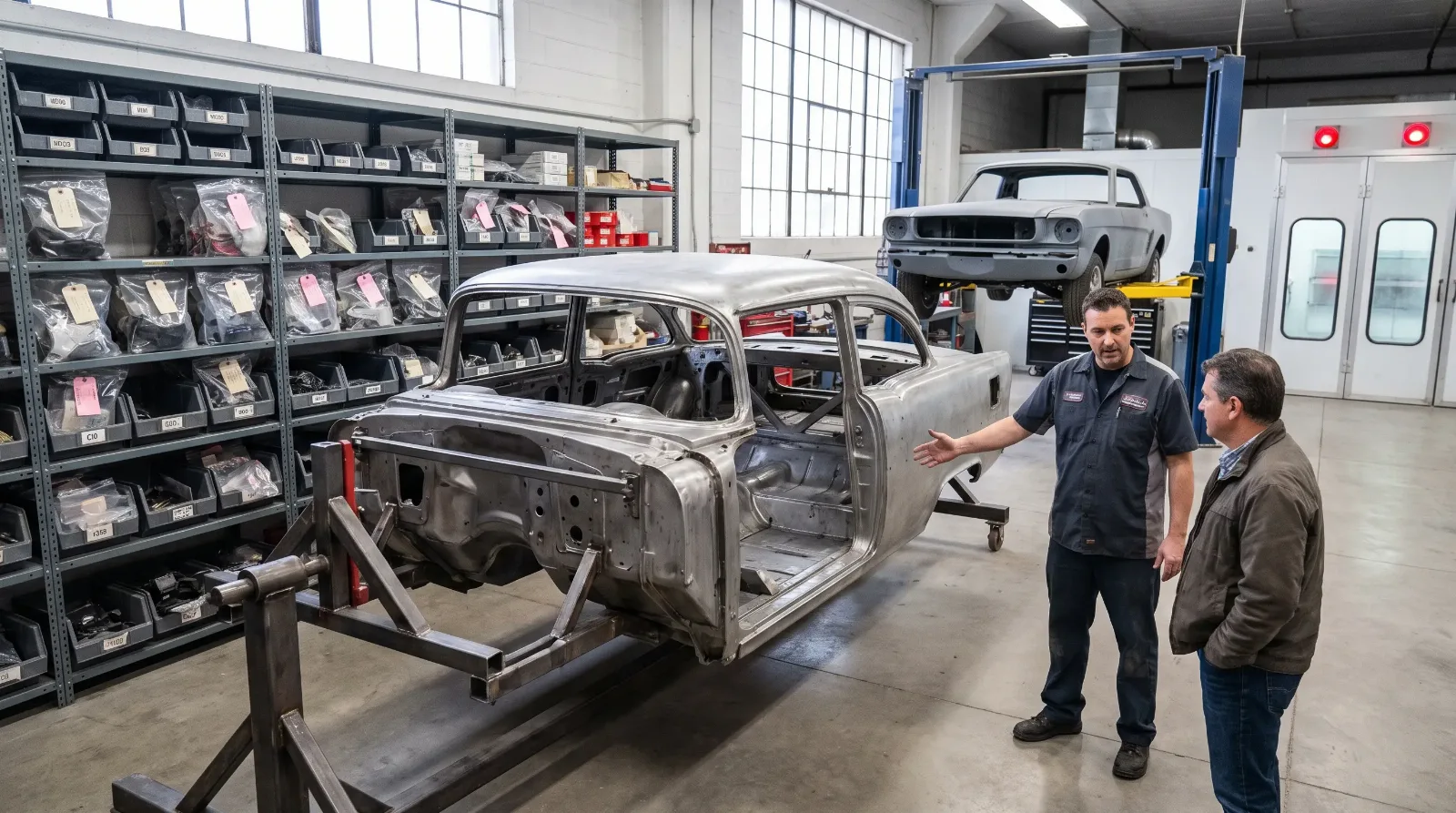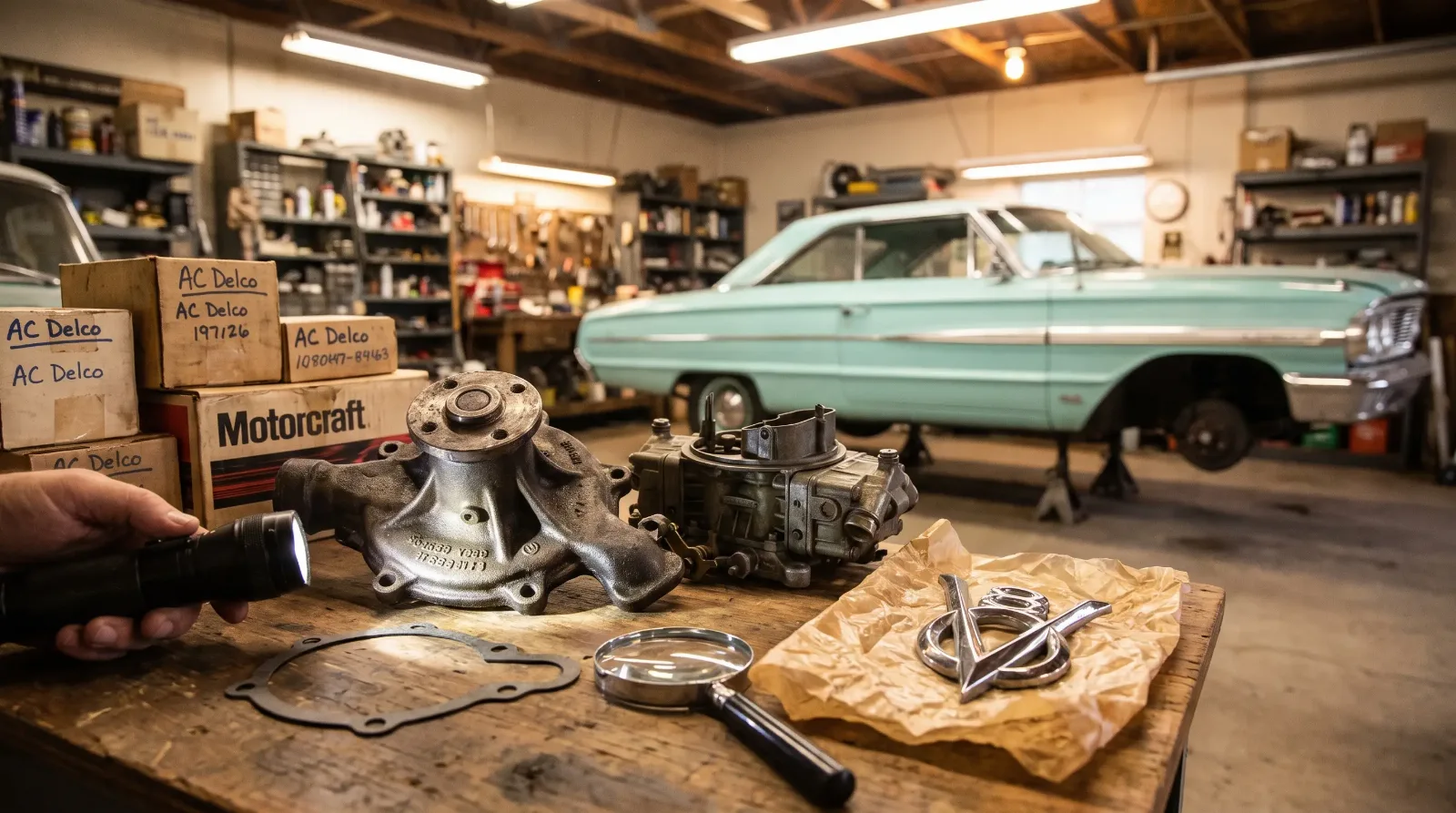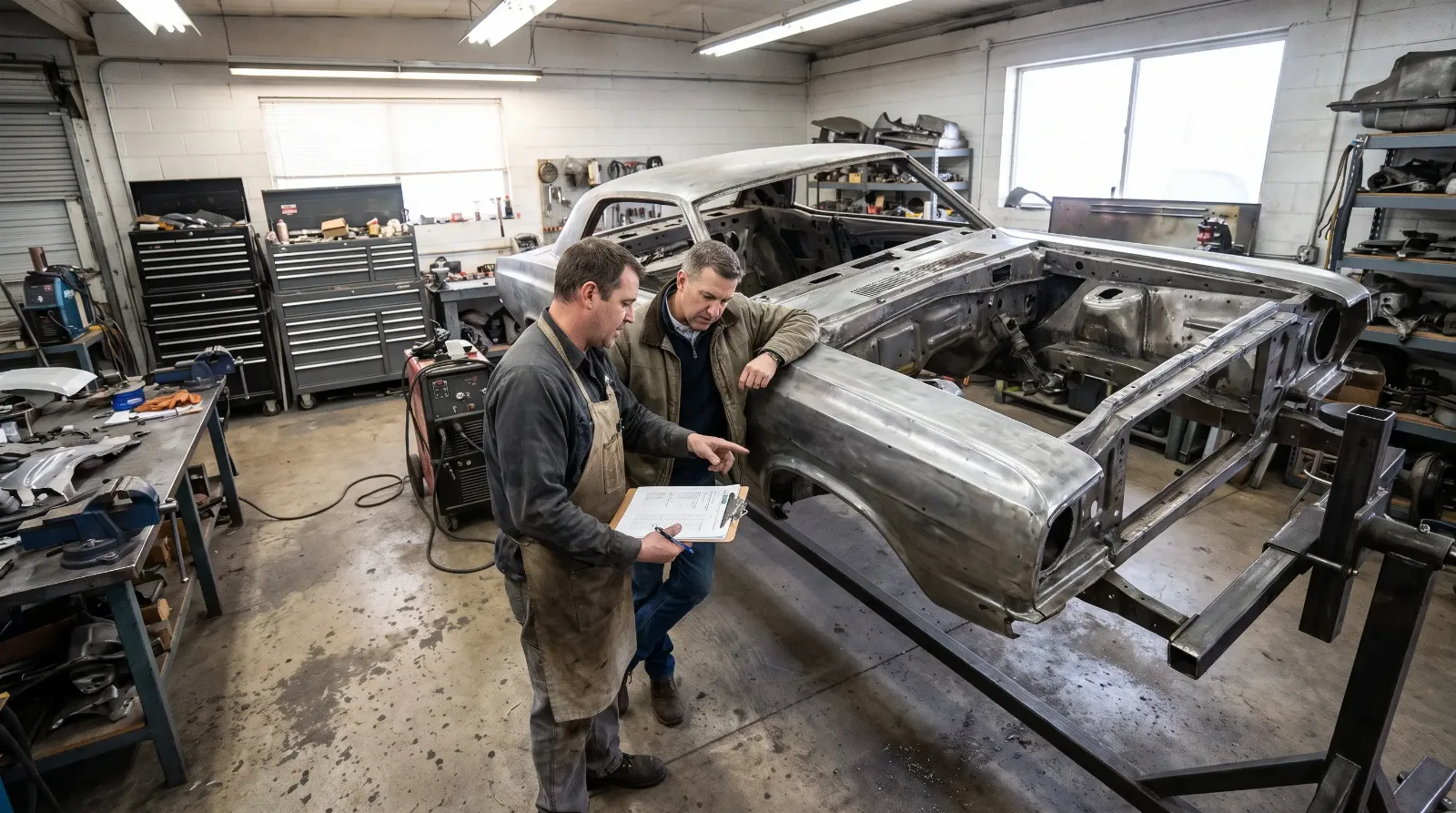
Every few months someone shows me a spreadsheet for a restoration they are about to start. The parts column is usually close. The labor column is usually wrong by half. And the bottom line, the number they plan to stop at, is almost always the number where the real bills begin. A classic car restoration cost is not one figure. It is a range that depends on how far down you take the car, who does the work, and what the car is worth when it rolls out of the shop.
So here is the 2026 picture, built from published shop rates, itemized build invoices, and what finished cars actually bring at auction. I will give you ranges, tell you what moves them, and say plainly where the math stops working.
The short answer: three budgets, not one
Restoration quality maps roughly onto the condition tiers appraisers and insurers already use. A #3 "good" car, what most owners call a driver, is sound, presentable, and meant to be used. A #2 "excellent" car could win a local or regional show. A #1 "concours" car is as good as or better than the day it left the factory. Each step up does not add a fixed amount. It multiplies the hours.
| Restoration level | Typical shop hours | All-in cost, 2026 US dollars | What you get |
|---|---|---|---|
| Driver quality (#3) | 500 to 1,000 | $45,000 to $100,000 | Mechanically sorted, solid body, good paint from a few feet away, reproduction interior |
| Street show / excellent (#2) | 1,000 to 2,000 | $100,000 to $225,000 | Body off or rotisserie work, panel gaps corrected, show-grade paint, detailed engine bay |
| Concours (#1) | 2,500 to 5,000 | $200,000 to $400,000+ | Factory-correct finishes, date-coded parts, documented to judging standards |
Those figures assume a common American car with good parts support, such as a Mustang, Chevelle, or C10. A Mercedes 300SL, an early Porsche 911, or a coachbuilt prewar car sits in a different universe, where a single trim piece can cost what a whole Mustang interior costs.
Where the money actually goes
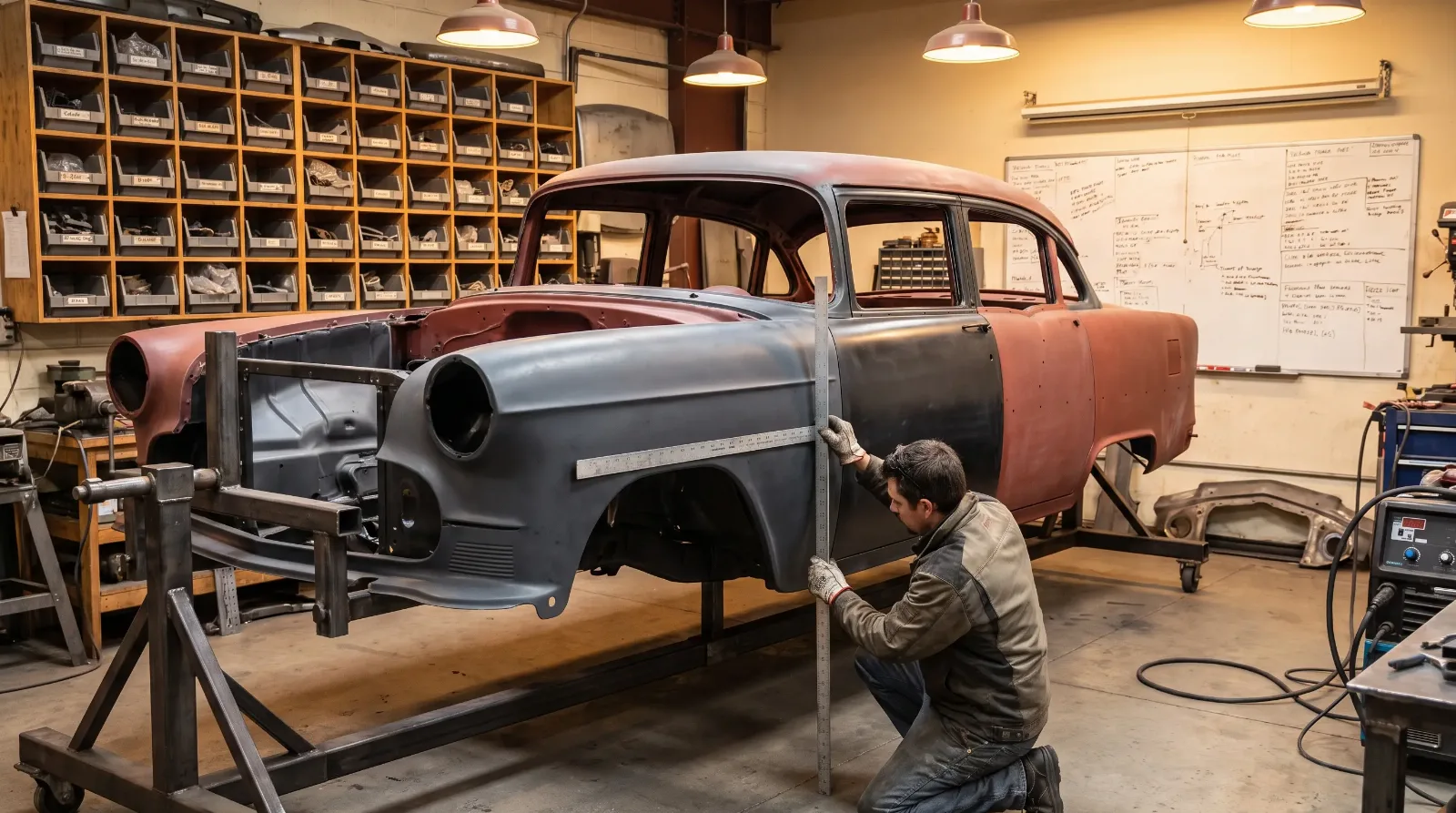
When I break down a finished invoice, the same pattern shows up again and again. Labor is the largest line, and most of that labor goes into metal and paint. Parts are the second line. Everything else, from chrome to wiring, fills in the gaps and rarely gets budgeted properly.
| Area | Driver range | Show range | Notes |
|---|---|---|---|
| Teardown, media blasting, rust repair | $8,000 to $20,000 | $20,000 to $50,000+ | The least predictable line; you do not know until the paint is off |
| Bodywork and paint | $12,000 to $25,000 | $30,000 to $70,000 | Block sanding hours drive the difference |
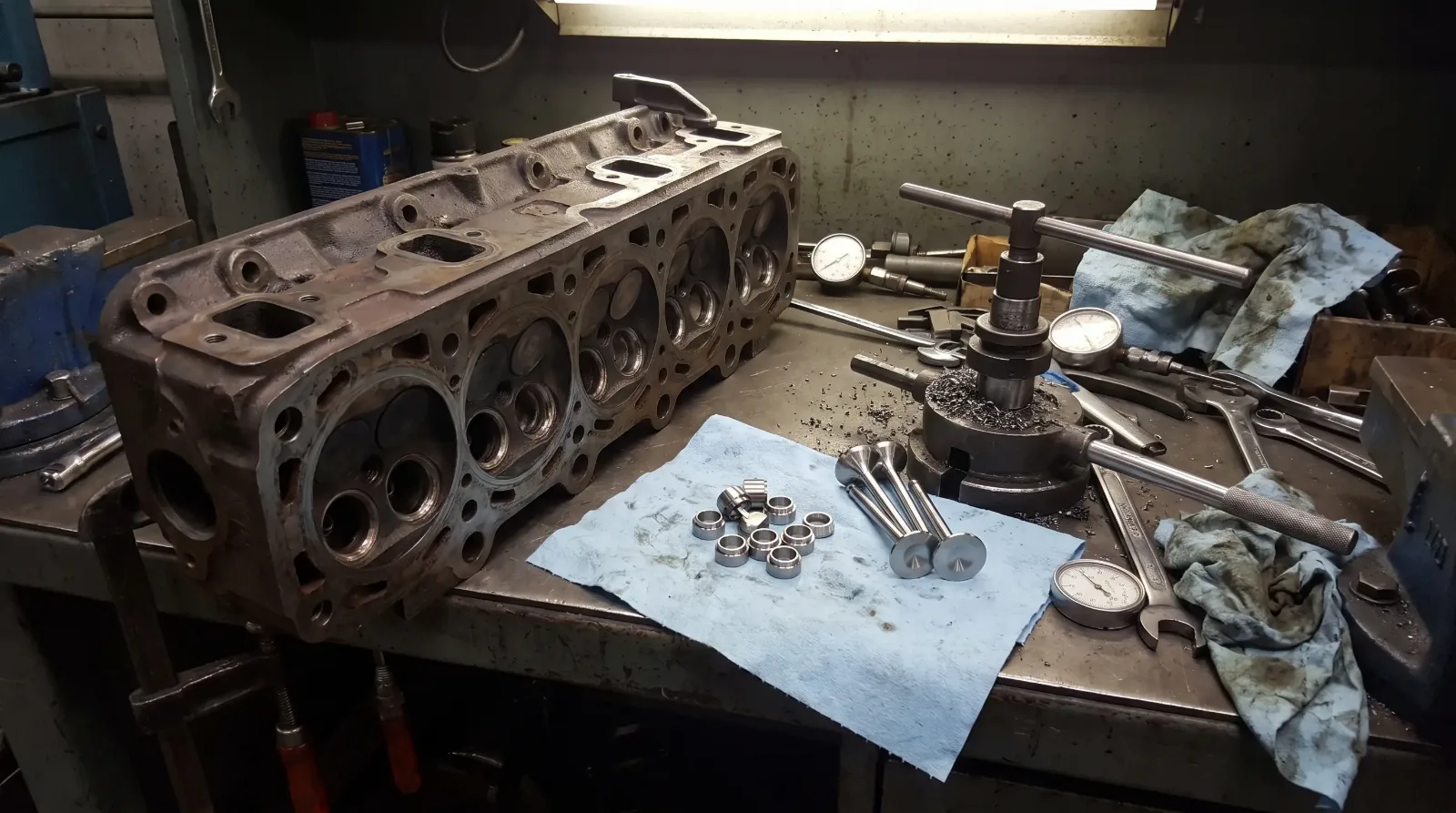
| Engine rebuild | $6,000 to $12,000 | $12,000 to $30,000 | Numbers-matching blocks cost more to save than to replace |
| Transmission and rear axle | $3,000 to $6,000 | $5,000 to $12,000 | Rebuild versus correct date-coded unit |
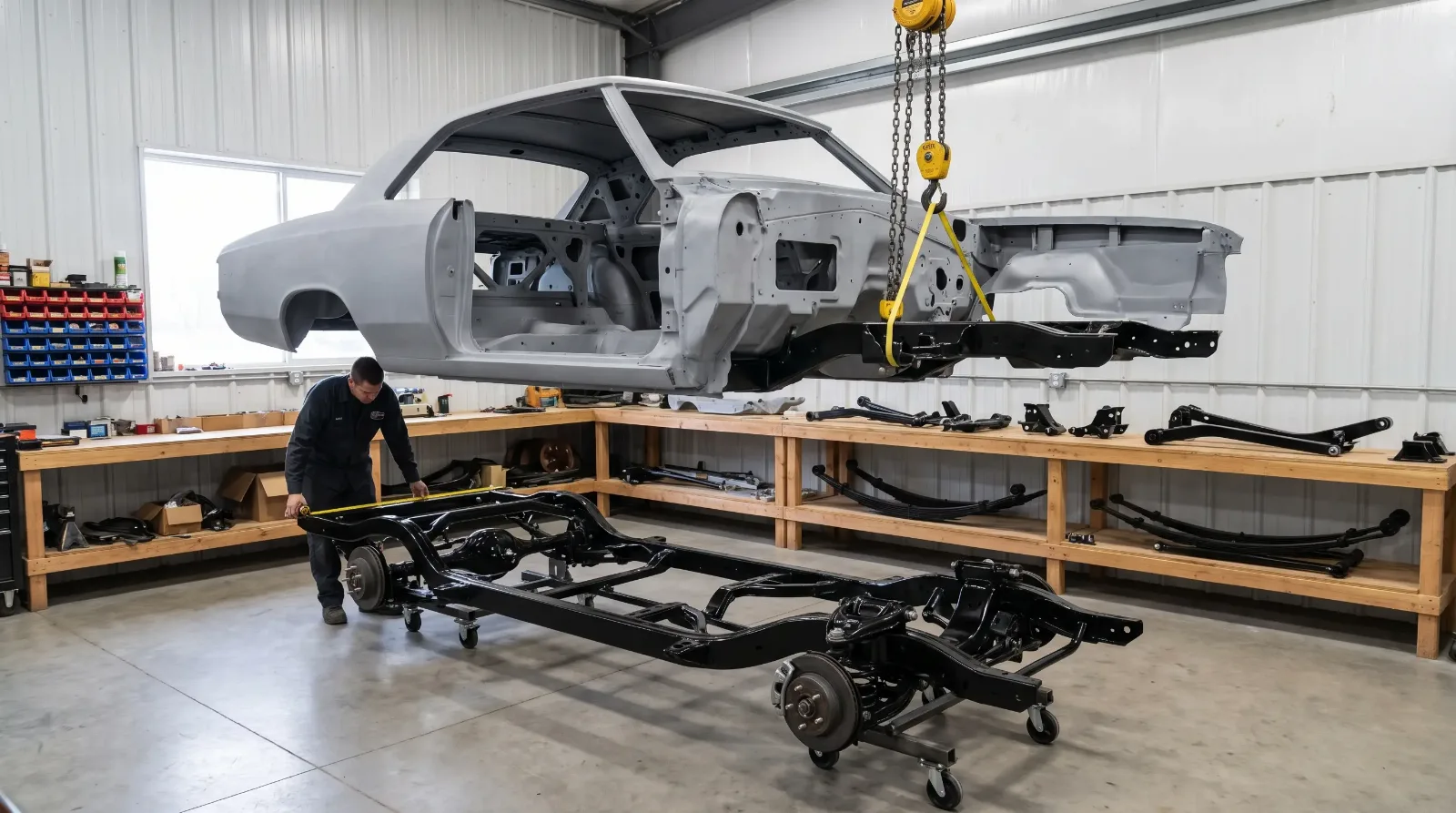
| Suspension, steering, brakes | $3,000 to $7,000 | $6,000 to $15,000 | Plating and correct finishes add up at show level |
| Interior | $5,000 to $12,000 | $15,000 to $30,000 | Reproduction kits are cheap; correct materials are not |
| Chrome and brightwork | $3,000 to $8,000 | $8,000 to $20,000 | Triple plating of bumpers is priced per piece |
| Wiring, glass, weatherstrip, small parts | $3,000 to $7,000 | $6,000 to $15,000 | The line most owners forget entirely |
Add those columns and you land roughly inside the tier ranges above. Notice that the driver column already totals more than many buyers expect. That is the first reality check of any project.
Labor rates and why hours matter more than the rate
Independent restoration shops in the US generally bill somewhere between $85 and $150 per hour in 2026, with roughly $125 a common figure at established shops and the top concours specialists at $175 or more. Rural shops sit at the low end, metro shops and marque specialists at the high end. It is tempting to shop on the rate alone. That is a mistake.
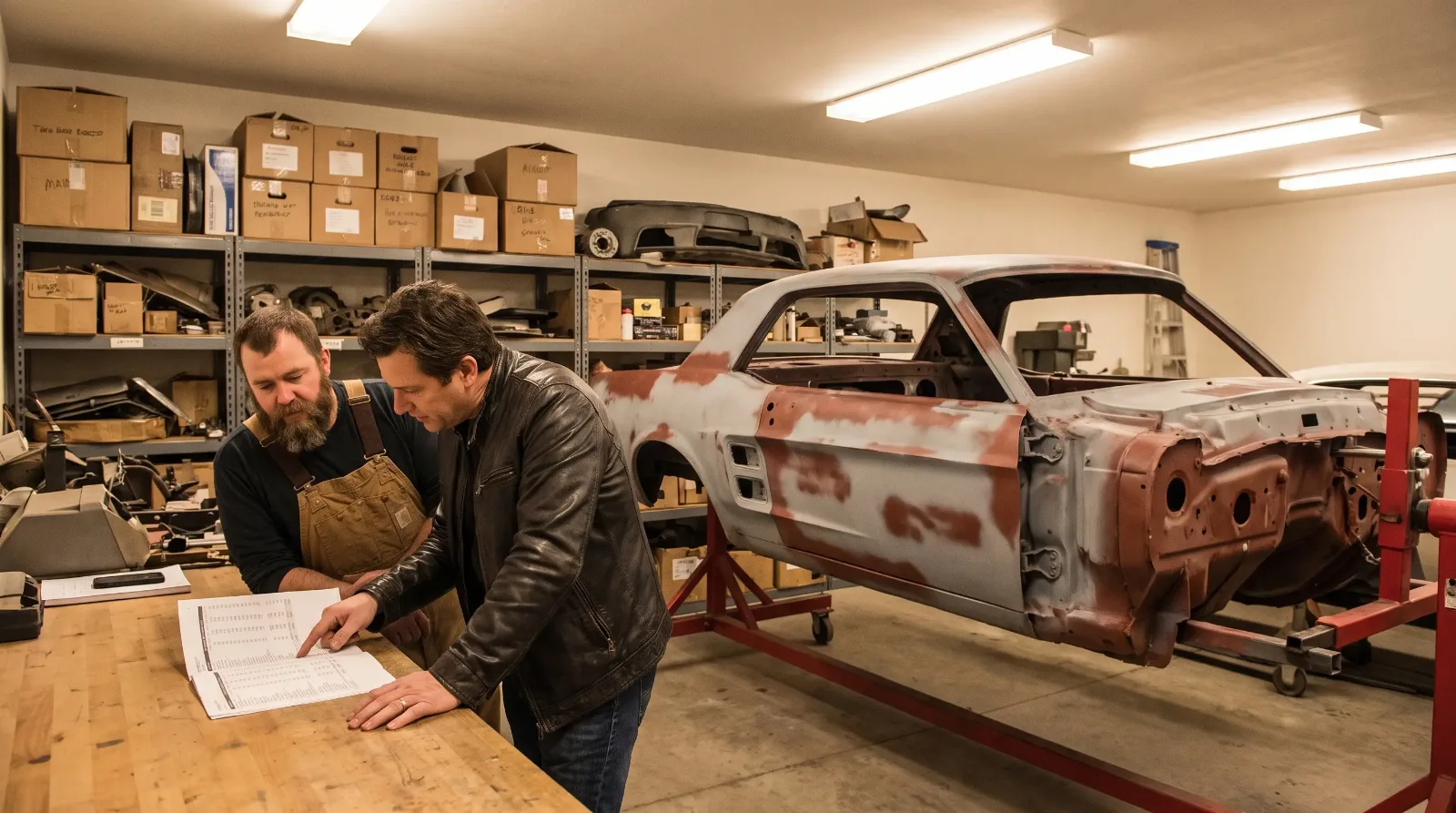
A shop at $95 an hour that takes 1,600 hours to finish a car costs more than a shop at $130 that finishes the same job in 1,050 hours. Efficiency, parts sourcing, and whether the shop has done your model before matter far more than the posted rate. Ask for hours on comparable completed cars, not just the rate card. If you are still building a shortlist, you can find a restoration shop near you and compare how each one quotes and documents its time.
The other trap is the billing model. Most shops work time and materials, which means you pay for what actually happens, including the surprises. Fixed-price quotes exist, but they usually come with a narrow scope and change orders for anything found after teardown. Neither is wrong. You just need to know which one you are signing, and the guide on how to pick the right shop covers the contract terms and progress billing questions worth asking before the car leaves your garage.
"The hourly rate is the number everyone negotiates and the hour count is the number that actually decides the bill. I would rather pay a specialist more per hour than pay a generalist to learn my car on my dime."
David Mercer
What pushes a project over budget
Very few restorations finish at the original estimate. Overruns of 20 percent or more are common enough that experienced restorers plan for them from day one, and in my experience the causes are consistent.
Rust you could not see
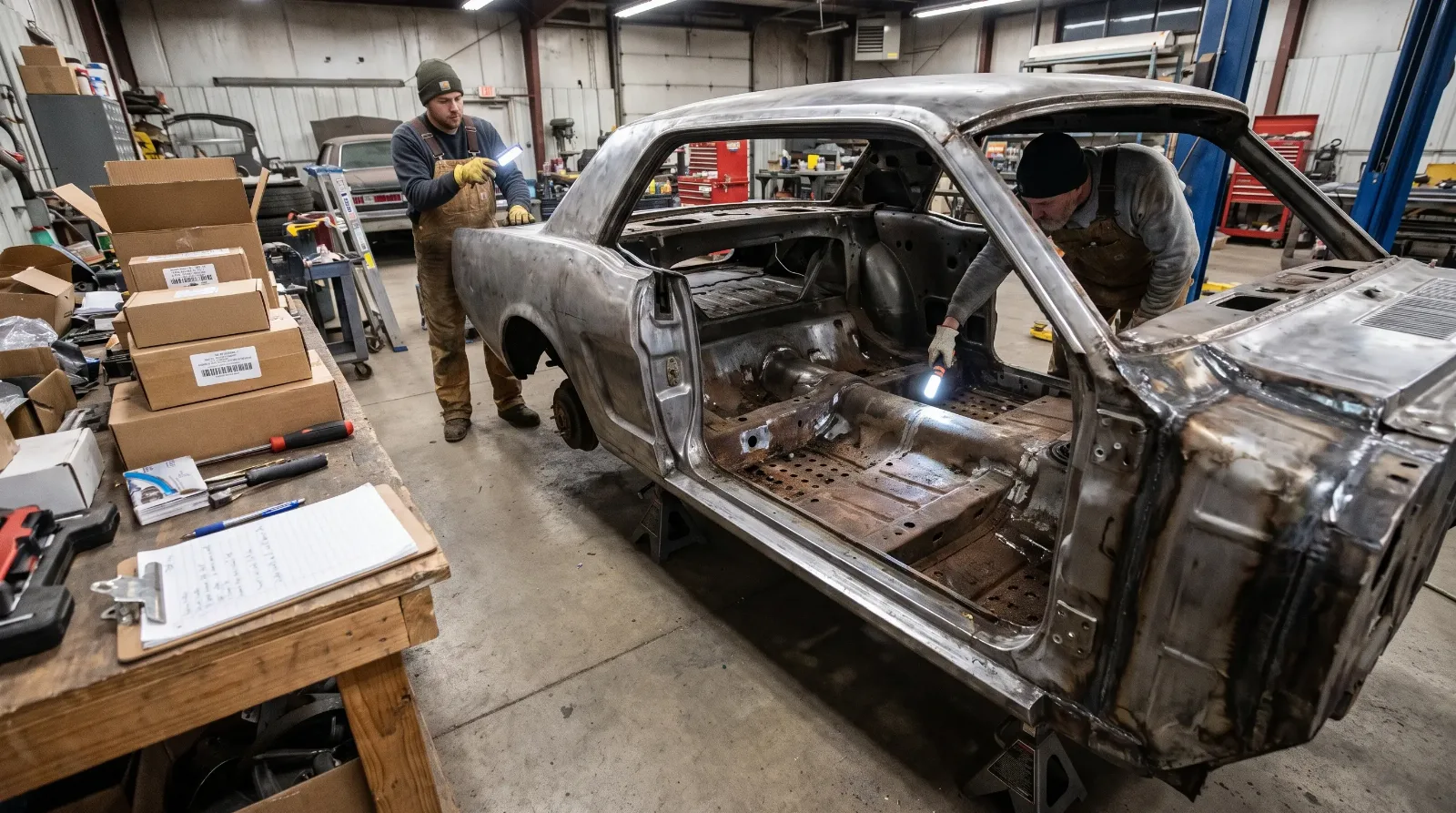
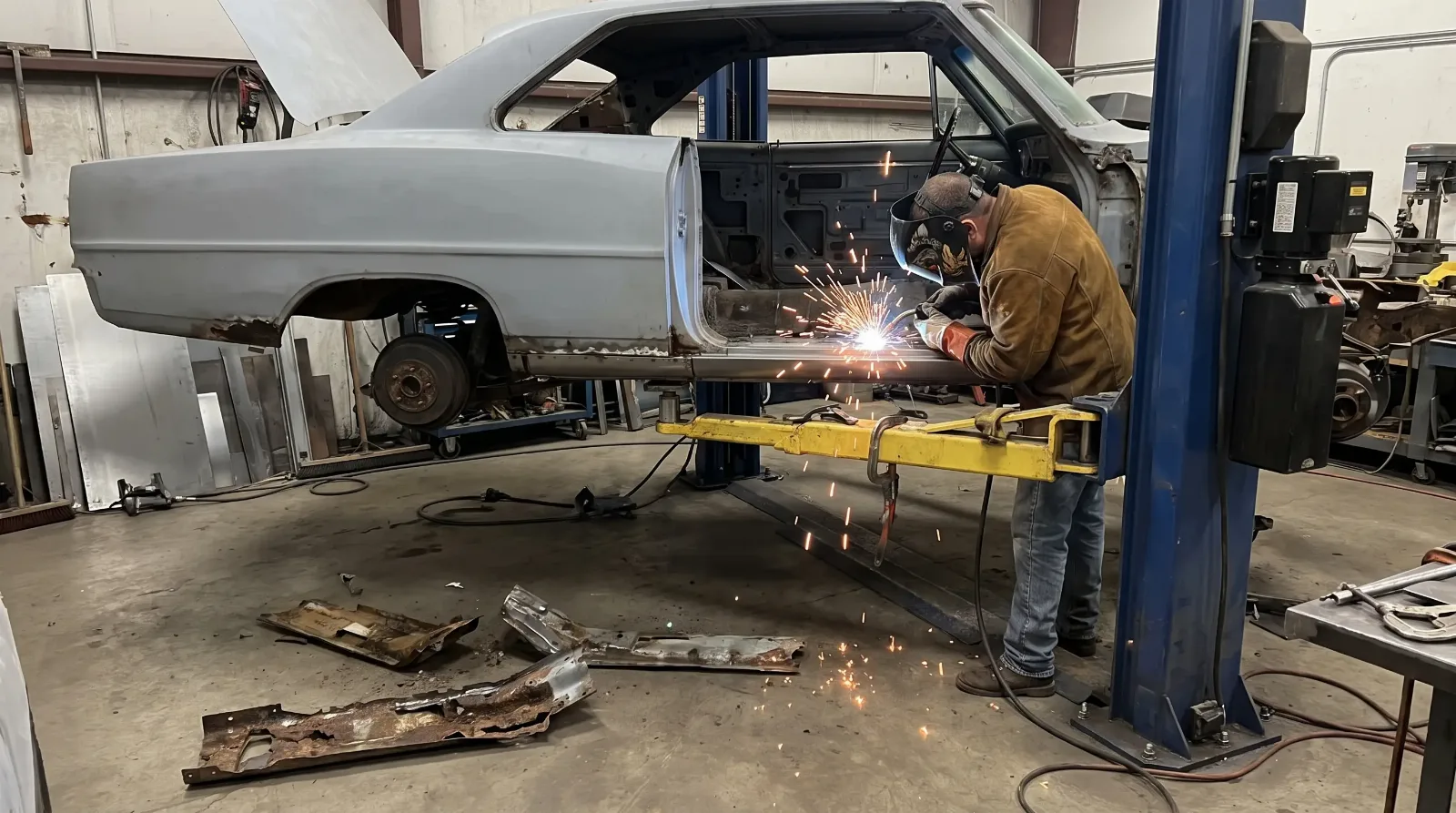
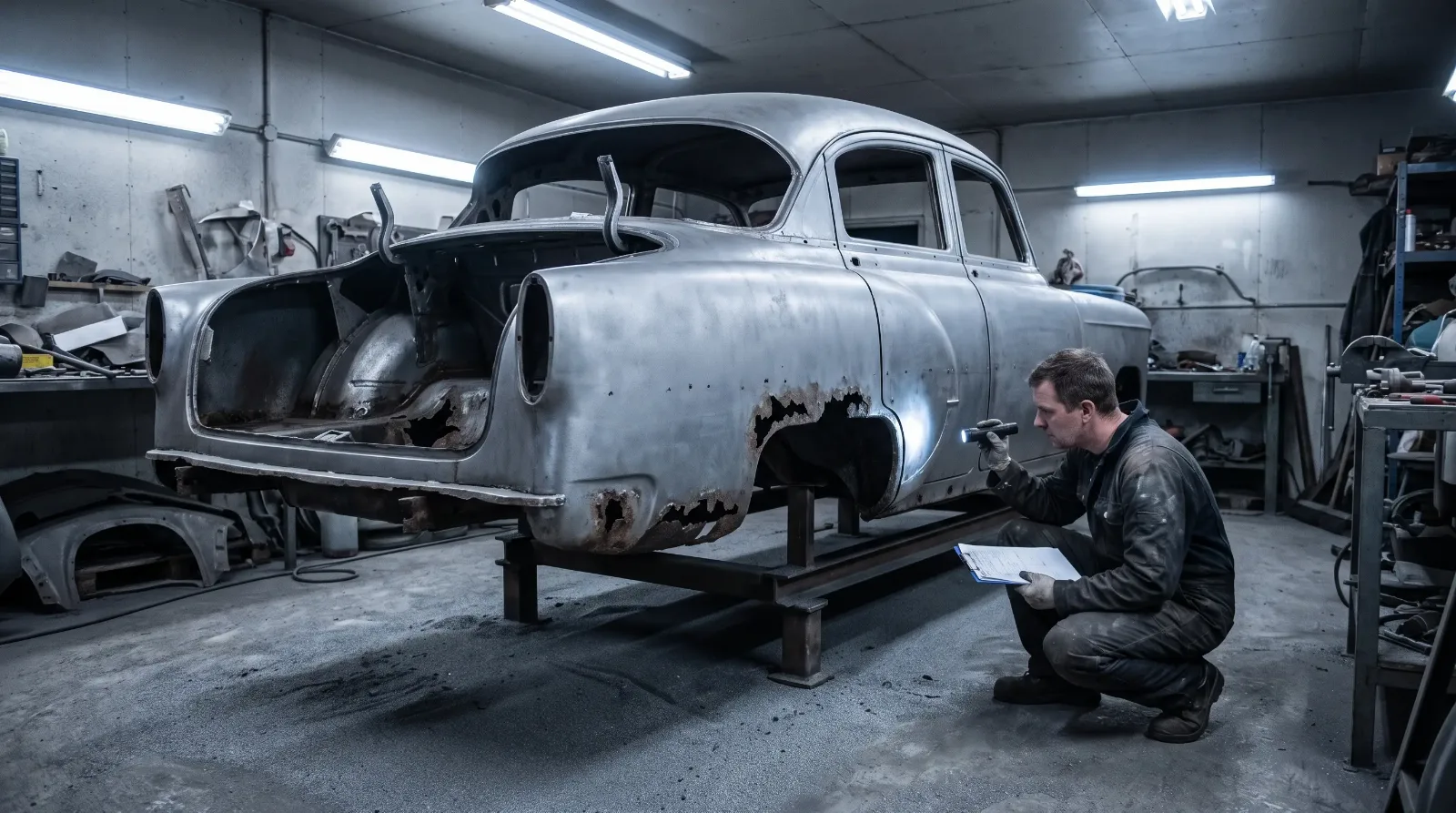
A car that looks solid on a lift can hide rotted inner rockers, trunk drops, cowl panels, and frame sections under undercoating and old filler. Once the body is blasted, a $10,000 metal estimate can become $30,000. This is why the teardown and assessment phase deserves its own line and its own contingency.
Scope creep
The owner who planned a driver decides at the paint stage that the car deserves better. Then the engine bay looks wrong next to the new paint, so it gets detailed. Then the interior. Each decision is reasonable on its own. Together they move a $60,000 driver into six figures without anyone ever choosing that budget.
Parts availability
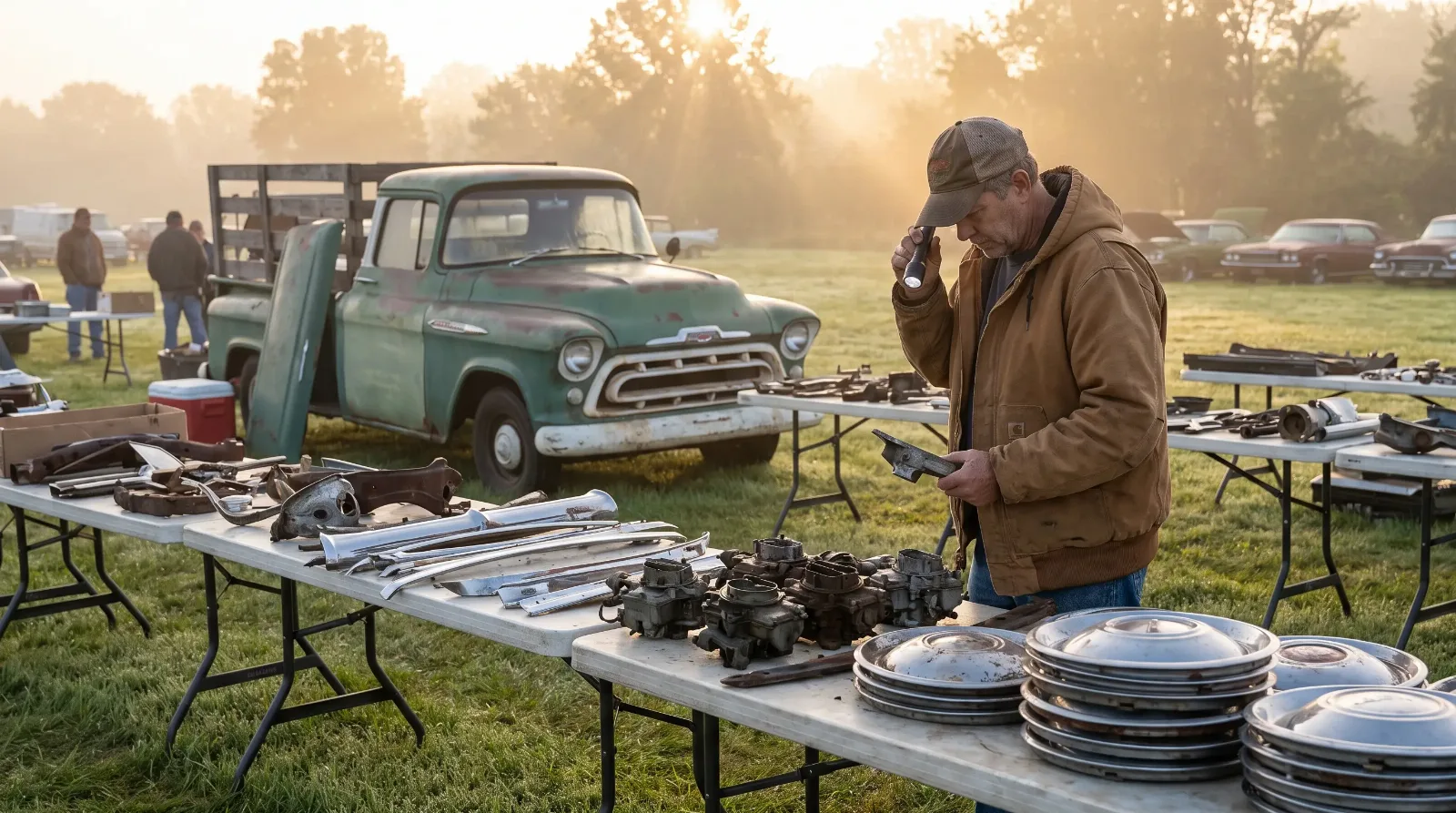
Popular American models have deep reproduction catalogs. Low-production cars, imports, and anything with unusual trim do not. When a part has to be found used, restored, or fabricated, both the cost and the timeline stretch. Parts that sit on backorder also stall the car in the shop, and a stalled car still occupies space you may be paying for.
Originality requirements
Correct date codes, period-correct fasteners, factory paint daubs and inspection marks: chasing these for a judged car can double the hours on certain systems. If you are not entering judged events, decide early whether you are paying for originality you will never use.
Restoration cost versus finished value
This is the part most people skip, and it is the part I care about most. For the majority of classic cars, a professional restoration costs more than the finished car is worth. That is not a reason to avoid restoring one. It is a reason to know your number before you start.
Consider a common case. A first-generation Mustang coupe with a six-cylinder is one of the more affordable classics to buy finished, and even excellent examples typically sell for a fraction of what a full professional restoration costs. That restoration can easily pass $80,000. The owner who does that is spending for enjoyment, not equity, and should say so honestly. A big-block Chevelle SS or a documented Hemi car changes the equation, because finished values can carry the cost. That is why the same shop invoice can be a smart move on one car and a financial loss on another.
Auction results confirm this every January in Scottsdale and Kissimmee. Freshly restored cars routinely hammer for less than their documented build cost, sometimes for half. Buyers pay for the result, not the receipts. The best value in the hobby is often a car someone else already restored and lost money on.
Buy finished, buy a project, or build something different
Before committing to a full restoration, run three numbers side by side: the cost of a finished car of the grade you want, the cost of a project plus the restoration estimate plus a 30 percent contingency, and your realistic timeline.
If a finished car costs less, buy it. You get the car this year instead of in three years, and someone else absorbed the overrun. If the model is rare, has family history, or finished examples simply do not come up, the project route makes sense. Starting with the most complete, least rusty example you can find is the cheapest decision you will make in the whole process, so browse project cars for sale with a body shop's eye: pay more for solid metal and less for shiny paint.
There is also a third path. Some owners discover partway through a factory-correct plan that they really want modern brakes, fuel injection, and air conditioning. That is a different build with a different budget logic, and if it sounds like you, read how the costs of a restomod build compare before you spend money on originality you plan to remove later.
How to build a realistic restoration budget
A budget that survives contact with a real project usually follows a few habits.
- Pay for an assessment first. A few hours of inspection on a lift, ideally with some test blasting in suspect areas, is the cheapest information you will ever buy.
- Set the target grade in writing. Driver, show, or concours. Every later decision gets measured against that line.
- Add a contingency of 20 to 30 percent on top of the estimate, and treat it as money already spent.
- Ask for monthly itemized invoices with hours by task. You want to see overruns when they are small.
- Stage the work if cash flow is tight. Mechanical first, then body, then interior, so the car can be driven between phases.
- Check what the finished car is worth today, using recent auction results and insurer valuation tools, so you know your exposure.
The bottom line on cost
For a common American classic in 2026, plan on roughly $45,000 to $100,000 for a solid driver, $100,000 to $225,000 for a show-quality car, and $200,000 or more for concours work. Expect to exceed your first estimate. Compare every restoration plan against the price of a car someone else already finished. If the numbers still say restore, do it with a clear target grade, a real contingency, and a shop that can show you its hours on cars like yours. Restoring a car for the love of it is a perfectly good reason. Just make sure you know what that love is going to cost before the first panel comes off.
Sources and notes
- Hagerty: What does it cost to restore my classic car?, labor rates and why most restorations are not recouped at sale
- Hagerty: What does a car's condition really look like?, definitions of the #1 to #4 condition grades
- Beancount: Classic car restoration shop bookkeeping guide (2026), average shop rates and labor hours by restoration level
- Sports Car Market: A costly 911 dream, an itemized restoration invoice versus a specialist's budget for the same car
- Sports Car Market: Set the WABAC, how restoration labor costs have grown and what a top-grade build costs today