
A man at a small-town swap meet once held a cracked door panel up to the light like a pie he was thinking of buying. The vinyl had gone the color of weak tea, the armrest was split, and one of the clip holes had torn clean through the board. He turned it over, looked at the faded pencil mark on the back, and set it down gently. It had been in somebody's car for decades, and he could not bring himself to pay forty dollars for it or throw it away. Everyone who restores an interior reaches that moment with a door panel in their hands.
Restoration & Tech
7 min read
Door Panels: Restore the Originals or Buy Reproductions
Original door panels carry the car's history, reproductions carry a clean fit. Here is how to judge which one your classic needs, what each route costs, and where hybrids win.
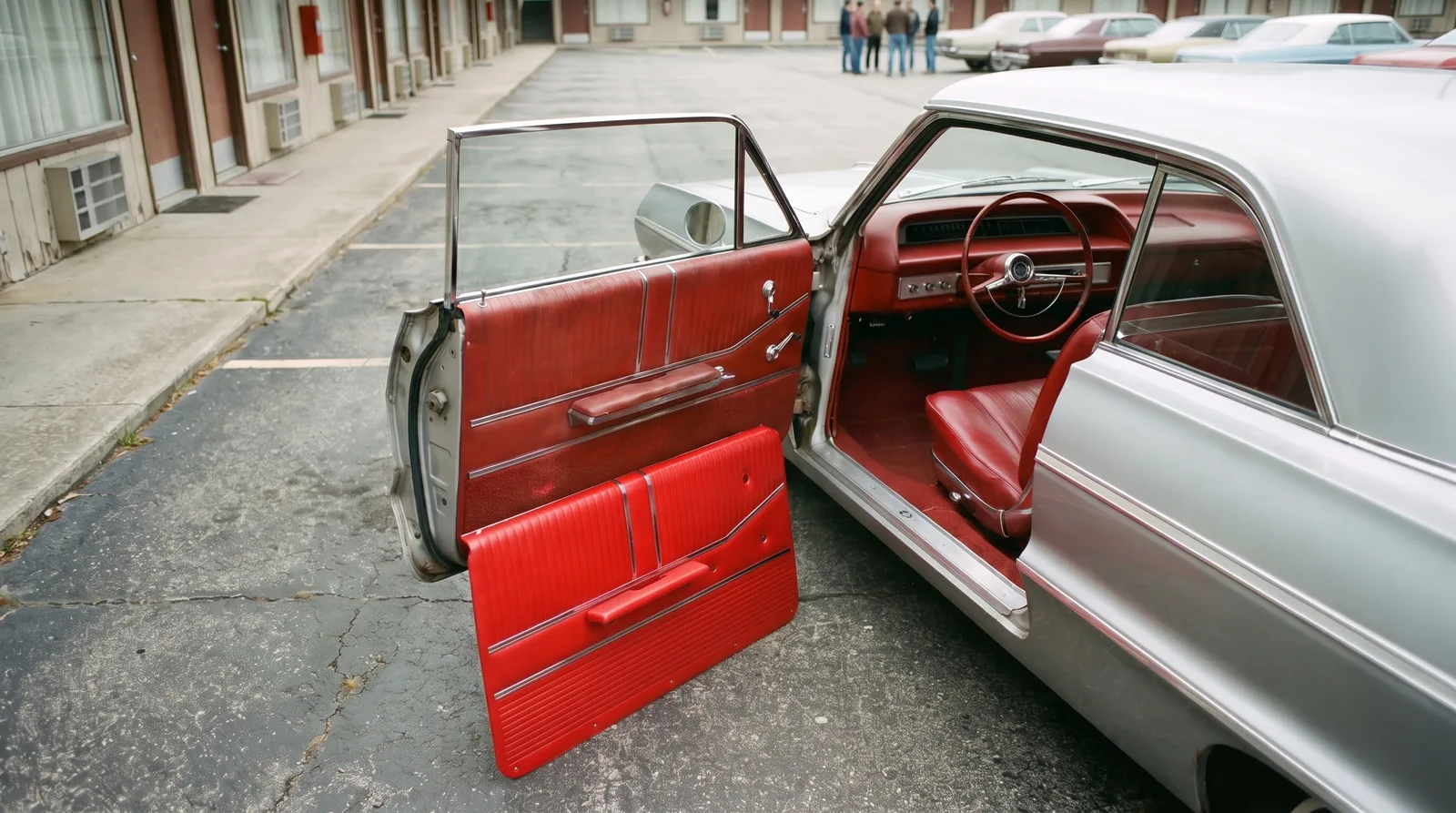
The question is simple to ask and annoying to answer. Do you rebuild what the factory installed, or do you order a new set and bolt it on? It sits right in the middle of any interior restoration work, because door panels touch your hands and elbows every time you drive, and they are among the first parts a visitor looks at when the door swings open.
What your original panels are really made of
Before deciding anything, find out what you are holding. Door panels of the 1950s and 1960s are usually a pressed fiberboard or a cardboard-like composite backing, wrapped in vinyl or cloth and held with metal retainers. Many panels use a stiff card or Masonite-type hardboard backing, and some later cars moved to molded plastic cores, with a vinyl skin over foam. The backing decides everything. A rigid plastic or hardboard core in good shape can often be rebuilt. A water-damaged card or fiberboard panel that has swollen, delaminated or turned to mush cannot, no matter how much patience you bring. Some restorers cut a new backing from epoxy fiberglass board, about 2.5 to 3 mm thick and close to the original card, which water does not affect.
Pull the panel gently and check three things. First, the backing: press near the lower edge, where water collects, and feel for softness. Second, the mounting holes: if more than a handful of retainer holes have torn out, the panel will rattle even after new covering goes on. Third, the shape: warping from heat and moisture ruins the gap against the door skin, and no new vinyl corrects that.
When restoring the originals makes sense
Originals earn their place when the backing is sound and the damage is cosmetic. Faded vinyl, a torn armrest pad, cracked trim strips and tired window cranks are all fixable. Reupholstering a good original board keeps the factory contours, the exact mounting pattern and the original fit to the door, which a reproduction sometimes only approximates. If the car is a documented, low-production or numbers matching example, keeping the original substrate also preserves what an appraiser or judge may want to see.
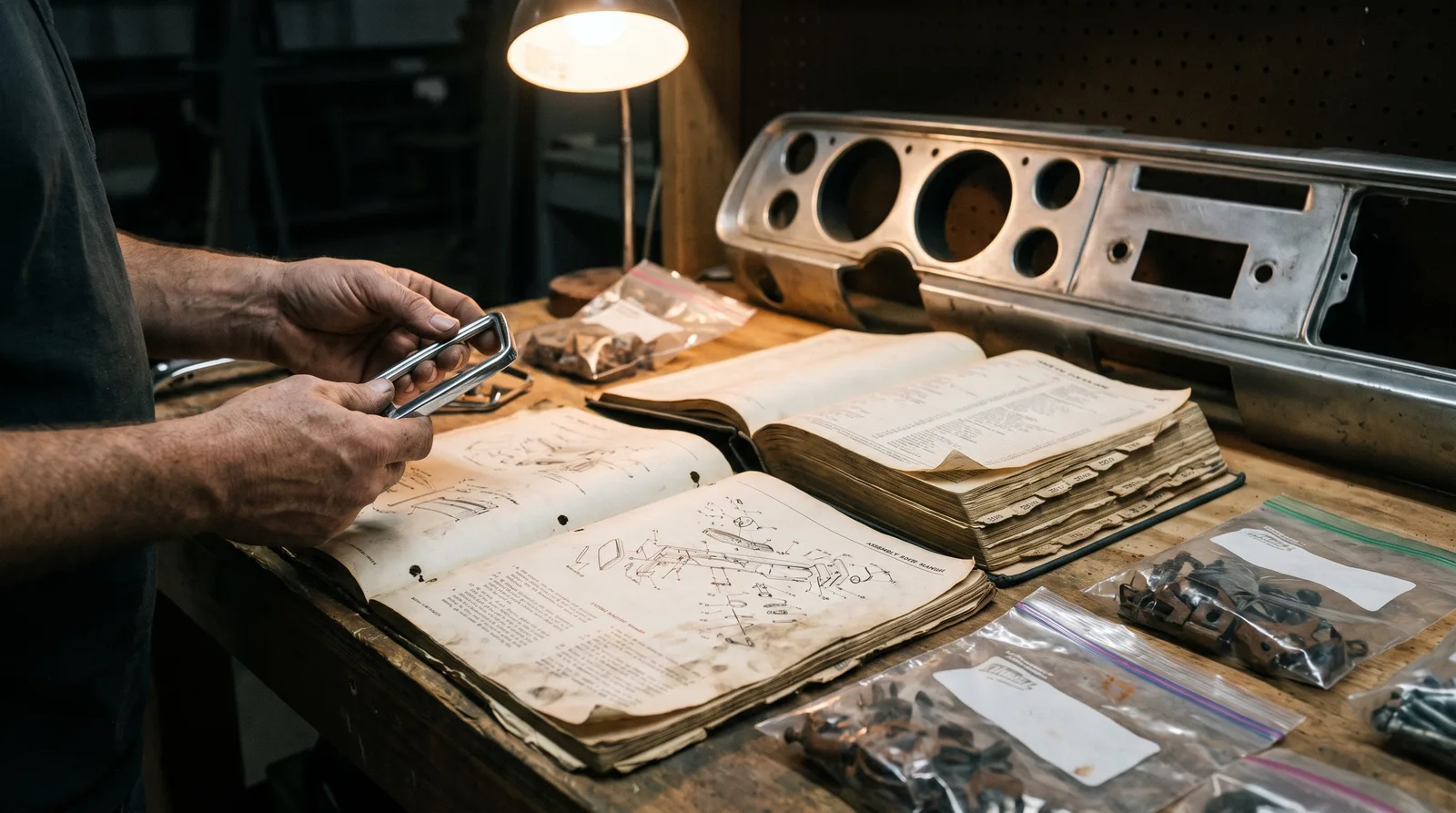
The work is straightforward but fussy. Strip the old covering, clean and seal the board, repair splits with a thin fiberglass or epoxy backing patch, then recover with matching vinyl and the right foam or padding. Labor is the bulk of a trim shop bill, since patterning and fitting door panel covering is slow work, and complex panels and custom inserts cost more. Do it yourself and the materials are modest, but the real cost is the hours and the learning curve around seams and corners.
When reproductions are the better call
If the backing has rotted, if the panels were cut for speakers decades ago, or if a previous owner butchered them with a hole saw, stop restoring and start shopping. Reproductions made for popular models arrive pre-covered with the correct pattern and color, ready to install, and a good set fits more tightly than a tired original ever will. For high-volume cars the parts market is deep, and a door panel set commonly runs about $400 to $1,500 in parts, or roughly $600 to $2,500 installed, depending on the car and the materials.
The price jumps for rarer cars and special trims. Low-production or foreign models may mean custom fabrication from a pattern or a damaged original, and that can push a set toward the top of that range or beyond. This is also where the broader debate about reproduction vs original parts applies in miniature: a reproduction is only as good as its research, so ask whether the maker worked from an original or simply guessed.
| Factor | Restore originals | Buy reproductions |
|---|---|---|
| Typical cost per pair | Mostly trim shop labor, plus vinyl and foam; often a good share of the reproduction price | Roughly $400 to $1,500 in parts for a set, $600 to $2,500 installed; more for rare ones |
| Fit to door | Factory exact if board is sound | Usually good, occasionally slightly off |
| Originality value | Highest, keeps factory substrate | Lower, replaces period parts |
| Time | Slow, depends on repairs | Fast, mostly installation |
| Best when | Backing is intact, damage is cosmetic | Backing is rotted, torn or cut up |
The hybrid route most owners end up taking
The cleanest answer is rarely all one or all the other. Plenty of owners keep the original hardware, armrests, pulls, window cranks and trim strips, and pair them with a reproduction board and covering. You get a straight, solid base and the small period details that make the door look right. If one panel is good and the other is ruined, reproduce the damaged one and recover the good one to match, using the same vinyl batch so the grain and color line up.
Whichever way you lean, label and bag every clip, screw and retainer when you take the panels off. Lost clips are the usual reason a perfect panel never sits flush. Check the vapor barrier behind the panel too. A torn or missing plastic sheet lets door moisture reach the new board, and then you are doing the whole job over in five years.
"The best panel is the one that closes against the door without a sound and still looks like it belongs to the car. Everything else is a debate about money."
Nora Beckett
Where the door panels sit in the build order
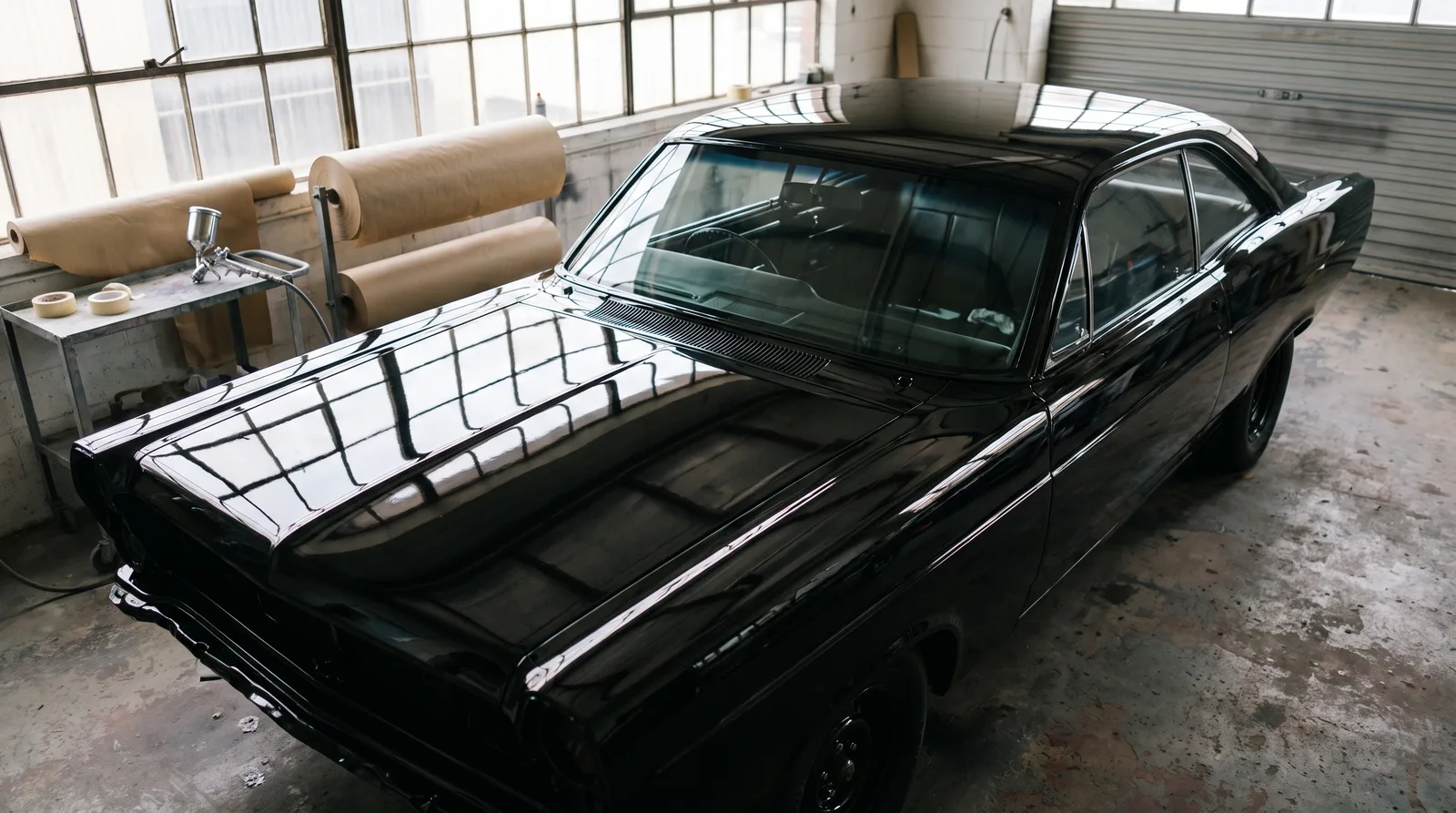
Do not install door panels until the paint, window regulators and wiring are finished, and the weatherstripping is in. The last touch in the cabin is the part the driver holds the most, so plan steering wheel restoration in the same window and the cabin ends up with one consistent level of finish. A fresh door panel beside a cracked wheel looks odd within seconds.
In the end, the choice comes down to what the car is and what you want from it. A rare original with sound boards deserves careful restoration. A rotted driver with a story about a family trip needs new panels and a good install. Either way, the man at the swap meet had it right. Hold the part, look at the pencil mark on the back, and decide what it is worth to keep.
Sources and notes
- Door trim restoration (Hudson-AMC technical page), card or Masonite backing, water damage, epoxy fiberglass replacement board and contact adhesive
- How much does it cost to reupholster a classic car? (EngineerFix), upholsterer labor rates and door card patterning as slow work
- How much does it cost to reupholster a car? (ThePricer), interior project scope and door panel repair costs
- How much it can cost to reupholster car seats (Jalopnik), labor as the main cost and retrimming door panels adding to the bill
- Hardboard (Wikipedia), Masonite and hardboard as compressed wood fiber board
Related Reading

About the author
Nora Beckett
Automotive features writer and photographer who tells the human stories behind the cars, from show fields to cross-country road trips.
More in Restoration & Tech
Comments (1)
C
Caddy_Cal
4 days ago
Forty years in the funeral business taught me that families forgive almost anything except the wrong upholstery. My 1960 Fleetwood's door boards are sound but the vinyl is tired. Does anyone reproduce the correct grain for a Cadillac of that year, or is recovering the only honest option?
Cal, with sound boards you're already in the better position, and on a car like yours I'd keep them. The harder part is the grain. Ask the trim shop to match it against a hidden section, behind the armrest or under a trim strip, somewhere the sun never reached.