Open the door of a classic car and the interior tells you its history faster than any paperwork. Sun-split vinyl on the passenger side says the car lived with its windows facing south. A driver's seat bolster worn through to the burlap says somebody commuted in it for years. A headliner that sags in one corner usually means a leaking rear window seal, and that means rust you have not found yet. Interior car restoration is the part of the job owners see and touch every time they drive, and it is also the part most often done quickly, with the wrong materials, by whoever was cheapest that month.
This guide covers how a proper interior restoration is planned, what the work actually involves, which materials were used when, what it costs in 2026, and where originality matters enough to change your decisions.
Where the interior fits in a restoration
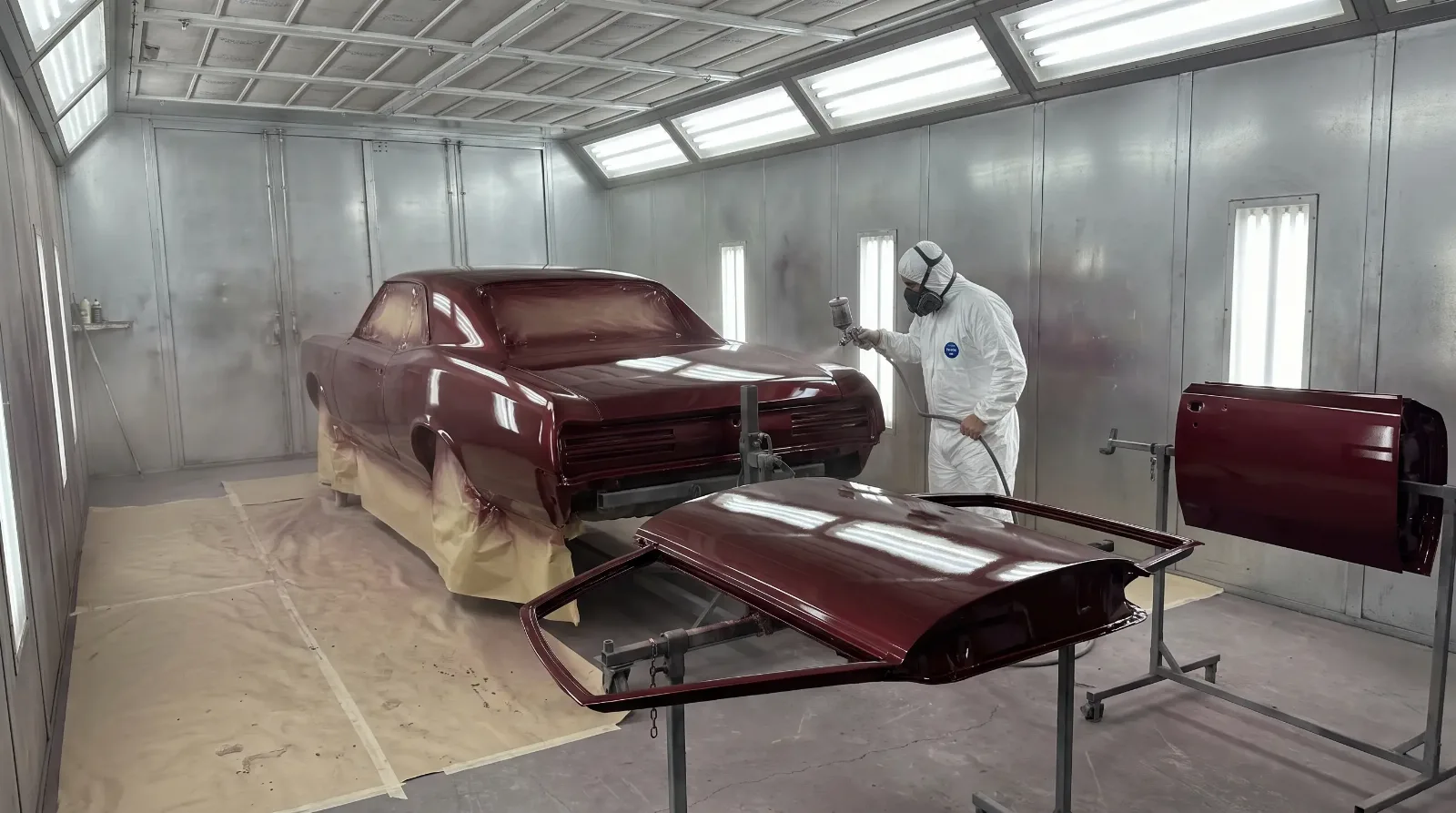
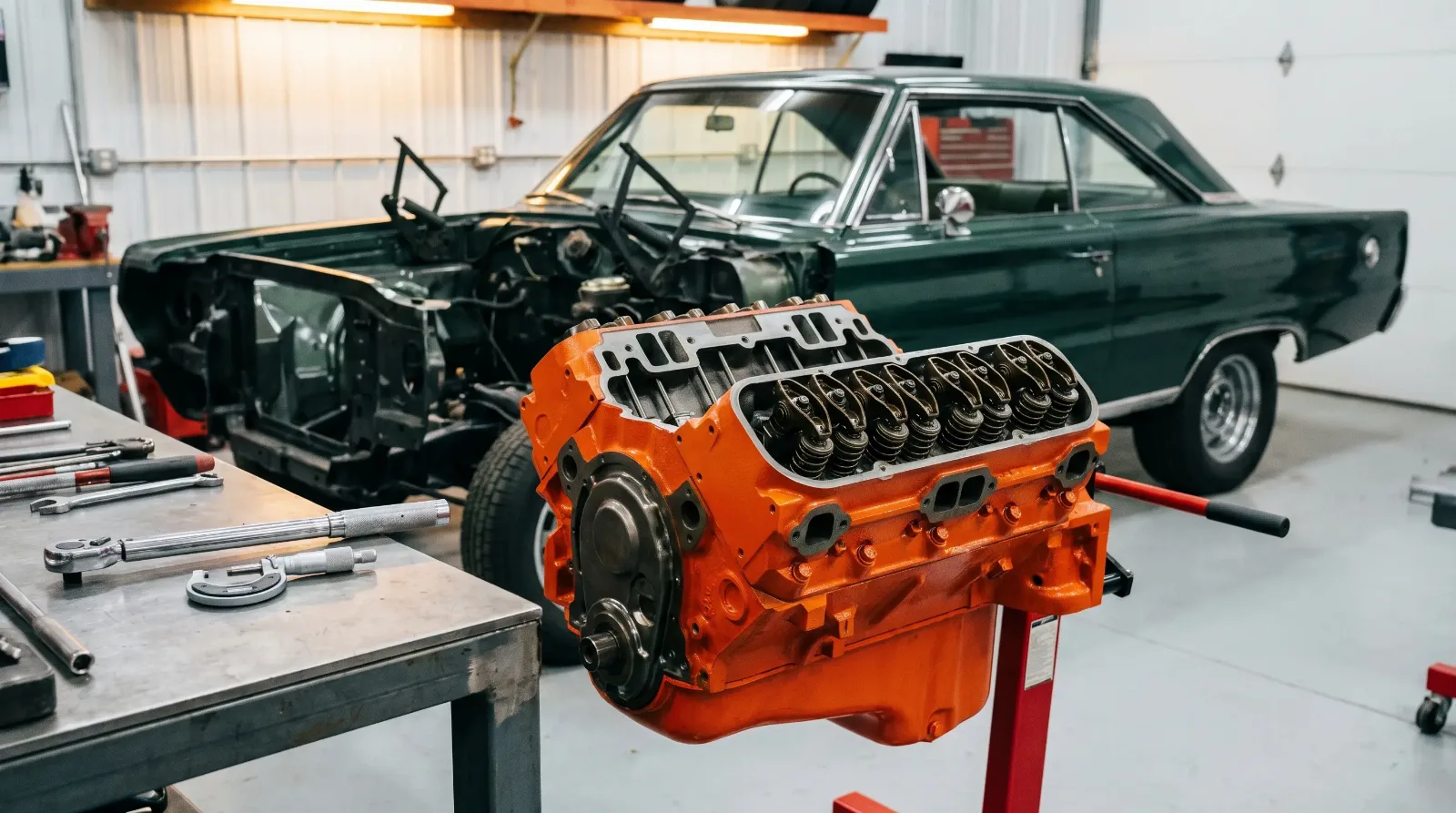
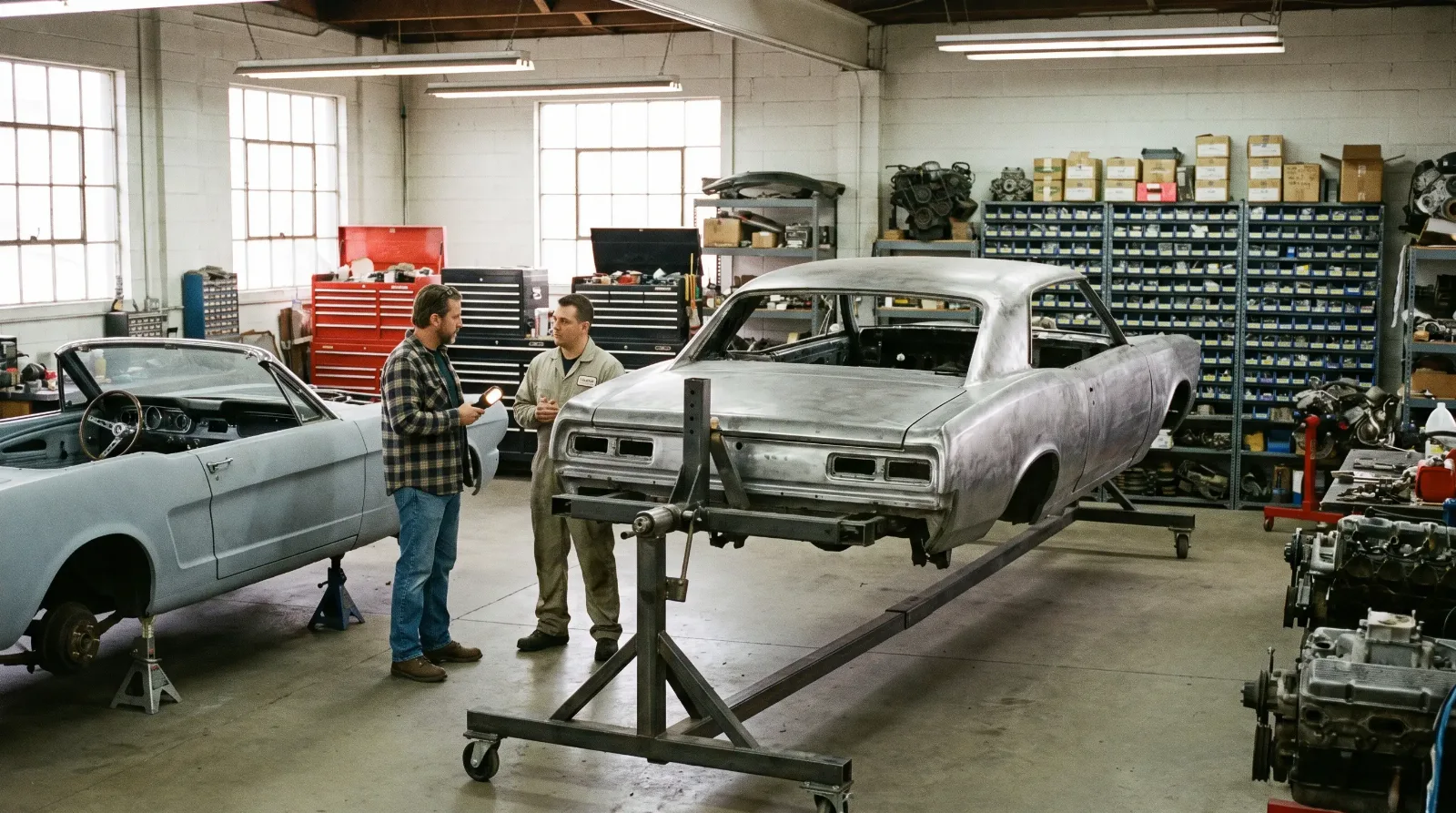
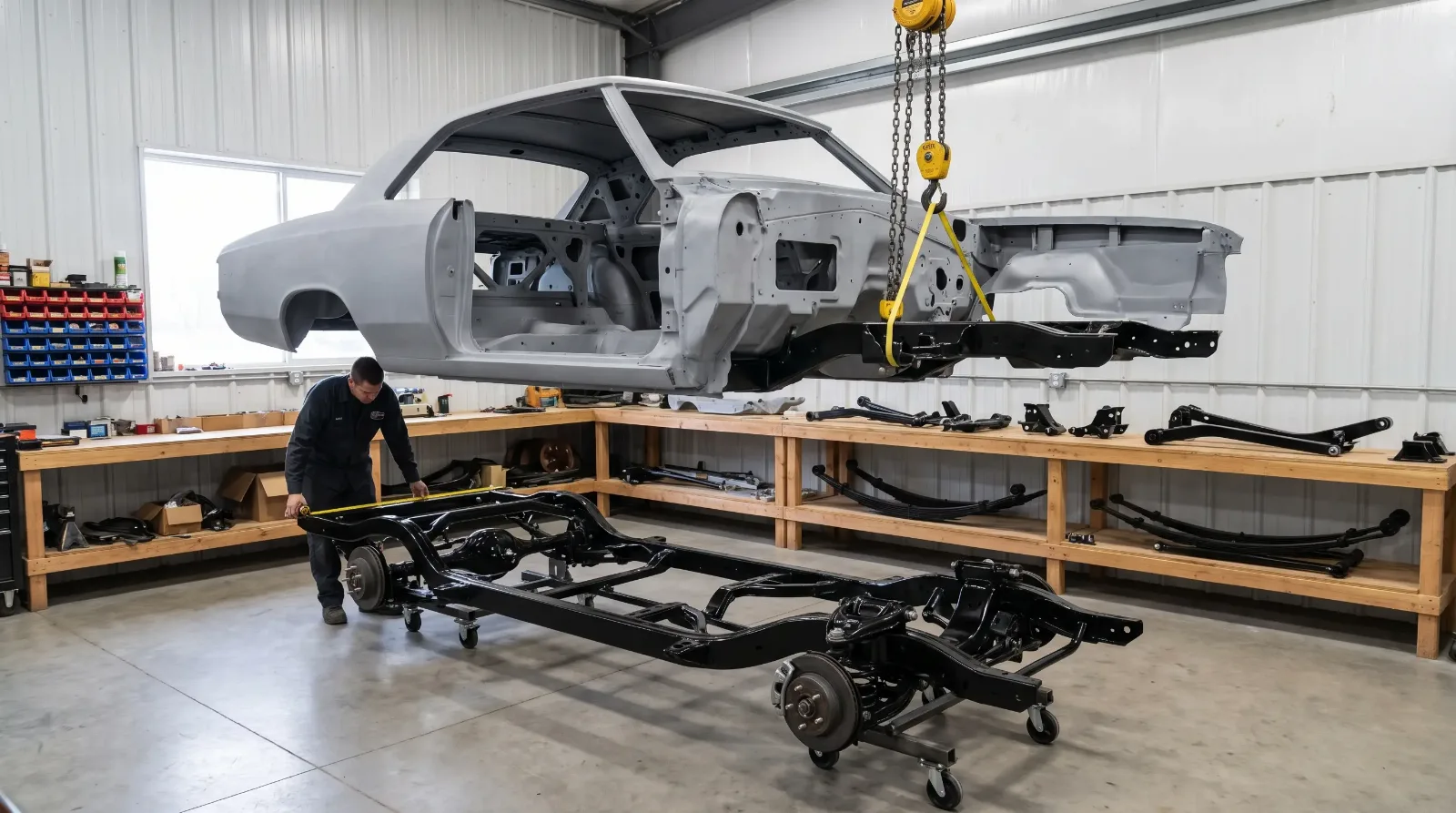
The interior goes in last. That sounds obvious, but cars still arrive at trim shops with fresh carpet already installed under a dash that has not been out, or new seat covers on a car that still needs its floor pans welded. Every welding spark, every sanding pass and every drop of brake fluid is a threat to new upholstery. A sensible sequence runs metal and rust repair first, then paint, then wiring and the engine and mechanical rebuild, and only then the soft trim.
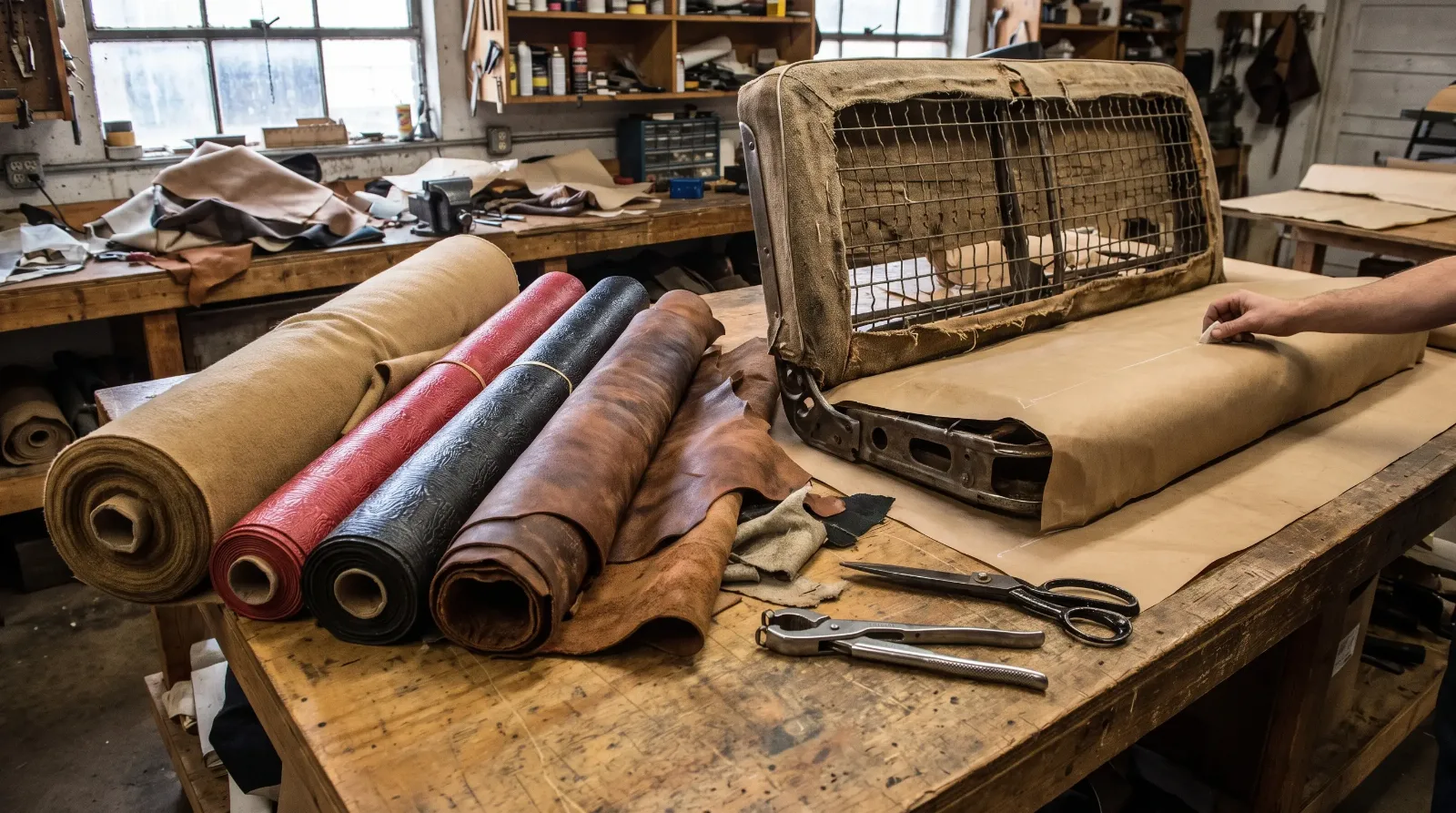
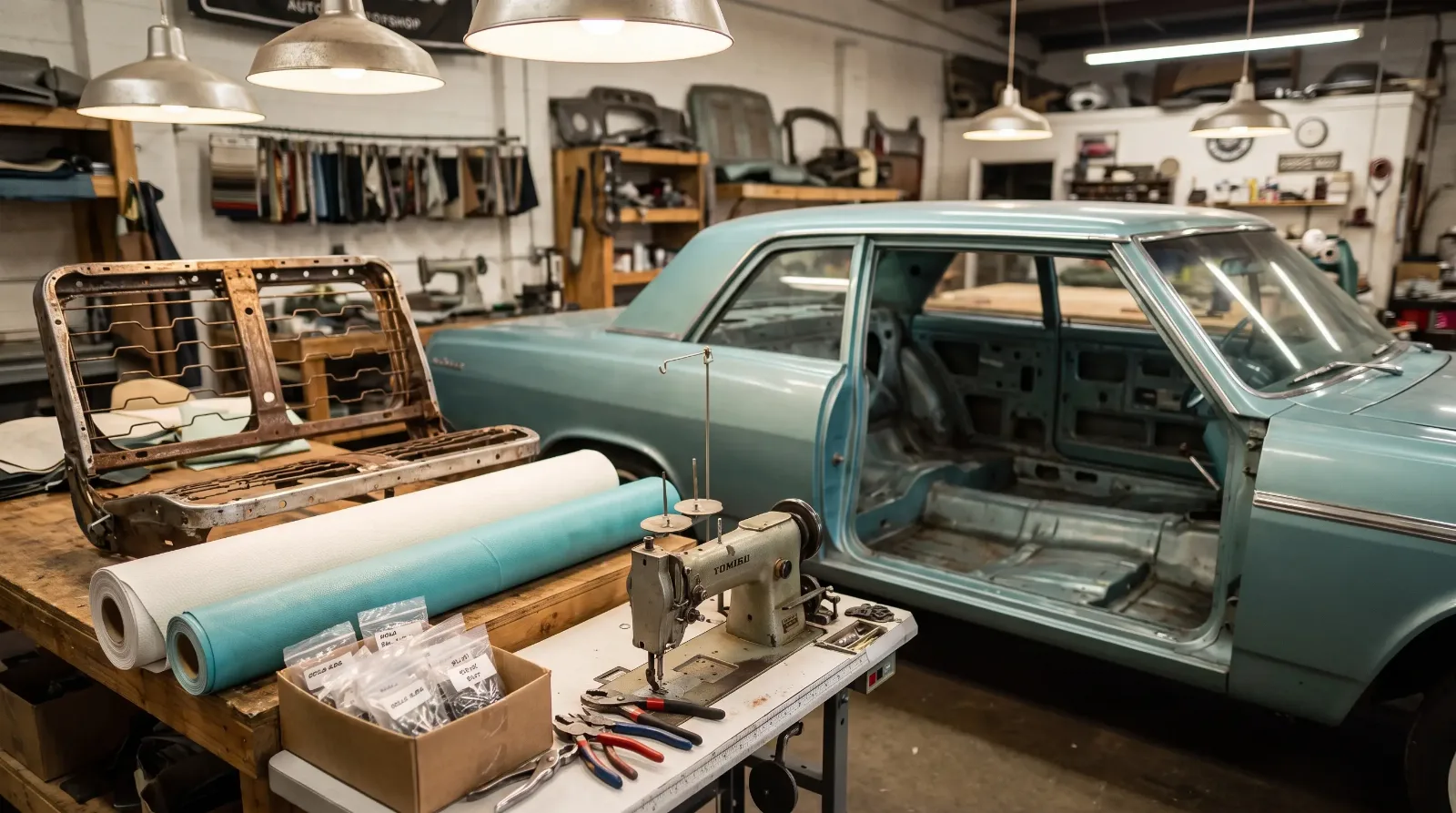
There is one exception. The interior should be documented and dismantled at the very beginning, before anything else is touched. The original seat covers, door panels and headliner are your best patterns, even when they are ruined. Seam placement, pleat spacing, the direction of the grain in a vinyl, the number of listing wires in a headliner and the location of every hog ring are all evidence. Photograph each panel from both sides, bag and label every clip and screw, and keep the old material until the new interior is finished and approved.
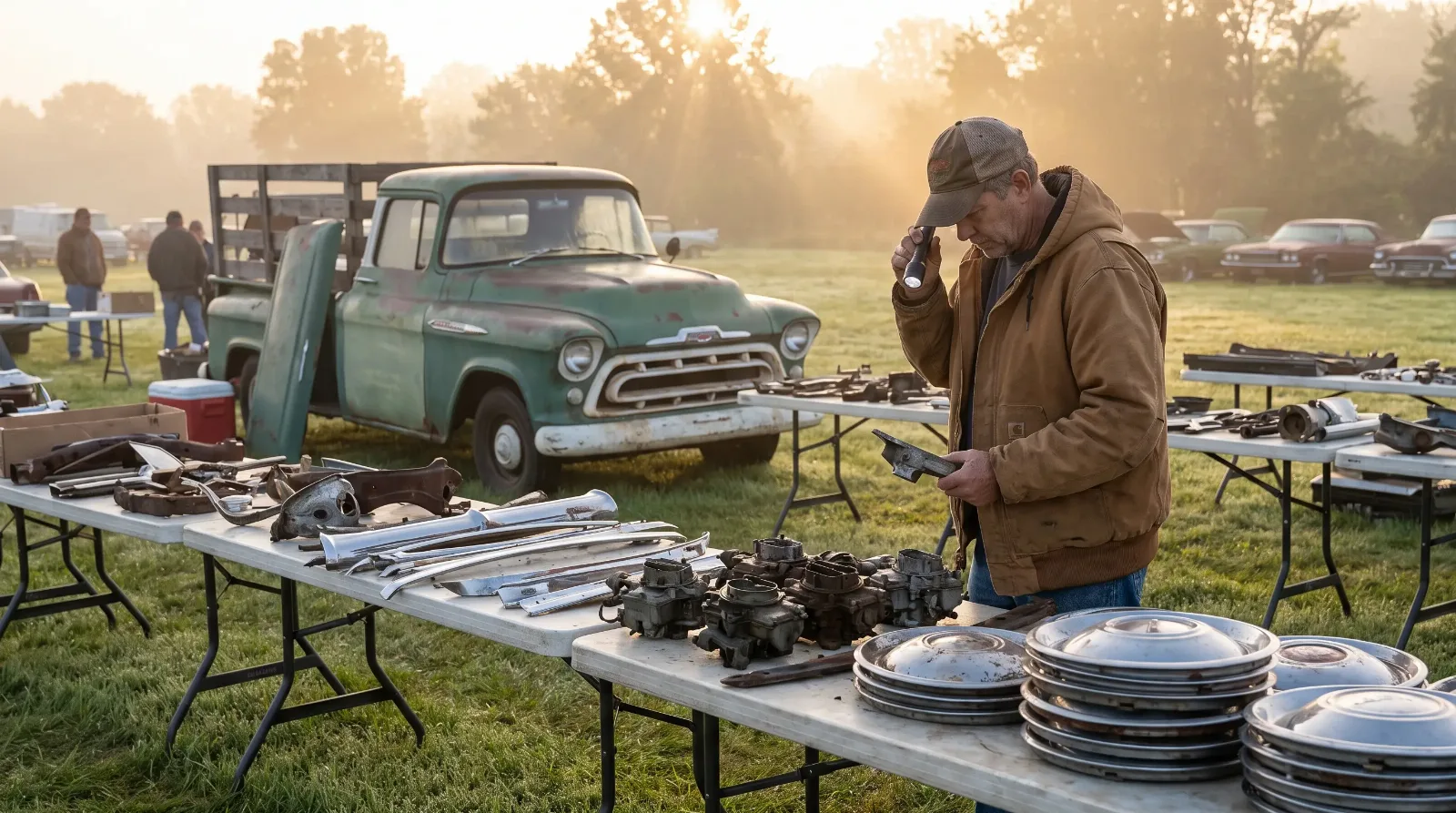
Most owners hand the interior to a specialist trim shop even when they do the rest themselves. When you are choosing among restoration shops, ask whether trim is done in house or subcontracted, because a full-service shop that sends upholstery out is adding a margin and a scheduling dependency you cannot see.
Assessing what you have before you buy anything
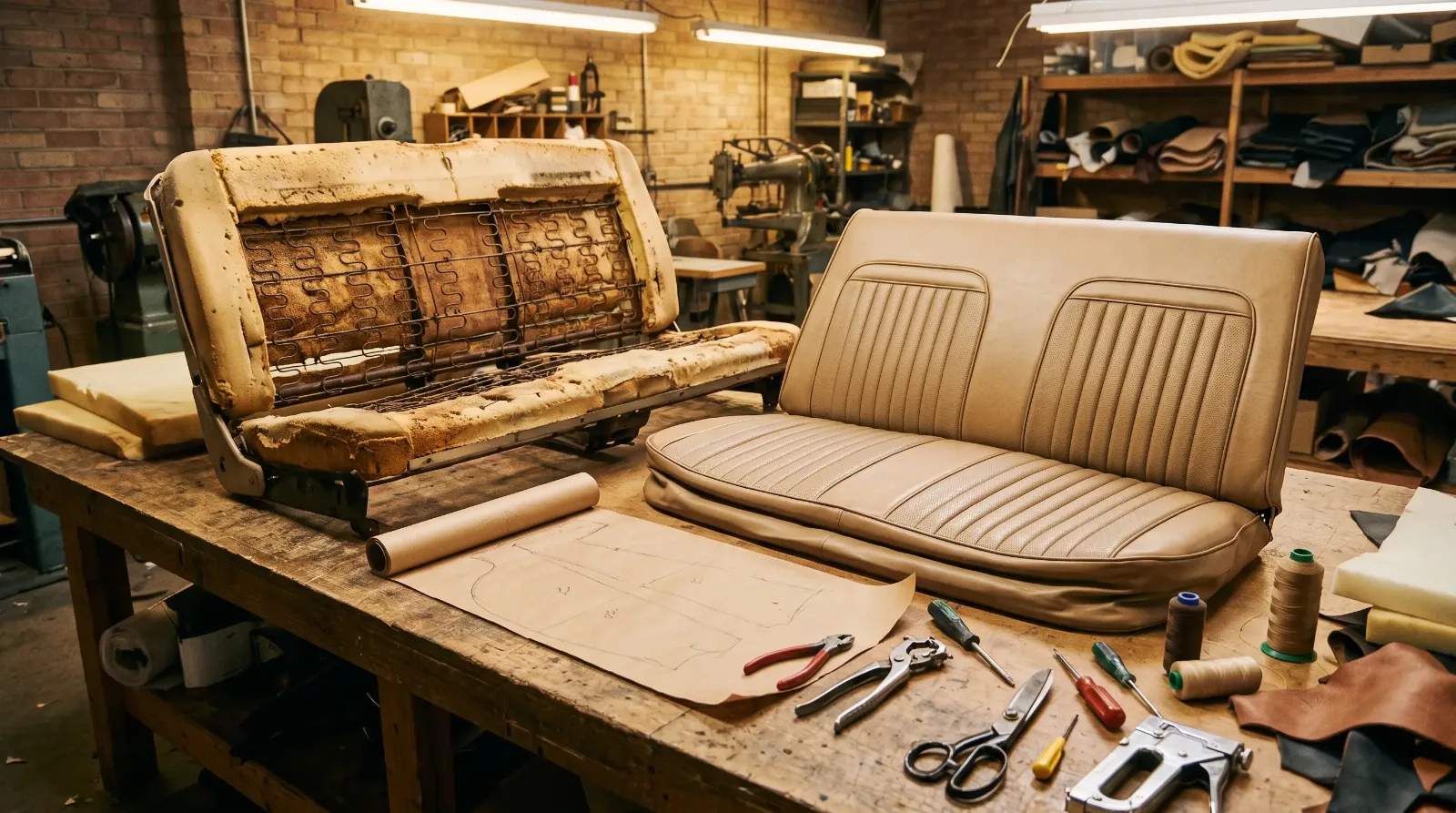
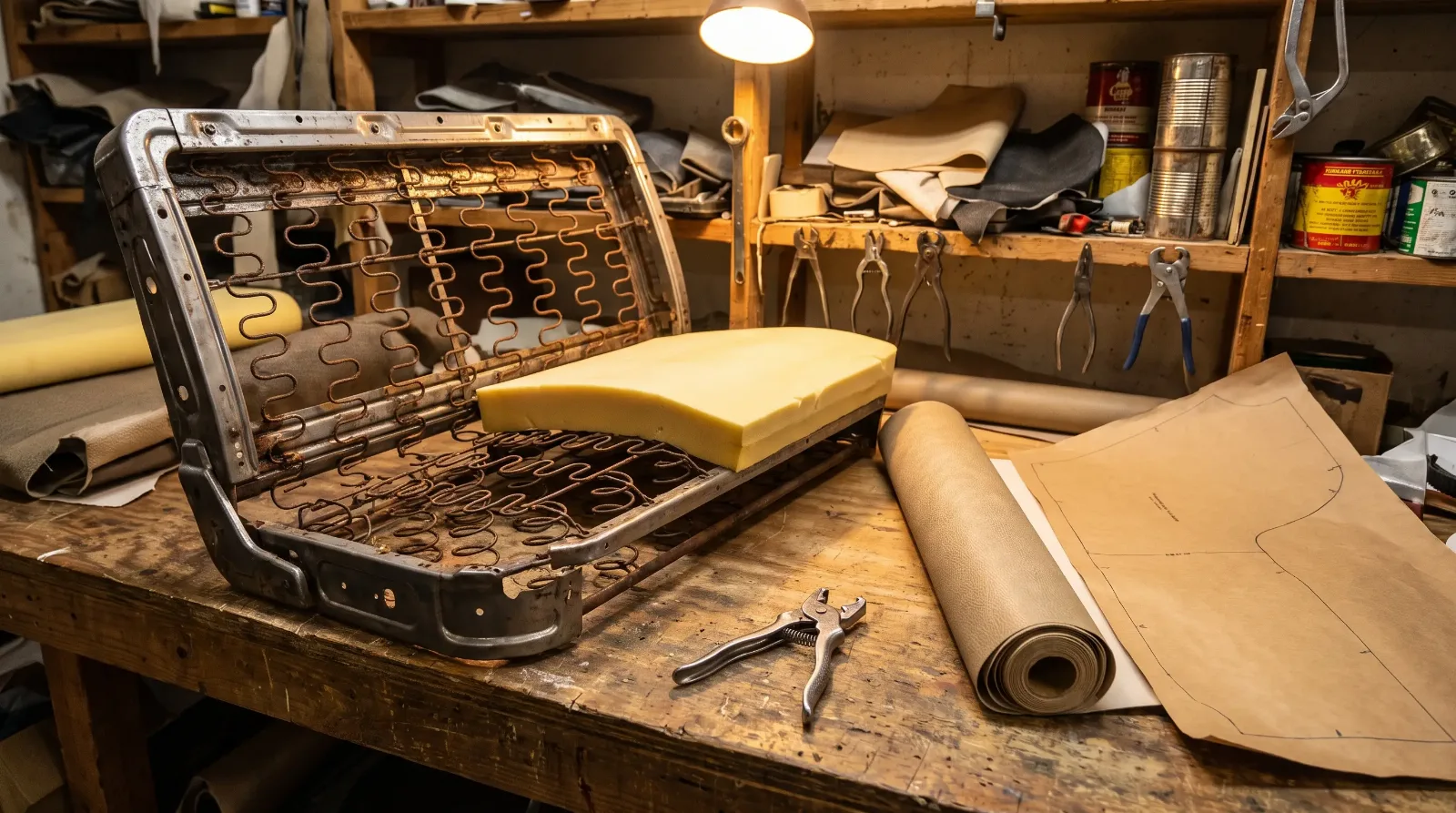
An honest assessment separates what can be saved from what has to be replaced, and it starts with the structure under the cover. Seat frames crack at welds and mounting points. Coil and zigzag springs lose tension or snap. Foam from the 1960s and 1970s has usually turned to crumbs or hardened into something closer to cardboard. Older cars may have horsehair, cotton batting or jute padding that is dry, compressed and sometimes full of nesting debris.
Then look at the hard parts. Dash pads crack along the defroster vents. Door panel backing boards, often pressed fiberboard, absorb moisture and swell. Plated pot-metal trim pits and blisters. Woodgrain appliqués fade. Gauges and clocks may need rebuilding regardless of how the faces look. The assessment should produce a written list with a decision next to every item: reuse, restore, reproduce or replace.
🔧 Inspection Priorities
- Floor and rear deck metal. Lift the carpet and check the pans, seat mounts and package tray for rust. Trim work done over rot will be torn out within a year, and floor or deck repair found at this stage can add several thousand dollars before a single stitch is sewn.
- Water entry points. Stained headliner, damp jute or mildew on the kick panels point to failed windshield, rear glass, door or trunk seals. Fix the leak first.
- Seat frames and springs. Cracked frames or broken springs mean the cover price is only part of the seat bill.
- Dash pad and instrument panel. Original pads in good condition are increasingly scarce for many models, and recovering one is skilled work.
- Trim plating and small parts. Missing or pitted knobs, escutcheons and bezels can be slow and expensive to find in correct form.
Materials by era, and why they matter
Getting the material right is what separates a restoration from a reupholstery job. American closed cars of the late 1920s and 1930s were commonly trimmed in wool broadcloth or mohair, with leather more typical of open cars and the chauffeur's compartment of formal bodies. Coachbuilt cars of the period were trimmed to the customer's order, so a single chassis type can appear with very different interiors, and surviving build records or original fabric are the only reliable guide.
After the war, nylon-based fabrics and early vinyls spread quickly. By the mid-1950s two-tone vinyl and patterned cloth inserts were common in American cars, and by the 1960s vinyl interiors dominated mainstream production, with leather offered on luxury and some sporting models. The 1970s brought velour and cut-pile fabrics. European sports and luxury cars kept leather more widely, Connolly hide being the familiar name in British cars, with vinyl substitutes on cheaper models.
| Period | Typical upholstery | Common carpet | Restoration notes |
|---|---|---|---|
| 1920s to 1930s | Wool broadcloth, mohair, leather in open cars | Wool, often with rubber mats in front | Horsehair and cotton padding; tack-strip construction; matching original fabric often requires a specialist supplier |
| 1940s to 1950s | Broadcloth, nylon fabrics, early vinyl, two-tone combinations | Wool loop, then rayon blends | Patterns and colors vary by model year; reproduction kits widely available for popular American models |
| 1960s | Grained vinyl, leather on premium models | Nylon loop, later cut pile | Grain pattern and pleat count are judged; molded carpet replaced sectional carpet in many cars |
| 1970s to 1990s | Vinyl, velour, cloth inserts, leather | Cut-pile nylon | Foam deterioration is near universal; dash pads crack from heat; seat foam and sewn covers reproduced for many models |
The table is a guide, not a rulebook. Manufacturers changed suppliers mid-year, and individual models broke the pattern. The car's own trim code, where one exists on the body tag or data plate, is the first source to check.
The work, component by component
Seats
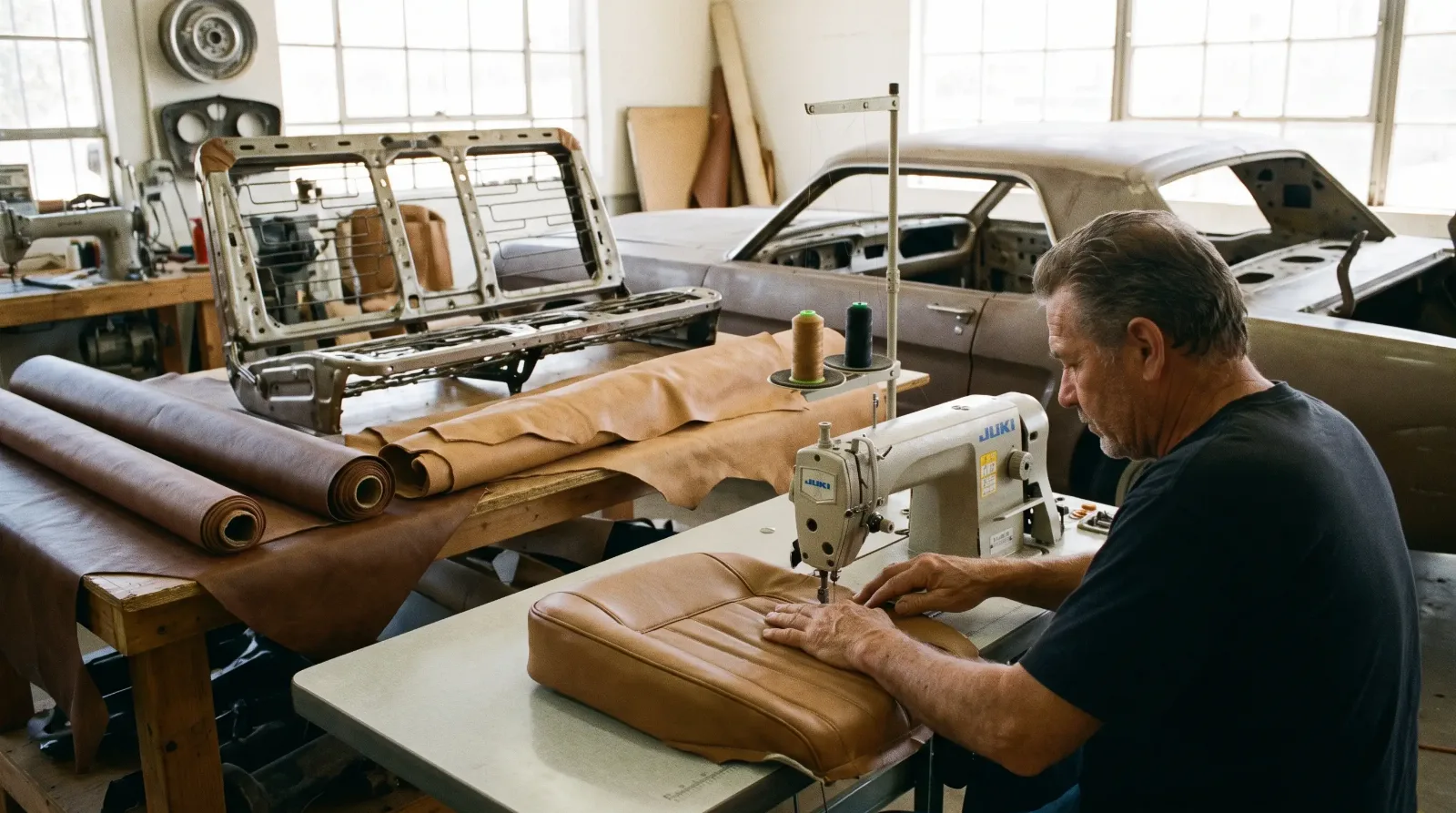
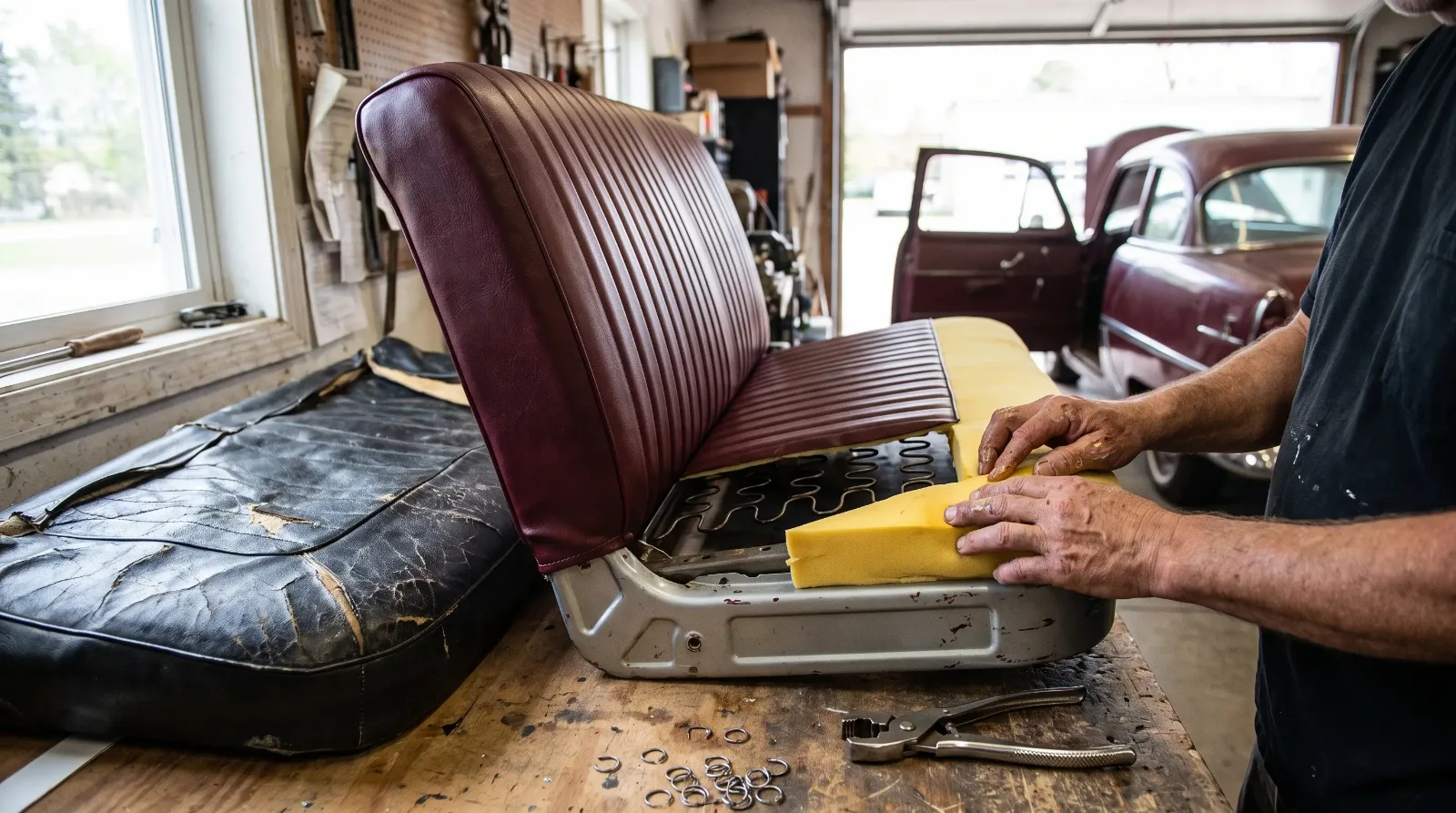
Seats are the largest single job. The frame is stripped to bare metal, inspected, repaired and painted. Springs are replaced or retied, then new foam or padding is cut, glued and shaped. On a concours car, the padding should match the original construction, which for an older car may mean cotton and horsehair rather than modern foam. Covers come either from a reproduction kit or are patterned and sewn from the originals. A cover stretched over tired foam will wrinkle no matter how well it was sewn.
Headliner
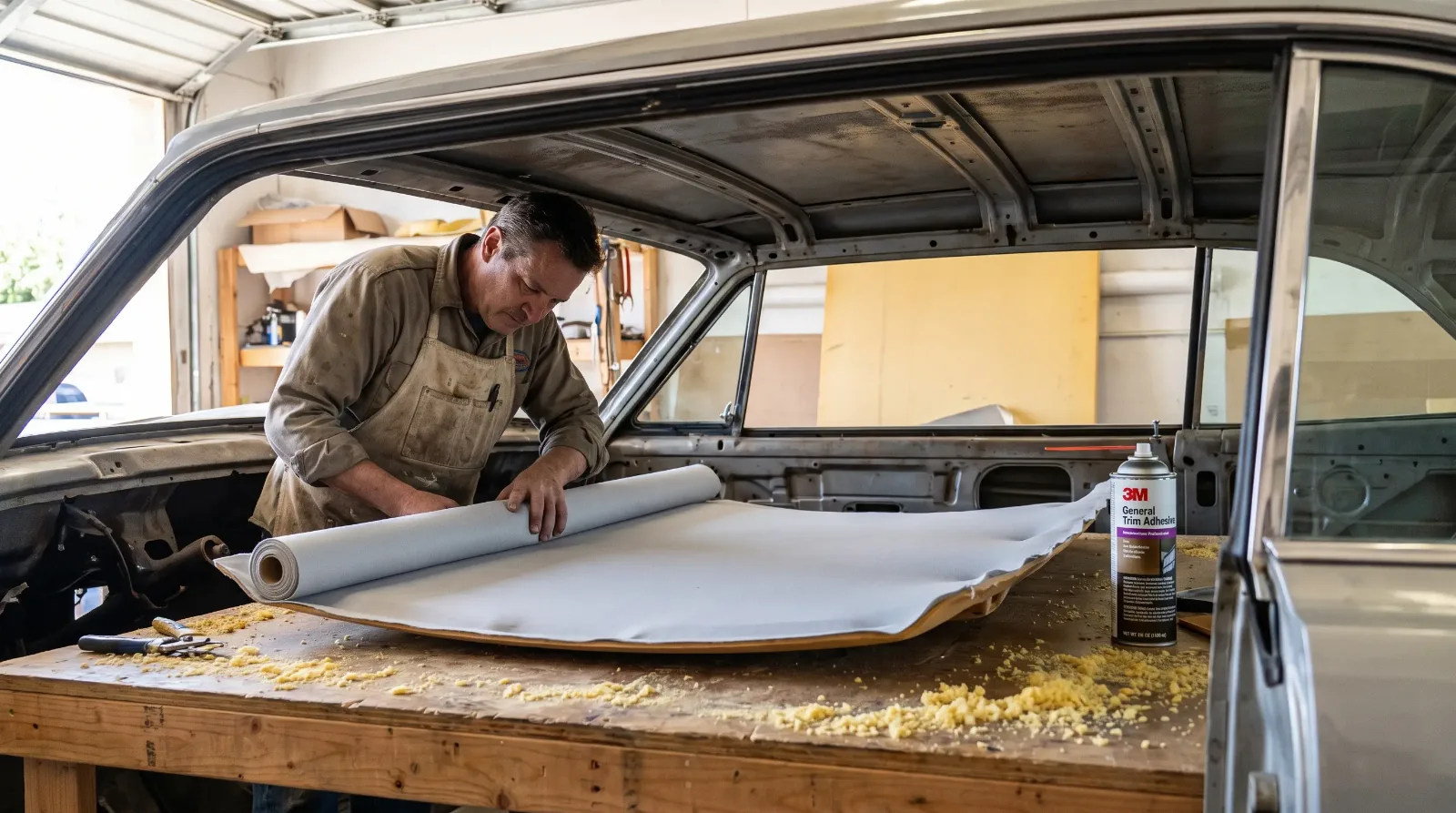
Bow-type headliners, held up by metal bows that pass through sewn channels in the material, are common in older cars and are often fitted with the windshield and rear glass trim and seals removed. Getting the sections taut and even without puckers at the corners is a skill that improves with repetition. Later cars often use a molded fiberboard shell covered in foam-backed cloth, and these need the old, decayed foam scraped off completely before new material is glued down. The foam layer behind the fabric oxidizes with heat and age until the bond fails, which is why sagging is so common in cars from the 1970s onward.
Carpet, insulation and sound deadening
Molded carpet sets are made for most popular American cars and fit far better than flat goods cut in place. Underneath, the original jute padding is normally replaced. Modern butyl sound-deadening mats are invisible once the carpet is down, but judges at a strict originality event may note them, so this is a decision to make on purpose rather than by default.
Door panels, kick panels and package tray
Door panels are rebuilt on new backing board, with the original embossing, chrome strips and heat-sealed patterns reproduced. Reproduction panels for popular models are available ready to install. For limited-production cars, a trim shop will make new panels using the originals as patterns, and this is where the photographs from the teardown pay for themselves.
Dash, instruments and trim
A cracked dash pad can be recovered, replaced with a reproduction, or restored by a specialist who rebuilds the foam and recovers it in correct grain vinyl. Gauges go to an instrument specialist for calibration, new faces if needed and correct needle finish. Plated parts go to a plater, and woodgrain may be redone with water transfer film or hand graining depending on the original method.
"The most revealing part of an interior is never the seat face. It is the underside of the seat, the back of the door panel and the stitching nobody was meant to look at. That is where a correct restoration and a quick one stop resembling each other."
Sarah Whitfield
Originality, concours and preservation
Before you remove anything, decide what the car is for. A driver can take modern foam, a durable vinyl in the right color and sound deadening under the carpet without anyone minding. A car headed for judged events is a different proposition. Marque clubs and concours judges look at material, grain, color, stitching pattern, fasteners and hardware finishes, and an interior that is visibly wrong in any of these will cost points.
There is also a growing respect for original interiors that are worn but intact. Preservation classes at major concours, and the broader interest in unrestored survivors, mean that an original interior in fair condition can be worth more to the car than a new one. If the seats are sound and the material is merely faded or lightly worn, cleaning, conditioning and careful repair of small tears may be the better choice. Once original material is cut out and thrown away, it cannot come back.
What interior car restoration costs in 2026
Prices depend on the car, the region, the shop's reputation and how much of the work comes from reproduction kits versus custom patterning. The figures below are typical 2026 ranges for an American car of the 1950s to 1970s using quality reproduction materials and professional labor. Pre-war and coachbuilt cars, and anything requiring matched original fabric or hand-sewn leather, can run well above these. For scale, a complete reproduction kit for a 1967 Camaro coupe (front and rear seat covers, front seat foam, pre-assembled door panels, molded carpet, insulation and headliner) sells for roughly $1,800 before any labor, and dash pad prices vary more by model than any other line here.
| Job | Parts and materials | Professional installed range |
|---|---|---|
| Front and rear seat covers with new foam | $500 to $2,000 | $1,500 to $5,000 |
| Headliner (bow type) | $150 to $400 | $500 to $1,200 |
| Molded carpet with new padding | $200 to $600 | $600 to $1,500 |
| Door panels (set) | $400 to $1,500 | $600 to $2,500 |
| Dash pad recovery or replacement | $250 to $1,200 | $600 to $2,500 |
| Full interior, driver quality | $1,800 to $5,000 | $5,000 to $12,000 |
| Full interior, show or concours quality | Varies with material sourcing | $15,000 and up, often far more for rare cars |
Leather adds substantially over vinyl. Even on a basic modern retrim the leather premium is commonly quoted at around $1,000, and correct-grain hides for a classic usually widen that gap. Lead times at well-regarded trim shops are commonly measured in months, so book early in the restoration rather than when the paint is drying.
Doing it yourself versus hiring a trim shop
Some interior jobs are well within reach of a careful owner. Molded carpet installation, replacing pre-made door panels, fitting reproduction dash pads and cleaning and conditioning original material all reward patience more than specialist tools. A set of hog ring pliers, a steamer, a good spray adhesive and a lot of clamps will handle most of it.
Seat covers are borderline. Kits for popular cars are designed for owner installation, and many people get acceptable results, but getting covers smooth and tight over new foam takes practice and hand strength. Bow-type headliners, custom-patterned covers, leather work and anything involving an industrial sewing machine are usually best left to a trim specialist.
When you do hire out, ask to see finished work in person and ask about the shop's experience with your make and era. A shop that does excellent work on 1960s American vinyl may have little experience with 1930s broadcloth or British leather.
Whoever does the work, compare reproduction parts against originals before installing them. A part that is close is not the same as one that is correct. Done in the right order, with the right materials and with the original pieces kept as evidence, an interior restoration finishes the car rather than just covering it. Done quickly, it is the first thing the next owner will tear out.
Sources and notes
- 1967 Camaro standard interior kit listing (FP Auto Parts), contents and price of a complete PUI, ACC and Flatline Barriers reproduction kit used as the parts benchmark
- How much does it cost to reupholster a car (ThePricer), per-seat, front-pair, headliner, carpet, door panel and classic full-interior labor ranges
- How much it costs to reupholster car seats (Jalopnik), per-seat starting prices, full retrim figures and the leather premium over cloth
- Headliner (material), Wikipedia, foam-backed headliner construction and why the foam bond fails with heat and age
- Connolly Leather, Wikipedia, the company's history and its role as leather supplier to British and other makers