
A freshly rebuilt engine can look perfect on the stand and still fail in the first ten minutes. A dyno test is the cheapest way to find that out before the engine is in the car, the hood is on, and the paint is fresh. It gives you a controlled break in, a first look at oil pressure and temperature, and a power curve you can check against what the build should make. If you want the full context for the build, read the rebuild guide first.
Restoration & Tech
7 min read
Dyno Testing a Fresh Rebuild
An engine dyno test breaks in and verifies a fresh rebuild before it goes in the car. Costs, break in steps, what the numbers mean, and what to fix first.
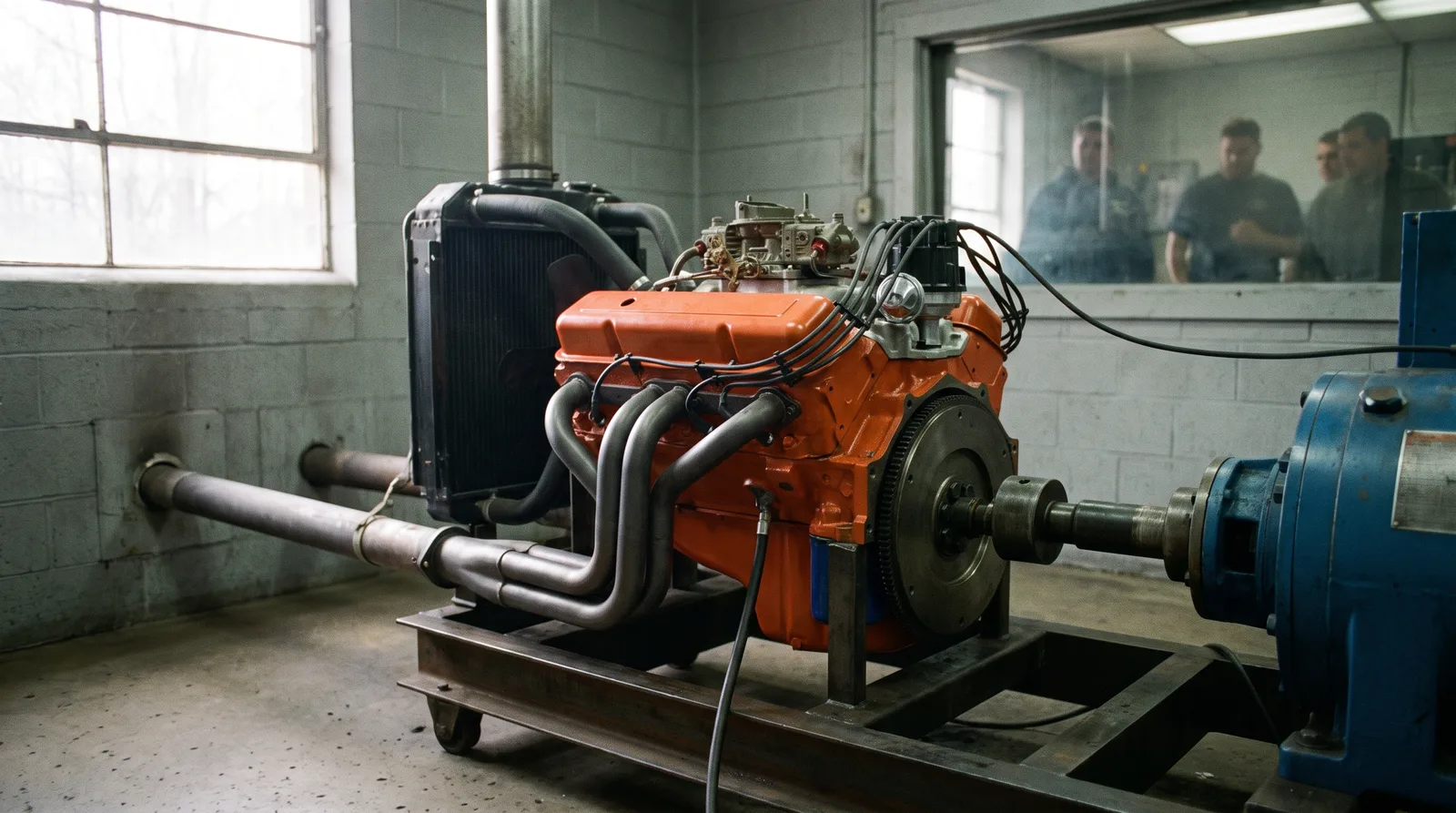
What an engine dyno test does
An engine dyno holds the engine on a stand, connects the output shaft to a water brake or electric absorber, and measures torque at a range of speeds. Horsepower is calculated from torque and rpm. The test cell controls fuel, cooling, exhaust, and ignition so the data is repeatable.
That control is the point. In a car, a rough idle might be the carburetor, the ignition, a vacuum leak, or a transmission problem. On the stand, it can only be the engine. You find leaks, bad adjustments, and wrong parts before they are buried under a hood.
Engine dyno versus chassis dyno
| Item | Engine dyno | Chassis dyno |
|---|---|---|
| Where it runs | On a stand, out of the car | In the car, on rollers |
| Best use | Break in and verify a rebuild | Tune the finished car |
| Power measured | At the crankshaft | At the wheels, lower by drivetrain loss |
| Typical 2026 cost | Varies by shop, quote it up front | Varies by shop, usually a smaller session fee |
Drivetrain loss on a chassis dyno is commonly put at roughly 15 to 20 percent, depending on the transmission and axle. That is why wheel numbers are lower than flywheel numbers, and why you must compare like with like. Do not set a goal using a chassis figure and then judge an engine dyno result against it.
The break in run
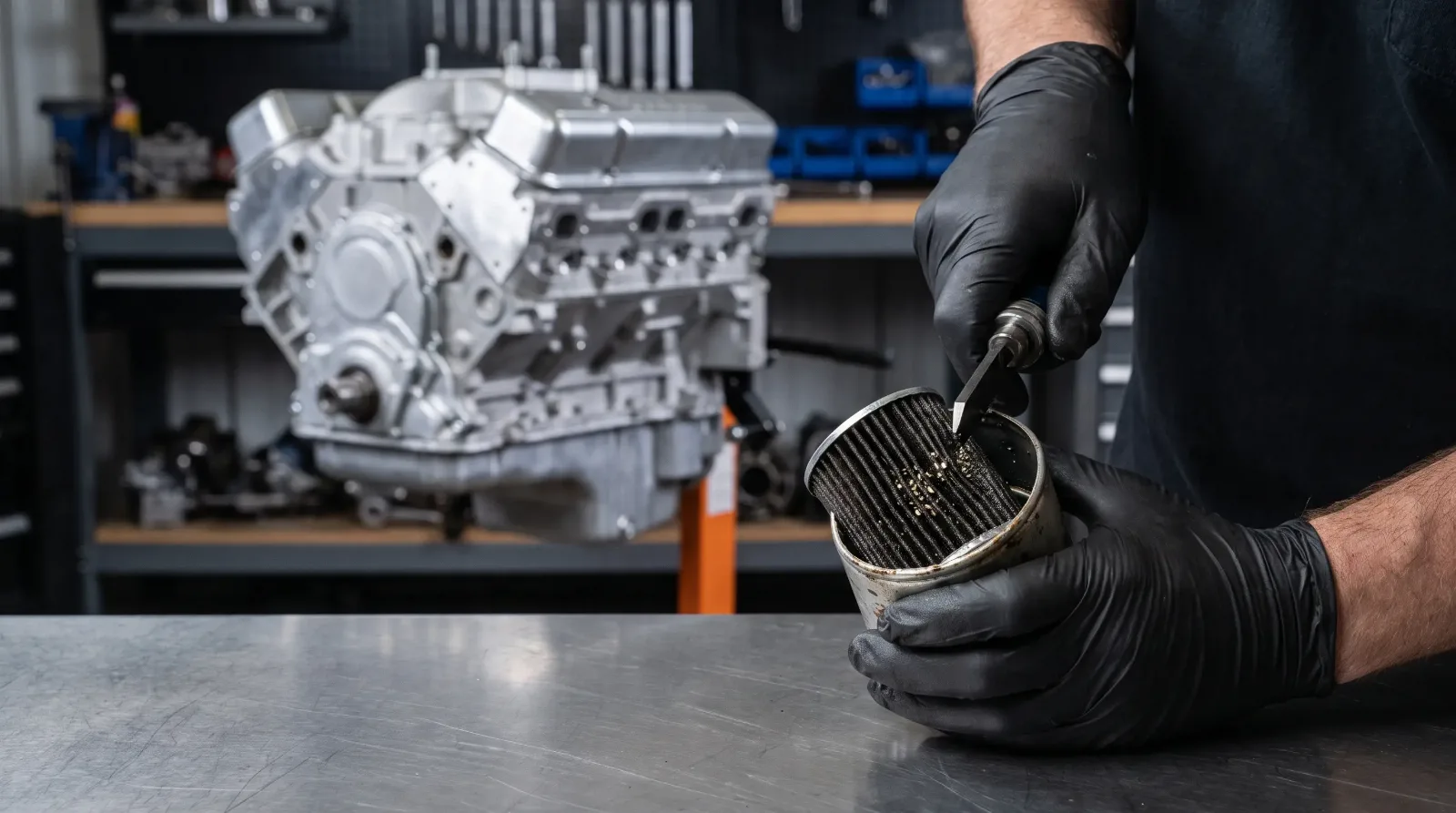
Break in is the most valuable thing a dyno does for a rebuild. A flat tappet camshaft needs a specific procedure to survive, and the first run is where that happens. Typical practice is to start the engine, bring it to roughly 2,000 to 2,800 rpm (about 2,500), and hold it there for 20 to 30 minutes while the cam and lifters seat, varying the speed a little. Use oil with the right additive package, since the ZDDP (zinc) content of modern passenger car oils has been reduced and low-ZDDP oil has been cited in flat tappet cam and lifter failures. Roller cams are more forgiving but still benefit from a controlled start.
- Prime the oil system with a priming tool until oil shows at the rocker arms.
- Fill the cooling system and check for leaks before the first fire.
- Start the engine and bring it directly to the break in rpm. Do not let it idle.
- Watch oil pressure, water temperature, and fuel pressure. Stop on any abnormal reading.
- Change the oil and filter after the break in, and cut the filter open to inspect for metal.
The oil filter check is blunt but effective. A little fine glitter is normal. Chunks are not.
Reading the numbers
The result is a printed curve of torque and horsepower against rpm. Look at the shape first. A smooth, rising curve with a clean peak says the engine is breathing and burning properly. A sudden dip or a flat spot says something is off, usually fuel delivery, ignition timing, or a valve train problem.
Compare the figures against what the combination should make. Ask the builder what the combination should make, since cam, heads, and compression all move the number. If you are far under, check the basics. If you are far over, check the dyno correction factor, because weather corrections can flatter a number.
Look at air fuel ratio too. A naturally aspirated engine under high load usually targets about 12.5 to 13.3 to 1 on gasoline, which is deliberately rich. A mixture much leaner than that runs hot and can damage pistons and other parts. A dyno with a wideband oxygen sensor shows this in real time and lets the tuner correct jets or fuel maps before anything is damaged.
"The dyno sheet is the only honest part of the build. Everything else is a brochure."
Dan Reeves
What to fix first
If the test shows problems, fix them in a sensible order. Start with leaks and oil pressure, because those threaten the engine itself. Then ignition timing, then fuel mixture, then valve lash and cam timing if the curve still looks wrong. Do not chase horsepower with new parts until the basics are sorted, since most disappointing results turn out to be a bad adjustment and not a bad component.
Take a baseline. Record the first clean pull, then change one thing at a time and re-run. A carburetor jet change, a timing change, a spark plug heat range. Each should show up on the sheet. That discipline turns a dyno session into a tuning record you can reuse when the engine is installed.
Costs and what you get
A basic engine dyno session, with a break in and a few pulls, is usually priced by the hour or the day, and the price depends on the shop and how much support it supplies. A full tuning session with multiple runs and sensor logging costs more. Some builders include the test in their rebuild price, so ask. It is also worth asking for the raw data and a printed sheet, not just a verbal report.
It is a small cost compared with the engine. For context, a full machine shop rebuild on a common V8 often runs to several thousand dollars, and the cost of doing it twice is bigger. If you are weighing the budget, look at what shops charge in the Chevy 350 rebuild cost breakdown to see how the dyno test fits into the total.
Preparing the engine for the stand
Bring the engine ready to run, with the correct accessories, a clean exhaust connection, and a properly set carburetor or fuel system. Torque converter and transmission are not needed, because the dyno loads the crank directly. Check the harmonic balancer, flexplate or adapter, and all fasteners. Many shops want the water pump, thermostat, and distributor installed so they can run it as it will run in the car.
After the test
Drain the break in oil, install fresh oil, and bring the engine home in a clean condition. Keep the dyno sheet and note the weather, oil used, and timing. When the engine goes into the car, you have a reference for tuning, a warranty paper trail, and the confidence that the first start will not be the first test. That is worth more than any number on the sheet.
Sources and notes
- EngineLabs, how to break in a new engine without an engine dyno, flat tappet cam break-in at about 2,500 to 3,000 rpm for 20 to 25 minutes and dyno-style loaded pulls
- EngineLabs, understanding your wideband O2 sensor, 12.5 to 13.3 to 1 air fuel target for a naturally aspirated engine under high load
- Wikipedia, Dynamometer, engine versus chassis dynamometers, absorber types, power from torque and rpm, drivetrain loss of roughly 15 to 20 percent
- Wikipedia, Zinc dithiophosphate, ZDDP limits in modern oils and flat tappet cam wear concerns
- Wikipedia, Air-fuel ratio, stoichiometric gasoline ratio, rich mixtures under load and lean mixture heat
Related Reading
Have a
Classic Car
for Sale?
Reach thousands of serious classic car collectors across the US.
Sell It Here →
Selling a classic? Here's how: the best sites to sell a classic car
Are You a Classic Car Dealer?
List your full inventory and connect with targeted classic car buyers.
Join as a Dealer →

About the author
Dan Reeves
Performance engine builder from North Carolina's motorsports corridor, focused on swaps, forced induction and making real, repeatable power.
More in Restoration & Tech



Comments
Be the first to comment on this article.