
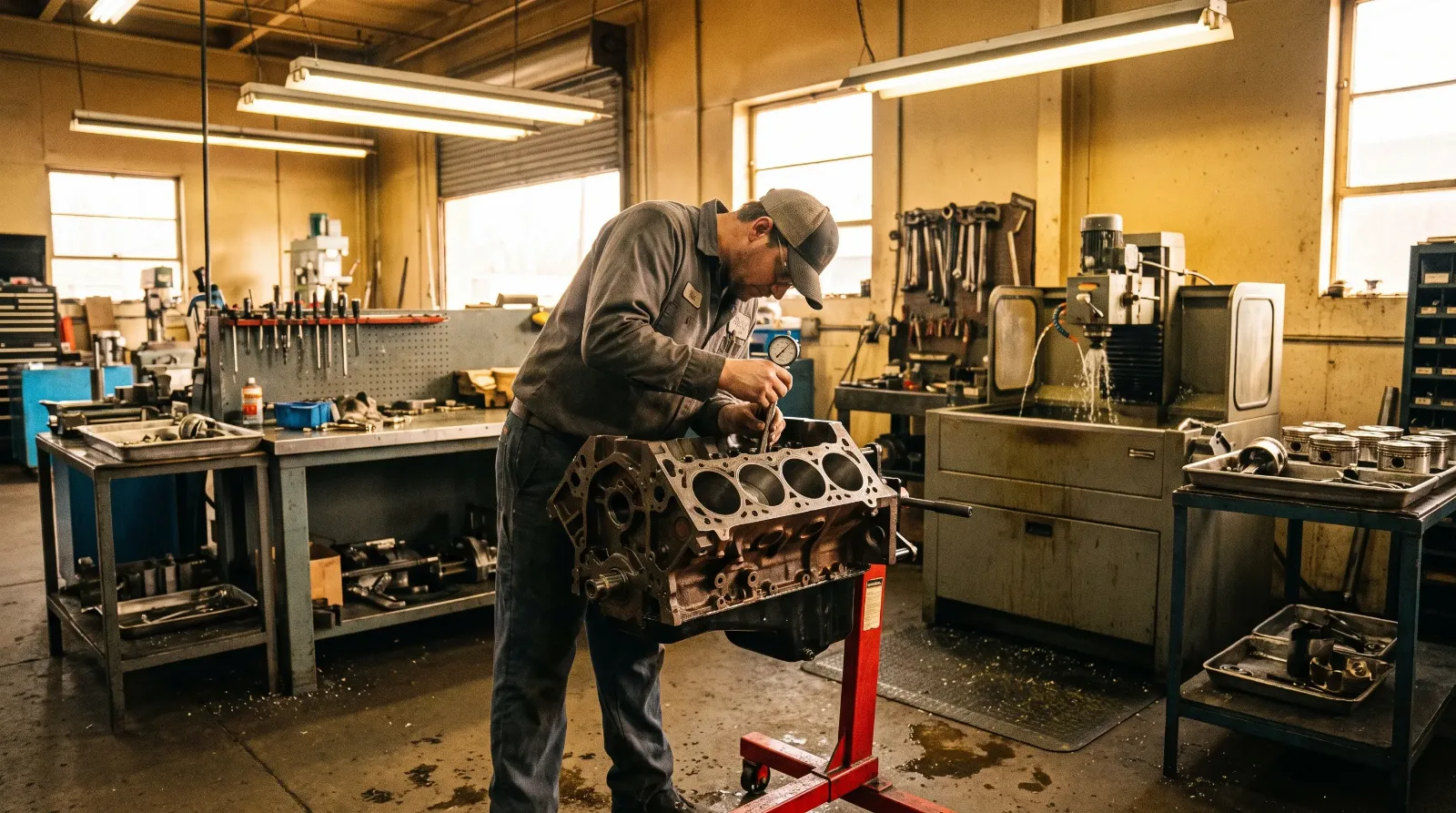
The argument always starts the same way. Somebody at the meet says the original engine has to stay, and somebody else says a new block is stronger and the car will never know. Both are partly right. Rebuilding a numbers matching engine is a decision about value, risk, and paperwork, and it is worth working through before the machine shop touches anything. Once a block is bored and decked, there is no going back.
Restoration & Tech
7 min read
Rebuilding a Numbers-Matching Engine: Save the Original Block?
Is the original block worth saving? What rebuilding a numbers matching engine involves, what damage kills a block, and what it costs against a replacement.
What numbers matching actually means
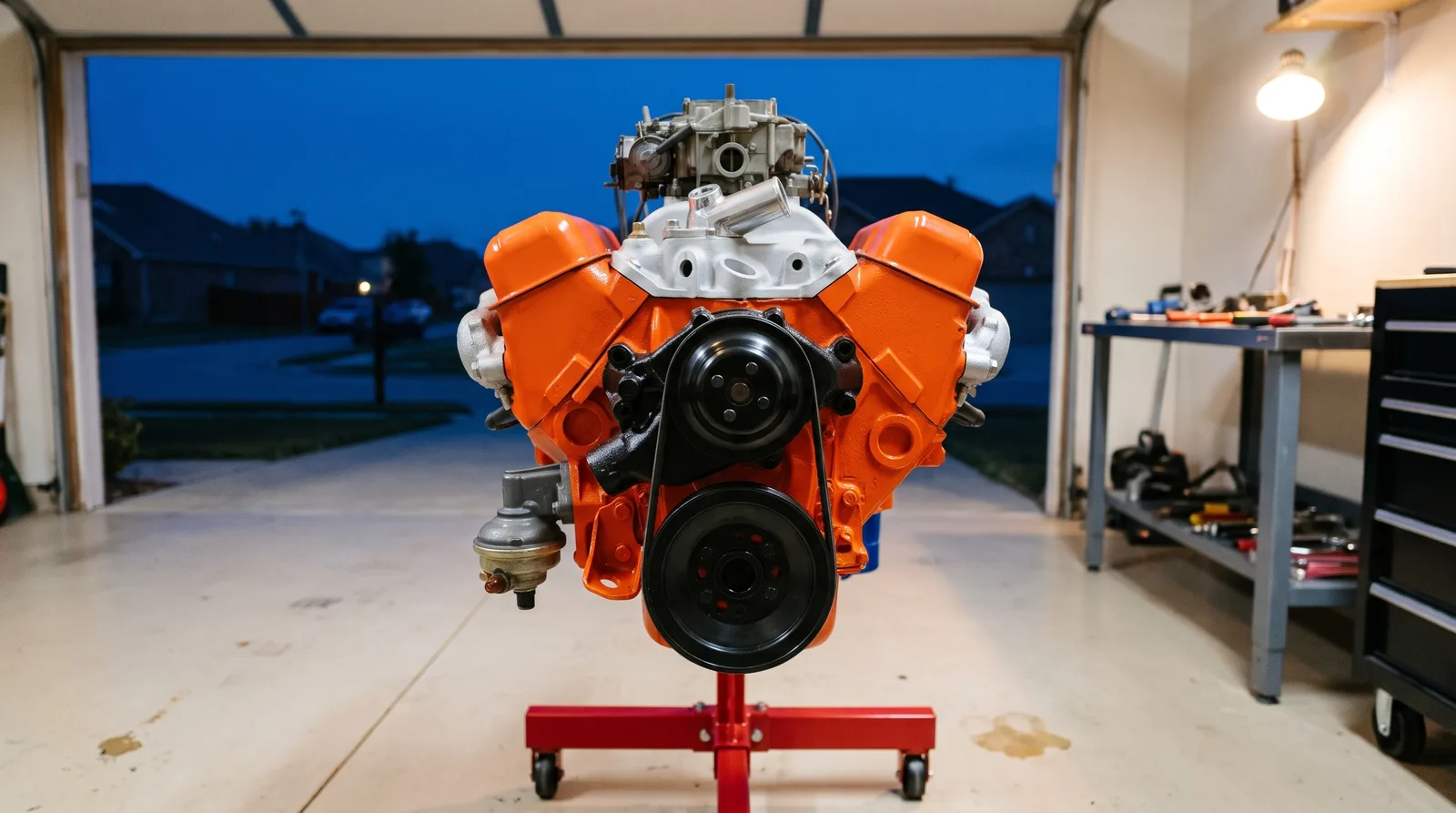
Numbers matching means the major components carry the codes and date stamps the factory assigned to that specific vehicle. For an engine, that usually means the block casting number and date, a stamped partial VIN or serial pad, and sometimes a build or broadcast code. Other components, such as the heads, intake, carburetor, and distributor, also have date codes that should predate the car's assembly, typically by weeks to a few months. If you are new to the idea, our primer on what numbers matching means lays out the basics, and the model specific discussion for Camaro numbers matching shows how the codes work on one popular platform.
The stamp is the part that carries the value. Casting numbers prove what type of block you have. The stamped pad proves it belongs to your car. A thorough decode and a documented chain of ownership turn that into evidence.
How the money works
The premium for a numbers matching drivetrain can be large on rare, high performance cars and small on common ones. On a rare, high performance model, a car missing its original engine can lose a significant chunk of its value, and collectors pay accordingly for the original. On a base model with a common engine, the difference may be modest. Ask what the market pays for your specific car, and talk to an appraiser or marque club before you decide.
| Path | Typical 2026 cost | Effect on value |
|---|---|---|
| Rebuild original block, standard machining | $4,000 to $8,000 for a shop-built stock long block, machine work included | Keeps numbers matching premium |
| Rebuild with repair (sleeving, crack repair) | Several thousand dollars more than a standard rebuild, depending on the repair | Retains stamp; must be disclosed |
| Correct date coded replacement block | Varies widely with the casting and how scarce it is | Period correct, but not original to the car |
| New crate engine | Often similar to or above a basic rebuild, more for performance packages | Driver value; premium usually lost |
Inspect the block before you promise anything
Pull the engine and have it hot tanked or chemically cleaned, then magnafluxed for cracks. This step is not optional. A cracked block that you rebuild is a very expensive paperweight, and you want to know before you pay for pistons and cams.
Check these points in order:
- Cracks in the cylinder walls, the lifter valley, and between the main bearing webs.
- Cylinder wall thickness after boring. Sonic testing measures how much material remains, and cores can shift enough that walls vary a lot within one block. A common target is at least 0.125 inch in the top inch of the bore, with roughly 0.090 inch as the floor.
- Main bearing bore alignment and distortion from overheating.
- Deck surface condition and flatness.
- Core plug corrosion that reveals past cooling system neglect.
A block with corrosion in the water jackets or a crack in a critical area is a candidate for replacement. A block that is merely worn is a candidate for a standard rebuild. The difference is usually a few hundred dollars in testing, and it is worth spending.
Machine work that preserves originality
Good rebuilders protect the identity of the block. Ask the machinist to avoid grinding or deck milling near stamped surfaces. Overbores should be kept to the minimum that cleans up the cylinder, often 0.020 to 0.030 inch. On thin wall blocks such as the Ford 273 to 360 family, 0.030 is generally treated as the ceiling, and the real limit on any block is the wall thickness a sonic test finds. Line honing the mains and a light deck cut are sometimes necessary, and when they are, record every cut with measurements.
Do not discard the original parts you replace. Pistons, rods, and bearings are expected to be new on a rebuild, but heads, intake, and accessories that carry date codes should be cleaned and reused if they are sound. Keep a bag of the original casting parts, labeled, even if you do not reinstall them. Buyers like the paperwork, and some judging classes expect the original components to be present.
"The block was cracked, and everyone in the shop knew it by Tuesday. The hard part was admitting that the stamp was worth less than the car."
Wayne Coburn
When to walk away from the original
If the block is cracked beyond reasonable repair, if the cylinders cannot be bored without becoming too thin, or if the cost to save it approaches the cost of a correct replacement, step back. A date correct replacement block can be a good choice, particularly on a car that will be driven, and it is honest as long as you disclose it. Selling a car with a swapped block as numbers matching is fraud, and the paperwork in the next owner's hands will expose it.
Disclosure matters even when you do everything right. If the block was repaired, welded, or sleeved, say so in writing. Buyers and appraisers accept a documented repair far more readily than they accept a discovery.
Finding the right shop
Not every machine shop treats a numbers block with respect. Look for builders who ask about the stamps first and the horsepower second. Ask to see an engine they rebuilt from an original block, and ask what they would do if a crack showed up. Our directory of shops that handle original blocks is a place to start, and it helps to read what past customers say about handling and communication.
After the rebuild
A rebuilt original engine still needs a careful break in, an oil change after the first run, and a test under load. That test is covered in detail in our guide to dyno testing, which shows what to watch before the engine goes back in the car. Keep every receipt, machine shop measurement sheet, and photograph in a binder with the car.
If you are shopping rather than rebuilding, the same logic helps you evaluate a car. When comparing numbers-matching Corvettes or any other documented car, ask who rebuilt the engine, whether the stamped pad is intact, and whether the machine work is on paper. The work behind the numbers is part of the price, and it should be part of the conversation, in the same spirit as a general overview of classic engine rebuilds would suggest.
The decision
Save the block when it is sound, when the model commands a real premium, and when the work can be done without losing the stamp. Replace it when it is cracked, when the premium is small, or when the car is a driver. Then document whichever path you chose. That record is the thing that survives the next sale.
Sources and notes
- What to know before machining a matching numbers engine block (Hagerty), stamp locations, deck milling risk, and value loss without the original engine
- Ultrasonic inspection for wall thickness (Vehicle Service Pros), core shift and minimum bore wall thickness before overboring
- Quick Tech: magnetic particle inspecting engine components (EngineLabs), crack testing used blocks before machine work
- Matching numbers (Wikipedia), definition, components, and value effect
- Magnetic particle inspection (Wikipedia), ferromagnetic-only and near-surface limits of the crack test
Related Reading
Have a
Classic Car
for Sale?
Reach thousands of serious classic car collectors across the US.
Sell It Here →
Selling a classic? Here's how: the best sites to sell a classic car
Are You a Classic Car Dealer?
List your full inventory and connect with targeted classic car buyers.
Join as a Dealer →

About the author
Wayne Coburn
Longtime Corvette owner, judge and club figure who knows the cars, the records and the people behind them.
More in Restoration & Tech

Comments (1)
M
MoparMatt
8 hours ago
for real, on a common 318 car the original block isn't worth $8k of machine work. date-code a junkyard one and drive it