
The term gets thrown around at car shows and in classified ads, and it means different things to different people. A day-two restoration keeps the look of a car as it might have been modified shortly after it was new, using parts and methods from that era. The name is borrowed from the idea of what an owner did the second day after buying it: fit a hotter cam, bolt on better wheels, swap the shocks. The car stays honest to its period, but it is no longer exactly how the factory built it.
Restoration & Tech
7 min read
What Is a "Day Two" Restoration?
A day-two restoration recreates a car as a period owner would have modified it. Here is how it differs from factory-original and restomod work, and how it affects value.
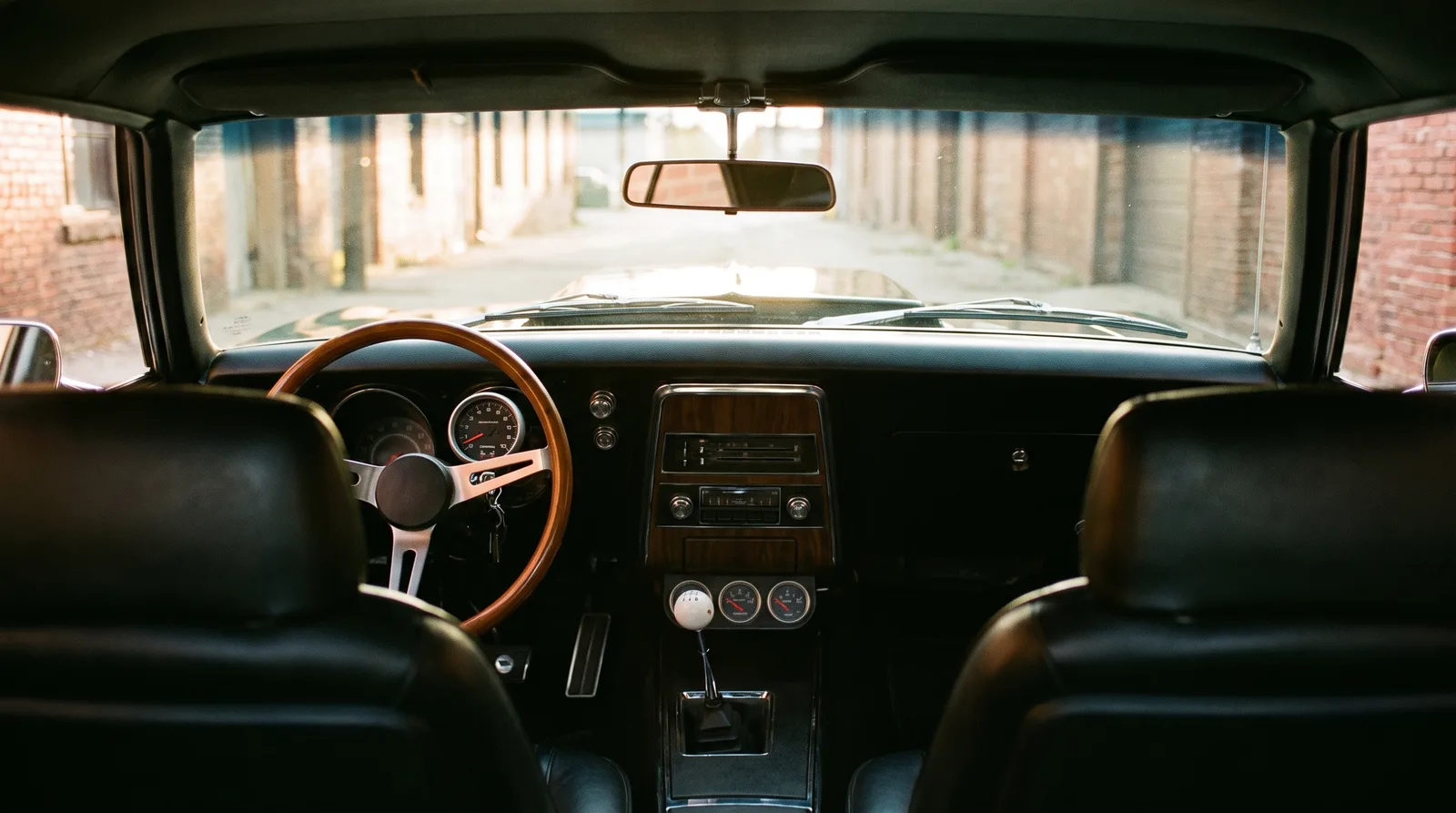
The idea in plain terms
A factory-original restoration, covered in our piece on factory-original restoration, targets the car as it left the assembly line. Correct paint, correct hose clamps, correct date codes. A day-two build deliberately leaves that behind. It asks a different question: what would a keen owner have done to this car in, say, 1970, with the parts that were on the shelf at the time?
The answer might be a period intake and carburetor, headers, a limited-slip differential, wide ovals on period-correct mags and a set of gauges under the dash. Nothing is modern. Nothing is hidden. Everything could have been bought in a speed shop within a few years of the car being built.
How it differs from a restomod
A restomod hides modern hardware inside an old shell: fuel injection, overdrive, disc brakes, air conditioning, a late-model suspension. A day-two car does not. If the part was not available in the period, it does not go on the car. That discipline is what keeps the style coherent, and it is also where builders argue. Is a 1980s-era aftermarket part day-two for a 1969 car? Most purists say no. The cutoff is a few years either side of the car's build date, and it is a guideline, not a rulebook.
Where it fits in the restoration spectrum
| Approach | Goal | Parts | Documentation matters |
|---|---|---|---|
| Factory-original | As built at the factory | Correct originals or reproductions | Very high |
| Day-two | As a period owner would have modified it | Period aftermarket and dealer parts | Moderate |
| Restomod | Modern performance in an old body | Modern components | Low |
| Preservation | Keep what survives | Original, as found | High |
What the work actually involves
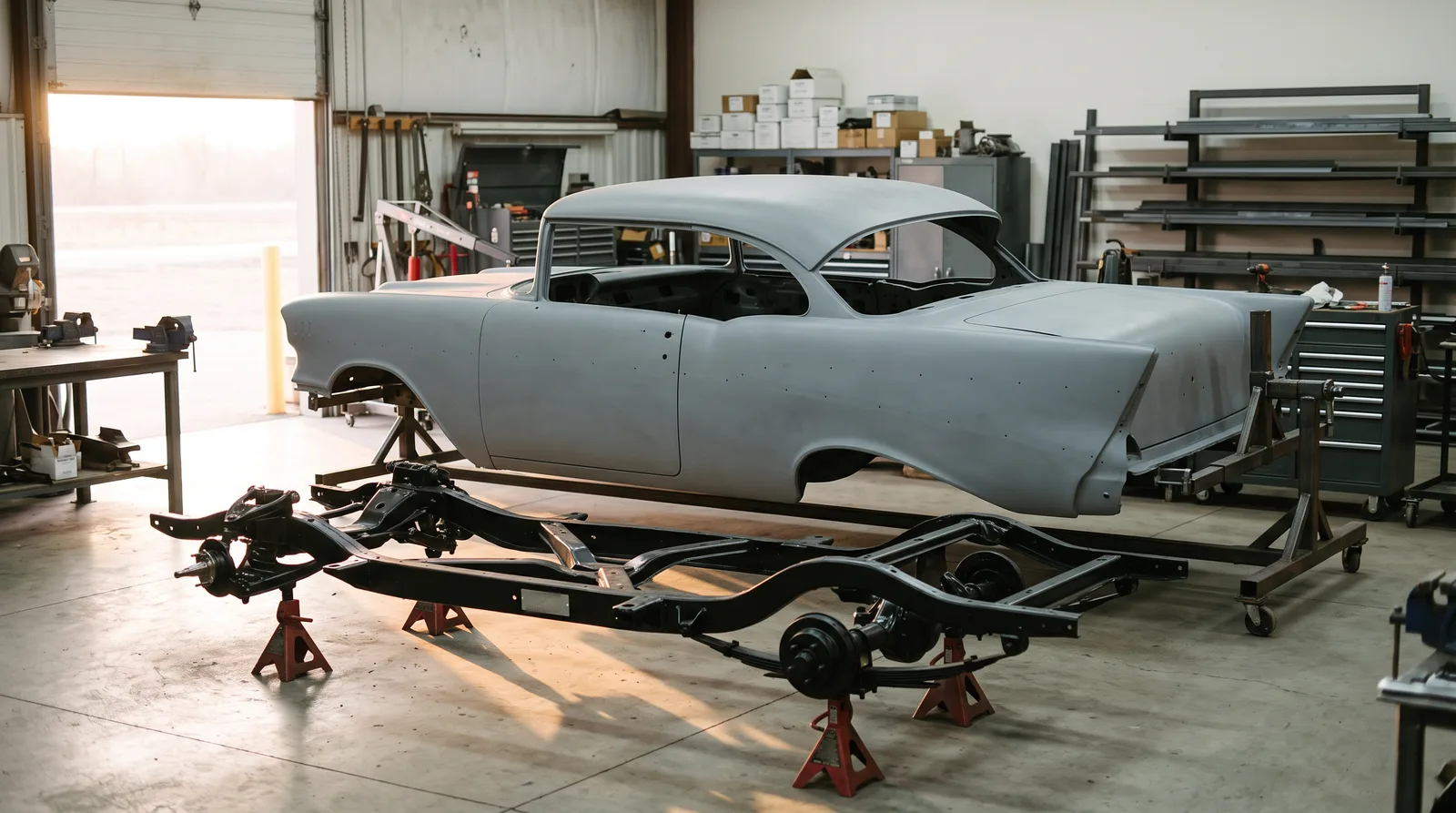
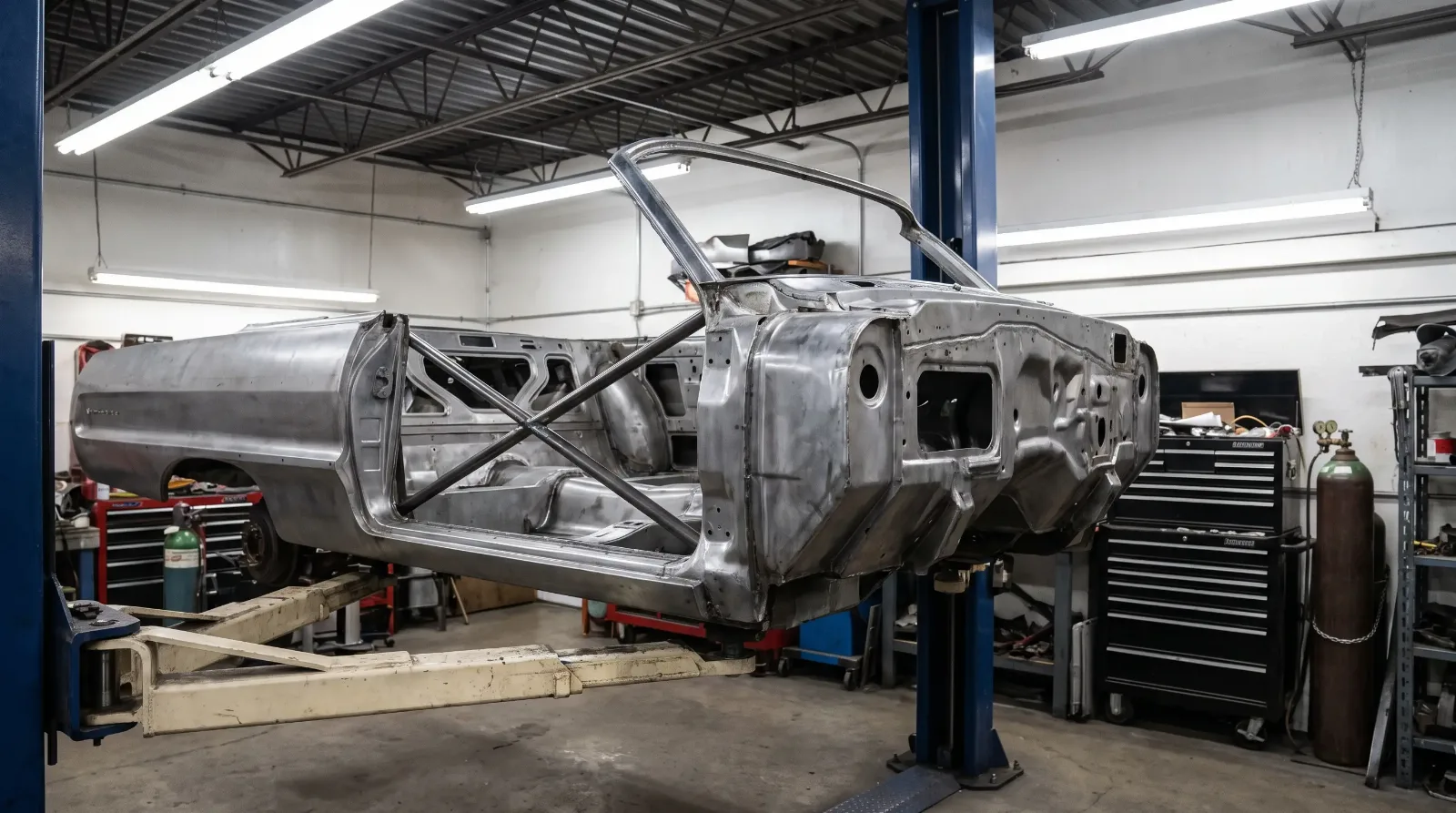
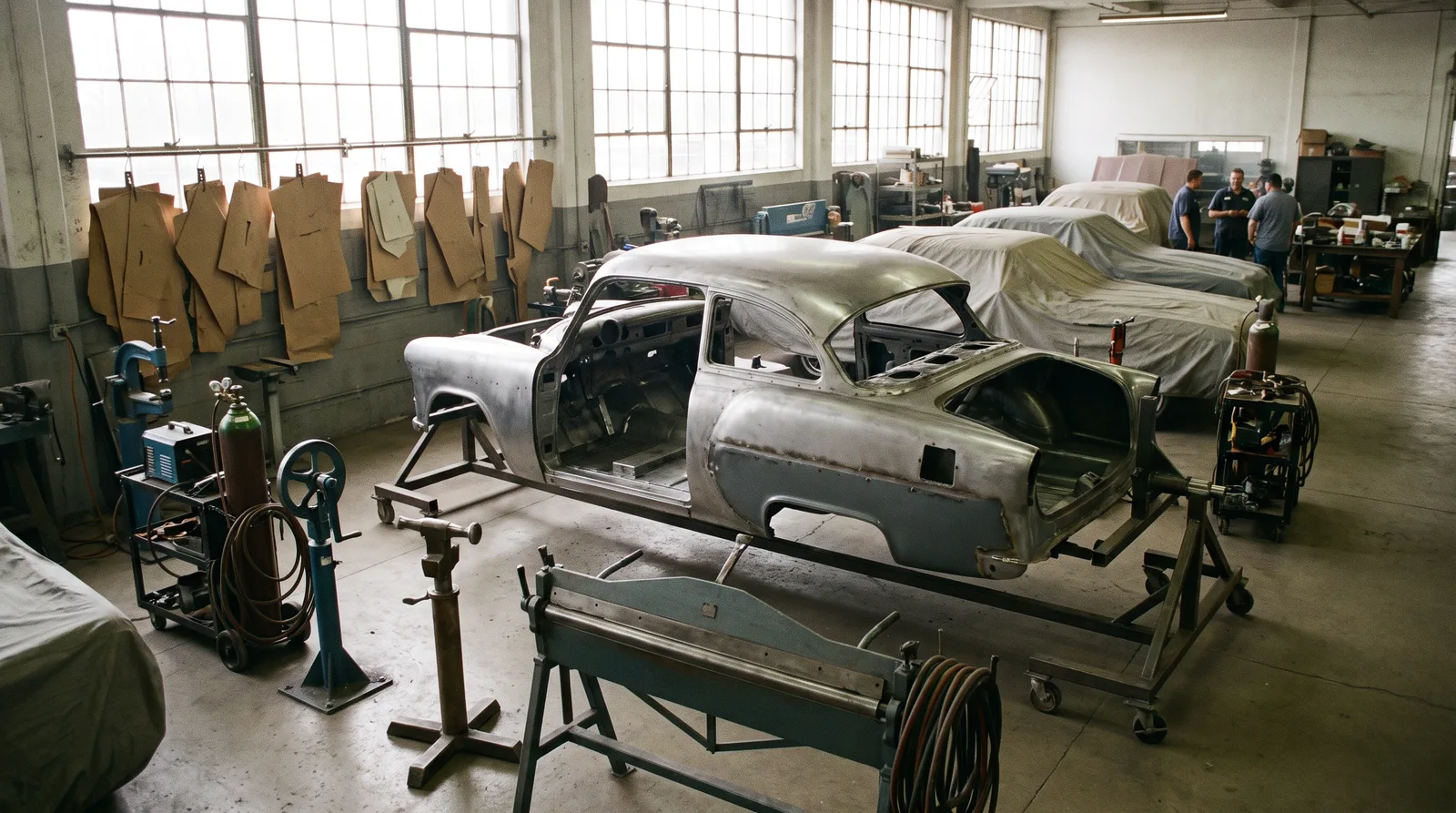
The body and paint work is the same as on any quality restoration. Rust repair, panel fit, proper prep. The difference is in the second half, where a builder picks a period theme and sticks to it. Common examples are a street-strip car with a modest cam and headers, a road-race flavor with a rear sway bar and a fast-ratio steering box, or a dealer-performance look using the option packages that were offered at the time.
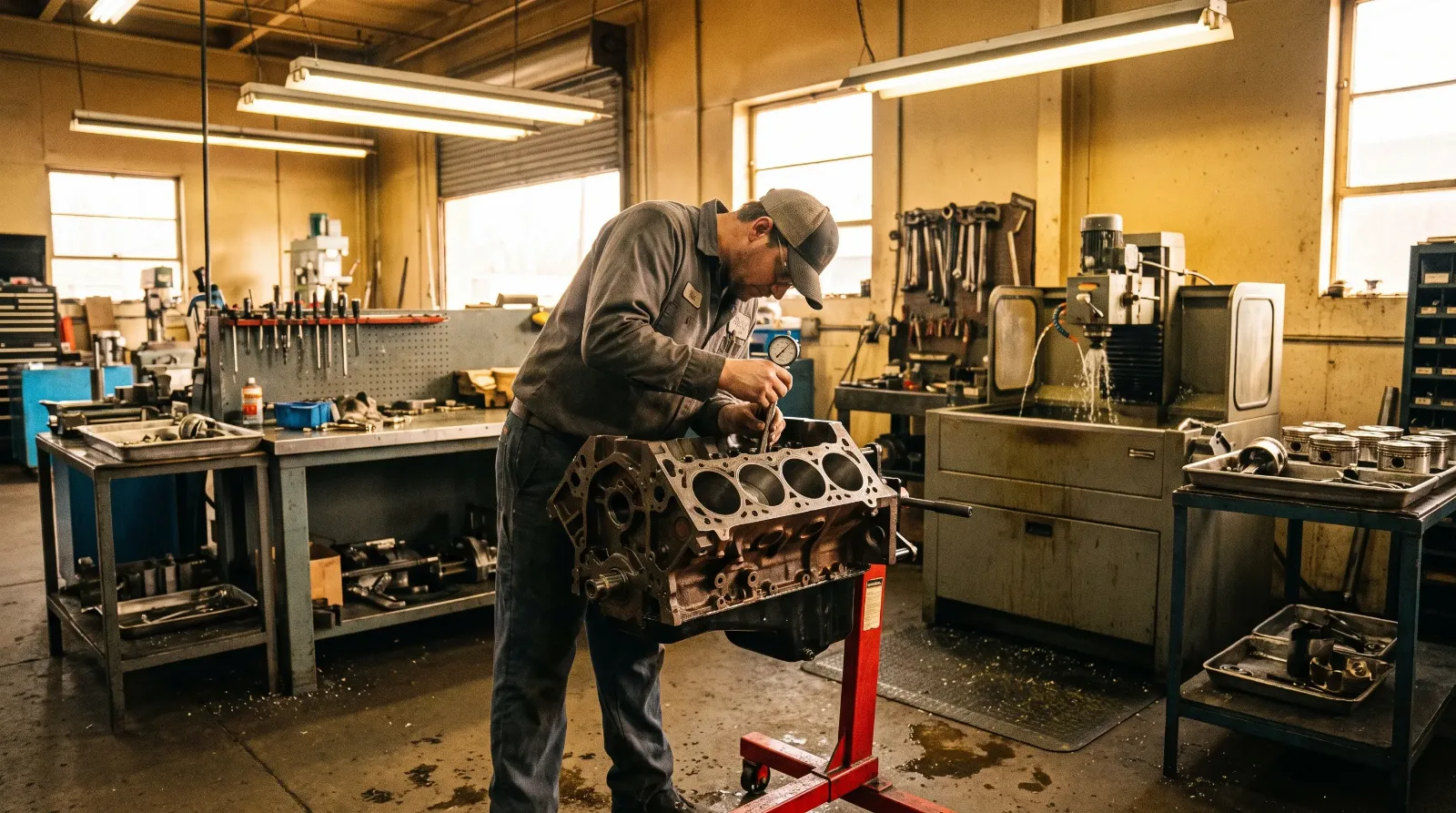
The engine is usually where the plan lives. A rebuild to factory specification with an added period intake, a bigger carburetor and a correct ignition upgrade gives a car that runs harder but still sounds right at idle. Horsepower gains depend entirely on the combination and are usually modest by modern standards, though a few showcase builds go much further. The point is character, not the dyno number.
Suspension, brakes and wheels
Day-two builders usually improve handling with parts that existed then: heavier sway bars, stiffer springs, gas shocks, front disc brake conversions where those were offered. Wheels and tires carry most of the visual story. Period mags with correct-profile tires set the tone right away. Rolling stock that looks modern breaks the illusion faster than anything under the hood.
Choosing a period theme
Before buying a single part, write down the year and the story. A 1968 street car with dealer-installed performance parts tells one story. The same car with road-race hardware from 1970 tells another. Mixing the two is the most common mistake, and it produces a car that looks like a parts-bin special rather than a plan. Study period magazines, dealer brochures and parts catalogs from your target year. They list what was offered and, just as useful, what was not.
Sourcing is half the fun and half the cost. Swap meets, estate sales and online forums turn up original aftermarket parts, and some of them are priced like jewelry. Reproduction parts are often acceptable if they look and function like the originals, but be honest in your build log about which are which. A mix of new-old-stock and quality reproduction is normal. Fake patina on a new part is not.
Finally, think about how the car will be used. A day-two car is meant to be driven, and period parts were not always built for modern traffic. Tires, brake pads and fluids are the place to quietly use current products, as long as the look stays period. Safety is not a place to be a purist.
Value and numbers matching
A day-two car gives up something in the market: it cannot be a numbers-matching, factory-correct car once the original parts have been replaced. If you plan to keep the original engine and parts on a shelf so the car can be returned, document that carefully. Our explainer on how numbers-matching status is determined and valued covers what buyers check and what counts.
Prices for day-two builds vary widely, because the market for them is smaller than for factory-correct cars or restomods. A well-built one with a clean parts story can appeal to buyers who want a car with period character. A poorly documented one with mixed-era parts is usually harder to sell. Keep receipts, photographs and a short build log that says which parts are period and why they were chosen.
"Pick a year and stay in it. The day-two cars that get respected are the ones where every part could have come out of a catalog from that season, and the builder can show you the catalog."
Mike Sullivan
Is a day-two build right for you
If you want a car you can drive hard, with the look and sound of its era and none of the electronics, it is a sensible middle path. If you plan to show at judged events in factory-correct classes, it is not. If you are shopping rather than building, browse our classic muscle cars for sale and look for listings that describe period modifications with receipts, since a documented build is worth more than a claim.
When the body and drivetrain are done, the project still has to be finished properly. That is the stage covered in our article on reassembly, and it is where a coherent period theme either holds together or falls apart.
Sources and notes
- Term paper: restomod and day two resto, expert panel, the period-modification definition and how it differs from a restomod
- All Chevy Performance, day two muscle car restoration guide, the speed-shop origin of the term and typical period parts such as headers, valve covers, wheels and shifters
- Corvette magazine, Day-Two Dynamo, early modifications to C1 and C2 Corvettes soon after delivery
- All Chevy Performance, Granada Gold day-two 1967 Camaro, a period-themed build with period wheels, a four-speed and a documented parts approach
- All Chevy Performance, Period Perfect day-two Chevelle, vintage speed parts sourced with specialist input to match the build year
Related Reading
Have a
Classic Car
for Sale?
Reach thousands of serious classic car collectors across the US.
Sell It Here →
Selling a classic? Here's how: where to sell your classic car online
Are You a Classic Car Dealer?
List your full inventory and connect with targeted classic car buyers.
Join as a Dealer →

About the author
Mike Sullivan
Detroit-area muscle car enthusiast and restoration specialist with three decades of hands-on experience working on American iron.
More in Restoration & Tech
Comments
Be the first to comment on this article.