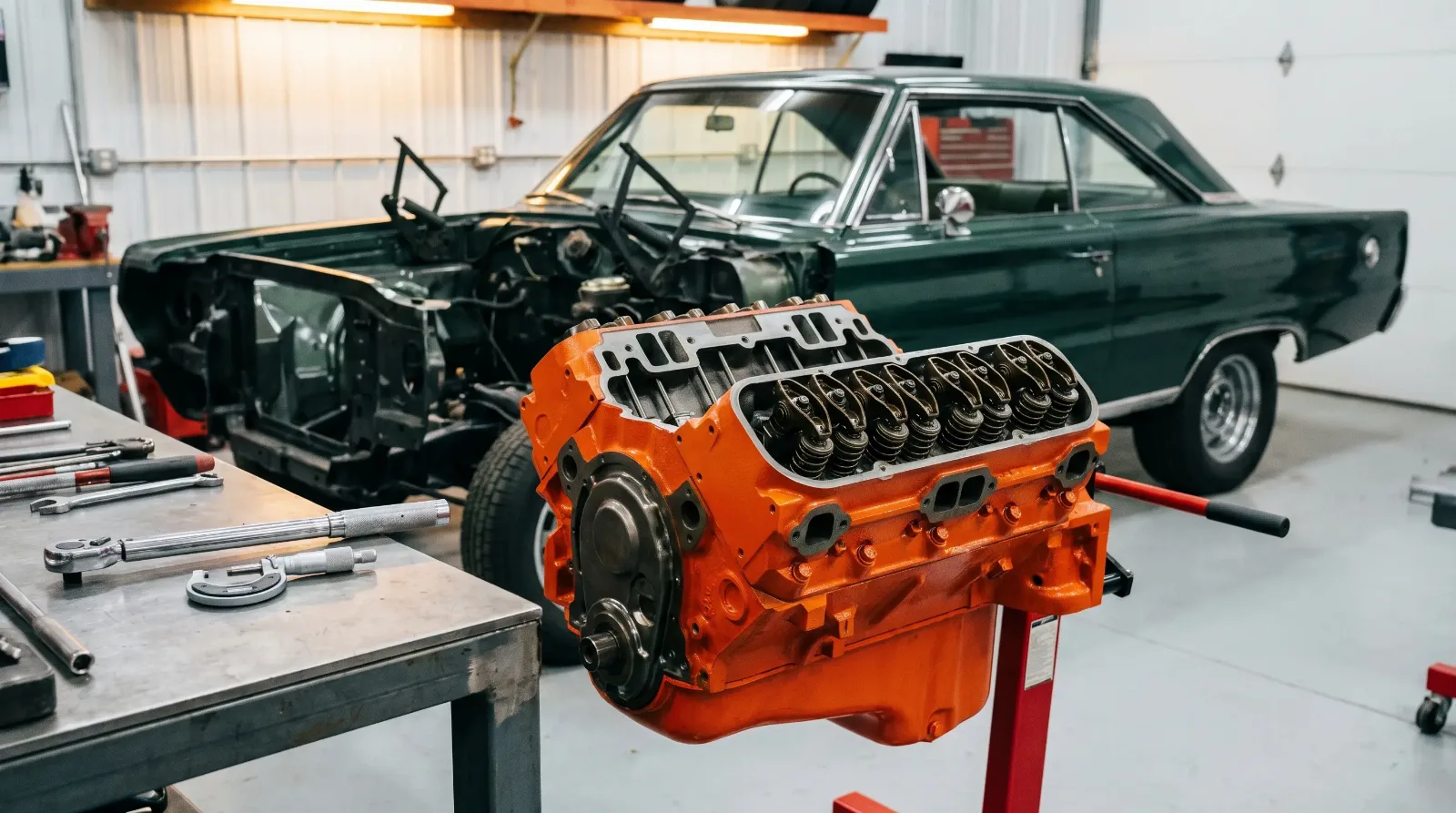
Most engines that come out of a classic car are not worn out. They are tired, dirty and mismatched. A classic car engine rebuild starts with telling those three things apart, because the fix for each one costs a very different amount of money. A 1969 small-block that smokes on startup might need valve seals and nothing else. The same engine with a knock at 2,000 rpm needs a crank, bearings and a machine shop.
This guide covers the whole job: diagnosis, machine work, assembly, break-in, and the drivetrain behind the engine that most people forget until the new motor twists a U-joint apart. Prices are 2026 US dollars, given as ranges.
Diagnose before you pull it
Pulling an engine is a weekend. Putting it back is another one. Do the cheap tests first so you know what you are pulling it for.
Start with a compression test, warm engine, throttle blocked open, all plugs out. On a healthy stock V8 of the muscle era you want every cylinder within about 10 percent of the others. The absolute number matters less than the spread. A cylinder 30 psi low tells you something is wrong in that hole. Then run a leakdown test on the low cylinders. Listen where the air goes. Hissing at the oil fill means rings. At the tailpipe means an exhaust valve. At the intake means an intake valve. Bubbles in the radiator mean a head gasket or a cracked head, and that changes the whole budget.
Check oil pressure with a mechanical gauge, not the dash light. A common rule of thumb is about 10 psi per 1,000 rpm when hot, though your engine's service manual is the real reference. Pull the oil filter and cut it open. Bronze-colored flakes are bearing material. Silver flakes that a magnet grabs are steel, often from a cam lobe or lifter. Either one means the bottom end comes apart.
If the car has sat for years, none of these numbers mean much until it has been turned over by hand and lubricated. Our guide to waking up a barn find engine walks through that process before you commit to a full teardown.
Rebuild, refresh or replace
There are three honest options, and the right one depends on what the car is and what you will do with it.
A refresh is gaskets, seals, a valve job, maybe rings and bearings with the engine in the car or on a stand, no machine work on the block. It works when wear is light and measurements are inside service limits.
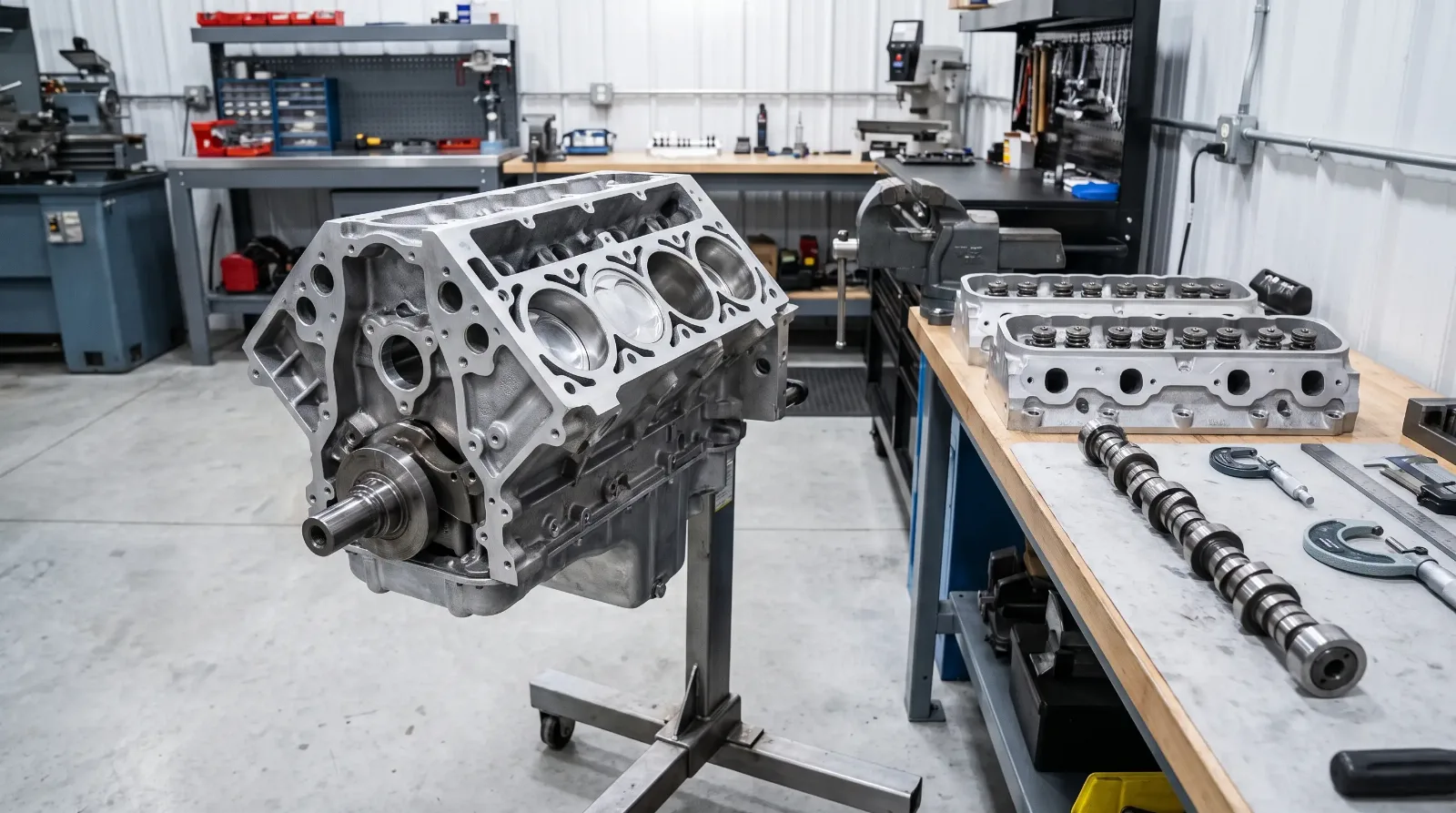
A full rebuild means the block, crank, rods and heads go to a machine shop. Everything is cleaned, inspected, measured and machined back into spec. This is the right call for a numbers-matching block, where the original casting is the value of the car.
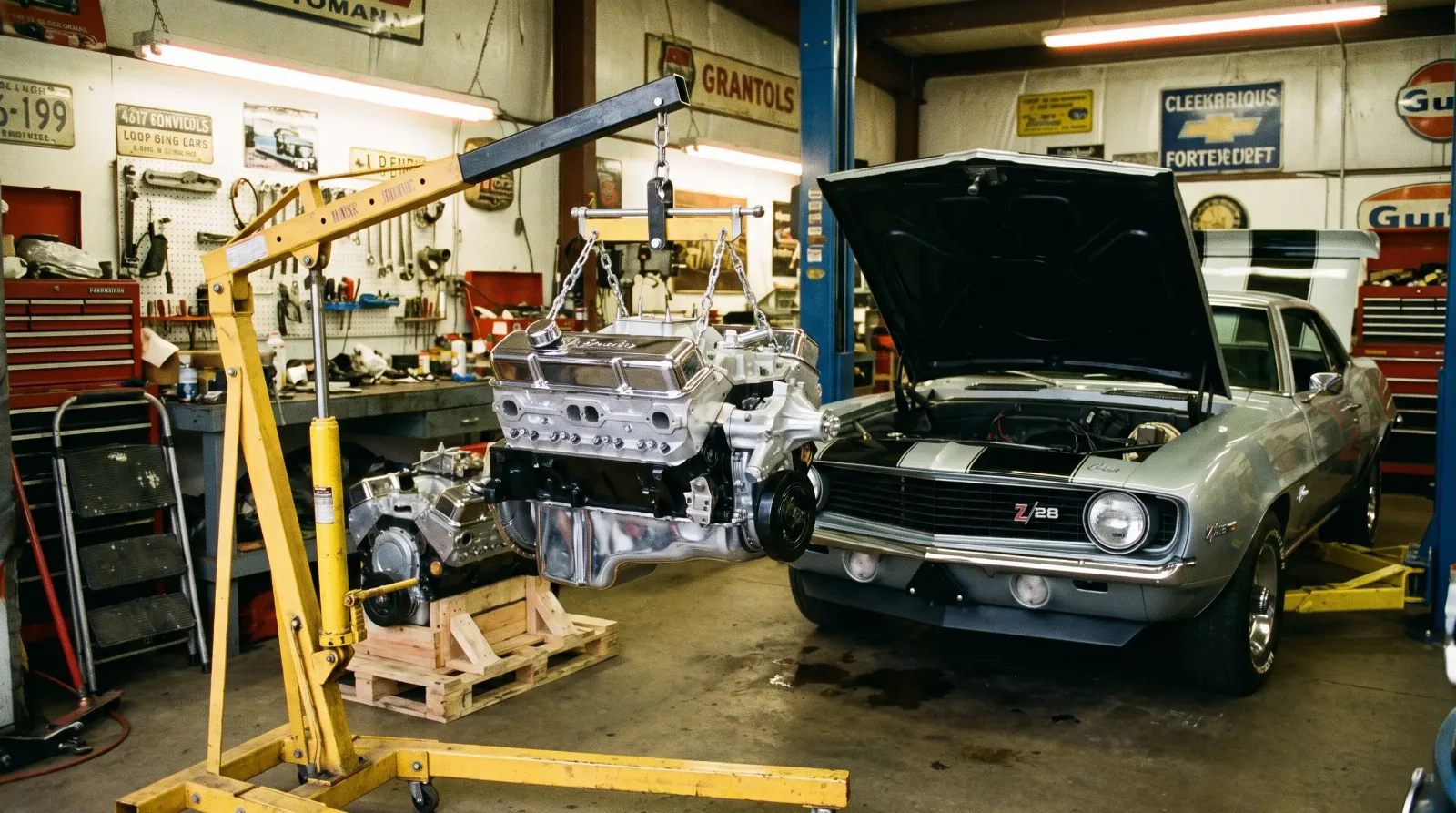
Replacement is a crate engine or a different engine entirely. On a driver with a non-original block, a crate small-block can cost less than machining the old one. That decision runs straight into the question of originality versus modern hardware, and our piece on choosing between a factory-correct restoration and a restomod build lays out where each path makes sense.
One blunt point. If the block is original to the car and stamped with the matching VIN derivative, it gets rebuilt, not replaced. Swap it and you take a real chunk out of the car's value at sale.
What the machine shop does and what it costs
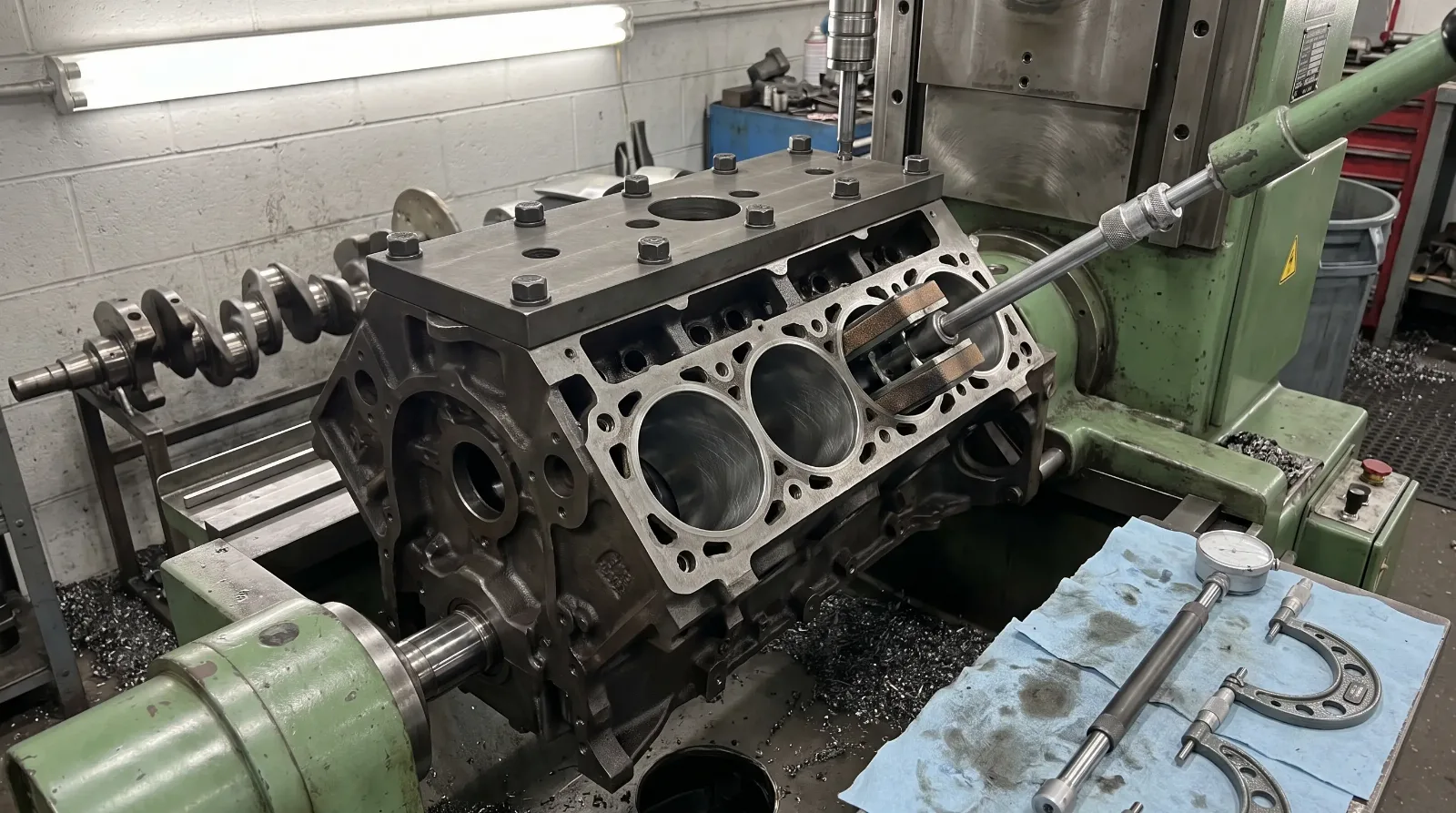
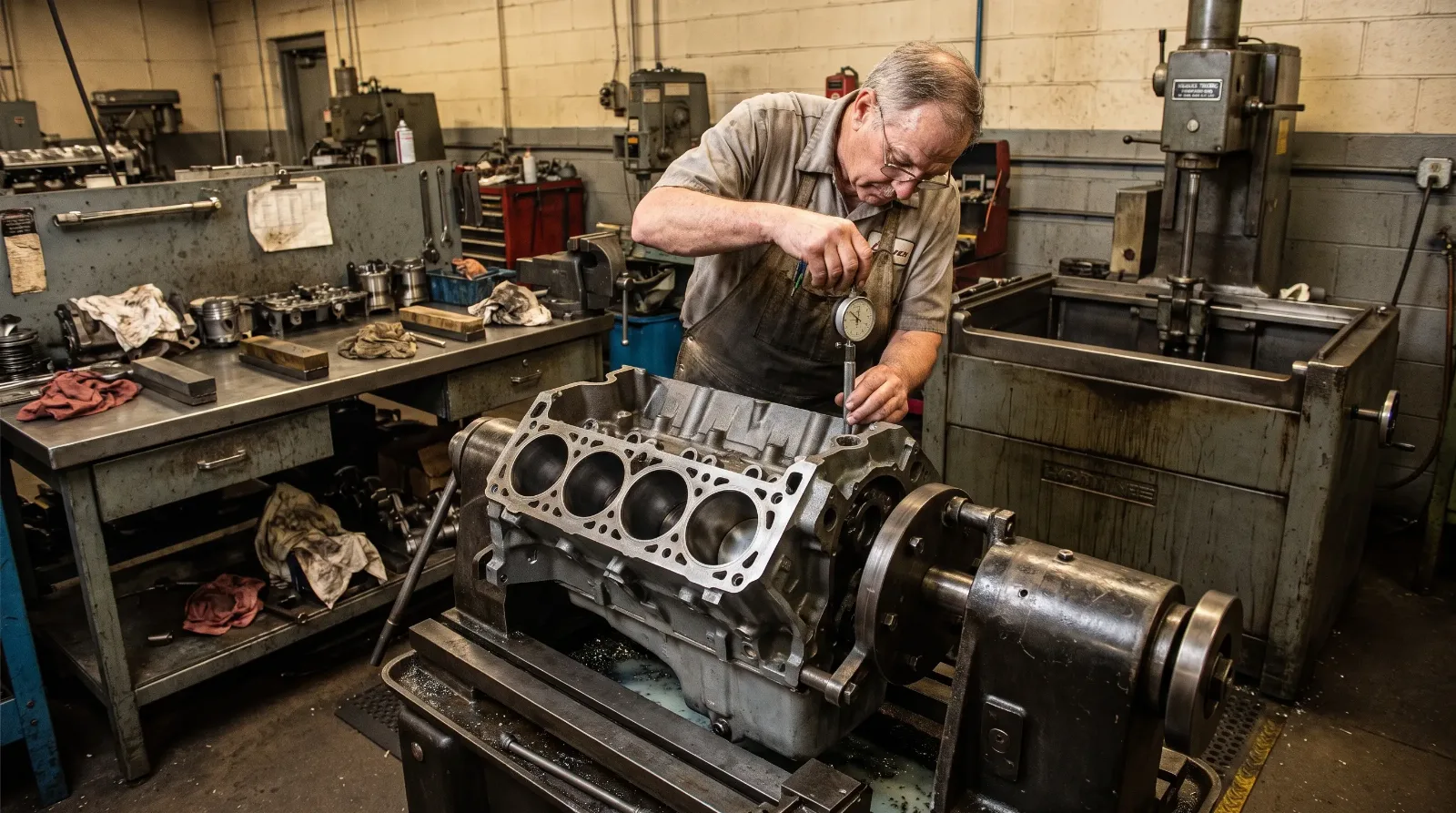
This is where the money goes, and where most of the quality comes from. A good machinist with a torque plate and a bore gauge matters more than any part you can buy from a catalog.
| Operation | What it fixes | Typical 2026 cost (V8) |
|---|---|---|
| Hot tank or bake and blast, magnaflux | Cleans block, finds cracks | $100 to $300 |
| Bore and hone with torque plate | Worn or tapered cylinders | $250 to $500 |
| Deck block | Warped or uneven deck surface | $125 to $300 |
| Align hone mains | Out-of-round main bores | $100 to $450 |
| Grind and polish crank | Scored or worn journals | $100 to $400 |
| Recondition rods, new bolts | Stretched big ends | $150 to $400, varies widely |
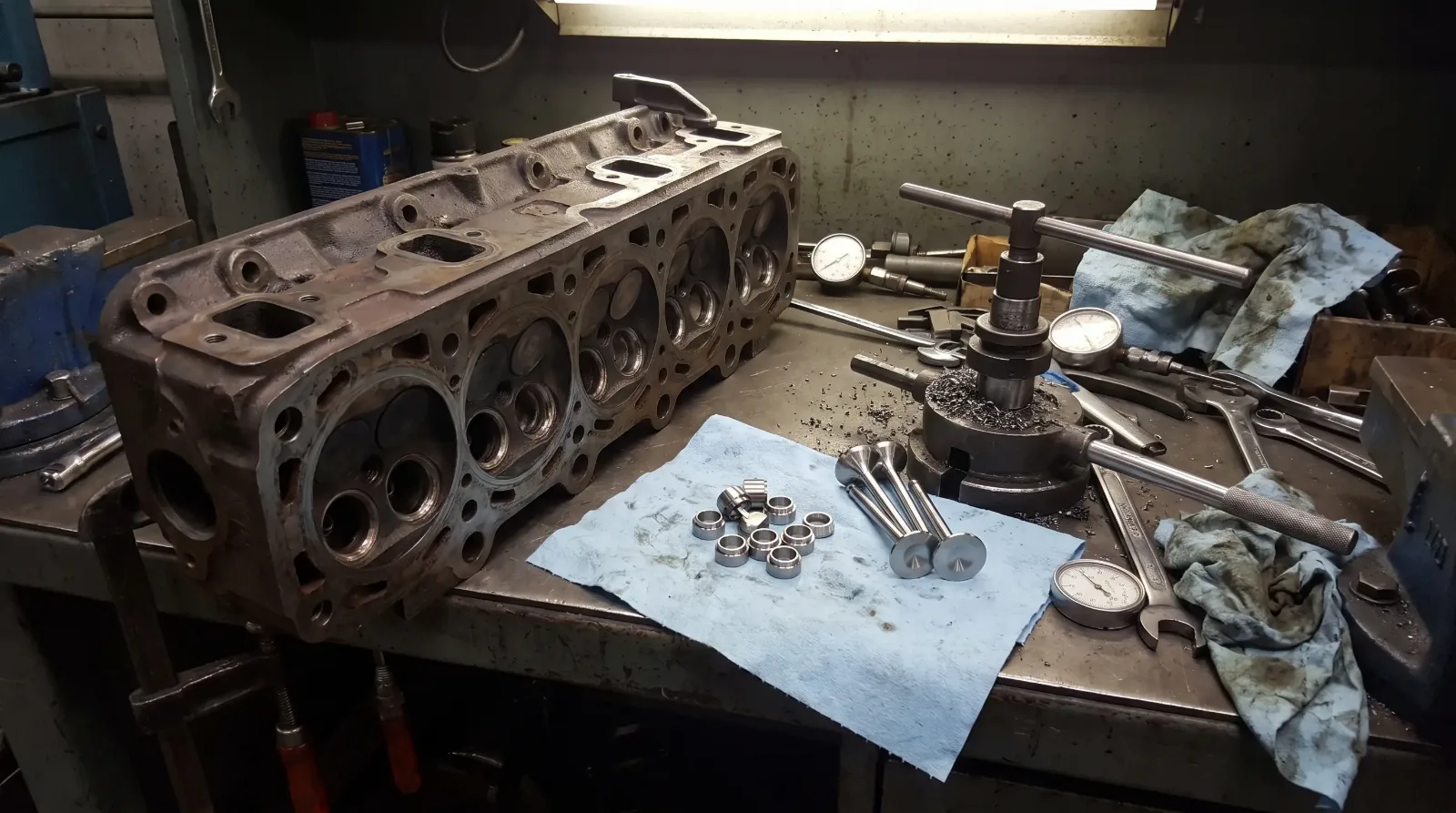
| Valve job, hardened seats, guides | Leaking valves, unleaded fuel | $400 to $1,200 per pair, more with seat inserts |
| Balance rotating assembly | Vibration, bearing life | $300 to $500 |
Prices vary a lot by region and shop, but add those up and machine work alone on a typical American V8 runs roughly $1,500 to $3,500. Parts for a stock-spec rebuild (pistons, rings, bearings, cam, lifters, timing set, oil pump, gaskets) add roughly $800 to $2,500. With shop assembly labor on top, a complete shop-built stock long block for a common small-block Chevy or Ford usually lands between $4,000 and $8,000, and a performance build runs past that. Big-blocks, Hemis and low-production engines with expensive or scarce parts can easily double that.
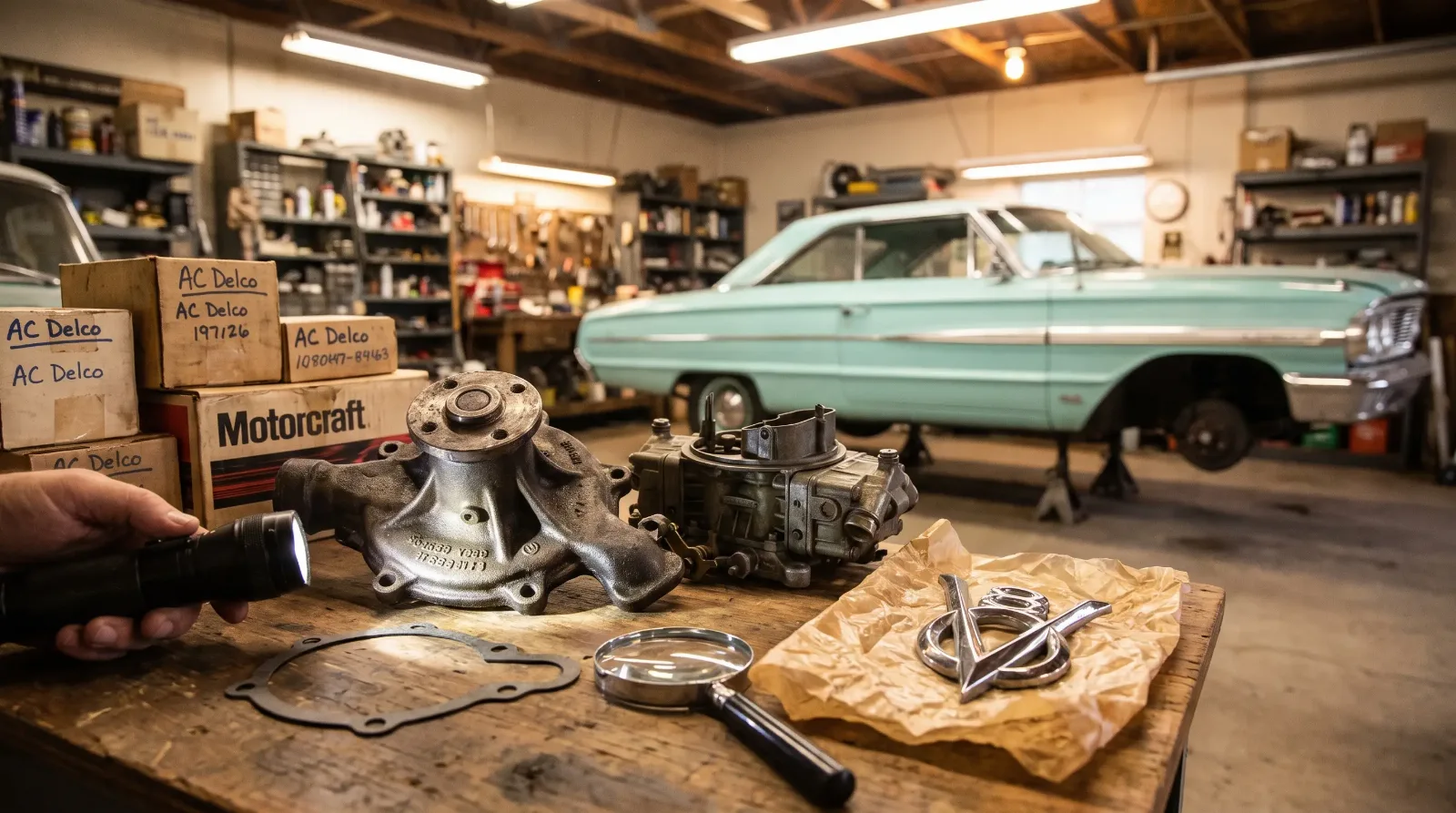
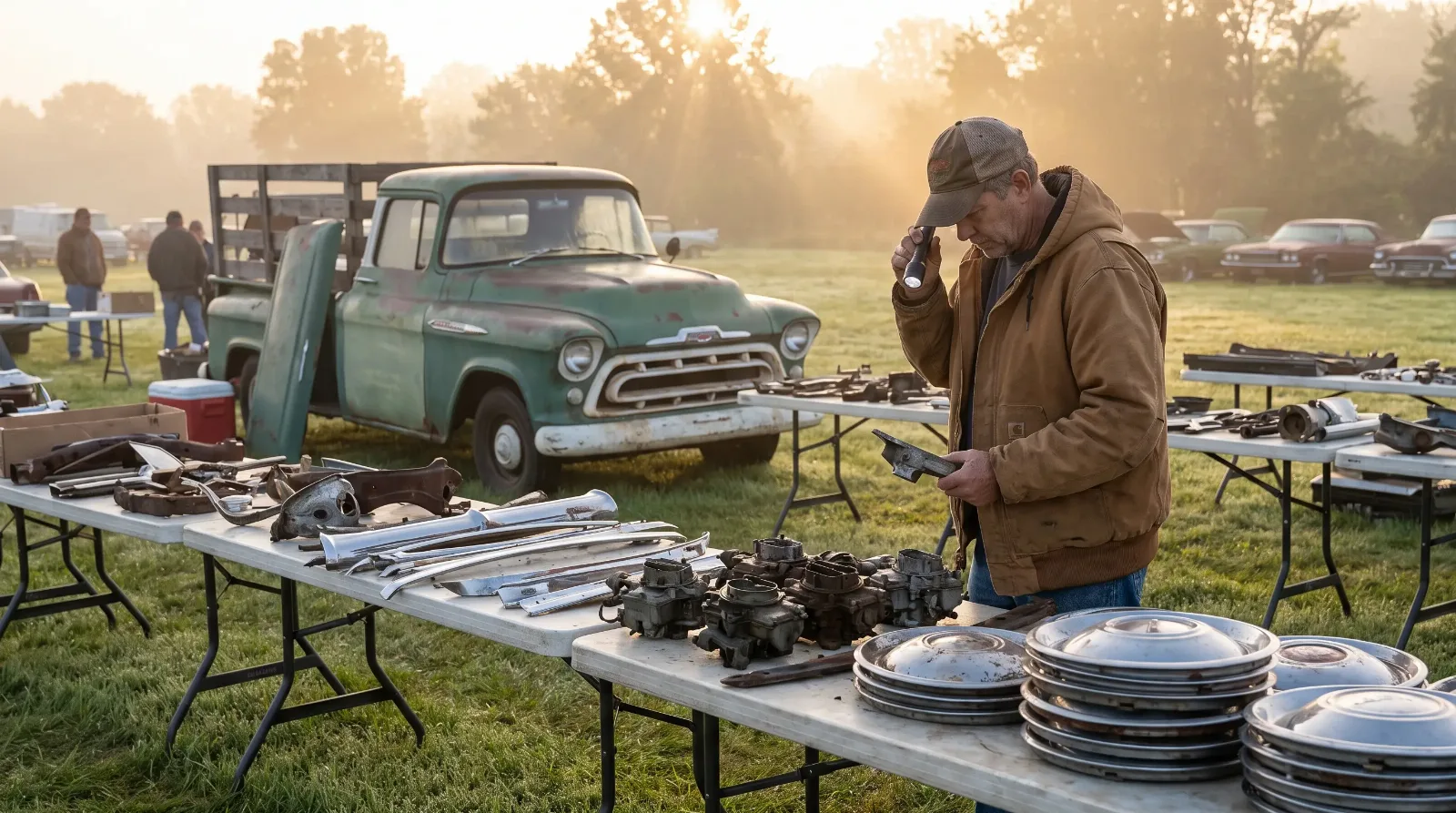
Scarcity is the multiplier nobody budgets for. A 427 aluminum head or a correct date-coded carburetor is not a catalog item. Start finding parts before the block is even at the shop, because the machine work takes weeks and the hunt for a correct casting can take months.
"Bigger cam, bigger carb, louder exhaust. Makes noise. A square bore, the right ring gap and a balanced crank make power that lasts. Only one of those shows up on the dyno sheet two years later."
Dan Reeves
Assembly is a measuring job
The parts arrive. The block comes back clean and painted.
Measure everything yourself, even if the shop already did. Use Plastigage at minimum, a bore gauge and micrometers if you have them. A rough guideline for main and rod bearing clearance on many classic V8s is around 0.001 inch per inch of journal diameter, but use the factory service manual for your engine, not a forum rule. Check crank end play. File-fit the piston rings to the gap the ring maker specifies for your bore and use. Degree the cam if it is anything other than a stock grind.
Torque every fastener in the sequence and to the value in the manual, with assembly lube on the threads where called for. Use new rod bolts. Prime the oil system with a drill and priming tool before the engine ever turns over on the starter, and keep going until oil comes out of every rocker.
The flat tappet problem
Most American V8s built before the mid-1980s use flat tappet camshafts. Modern passenger car oils carry far less zinc and phosphorus (ZDDP) than the oils these engines were designed around. ZDDP levels in many passenger car oils dropped during the 2000s from roughly 1,200 ppm to a maximum of around 800 ppm. A new flat tappet cam can wipe a lobe in the first 20 minutes if it is broken in on the wrong oil. Use a dedicated break-in oil or a high-zinc oil, coat the lobes with the moly lube that comes with the cam, and run lighter break-in valve springs or pull the inner springs if the cam maker says to.
🔧 Inspection Priorities
- Crack check on the block and heads. A crack found after assembly means doing everything twice. Magnaflux or pressure test before any machining is paid for.
- Bearing clearances. Too tight spins a bearing, too loose drops oil pressure. Either one means a new crank and possibly a new block.
- Cam break-in. A wiped lobe sends steel through the whole oil system. Plan on new bearings and a full flush at minimum.
- Ring gap. Gaps too tight can butt under heat and scuff the bore. Every cylinder, every ring, measured.
- Oil pump pickup. Check height to the pan floor and tack weld or bolt it securely. A loose pickup starves the engine at the worst moment.
Break-in and first 500 miles
For a flat tappet engine, the first start should fire immediately. Timing set close, fuel bowl already full, carb primed. Then hold it between roughly 2,000 and 2,800 rpm for 20 to 30 minutes, varying the speed, no idling. Idle is the enemy here because the cam lobes depend on splash oil from crankshaft speed.
After the cam is broken in, change the oil and filter. Cut the filter open again. A little assembly debris is normal. Metal is not. Then drive the car with varied loads for the first few hundred miles, no long steady cruising and no full-throttle runs, so the rings seat against the cylinder walls. Many builders change the oil again around 500 miles. Retorque the intake bolts and check valve lash if it has adjustable rockers.
Put a fresh engine on a dyno or at least a chassis dyno if you can. A dyno session costs little next to the engine and tells you if the timing curve and carb are right before you find out on the highway.
The drivetrain behind the engine
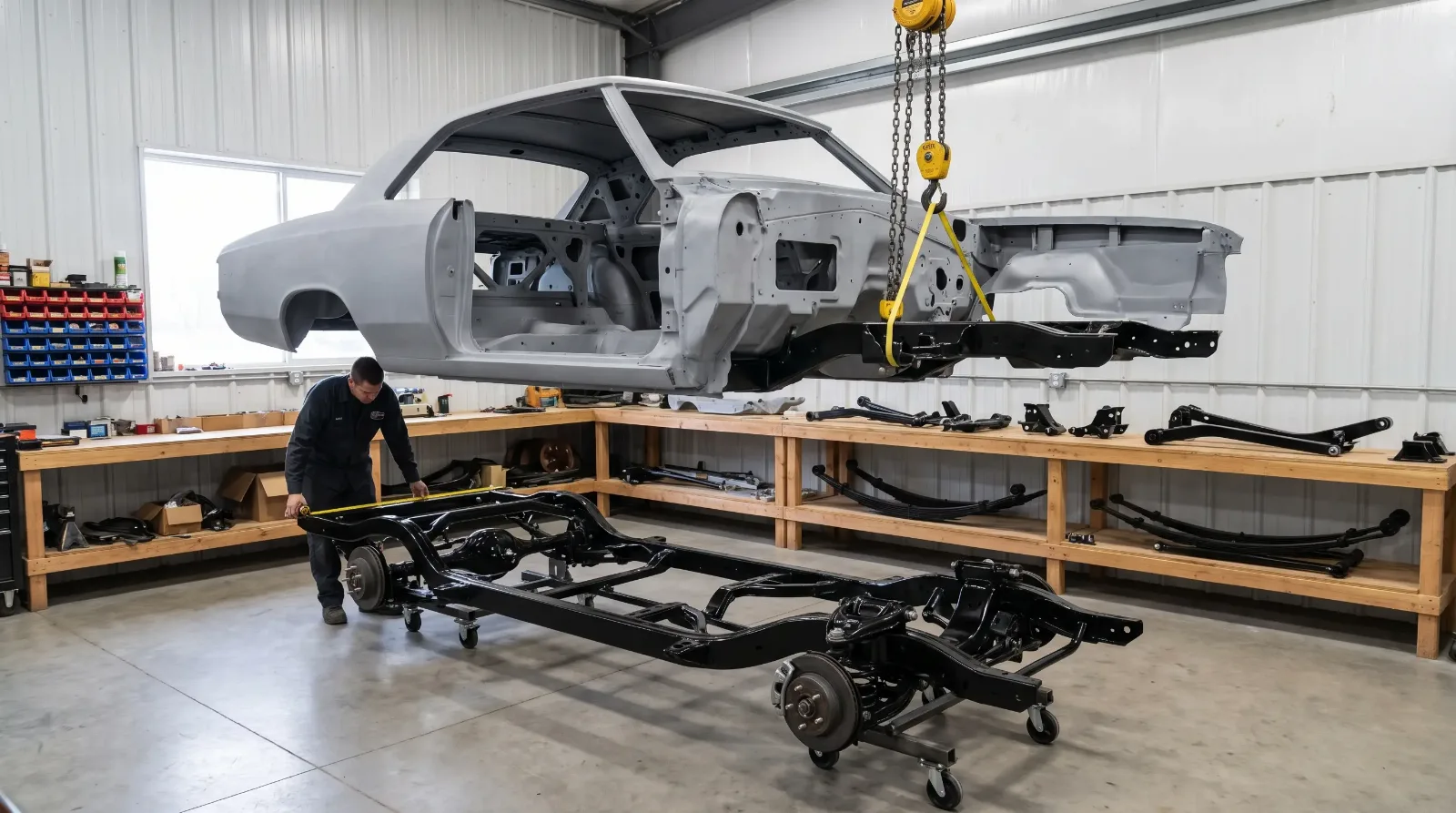
An engine rebuild that ignores the drivetrain is half a job. A fresh engine making its rated torque will find every weak point between the flywheel and the tires.
Clutch and transmission
On a manual car, the clutch, pressure plate, pilot bearing and throwout bearing get replaced when the engine is out. Check the flywheel for heat cracks and have it resurfaced. Check the bellhousing alignment with a dial indicator, because a misaligned bellhousing chews up input bearings and makes shifts notchy.
Automatics of the era, such as the Turbo Hydra-Matic 350 and 400, Ford C4 and C6, and Chrysler TorqueFlite, are durable and well supported. A rebuild by a transmission shop is usually a four-figure job, more for a correct date-coded unit with original parts. Manual gearboxes like the Muncie four-speed or Ford Toploader cost more to rebuild when synchros and gears are worn, and correct originals carry a premium.
Driveshaft and rear axle
Replace the U-joints and have the driveshaft balanced. Check pinion angle after any change in engine or transmission mounts. A wrong angle causes a vibration that people blame on the new engine.
The rear axle needs the same attention. Pull the cover. Look at the gear pattern and the bearings. Common rear ends like the GM 12-bolt, Ford 9-inch and Dana 60 are well supported for rebuild kits, but correct original housings with matching codes matter on a numbers car. A full ring and pinion setup with bearings by a good shop is usually a four-figure bill once parts and setup labor are counted.
Doing it yourself versus hiring it out
You can save real money doing the removal, teardown, assembly and installation yourself. Machine work has to go to a shop. Nobody does a torque plate hone in a home garage. Shop assembly labor on a V8 alone is commonly quoted at around $850 to $1,650, and removal, installation and drivetrain work add more on top, so the savings are real if you already own the tools and have the time.
The trade is risk. One wrong torque value or a missed clearance can cost the full price of the job. If the car is valuable or numbers-matching, hire it out to a specialist who builds that engine family every week. Ask to see engines they built that are now running, ask for references, and ask whether they dyno test before delivery. When you are ready to find a shop, look for one that does machine work in house or works with one shop consistently.
If you want a ground-level look at what the process looks like on one specific engine, read our account of a Pontiac 400 rebuild from teardown to first start. It shows how the costs and surprises stack up in real life.
What a rebuild does to value
A documented, professional engine and drivetrain rebuild usually adds confidence more than it adds dollars. Buyers will pay for a car that is known to be sound. They will not pay back every invoice. Expect to recover only part of the cost at sale, and expect much better recovery on a numbers-matching car where the original engine was saved.
The paper matters. A receipt binder with machine shop measurements, part numbers and a dyno sheet makes a rebuilt engine an asset in a negotiation instead of a question mark.
If you are shopping rather than building, look at how sellers describe the engine history on muscle cars for sale. The listings with a named builder, a date and a measurement sheet are the ones where somebody did the job right. The ones that say "fresh rebuild" and nothing else deserve a compression test before any money changes hands.
Sources and notes
- EPA: EPA takes final step in phaseout of leaded gasoline, confirms the January 1, 1996 ban on leaded fuel for on-road vehicles
- eBay Motors: How to do an engine compression test, supports the 10 percent cylinder-to-cylinder spread guideline
- EngineLabs: Lake Speed Jr. puts zinc oil additives and DLC lifters to the test, ZDDP drop from roughly 1,200 ppm to about 800 ppm and its effect on flat tappet break-in
- Timeless Muscle: Breaking in your hydraulic flat tappet camshaft, break-in rpm steps between 2,000 and 2,800 rpm over about 30 minutes, high-zinc oil, oil change after break-in
- Bullnose Garage: Common engine machine work definitions and costs, 2024 price ranges for hot tanking, magnaflux, boring, honing, decking, align honing, crank grinding and balancing
- EngineerFix: How much does it cost to rebuild a 350 engine?, machine work, assembly labor and total rebuild ranges for a small-block V8