
Slide the engine back a foot and the whole car changes character. That is what setback does on a gasser, and it is the single move that separates a car that hooks off the line from one that spins the tires and goes nowhere. The nose-high stance gets the attention, but weight bias is the part that actually wins the race. If you want the full build sequence, start with our guide on how to build a gasser, then come back here for the part everybody argues about at the pits.
Restoration & Tech
7 min read
Gasser Engine Setback and Weight Bias
Setback moves the engine back for rear traction. Here is why it works, what the rules allowed, and how far you can go before the front end suffers.
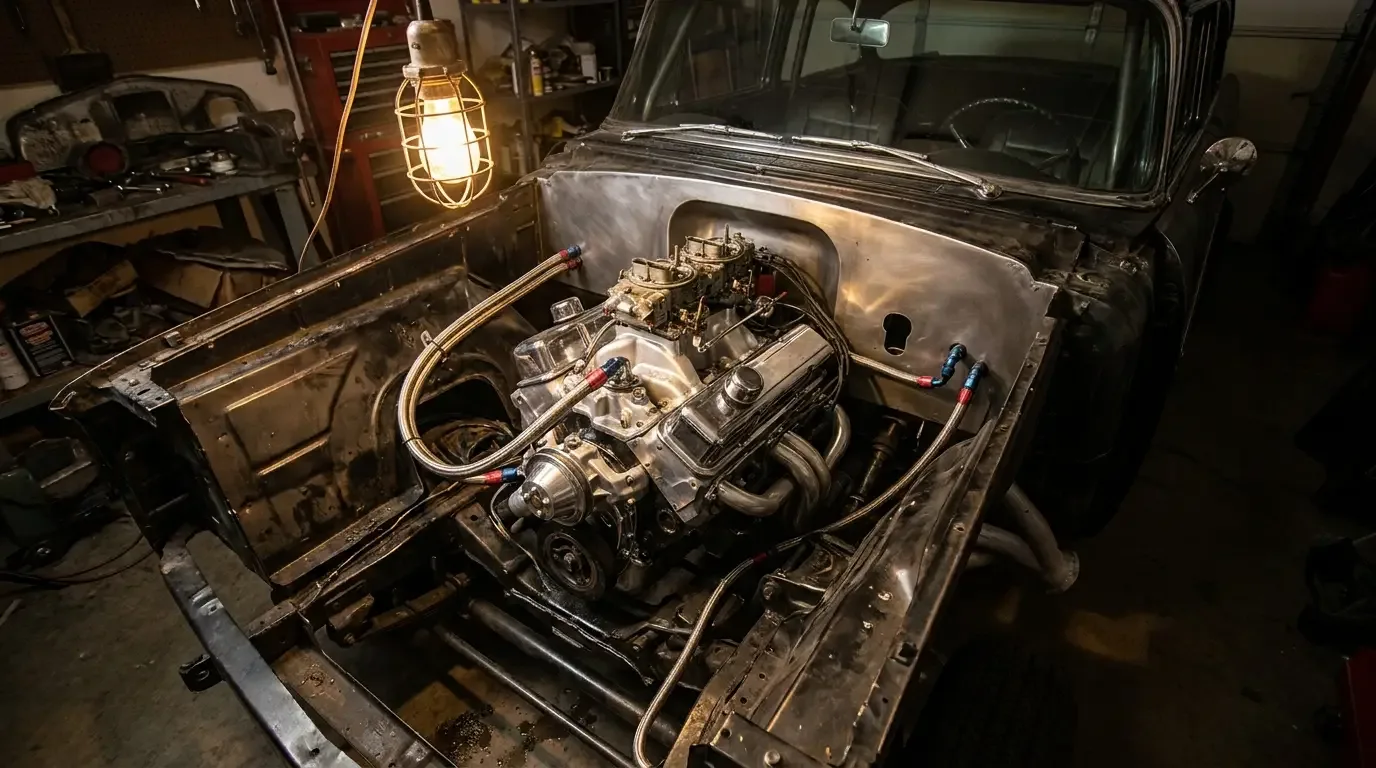
I have set engines back in Willys, Anglias, and a couple of tri-fives over the years, and the same rules keep coming up. Move the mass rearward, put more of the car's weight on the driving tires, and the traction follows. But there is a ceiling, both in physics and in the rulebook, and crossing it turns a fast car into a handful.
Why moving the engine back adds traction
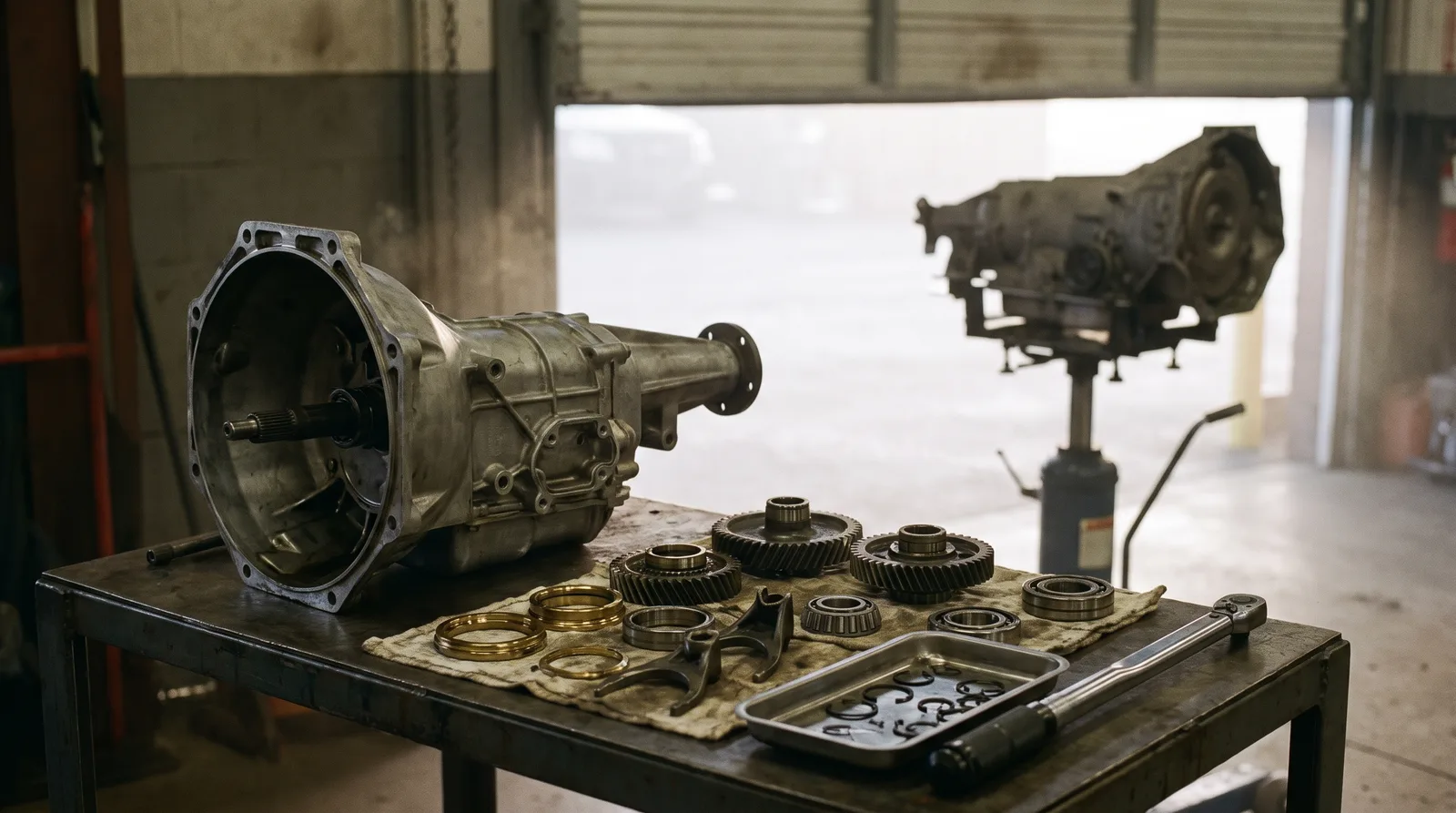
A drag car launches on its rear tires. The more static weight sitting over those tires, and the more weight that transfers to them when you drop the clutch, the harder they bite. A stock passenger car carries most of its mass up front over the engine and the front wheels do nothing useful at the starting line. Setback fixes that by relocating the heaviest single component, the engine and transmission, closer to the rear axle.
Two things happen at once. Static rear weight percentage goes up, so the tires start with more load on them. And because the center of mass sits farther back and lower in the chassis, weight transfer on launch loads the rear even more. On a period gasser running a solid front axle and leaf springs, that combination is what let a 2,400-pound Willys put a hopped-up small block to the pavement without a modern slick or a wheelie bar.
The setback is measured from the centerline of the front axle to the centerline of the number-one spark plug or the front of the block, depending on who is writing the rule. What matters to you as a builder is the number and the ratio it produces.
What the rules actually allowed
Setback was never a free-for-all in sanctioned gas classes. The NHRA and AHRA gas eliminator rules capped how far back you could move the engine, typically expressed as a percentage of the wheelbase measured to the front axle centerline. Ten percent was a common figure in the classic era, which on a 100-inch wheelbase works out to roughly 10 inches of legal setback from the stock location.
The exact allowance moved around by class and by year, and the tech inspectors checked it. A car caught with too much setback got bumped to a different class or turned away. That is why period builders learned to get the most out of a modest, legal number rather than just shoving the engine as far back as the firewall would let them.
| Wheelbase | Approx. 10% legal setback | Typical rear weight gain |
|---|---|---|
| 93 in (Anglia) | around 9 in | a few points |
| 100 in (Willys coupe) | around 10 in | a few points |
| 115 in (tri-five sedan) | around 11 in | a few points |
Treat those weight-gain figures as approximate. Actual numbers depend on how heavy your engine is and where the crank centerline ends up relative to the axles. Weigh the car on corner scales before and after if you want to know for sure.
"People think setback is about cramming the motor into the firewall. It is not. It is about the scale ticket. I want to see rear weight climb and the car sit level under power. If the number on the scale did not move, you moved the engine for nothing."
Mike Sullivan
How far is too far
Physics has its own limit that shows up before the rulebook does. Push too much weight rearward and the front axle gets light. A gasser already runs a tall, narrow front end on a straight axle, so it does not take much to make the steering vague at speed and the front end prone to wandering. Get the balance badly wrong and the car will try to lift the nose harder than the tires and suspension can control.
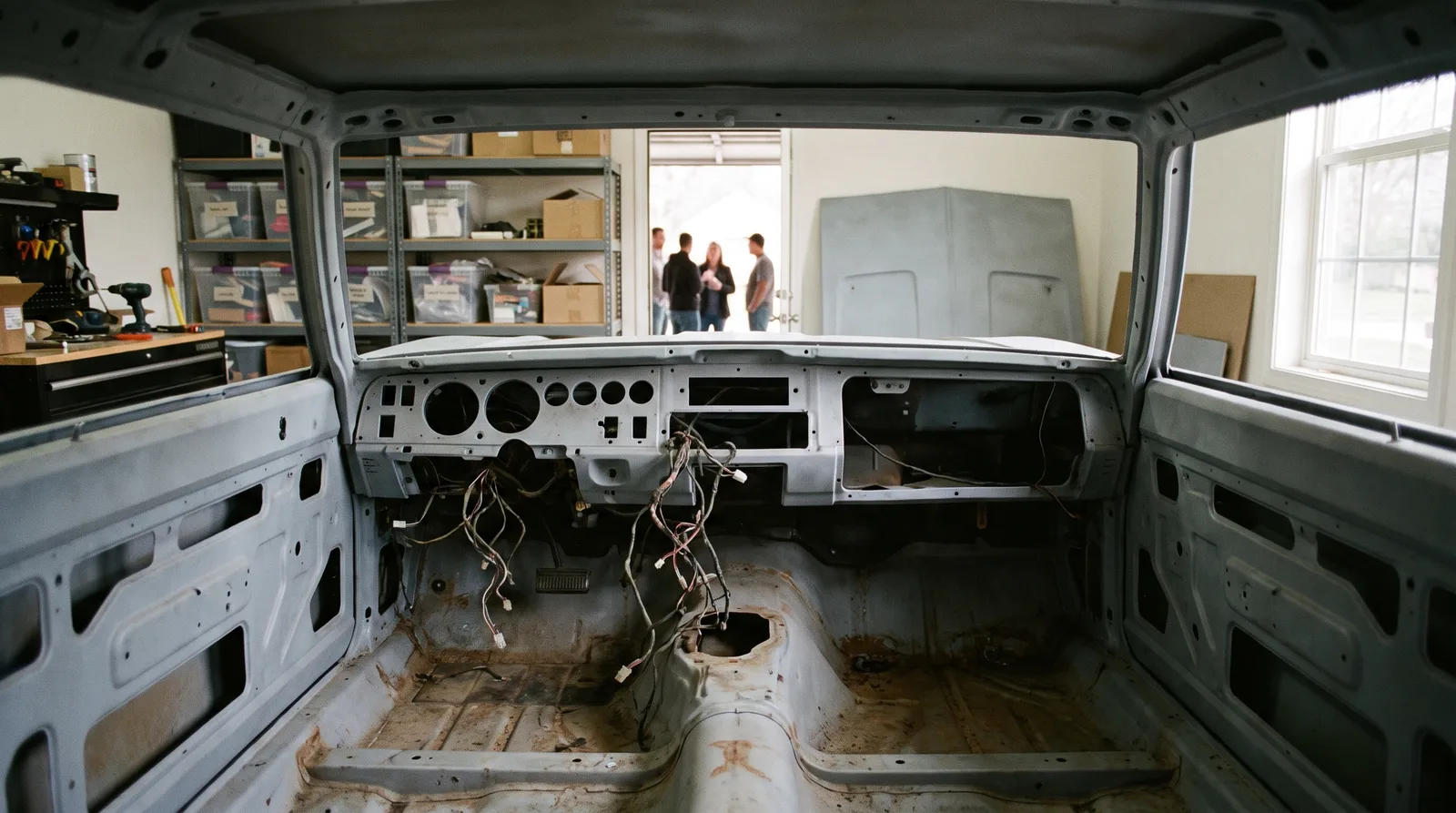
There is also the packaging problem. Every inch of setback pushes the transmission tunnel, the shifter, and the header collectors rearward into the cabin. On a small British body like an Anglia you run out of room fast, and the driver ends up sitting on top of the bellhousing. That is real, and it is one reason the tidy-looking cars often ran less setback than the fenders would suggest.
- Front end goes light: darty steering, poor braking, harder to keep straight.
- Cabin intrusion: hot transmission and headers next to the driver.
- Driveshaft angle: too much setback shortens the shaft and steepens the u-joint angle.
- Legality: over the class limit means a tech rejection, not a trophy.
Getting the balance right
The goal is a rear weight bias that helps the launch without gutting the front. Most period gas coupes lived somewhere around 55 to 60 percent rear, and you get there with a combination of setback, battery relocation to the trunk, and honest weight stripping off the nose. Setback does a lot of the work, but it is not the only tool. Where you put the battery and the fuel cell matters just as much.
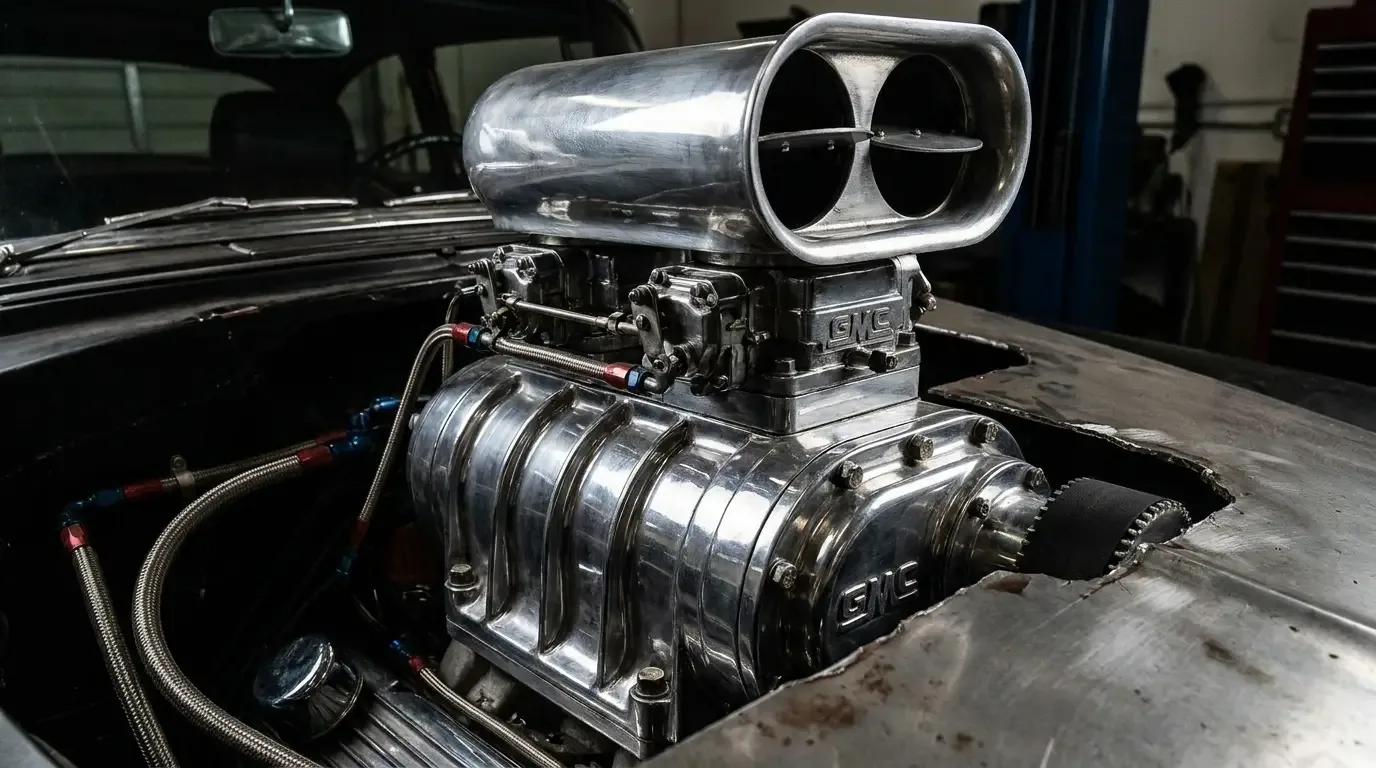
If you are running a blower or injection, the weight of that hardware sits high and forward on the engine, which changes the math again. That is worth its own conversation, and we cover it in Blown and Injected Gasser Engines. A supercharged setup adds mass right where you least want it for balance, so the setback and ballast plan has to account for it.
Setback is one of those details that looks like hot-rod folklore until you put a car on the scales and watch the traction change. It came straight out of the drag classes and the search for a legal edge, and if you want the wider history of how these cars and their rules came together, read the story of the gasser. The stance sells the look. The weight bias wins the round.
Sources and notes
- Period drag-racing press and NHRA/AHRA gas class rule summaries from the 1950s-60s era.
- Chassis and straight-axle reference material on weight transfer and setback measurement.
- Builder interviews and shop experience with Willys, Anglia, and tri-five gasser packaging.
- Club and registry records documenting period gas-class cars and their configurations.
Related Reading

Have a
Classic Car
for Sale?
Reach thousands of serious classic car collectors across the US.
Sell It Here →
Are You a Classic Car Dealer?
List your full inventory and connect with targeted classic car buyers.
Join as a Dealer →

About the author
Mike Sullivan
Detroit-area muscle car enthusiast and restoration specialist with three decades of hands-on experience working on American iron.
More in Restoration & Tech
Comments
Be the first to comment on this article.