
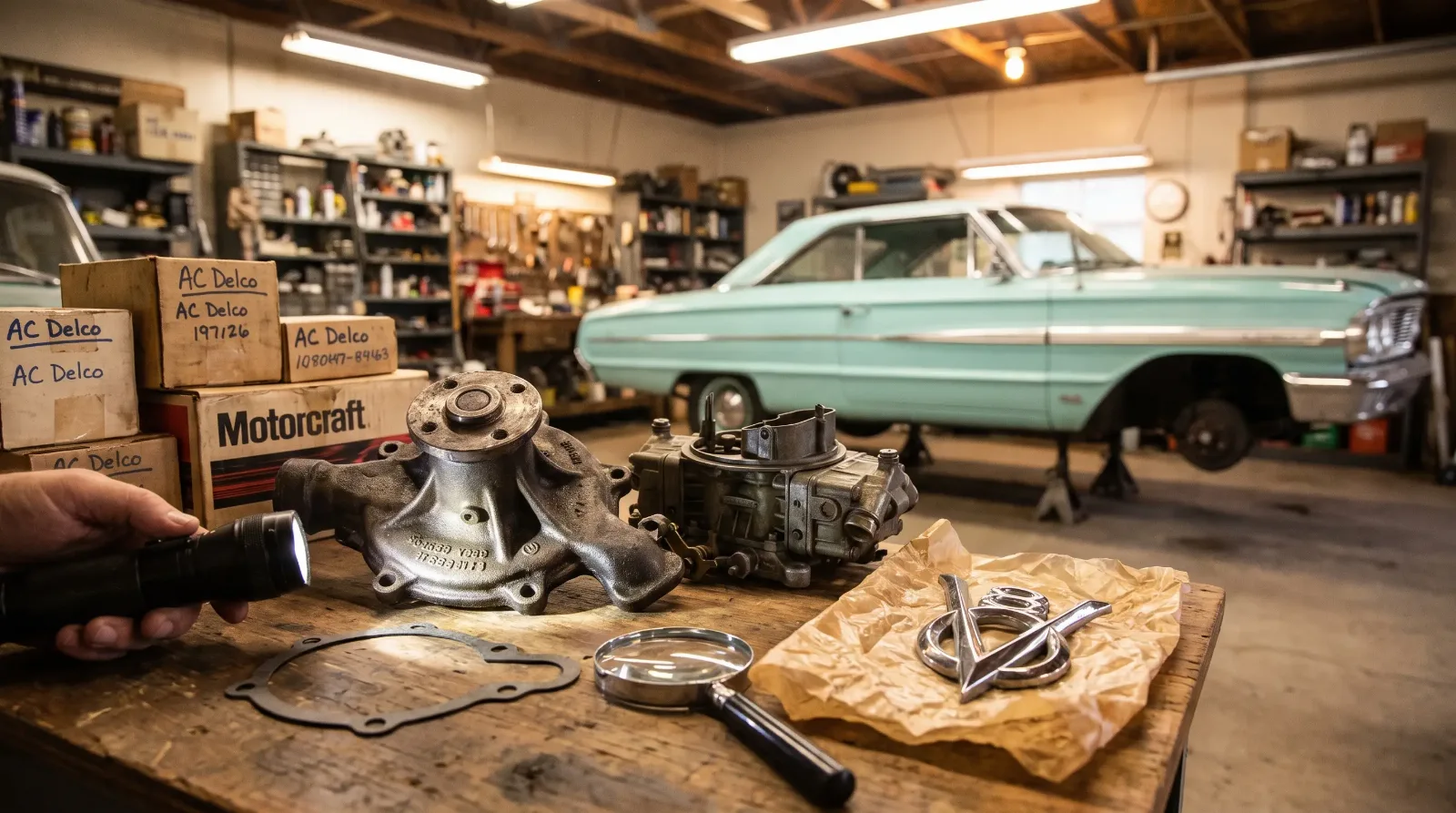
A core is the old part you hand over so someone can make it work again. Sometimes it is a carburetor, sometimes a starter, sometimes a steering box or a water pump. The question every restorer faces is simple: rebuild what you have, or buy a replacement. The answer comes down to three numbers. What the rebuild costs, what the replacement costs, and what the original is worth to the car.
Restoration & Tech
7 min read
Rebuildable Cores: Rebuild Services vs Replacement Parts
Rebuildable cores and rebuild services can beat replacement parts on cost and originality. Learn what makes a good core, what rebuilders charge and when to buy new instead.

This is a practical decision, and it is the part of sourcing parts where owners most often leave money on the table. Most people assume new is better. It is not always. A good rebuild of an original casting often outperforms a cheap replacement, keeps the correct markings and costs less.
What counts as a good core
A core is worth rebuilding when the main body is sound. For a carburetor that means the throttle bores are not worn oval, the body is not cracked and the mounting flange is flat. For a starter or alternator, it means the housing is intact and the mounting ears are not broken. For a steering box, it means the housing is not cracked and the bores are not scored. For a distributor, the housing and shaft bushing area matter most.
A bad core shows up fast. Cracks, stripped threads, heavy corrosion inside, broken ears, warped surfaces and missing internals are the usual reasons a rebuilder will turn a part down. Some rebuilders charge an evaluation fee up front, and some suppliers refund a core charge only if the part is rebuildable. Ask before you ship.
One more point. Cores with the right casting number and date code are worth more to a judged car than a clean replacement with no markings. If originality matters to you, keep the original core and rebuild it.
What rebuild services typically cost
Prices vary by part, by model and by the amount of work the core needs, so there is no honest single number. Get a written quote, and ask what is included. One carburetor rebuilder describes rebuilding as usually cheaper than buying a new unit, whether original-equipment or aftermarket, and older carburetors often arrive warped and need the mating surface milled flat, which adds to the job.
| Part | Rebuild cost compared with new | What decides it |
|---|---|---|
| Carburetor | Often less than a new unit; a few hundred dollars is common for a professional rebuild | Throttle shaft wear, warped body, availability of the correct unit |
| Starter motor | Usually similar to a replacement | Housing and mounting ears intact, bushing and drive condition |
| Alternator or generator | Usually similar to a replacement | Housing condition, correct output rating, originality |
| Water pump | Often not worth it; a new pump can cost the same or less | Bearing and seal wear, cracked or pitted housing |
| Steering box | Often a few hundred dollars up to four figures | Cracked housing, scored bores, availability of replacement |
| Distributor | Varies widely | Shaft bushing wear, correct advance curve for your build date |
Look at the table and notice the overlap. In many cases the rebuild and the replacement cost about the same. That means the tiebreaker is quality, not price. A rebuild by a shop that tests every unit on a bench is better than a new part of unknown origin. A rebuild by someone who just swaps gaskets is not.
Carburetors show why a skilled rebuild matters. A throttle shaft with appreciable play indicates worn bushings and shafts, and fixing that properly means rebushing or fitting oversize shafts, work that needs patience and specialized tools. For most owners, the practical choices are a professionally rebuilt unit or having yours professionally rebuilt.
How to pick a rebuilder
Ask what they replace and what they reuse. A proper rebuild replaces wear items, machines worn surfaces, tests the finished unit and writes down the result. Ask about a warranty. Ask for references from owners with the same model. Ask how they pack and return the part, because the best rebuild in the world dies in a bad shipping box.
Check for specialists. Some rebuilders work on one brand or one type of component, and know every running change by year. A generalist can do the job, but a specialist knows which part number is correct for your build date. When the stakes are high, ask for a flow test, a bench test or a spec sheet showing the finished numbers.
"Ask for the test numbers. If a rebuilder cannot tell you what the unit did on the bench, he did not test it. A part that has not been tested has not been rebuilt, it has been assembled."
Dan Reeves
When replacement wins
Buy new when the core is cracked, when the part is a wear item with no collector value, or when the replacement is cheaper and tested. Water pumps, fuel pumps, hoses and filters are examples. A new part also wins when the original design had a known flaw that the modern version fixes, such as an improved bearing or a better seal.
Buy new when the rebuild lead time is long and your project is waiting. Some rebuilders are backed up for weeks or months, and a stalled build costs more than the price difference. Plan ahead, send cores out early, and do not leave them until the week before assembly.
Think about the engine as a whole, too. If you are doing an engine rebuild, the supporting parts should be rebuilt or replaced at the same time. A fresh engine bolted to a tired carburetor and a weak starter is a fresh engine with problems.
Handling a core before you ship it
Do not strip a core for parts before you send it. Rebuilders want it complete, and missing pieces cost you money. Do not clean it with aggressive chemicals or bead blast it unless asked. Drain fluids, cap openings, wrap it, label it with your name and a description of the symptoms, and pack it in a box that can take a drop. Photograph it first, so you have proof of the condition in case something goes wrong.
Keep the paperwork. A rebuild receipt with the date, the work done and the test results is useful when you resell the car, and it helps if the part fails and you need warranty service.
Using documentation to decide
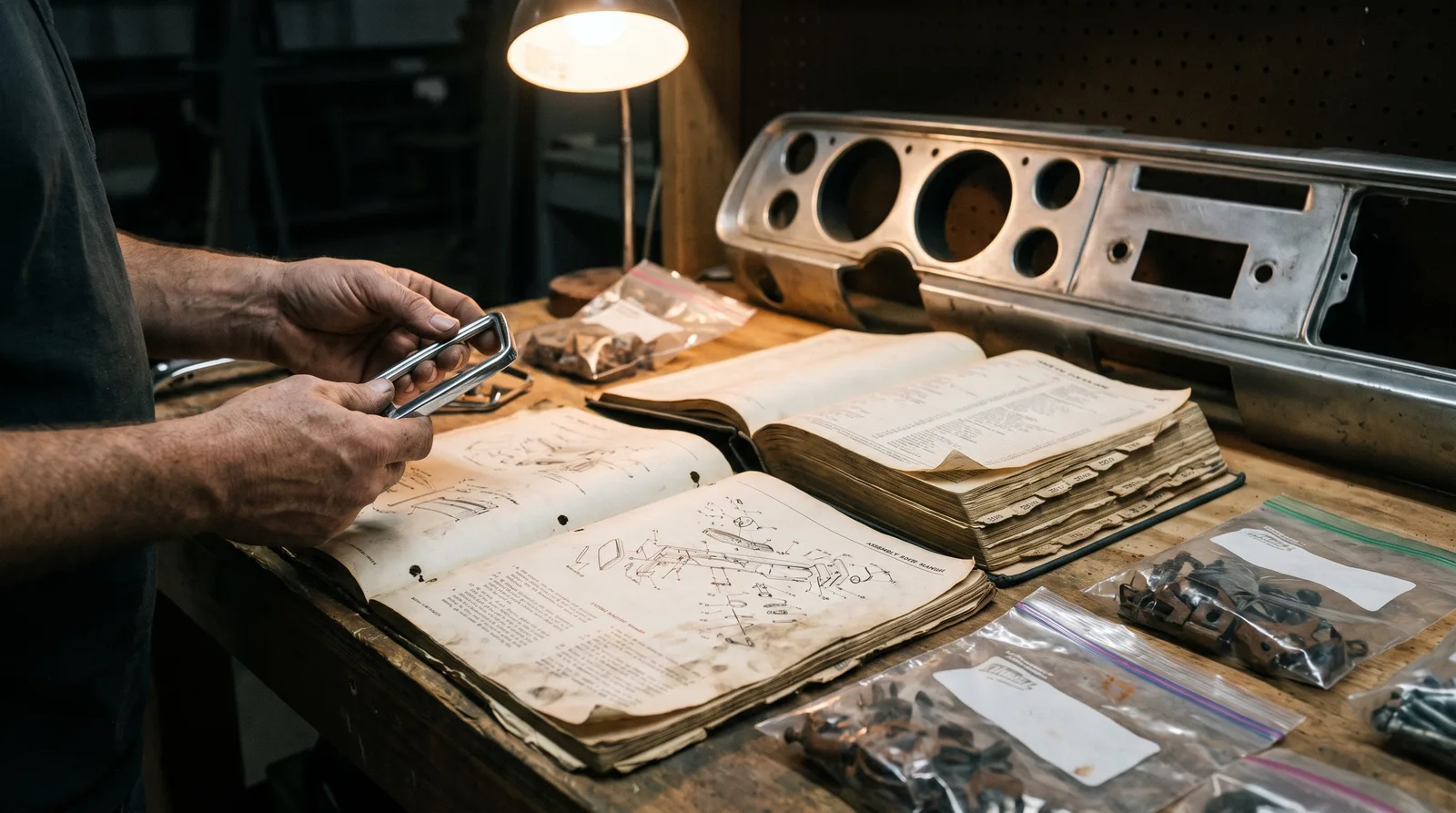
If you are not sure what the original looked like, check the references before you choose. Factory documents show the correct part numbers, finish and assembly sequence, and they tell you whether the part you hold is the right one for your car. Start with the assembly manual is the place to start, because it shows how each component fits and which variants were used when.
The rule for cores is the same as the rule for any other number on a restoration project. Get the quote, compare it to the replacement, factor in originality and time, and pick the one that costs least over the life of the car, not just on the invoice.
Sources and notes
- Moss Motoring, A Complete Carburettor Rebuild, throttle shaft wear, rebushing, and the professional-rebuild option
- FarmShow, Specialty Carburetors rebuilds common and classic carburetors, rebuilding versus buying new, warped older bodies that need milling, core return handling
- Wikipedia, Remanufacturing, definition of remanufacturing and how the term relates to rebuilding in the automotive sector
- Cover It Canada, how a core charge works, core charge as an upfront deposit refunded based on the rebuild-ability of the core
- SlashGear, Cheap crate engines under $5,000, example of remanufacturers requiring a core return
- Capital Reman Exchange, long blocks vs. complete engines, warranty coverage on internal parts versus ancillary parts
Related Reading

About the author
Dan Reeves
Performance engine builder from North Carolina's motorsports corridor, focused on swaps, forced induction and making real, repeatable power.
More in Restoration & Tech

Comments
Be the first to comment on this article.