
Reproduction parts are not one product. They are a spread of products that share a catalog page. Two fenders with a big gap in price may both be listed as correct for your car, and they may both fit, after a fashion. What separates them is whether the tooling came from an original part, how thick the steel is, how the stampings were checked, and how much work it takes to make the thing sit right on the body.
Restoration & Tech
7 min read
Reproduction Parts Quality: Concours-Grade vs Budget
Reproduction parts come in tiers, from concours grade to budget fit and hope. Learn how to judge them, where cheap is fine and where it costs you at judging or at the shop.
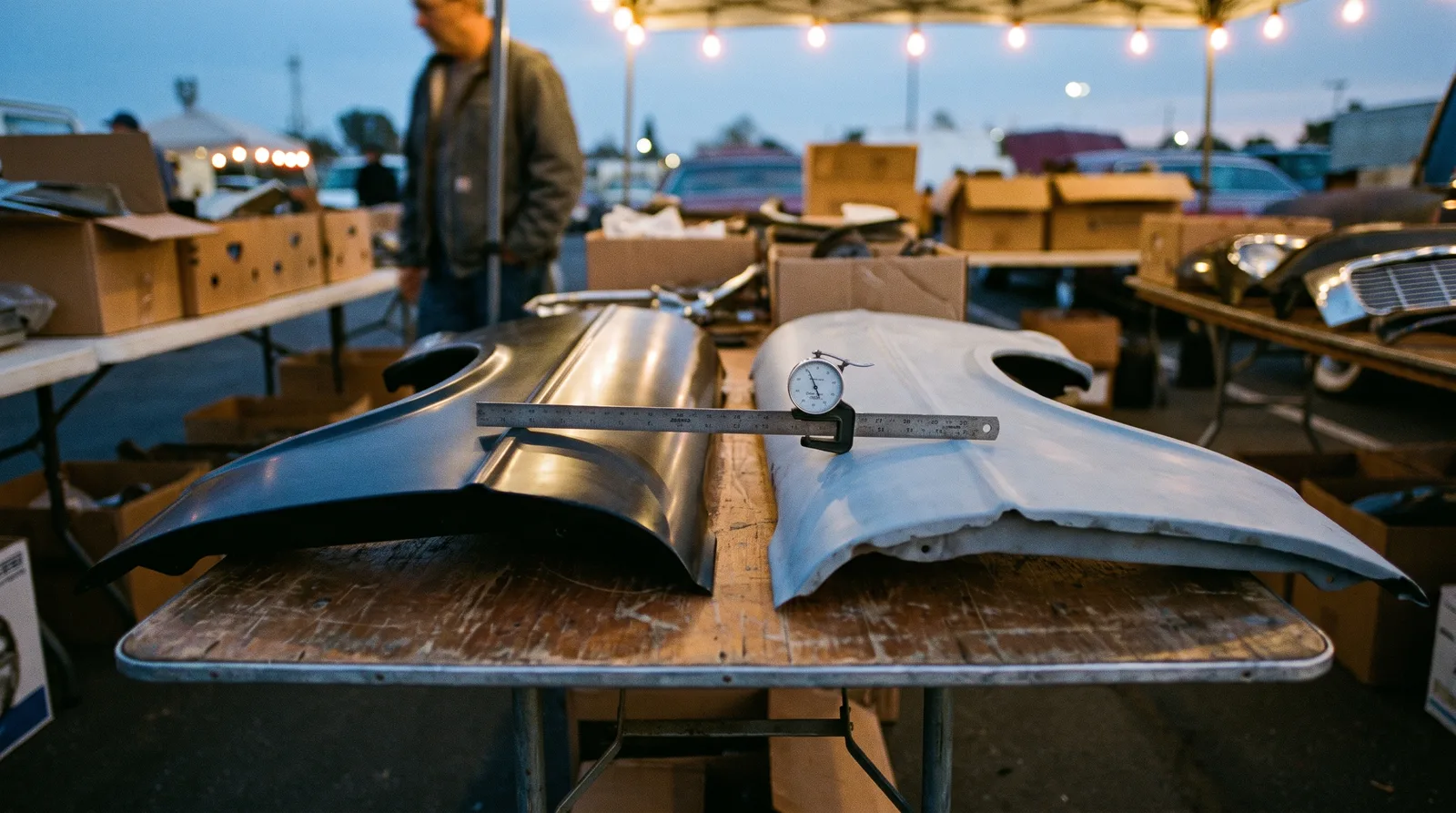
That spread is the subject of this article. If you want the wider sourcing picture first, our restoration parts guide covers where each kind of part comes from. Here the focus is on grading what you find, so you can spend where it counts and save where it does not.
The three tiers, in plain terms
There is no industry standard for these tiers, so treat the names as working labels. What matters is the behavior of the part when it arrives.
| Tier | What you get | Typical use |
|---|---|---|
| Concours grade | Tooling taken from originals, correct markings, finish and hardware, minimal fitting | Judged cars, authenticity focused builds |
| Standard | Good fit, correct appearance, small deviations in thickness or finish | Quality drivers, restorations with a budget limit |
| Budget | Close shape, thinner material, wrong details, inconsistent fit | Hidden areas, temporary use, driver cars |
The labels are not guarantees. A supplier can sell a budget panel and a premium one under the same part number family, so read the description, ask about the tooling source and ask whether the part is pressed in the United States or imported. Country of origin alone does not settle quality, since plenty of good parts come from overseas and plenty of weak ones are made at home. Licensing is a better clue: Ford and GM license restoration parts, and Ford keeps master samples of approved parts as a benchmark for later production runs.
Where the differences show up
Look at the details the factory got right and the copy did not. On trim and emblems, the thing to check is the casting detail and the plating. Cheap emblems lose their crispness, and the chrome thins out quickly. On weatherstripping, the profile and the rubber compound decide whether doors close and seal. On wiring harnesses, correct wire colors, correct clips and period correct connectors are what a judge will check, and what a driver will never notice.
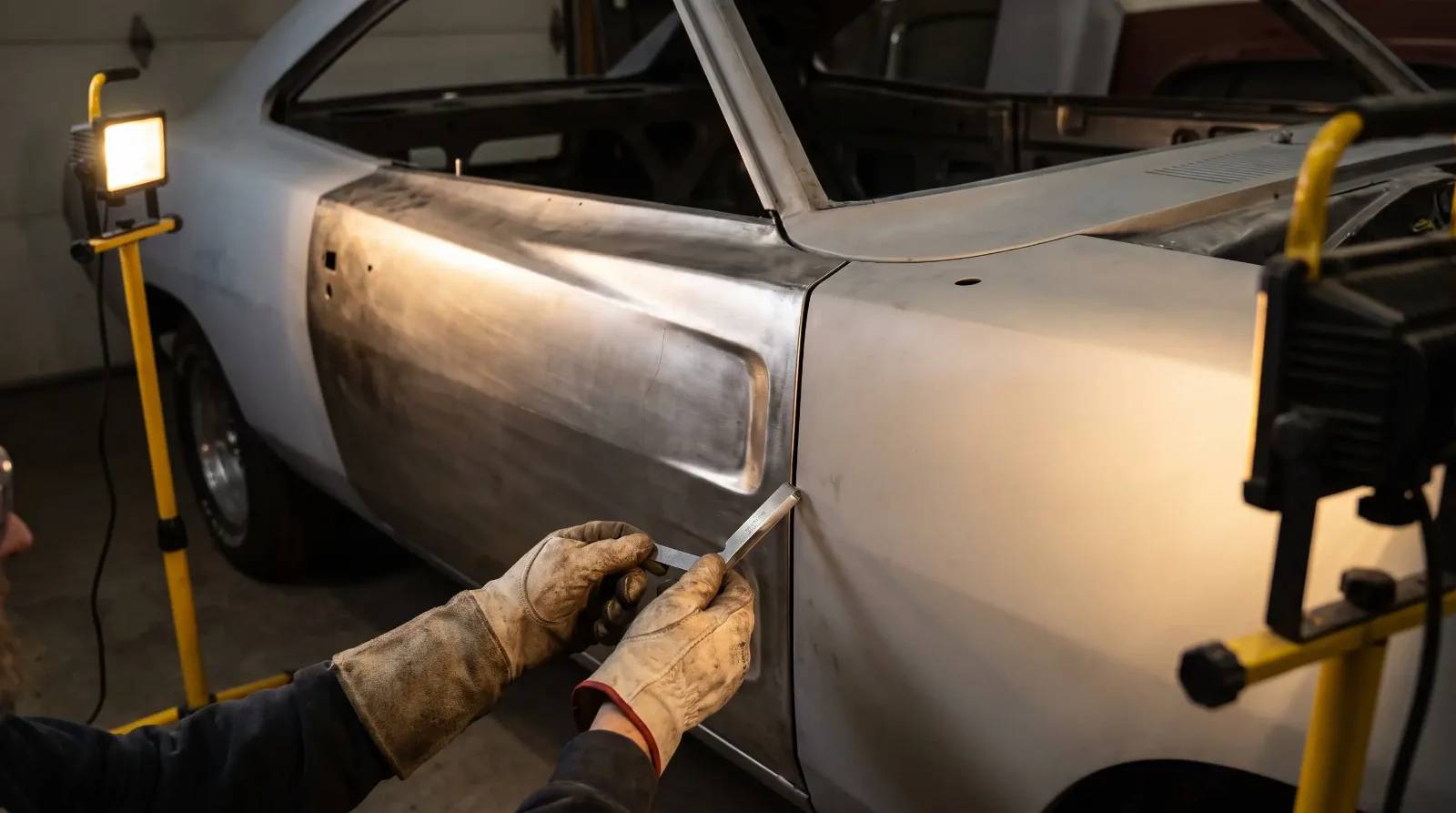
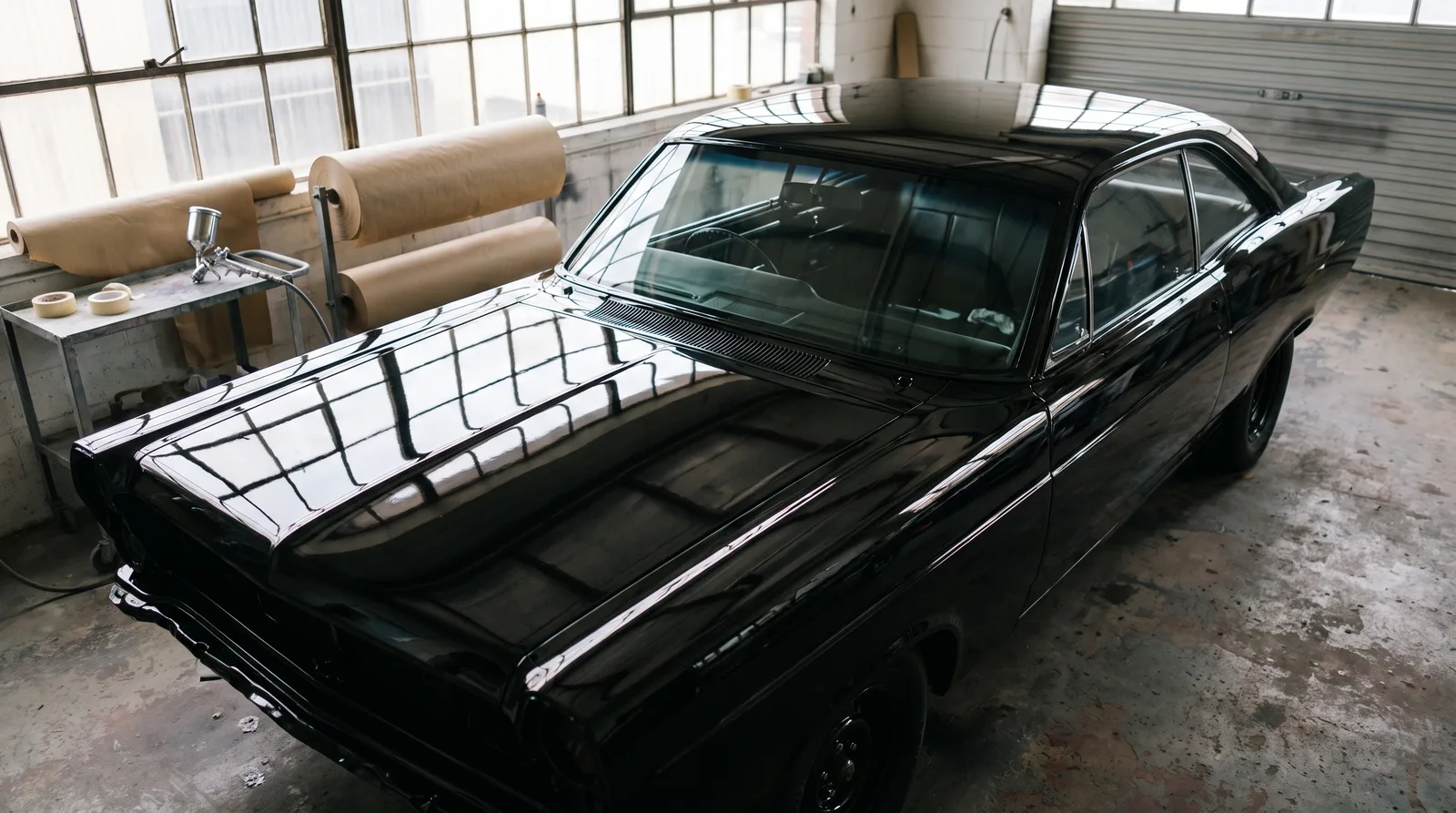
Fit is the other big separator. Even good reproduction panels on older cars often need minor adjustments, such as elongating mounting holes or adding shims, and a budget panel may need hours of hammer and dolly work, extra welding and filler to line up with the car. That labor is real money, so a cheap panel can end up costing more than a good one once the shop bills you. If you are weighing repro panels and paint together, remember that a panel that does not fit cleanly will show in the finish, however good the painter is.
Where cheap is fine
Do not spend concours money on parts nobody will see. Floor pans, inner structure, brackets, hidden brace pieces and fasteners under the dash rarely need to be perfect on a driver. A well made budget part in a hidden place saves money without costing you anything on the road. The same logic works for a car you will drive and not judge. If a clip or a bracket does its job, nobody at the cruise night will check the stamping.
Watch for a few areas where budget parts can hurt you. Anything structural, anything that holds the car in alignment, and anything safety related deserves a proper part. Brake lines, steering linkage, fuel system parts and suspension bushings should come from a supplier you trust, not the lowest bidder.
Where good parts are worth the money
Pay more where the eye lands first and where the part is hard to fix later. Exterior trim, badges, lenses, door handles, dash and gauge pieces, original style seat covers and anything with a printed or stamped marking that a judge can read. These are the places where a wrong detail is obvious and where the factory documentation will settle the argument.
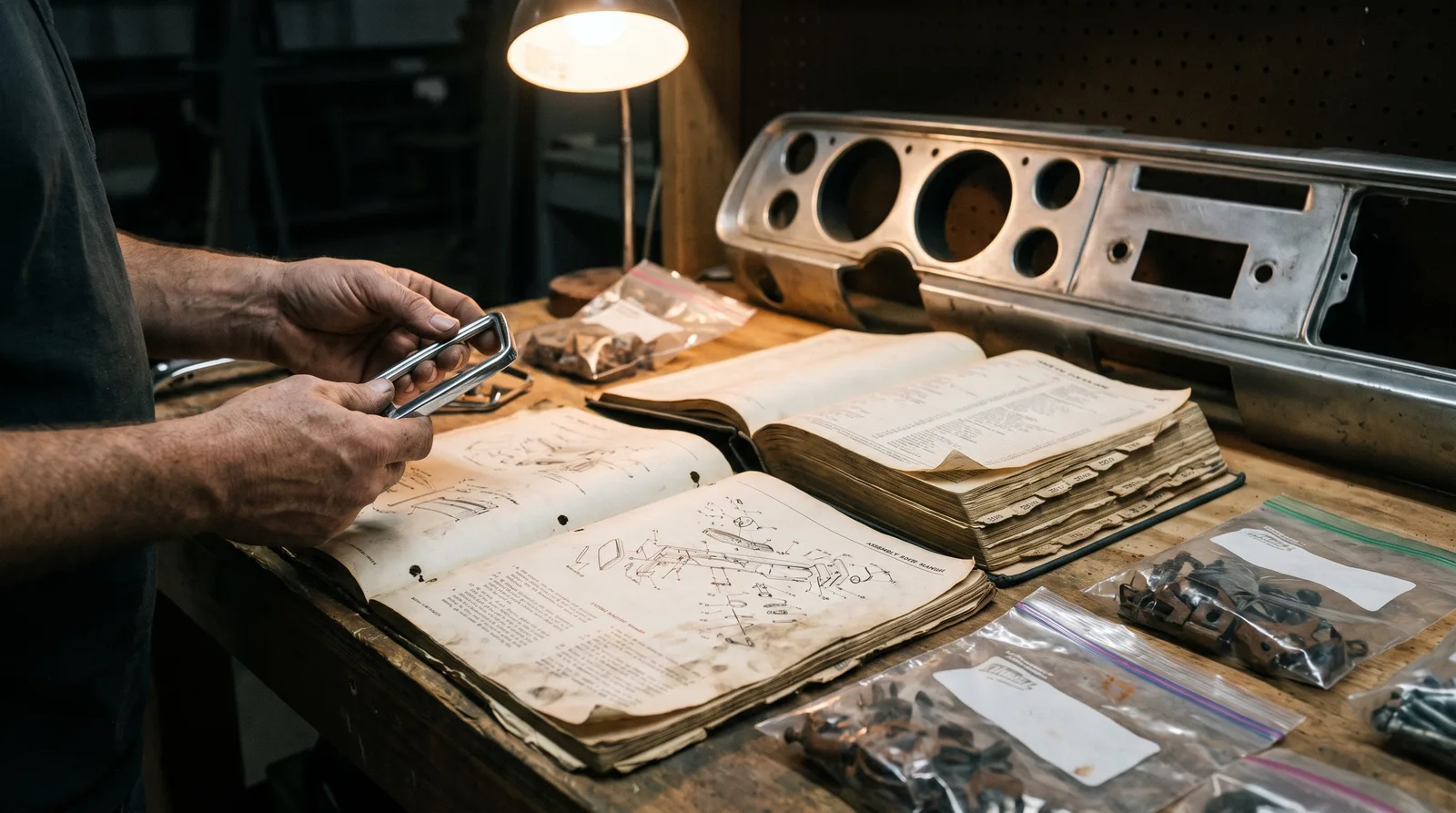
If a car has a strong paper trail, the parts should match it. A car with its original build records and a documented history deserves parts that respect that record. Pair the records with your own notes: part number, supplier, date and the tier you bought. If you sell the car later, that list answers a lot of questions before the buyer asks them.
A tier is only worth what it delivers on the bench. Test fit everything before paint, hardware and plating. Hang the door, close it, check the gaps, and keep the packaging until you are sure. Classic Industries and OER both advise test fitting before paint, and OER says it will not replace a panel judged not defective. Suppliers generally expect panels to be test fitted before final paint, and a panel that has already been painted is hard to return.
How to test a part before you commit
- Compare the part to the original or to a known good reference, if you have one. Measure thickness and key dimensions.
- Check markings, stampings, casting numbers and finish against factory references for your model year.
- Ask the seller about return policy, fit guarantee and tooling source before you pay.
- Trial fit the part dry, with no paint, plating or adhesive.
- Read owner club forums for your model. Members tend to report which supplier gets a part right and which does not.
Model popularity changes everything. Cars with huge enthusiast followings tend to have several suppliers competing on quality, which is good for buyers. If you are shopping for a car with deep support, say classic Mustangs for sale, the parts catalog is a point in the car's favor, and you can usually find a premium option for nearly every part. Rarer models do not offer that choice.
"The part number tells you what it is. It does not tell you how well it was made. Look at the part, check it against the record, and then decide what it is worth to you."
Tom Ramirez
Reproduction, NOS and original
Quality tiers are only part of the question. You also need to decide whether a reproduction is the right category at all, since new old stock and good originals can beat even the best copy for authenticity. We compare those three in our reproduction, NOS and original comparison.
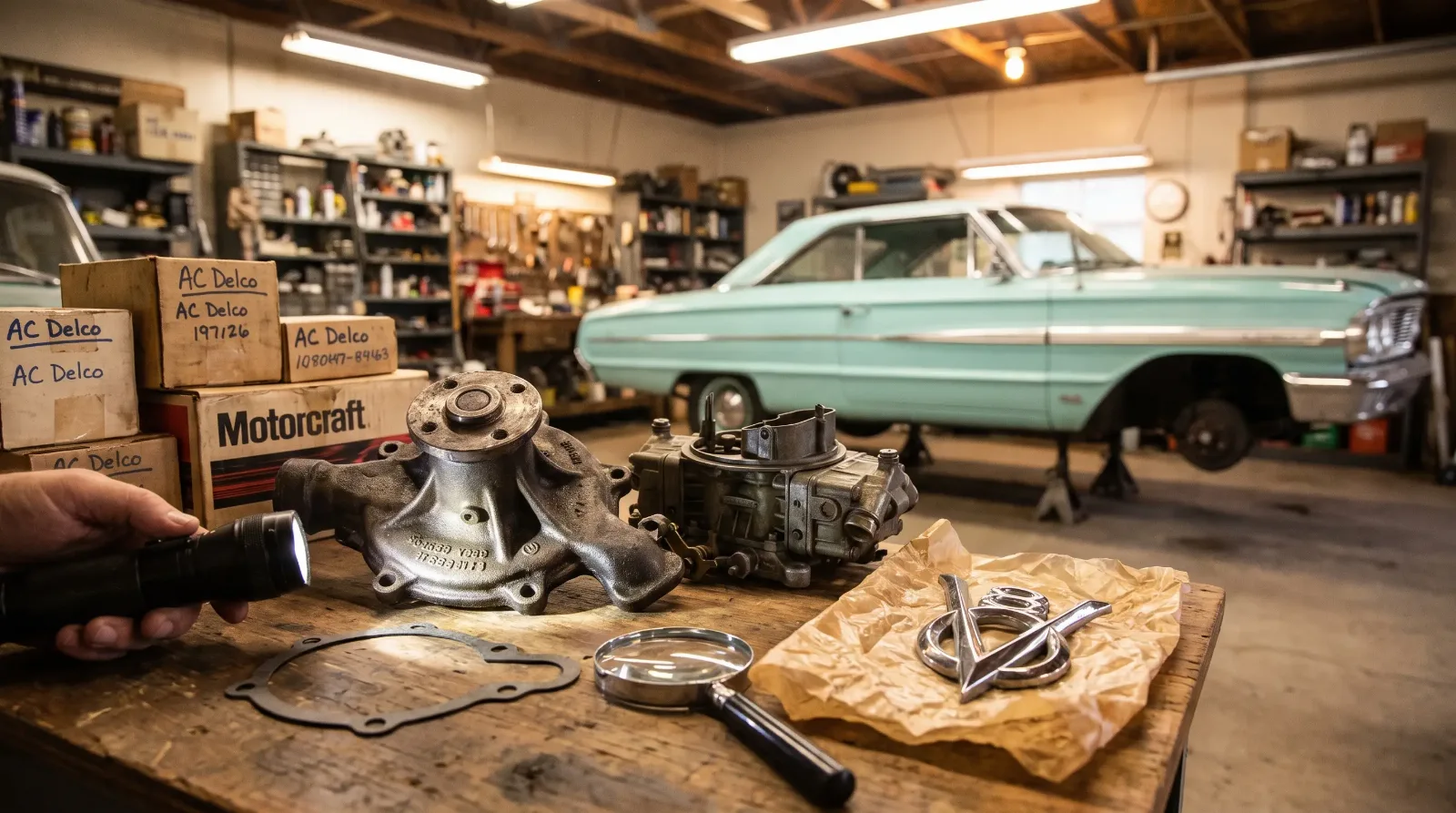
Finally, some parts are better rebuilt than replaced. Carburetors, starters, alternators, steering boxes and similar items often come back as good as new from a specialist, and the original casting and markings stay intact. That is where rebuildable cores come in, and it is worth reading before you buy a reproduction unit with unknown internals.
Sources and notes
- Classic Industries: panel damaged or defective, test fitting before paint, minor modifications as normal, and no direct-fit panels on older cars
- OER: determining whether a sheet panel is defective, tolerances on older vehicles and the contact-before-return policy
- OER: history of OER, GM and Chrysler Group licensing and use of original tooling where possible
- AutoGuide: Ford boosts restoration parts inventory for older models, Ford's licensing program and master samples
- Classic Industries: rust repair and auto body panels, minor imperfections in reproduction sheet metal and test fitting before final paint
- Early Ford V8 Club national judging manual (2025), judging on appearance of authenticity without separating genuine from reproduction parts
Related Reading


About the author
Tom Ramirez
Corvette researcher and historian based in Bowling Green, Kentucky. Two decades documenting Corvette production history from original factory records.
More in Restoration & Tech

Comments
Be the first to comment on this article.