
A steering column that feels loose, clunks when you turn the wheel, or won't cancel the turn signal after a turn gets blamed on the steering box or the linkage nine times out of ten, and it's wrong about as often as it's right. Column design carried through most of the years covered in the C10 story without dramatic changes, but the parts inside that column aged the same way regardless of year. Inside the tube is a bearing at the top, a bearing at the bottom, a turn signal switch with a plastic cam that gets brittle, and a lock cylinder that's been turned by the same key ten thousand times. Every one of those parts wears, and none of them show from the outside. You find out what's actually wrong by taking the column apart, which is a job you can do on a bench in an afternoon once you know the order things come out in.
Rebuilding a C10 Steering Column at Home
A step-by-step look at rebuilding a C10's steering column at home, covering the bearings, turn signal switch, and lock cylinder that wear out with age.
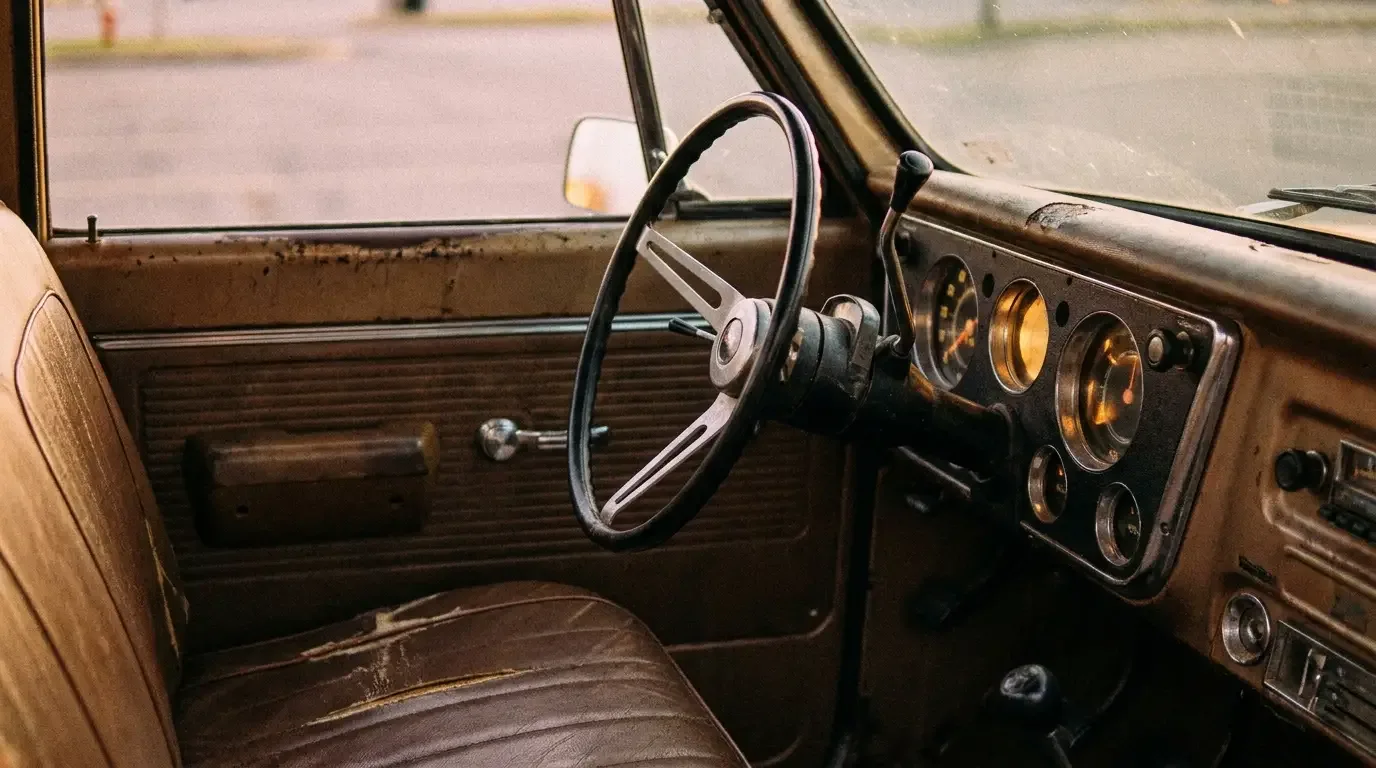
What actually wears out in there
The top bearing is what most guys feel as play in the wheel itself, a wobble side to side that has nothing to do with the front end. The turn signal switch is plastic on plastic in most of these columns, and the cancel cam that's supposed to knock the lever back to center after a turn wears its edges round over the decades until it stops catching reliably. The lock cylinder wears at the tumblers, which shows up as a key that only works if you jiggle it a certain way, and the horn contact ring at the base of the wheel corrodes until the horn works only sometimes or not at all. None of this is exotic. It's just old parts that have done their job for fifty years and are done doing it well.
| Symptom | Likely cause |
|---|---|
| Wheel wobble or play | Worn top bearing |
| Turn signal won't cancel | Worn cancel cam in switch |
| Horn works intermittently | Corroded horn contact ring |
| Key sticks or needs jiggling | Worn lock cylinder tumblers |
Getting the column out and apart
Disconnect the battery first, always, because you're working right next to the horn circuit and the ignition switch wiring the whole time. Pull the wheel with a proper puller, never a hammer against the shaft, because that shock travels straight down into the column bearings you're trying to save. The column drops out after the mounting bracket bolts at the dash and the coupler at the firewall come loose, and it's lighter than it looks once it's free.
On the bench, the column comes apart from the top down: horn contact and wheel, then the turn signal switch and its housing, then the lock cylinder, then down to the bearing preload nut that holds everything else in place. Keep every small spring and shim in a labeled container as you go, because a couple of these parts only work correctly with the right shim thickness back in the right spot, and guessing at reassembly costs you a second teardown.
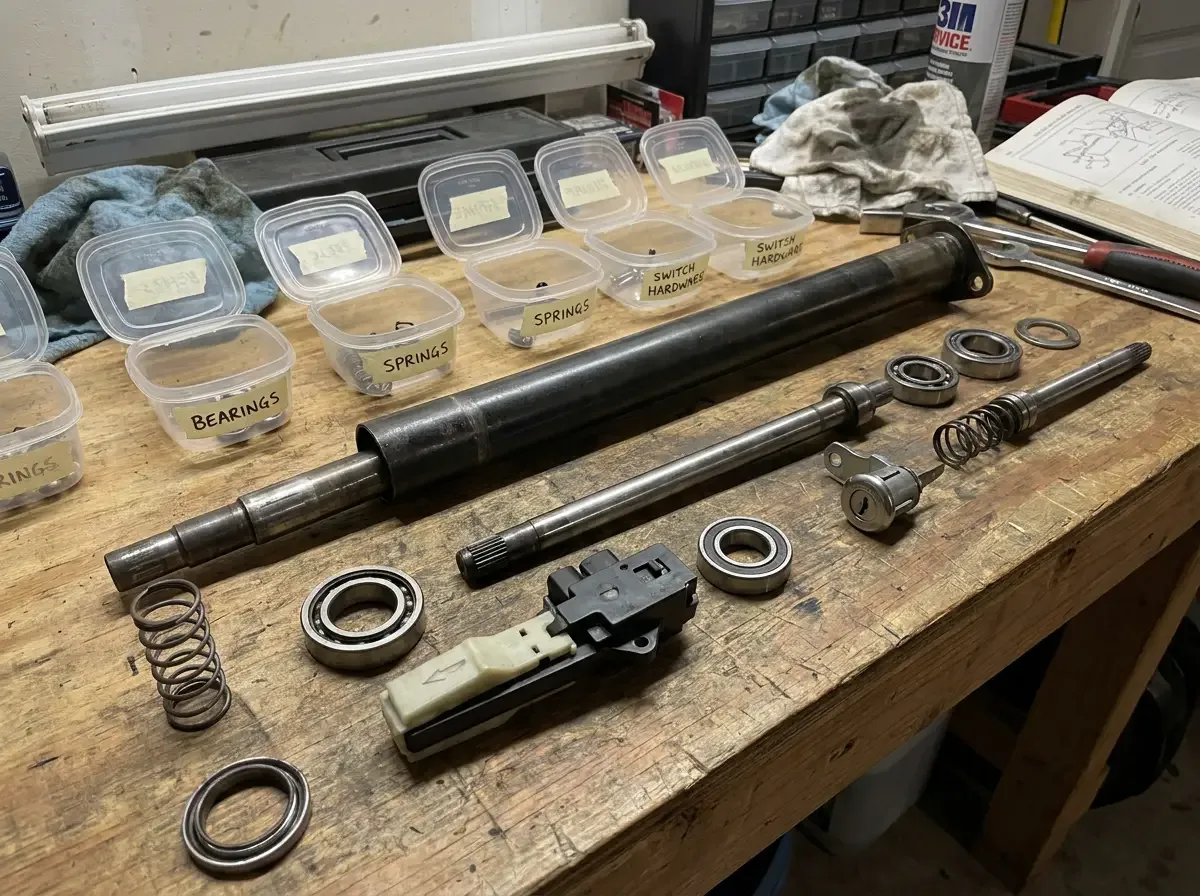
The parts worth replacing while it's open
Since you're already this far in, replace the parts that fail from age rather than damage. The turn signal switch is the single most common failure point, and a new reproduction switch is cheap insurance against doing this job twice. Bearings should go in new any time the column's apart this far, because the labor to replace them later without a full teardown again isn't worth saving on parts. The lock cylinder is worth rebuilding or replacing if the key sticks or works intermittently, since a failing lock cylinder eventually strands you somewhere inconvenient. If the C10 restoration guide has you doing the dash and steering column together, this is the natural point to also check the wiring connectors at the base of the column, because cracked insulation there causes intermittent electrical gremlins that get blamed on everything except the actual wire.
Reassembly and where guys get it wrong
Reassembly is the reverse of teardown with one catch: the bearing preload has to be set correctly, not just tightened down. Too loose and the wheel feels sloppy again in a year. Too tight and the column binds, which you'll feel as steering effort that increases the longer you drive, sometimes described as the wheel fighting back on a long highway stretch. Snug it to where the column turns free with no drag and no detectable side play, then check it again after everything else is bolted together, because torquing the mounting bracket can shift that preload slightly.
The turn signal cancel cam needs to index correctly with the wheel centered, or you'll get a signal that cancels early on one side and late on the other. Set the wheel dead center, install the cam in the position the service manual calls for, and confirm it cancels evenly in both directions before you call the job finished.
Putting it back in and finishing up
Reinstall the column, reconnect the coupler at the firewall, and check that the column isn't binding against the dash opening anywhere before you tighten the mounting bracket down for good. Reconnect the battery and test the horn, the turn signals both directions, and the ignition switch through all its positions before you put the wheel back on for good and move on to other trim. Once the column's buttoned up and working right, it's a natural stopping point before the trim work that finishes the cab, since most of that work happens around the same dash area you've already got opened up.
"A wobbly wheel gets blamed on the front end more than anything else I see, and half the time the front end's fine. It's a fifty-year-old bearing that's tired of doing its job."
Mike Sullivan
None of this is difficult work. It's fussy, and it rewards patience with small parts and shims more than mechanical muscle. Do it once, do it right, and the column stops being the thing you blame everything else on.
Sources and notes
- GM steering column compatibility and interchange guide, Speedway Motors
- 1967-72 Chevy truck/Blazer/Suburban turn signal switch adapter harness
- 1967-1972 Chevy/GMC truck turn signal switch, Classic Industries
- Turn indicator switch replacement walkthrough, 67-72 Chevy Trucks forum
- NOS GM turn signal switch, 1967-79 Chevrolet/GMC truck models
Related Reading

Detroit-area muscle car enthusiast and restoration specialist with three decades of hands-on experience working on American iron.
Related Listings - Chevrolet C10
More in Restoration & Tech
Comments
Be the first to comment on this article.