
Every restoration reaches the same fork in the road, and we talk about it at the shop and on the boulevard all the time. Do you shoot the car in single-stage paint the way the factory often did, or do you go with a basecoat and clearcoat the way modern cars are finished? Neither answer is wrong, but each one changes how the car looks, how it holds up, and what it costs you.
Restoration & Tech
6 min read
Single-Stage vs Basecoat/Clearcoat on a Classic
Single-stage paint or basecoat/clearcoat for your classic? Look, durability, repair, cost and which one fits a driver, a show car or a candy build.
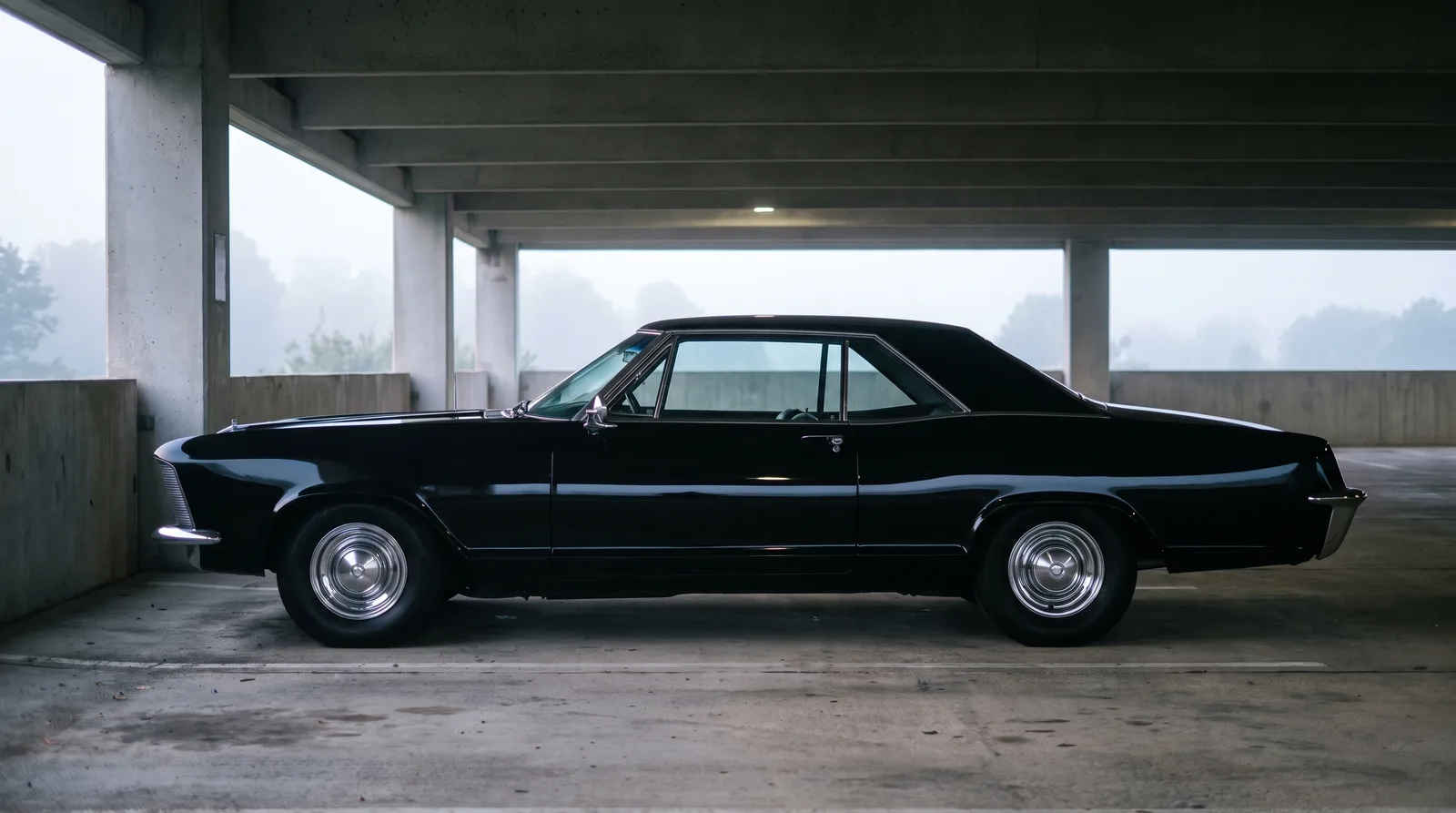
The choice sits inside the bigger plan for classic car paint jobs, so keep the budget and the end goal in mind while you read.
What single-stage actually is
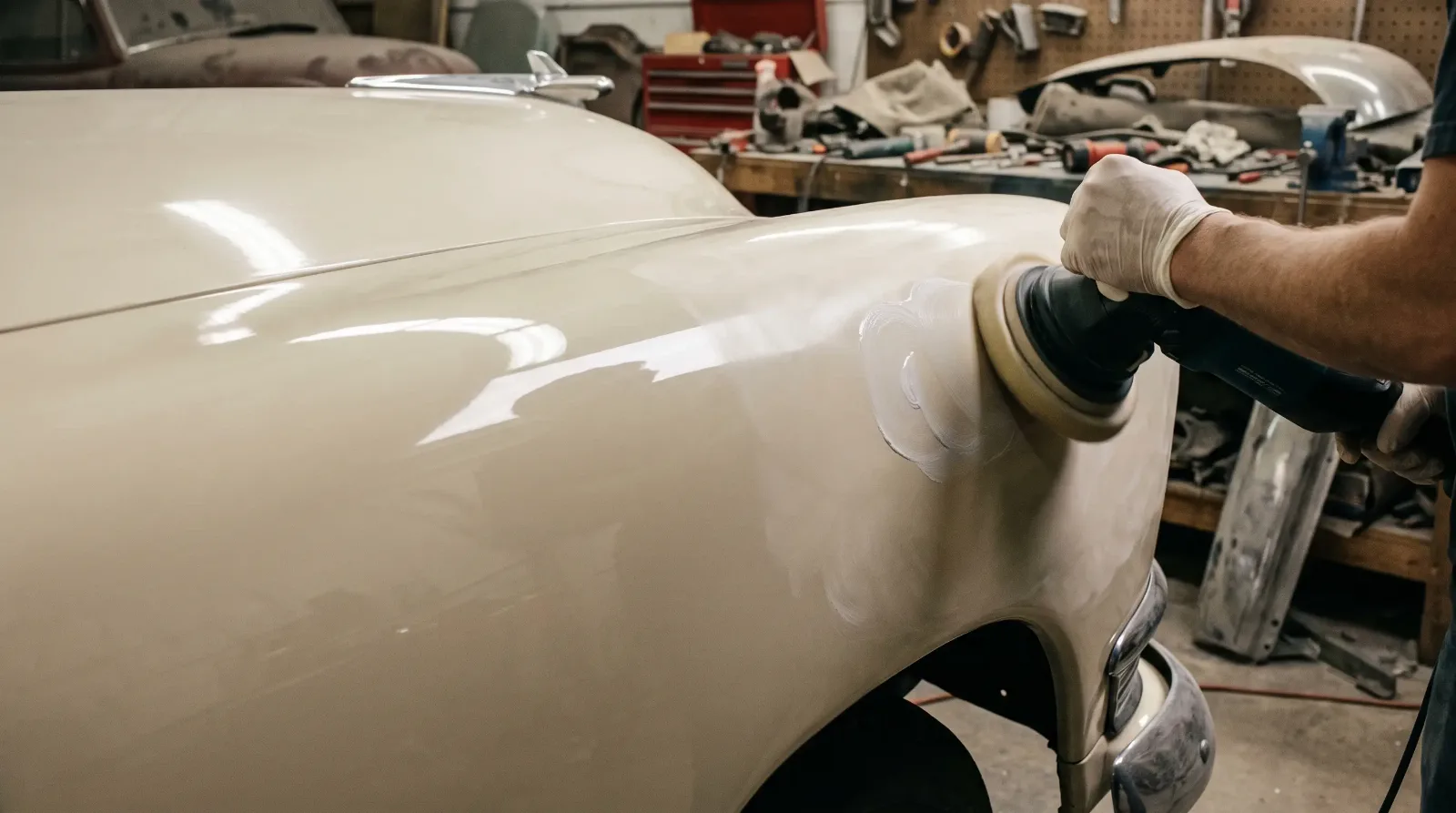
Single-stage paint puts color and gloss in the same coat. You mix the paint with a reducer and a hardener (on a urethane or acrylic enamel system), spray it on, and the color layer is also the shiny layer. There is no separate clear on top. Because the gloss and color are one film, you can buff it back with compound and polish to remove orange peel and bring up depth.
For years it was the standard on production cars. Single-stage lacquer and enamel were the factory norm for decades, and many cars into the 1980s still left the plant without a separate clear on top, so a single-stage finish gives you the look they wore on the showroom floor. It is also faster to spray, uses fewer materials, and forgives a lot in the booth.
What basecoat/clearcoat is
Basecoat/clearcoat is two layers. The base carries the color and has no gloss of its own, and it dries dull. Then you spray a urethane clear over it, and the clear is what gives you the depth, the shine, and the protection from sun and chemicals. The clear is also the layer you sand and polish.
Metallic and pearl colors almost demand this system, because the flake needs a clear to lock it down and give it that wet look. On a candy or a deep metallic, the layered approach is how we get a look that seems to go down into the paint. If you like that deep, wet finish, a clear over the color is the way to get it.
Side-by-side comparison
| Factor | Single-stage | Basecoat/clearcoat |
|---|---|---|
| Look | Period correct, softer gloss | Deep, glassy, modern |
| Durability | Good, oxidizes faster in sun | Better UV protection from the clear |
| Repair and buffing | Easy to spot repair and polish | Clear can be cut through if sanded too far |
| Metallics and pearls | Possible, less uniform | Best system for flake and pearl |
| Labor and materials | Lower | Higher, more steps |
| Cost of the paint system | Usually lower, fewer materials and steps | Usually higher, more materials and more steps |
For scale, many shops quote roughly $2,000 to $7,500 for a driver respray with minimal prep, $10,000 to $20,000 for a quality driver job, and $20,000 to $40,000 for a full bare-metal repaint, with show-level work running higher. Prep and bodywork usually cost more than the paint itself, so the gap between the two systems is small next to the gap between a light respray and a bare-metal job. Treat this as a guide, not a quote.
Which one fits your car
Match the finish to what you want the car to be.
- Restoring to original or showing at a judged event. Go single-stage, or the factory-style system your marque judges expect. Check the rules for your club before you spray anything.
- A driver you plan to use. Basecoat/clearcoat is hard to beat. The clear shields the color from sun and bird droppings and is easier to maintain.
- Metallic, pearl, candy, or flake colors. Choose basecoat/clearcoat. We build candy in layers, and the clear is what protects the work.
- A solid color on a budget. Single-stage urethane gives you a strong finish for less.
"A good paint job is not the one with the most coats. It is the one that fits the car and the person who will drive it, and still looks right when the sun hits it in July."
Hector Morales
Prep is the same for both
Whichever system you pick, the work underneath does not change. Both finishes need straight panels, clean metal, and a sealed primer, because neither one hides a wave. Clear is actually less forgiving here, since the deep gloss acts like a mirror and shows every scratch left by a coarse final grit. Single-stage has a little more room for error, but it still reflects a lumpy surface. Ask your painter which final sanding grit they want, and do not let anyone talk you out of the guide coat step.
Booth conditions matter more with clear, too. Dust, bugs, and runs in the top layer cannot be hidden, though a good painter can wet sand and buff the clear to fix them. Plan for that extra sanding and buffing time in the quote, and ask whether it is included.
Care, repair, and long-term upkeep
A single-stage finish needs more attention. It oxidizes in strong sun, so wax it and keep it covered when you can. The upside is that when it dulls, you can compound and polish the color away and bring the shine back, because the color is right at the surface.
Clear is tougher day to day, but it can fail in its own ways. Poor prep or heavy UV can cause the clear to peel or craze, and once it lifts there is no polishing it back. The fix is to sand and re-clear the panel. If a rock chip goes through the clear, touch it up quickly to keep moisture out of the color.
Paint chemistry is half the story. The type of paint you choose, whether lacquer, enamel, or urethane, changes how any of these systems behave, and we cover that in lacquer, enamel or urethane. Read that before you commit to a product line.
Our take
If the car is a show piece that must look factory, shoot it the way the factory did. If it is a car you will drive and love, put a clear on it and enjoy it. Whichever route you pick, spend your money on the body prep first, because both finishes show every flaw underneath. Ask your painter which system they shoot most often, since the best product is the one your shop knows cold.
Sources and notes
- Single stage paint vs basecoat/clearcoat, The Cande Shop, supports the durability, gloss, flake and repair comparison and the late 1980s to early 1990s shift
- Practical differences between single stage and clear coat paints, Autogeek, supports oxidation and buffing behavior and why clear cannot be polished back once it fails
- Clearcoat, Wikipedia, supports how the basecoat carries color and the clear carries gloss and protection
- Automotive paint, Wikipedia, supports the move from lacquer and enamel to basecoat/clearcoat urethane systems
- Lacquer, Wikipedia, supports the history of factory nitrocellulose lacquer and its replacement by two-component urethanes
Related Reading

About the author
Hector Morales
East LA lowrider builder and lifelong member of the car-club scene, writing lowrider culture, hydraulics and custom paint from the inside.
More in Restoration & Tech
Comments (1)
N
Nate H.
2 days ago
shot my super beetle in single stage urethane in a buddys garage, cut and buffed it myself, cost me maybe six hundred bucks
L
Larry D.
1 day ago
Nate, that is how we did it on my 1958 Impala too, single stage and a lot of elbow grease, and the thing about it is the article is right that it chalks up in the sun, because I parked it out front of the diner on Route 66 every summer and by August the roof would go dull as a coffee cup, and a fellow who ran the body shop down the road would come in for pie and tell me to quit fussing, just compound it Sunday and wax it Monday, and he was right every time, the color came right back because it is sitting on top where you can get at it.
N
Nate H.
1 day ago
larry the compound sunday wax monday thing is exactly my routine now, beetle still pops in july