
Most C10s left the factory on leaf springs, and if all you're doing is lowering the truck a few inches and keeping it simple, leaves with some added engineering can still do the job. But once you start talking rear suspension replacement, the real argument in the shop is trailing arm versus 4-link, and that's a different conversation entirely, one about how much control you want over where the axle sits and how much fabrication you're willing to sign up for to get it.
Restoration & Tech
6 min read
Trailing Arm vs 4-Link: C10 Rear Suspension Explained
Trailing arm and 4-link rear suspension setups solve the same problem differently. A hands-on breakdown of complexity, cost, and which system fits a given C10 build.
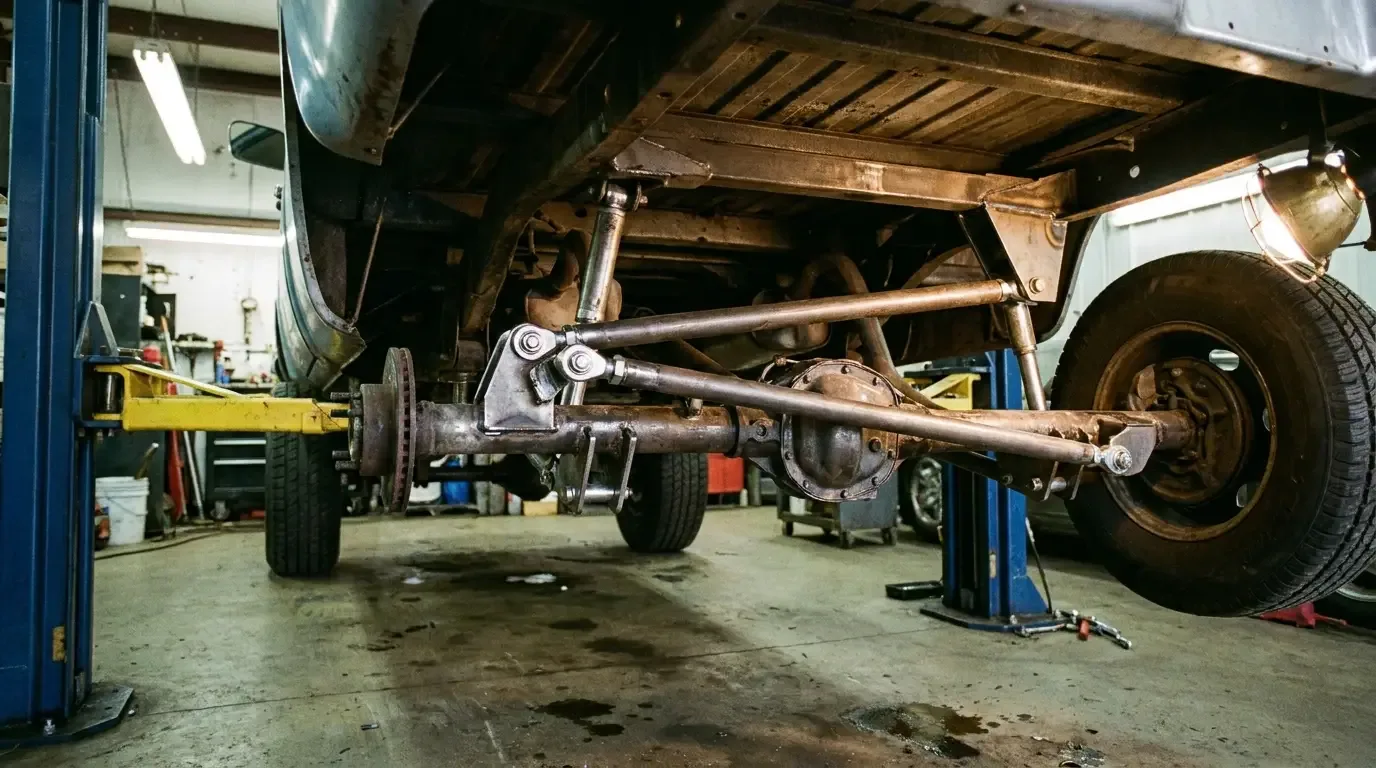
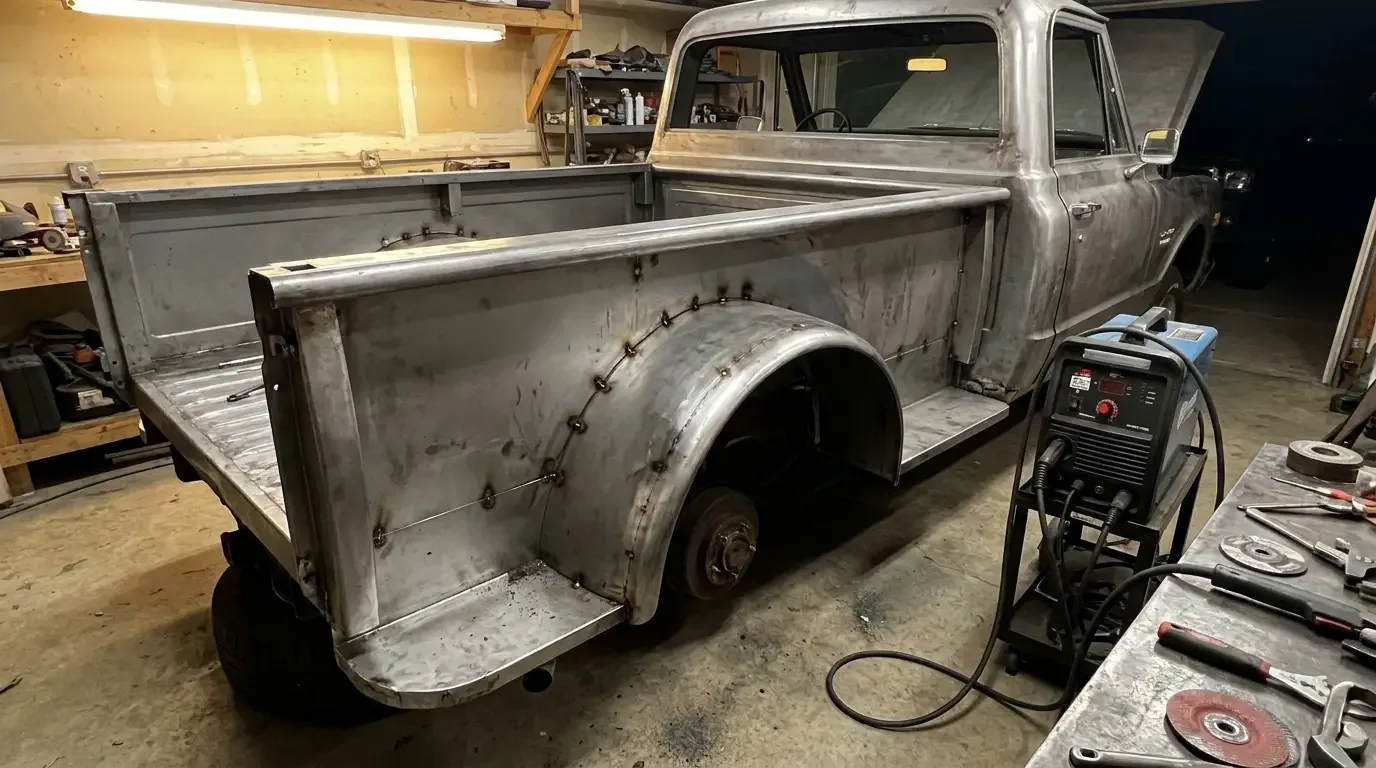
I've built both under trucks that needed the rear housing located precisely, whether that was for a low static stance, a wheel tub install, or just getting rid of leaf spring wrap under hard acceleration. Neither system is automatically the right call. It depends on what the truck needs to do and how much you want to be under it with a tape measure getting the geometry exactly right.
What each system is actually doing
A trailing arm setup uses two arms running fore-aft from the axle housing to mounting points on the frame, usually paired with a Panhard bar or Watts link to control lateral movement, since trailing arms alone don't do much to keep the axle from walking side to side. It's a simpler system with fewer bars to build, mount, and align, and it's the more common choice for a straightforward lowering job that isn't chasing serious horsepower.
A 4-link uses four bars, typically two upper and two lower, triangulated or parallel depending on the design, to locate the axle in every direction, fore-aft, lateral, and pinion angle, without needing a separate Panhard bar. That's more bars to build and mount correctly, but it's also more control over exactly where the axle sits and how the pinion angle behaves under acceleration, which matters more as power goes up.
Where trailing arm setups earn their keep
Trailing arms are less work, cost less in materials and labor, and for a truck that's being lowered for stance and driven on the street without serious power behind it, that's usually enough control. The Panhard bar or Watts link handles the lateral location, and as long as it's mounted and sized correctly, a trailing arm truck rides and handles fine for what most owners are actually doing with it.
Where trailing arm setups run out of margin is under real power. Wheel hop under hard launch, some pinion angle change through the travel range that a 4-link would control better, and less precise adjustability if you're chasing a specific rear stance or trying to dial in launch characteristics. For a cruiser, none of that matters much. For a truck making real numbers at the strip, it starts to.
Where 4-link setups earn their complexity
A 4-link gives you independent control over pinion angle and axle location that a trailing arm and Panhard bar combination can't match, which is why it shows up more often on trucks built for serious power or aggressive lowering where geometry has to be dialed in precisely rather than close enough. Adjustable link ends let you tune pinion angle and instant center without cutting anything, which matters if you're chasing wheel hop under boost or big torque numbers.
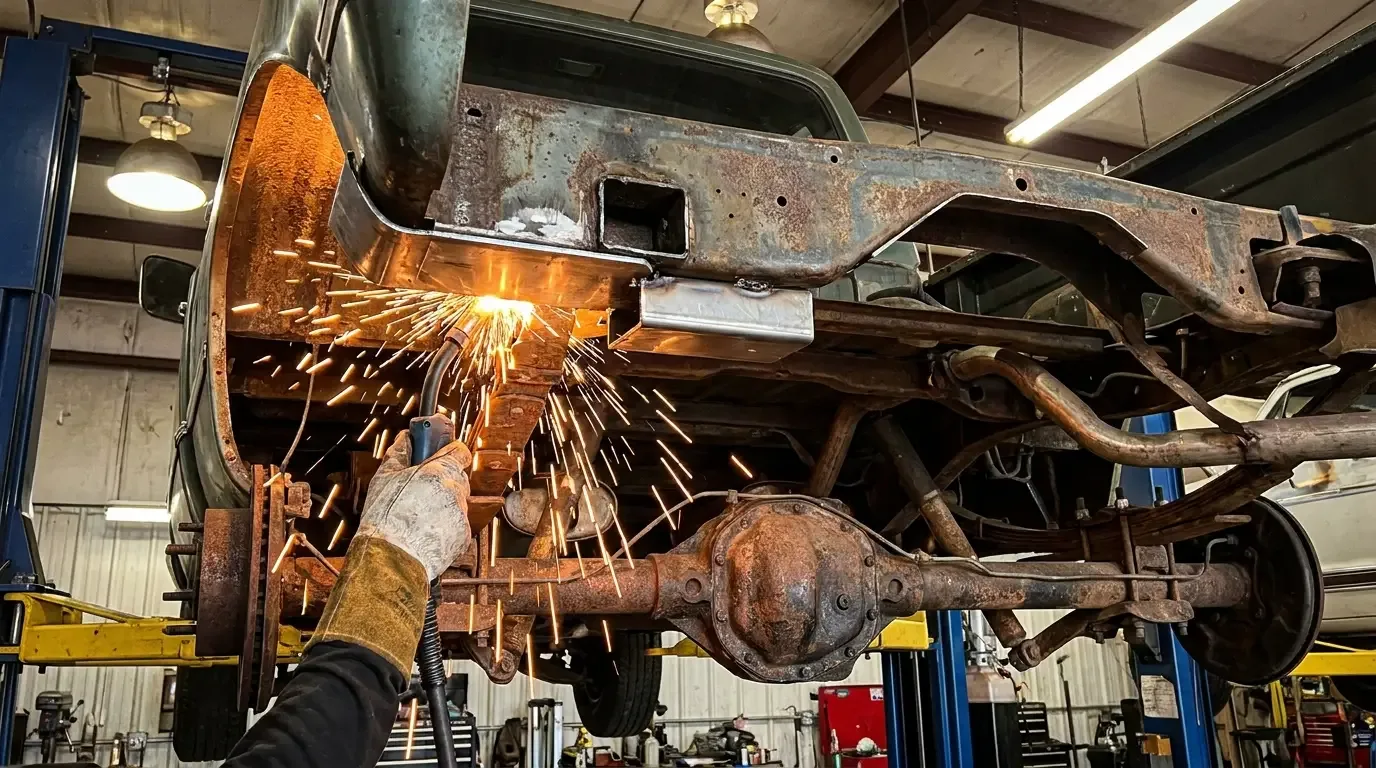
The cost is fabrication time and complexity. Four bars, four sets of mounts, brackets on the frame and on the axle housing, and geometry that has to be calculated correctly or you get bind, premature bushing wear, or handling that's worse than the leaf springs you replaced. This isn't a bolt-in weekend job for most trucks unless you're buying a complete kit engineered for your specific chassis.
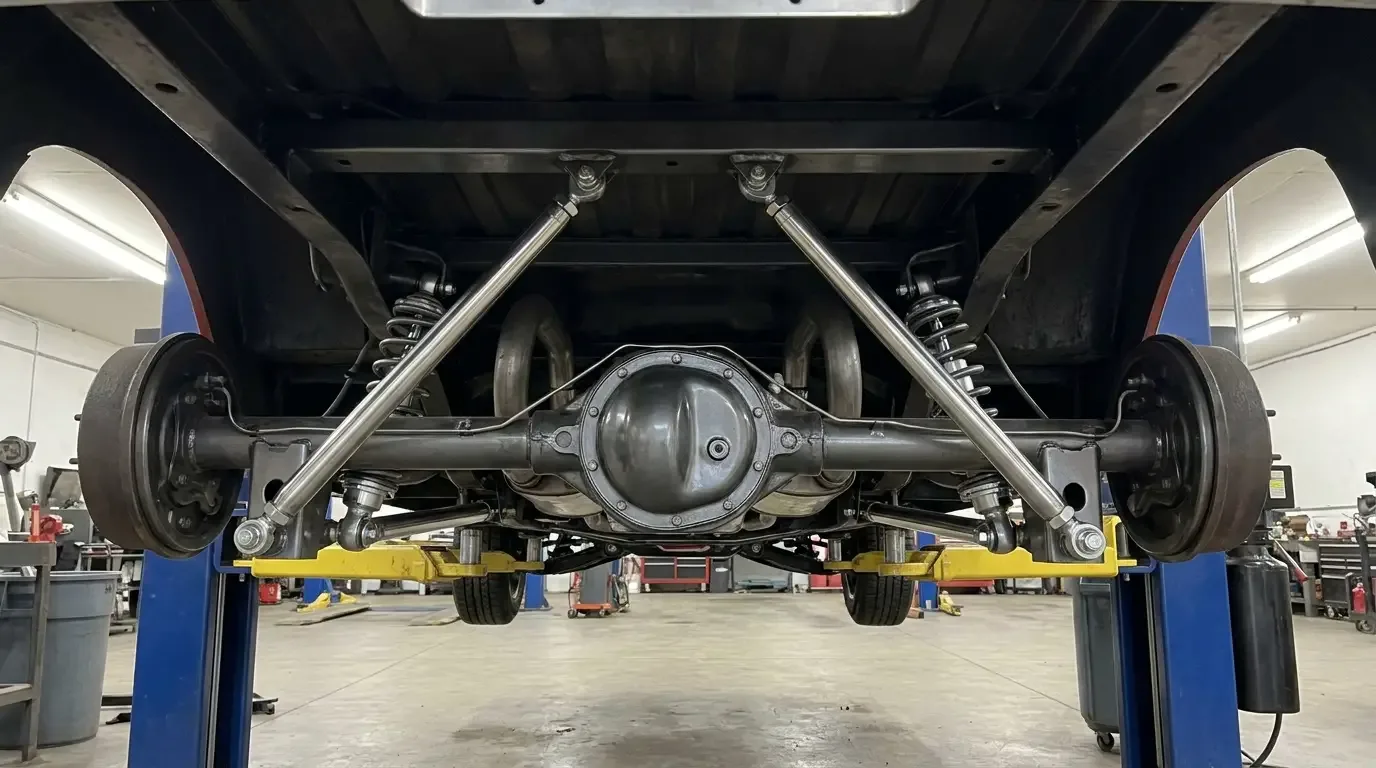
| Factor | Trailing arm | 4-link |
|---|---|---|
| Fabrication complexity | Lower, two arms plus lateral locator | Higher, four bars plus mounts |
| Pinion angle control | Limited without extra adjustment | Fully adjustable via link ends |
| Best fit | Street cruiser, moderate power | High power, aggressive lowering, strip use |
| Typical cost | Lower, simpler kit and less labor | Higher, more fabrication and shop time |
| Wheel hop resistance | Moderate | Better when set up correctly |
"I don't tell people 4-link is the upgrade and trailing arm is the compromise. That's not how it works. A trailing arm truck with a good Panhard bar rides fine for what ninety percent of owners are doing. The 4-link earns its keep when the power or the stance gets serious enough that pinion angle actually needs tuning, not guessing."
Mike Sullivan
Making the actual call
If the truck is getting lowered as part of a full lowering guide project and staying reasonable on power, a well-built trailing arm and Panhard bar setup gets the job done without the fabrication time and cost of a full 4-link. If you're building toward real power, an aggressive stance, or you've already committed to clearing wide tires once the suspension's sorted, the 4-link's adjustability starts paying for itself, since you'll be fine-tuning pinion angle and axle location more than once as the build evolves.
Budget more than just parts cost when you're pricing either system out. Trailing arm kits are usually close to bolt-in if the mounts are engineered for your specific frame, so labor stays reasonable even at a shop's hourly rate. A 4-link, unless it's a complete kit built around your exact chassis, usually means custom bracket work, and that's shop hours nobody's parts catalog line item accounts for. Ask before you buy whether the kit is truly bolt-in for your truck's cab and frame year, or whether "universal" means you'll be cutting and welding brackets to make it fit.
These trucks carried Chevrolet's half-ton legacy as work vehicles first, and the factory rear suspension reflected that, simple, durable, built for load carrying rather than precise handling. Whichever system you choose to replace it, the goal is the same: locate that axle correctly, under load and under travel, so the truck drives the way it looks. Neither trailing arm nor 4-link is the wrong answer. Picking one because it's trendy instead of because it matches what the truck actually needs to do is the mistake worth avoiding.
Sources and notes
Related Reading
Have a
Chevrolet C10
for Sale?
Reach thousands of serious classic car collectors across the US.
Sell It Here →
Are You a Classic Car Dealer?
List your full inventory and connect with targeted classic car buyers.
Join as a Dealer →

About the author
Mike Sullivan
Detroit-area muscle car enthusiast and restoration specialist with three decades of hands-on experience working on American iron.
Related Listings - Chevrolet C10
More in Restoration & Tech
Comments (1)
H
Hank Weaver
3 months ago
First-generation cars before they got heavy and complicated. Makes for a different ownership experience than what came later.