
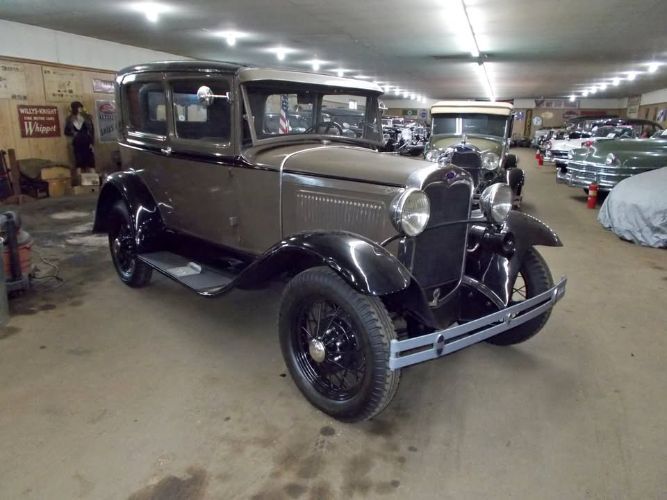
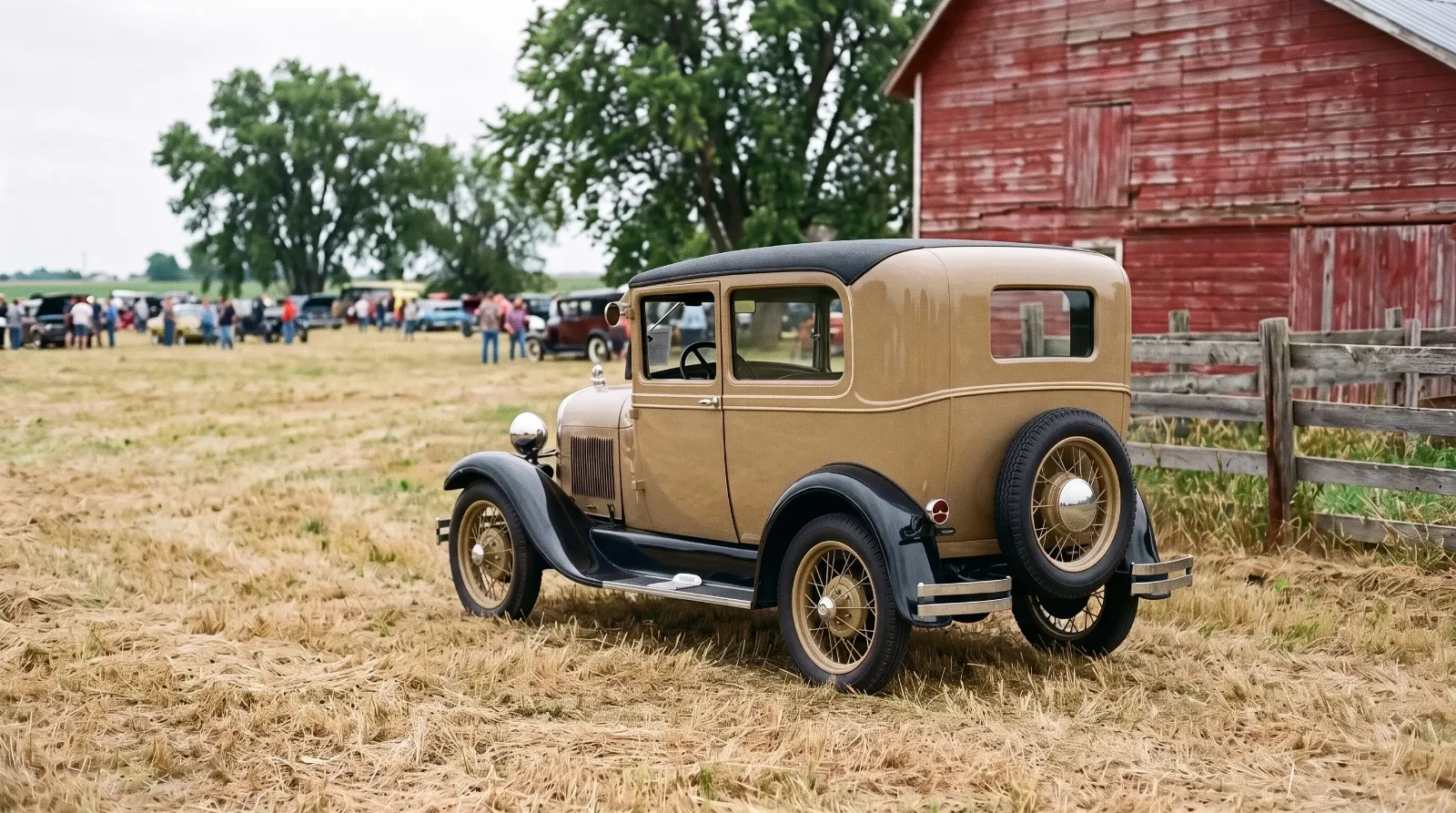
Ford never built a car called the AR. Collectors use the term for the earliest production Model As, the cars built from October 1927 into the first half of 1928, before Ford worked through a long list of running changes. A 1928 AR Model A is therefore not a separate model but a cluster of early parts on one car, and spotting one is a matter of reading those parts in the right order.
Car Features
6 min read
The Early 1928 AR Model A: How to Spot One
AR is a collectors' term, not a Ford name. How to spot an early 1928 Model A: the left hand brake, smooth pedals, bumpers and engine numbers.
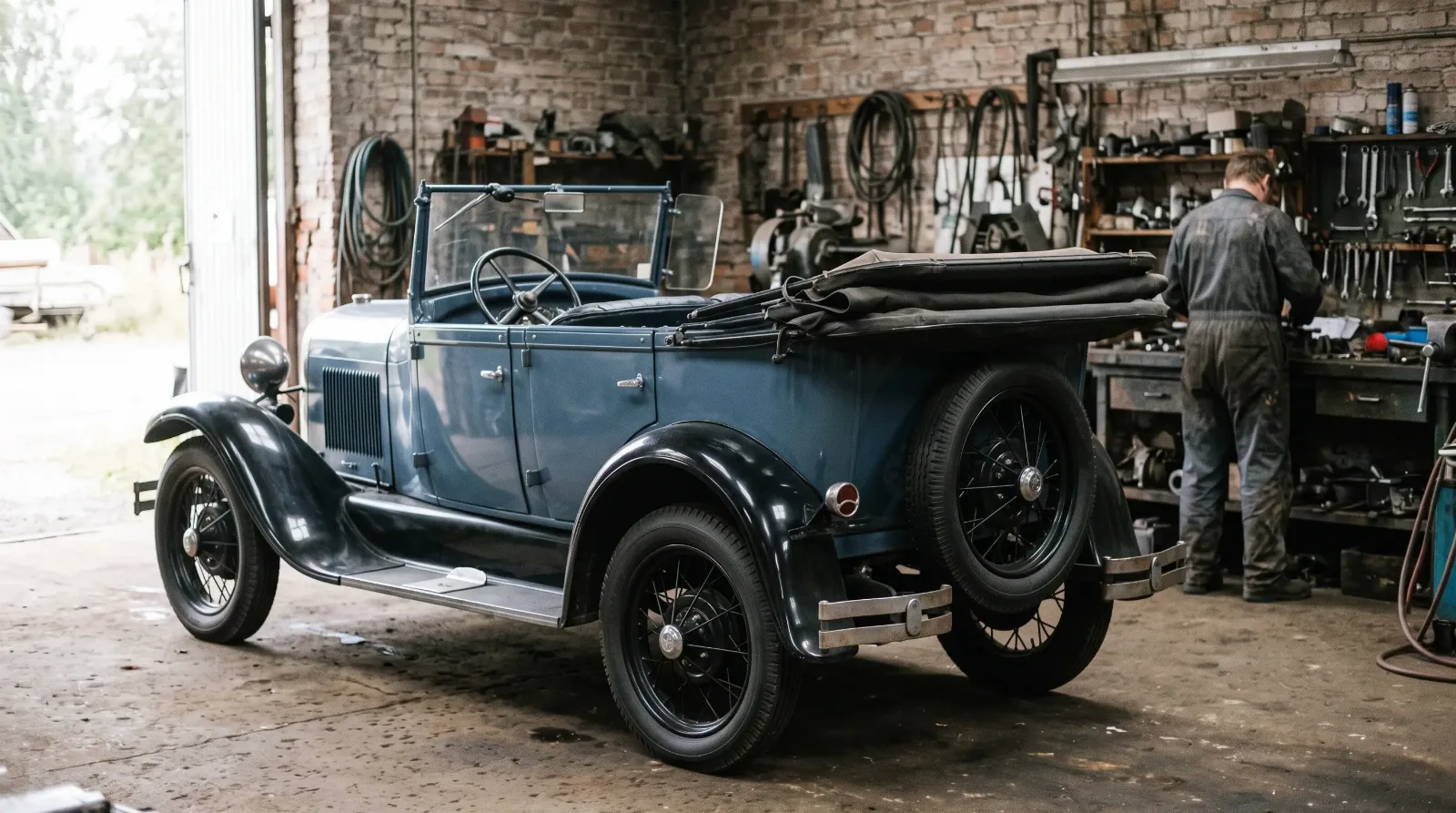
This guide sets out where the name comes from, which features mark an early car, how far the AR period really extends, and how to check that the parts belong together. For the wider story of the car, see the 1928 to 1931 Model A.
What 1928 AR Model A really means
The label comes from the Ford parts books. Early 1928 parts that were later superseded carried an "R" suffix in the parts listings, from the coding for replaced items. The emergency brake lever is a good example: the early lever for the single rear brake system is listed as A-2236-AR, while the lever used on 1929 to 1931 cars is A-2236-B. Hobbyists took that suffix and applied it to the whole car.
That shorthand is useful, but it is not a Ford designation, and some long-time Model A authorities object to the term altogether. It is better understood as a description of a car's parts than as a name for a model. A car is "AR" to the extent that it still carries the early components, and two cars built a few weeks apart can carry different mixes of them.
The production numbers explain why these cars are scarce. Model A production began on October 20, 1927, and the car went on public display on December 2. By January 1, 1928, only 5,275 engines had been built, and club records count about 5,000 vehicles from mid-October to the end of December. The earliest documented AR car is a Tudor with engine A-1149, dating to the first days of December 1927.
The spotting features, part by part
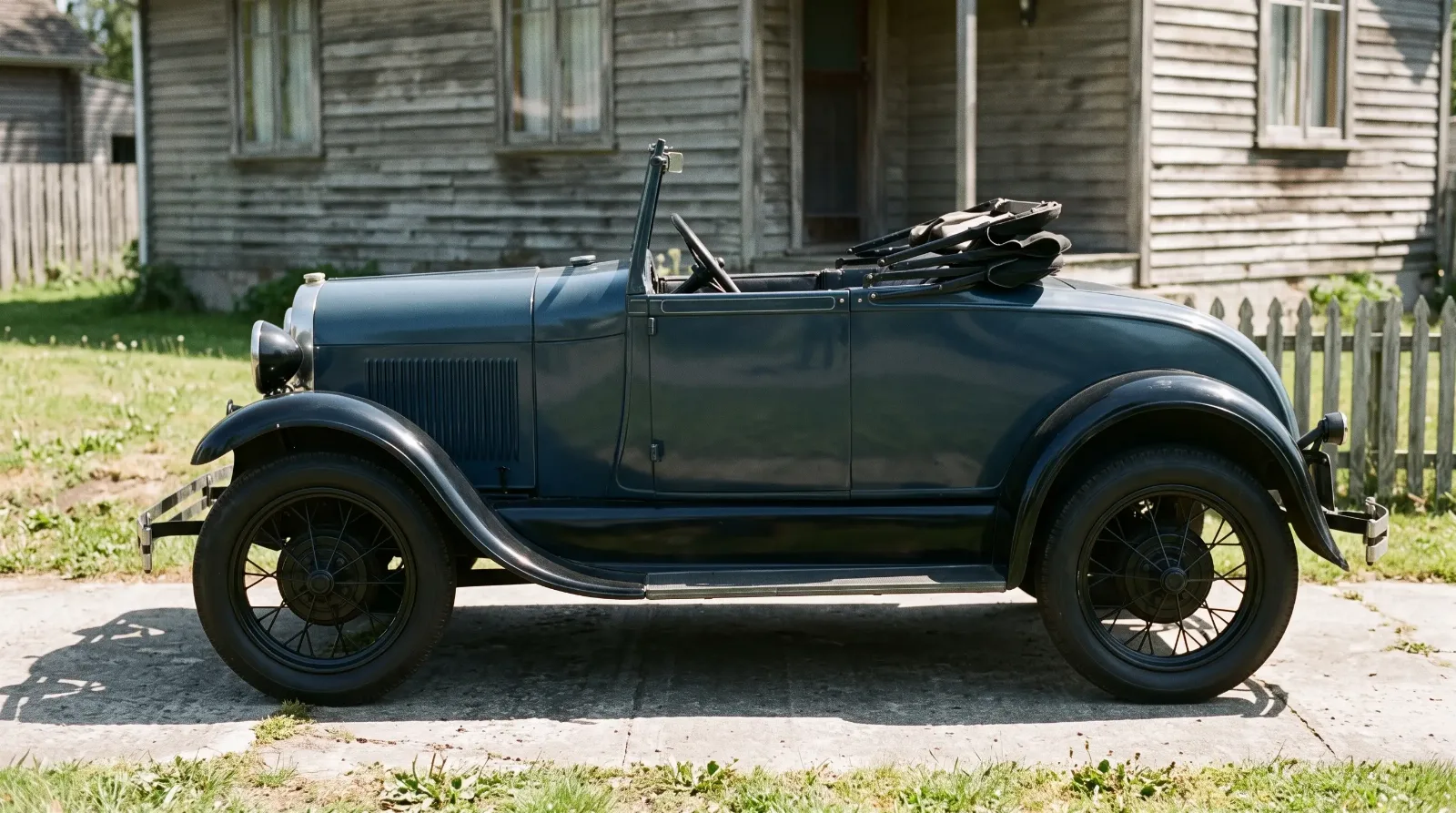
No single detail makes a car an AR. The reliable approach is to check a group of features that changed early and see whether they agree with each other and with the engine number. The table collects the main ones reported by the Early Birds research and other club sources.
| Area | Early (AR) feature | What changed later |
|---|---|---|
| Emergency brake | Hand lever on the left side, single rear brake system | Separate rear emergency brake system from June 1928 |
| Running board apron | Smooth, no bump for the brake rod | Bump added for the new rod |
| Bumpers | Flat, open ended, Model T style round center clamp | Later pattern |
| Radiator shell | Lacing woven through the shell; deeper cap recess | Later pattern |
| Pedals | Smooth clutch and brake pedals (first 70,000 to 80,000 cars) | Later pedal design |
| Generator | "Powerhouse" generator with side cutout; fan shroud | Later generator |
| Controls | Offset starter rod; short choke rod | Later pattern |
| Rear axle | 3.70:1 ratio (10/37 gears, A-4209) | 3.78:1 standard (9/34, A-4209-B) |
Some sources add further early details: a nickel radiator shell, fluted headlamp lenses and drum-style taillamps. These come from one author's list and are worth checking against the car's other features rather than relied on alone. The right-hand column is deliberately general; the exact later part numbers and change dates belong to the parts book.
The 3.70:1 axle deserves a note. Ford's March 1929 Service Bulletin discontinued it in favor of the 3.78:1 ratio, and an optional 4.11:1 was also offered. An original early axle is a strong supporting clue, but axles are easy to swap and were often changed during the car's working life.
"Start with the engine number and the brake lever, then work outward. If the parts tell the same story, you have an early car. If they argue, you have a later car with early pieces, which is perfectly honest as long as nobody pretends otherwise."
Tom Ramirez
How long the AR period lasted
This is where the sources disagree, and the disagreement matters to buyers. An RM Sotheby's catalog description calls the left-hand brake "typical of the first 200 'AR' Model As," which would make the group tiny. The Early Birds data, gathered from owner questionnaires and published in the club's Restorer magazine, tells a different story. On US passenger cars the left-side brake handle and single rear brake system ran into June 1928, with the changeover between June 10 and June 22, 1928, at engine numbers between A-155,000 and A-177,486.
The registry data is the stronger evidence, and it points to a simple conclusion: there is no single AR cut-off. Smooth pedals ended somewhere around the 70,000th to 80,000th car. The brake system changed in June 1928. Other parts changed at other points. A car built in March 1928 can be correct with smooth-faced items on one part and the later design on another.
Some features are early but are not AR markers at all. The smooth instrument panel with the oval speedometer ran from October 1927 to June 1930, through several variations. The 1928 cylinder head gave 4.3:1 compression, against 4.22:1 from 1929, and the 21-inch wheels with 4.50 by 21 tires lasted until the 1930 change to 19 inches. These help date a car to the early years but cannot separate an AR from a late 1928 car. For what followed, see the big 1929 year.
Checking a car before you pay for the label
The AR label adds interest and often value, so it attracts optimism. The record gives you the tools to test it.
Engine numbers are the backbone of the exercise, but remember that engines were replaced too. A block with an early number in a car with late body hardware is a mismatch to explain, not an automatic AR. The best early cars combine a plausible engine number with a consistent group of early fittings and some paper trail.
Early cars are also a reminder of how fast Ford was learning. The company was building a completely new car on new lines at the Rouge, and many of the AR features are first answers that Ford improved within months. That is what makes them interesting: they are the factory's working drafts. To place them in the wider story, see how it all fits together, and if you are shopping, browse the 1928 Model As for sale with the table above in hand.
Sources and notes
Related Reading
Have a
Ford Model A
for Sale?
Reach thousands of serious classic car collectors across the US.
Sell It Here →
Selling a classic? Here's how: where to sell your classic car online
Are You a Classic Car Dealer?
List your full inventory and connect with targeted classic car buyers.
Join as a Dealer →

About the author
Tom Ramirez
Corvette researcher and historian based in Bowling Green, Kentucky. Two decades documenting Corvette production history from original factory records.
Related Listings - Ford Model A
Comments
Be the first to comment on this article.