
Ford built 1,507,132 passenger cars in the United States in 1929. No other year of the Model A run comes close, and that single figure is the spine of any honest 1929 Ford Model A history. The car had been on sale for barely a year when the calendar turned. By the time it turned again, Ford had more than doubled its car output, taken the sales lead back from Chevrolet, added a run of new body styles and signed the paperwork for plants in England, Germany and the Soviet Union. Then the stock market fell, and the numbers started to bend the other way.
Car Features
7 min read
1929: The Model A's Biggest Year
Ford built 1,507,132 US cars in 1929, regained first place from Chevrolet and added new Model A bodies. The records of the peak year.

This piece stays inside that one year. For the arc from the 1927 shutdown to the last car in 1931, see the Ford Model A history pillar. Here the records do the talking.
The 1929 Ford Model A history in production figures
The cleanest way to see what 1929 meant is to set it beside its neighbors. The figures below are US-built Ford passenger cars, with trucks counted separately.
| Year | US Ford cars | US Ford trucks |
|---|---|---|
| 1928 | 633,594 | 110,342 |
| 1929 | 1,507,132 | 355,453 |
| 1930 | 1,155,162 | 272,897 |
| 1931 | 541,615 | 186,394 |
Add the trucks and Ford's US total for 1929 comes to 1,870,257 vehicles. The 1928 figure is low for a reason that has nothing to do with demand: the Model A was a brand new car on new tooling, and the plants spent much of that year learning to build it. In 1929 they had learned. The Rouge line was running at full capacity by the middle of the year, at a rate of 9,000 units a day.
The cumulative milestones show the same acceleration. The one millionth Model A came on February 4, 1929. The two millionth followed on July 24, 1929, under six months later. The three millionth arrived in March 1930. A million cars in roughly five and a half months is the fastest stretch of the whole program, and it sits squarely in 1929.
One caution about these figures. They are calendar-year totals for US plants, which is not the same thing as model-year production, and they leave out cars assembled abroad. The Model A Ford Club of America plant table also peaks in 1929, listing 1,422,705 domestic cars and 138,760 overseas, but the compiler notes the table is incomplete. Use the 1,507,132 figure when you want one number, and say what it counts.
Back to first place, and the year it actually happened
Here a common error needs correcting. You will often read that the Model A put Ford back on top in 1928. It did not. Chevrolet took first place in 1927, while Ford's plants sat idle for the changeover, and TIME reported that Chevrolet's 1928 production still exceeded Ford's. The Model A simply could not be built fast enough that first year to close the gap.
Ford passed Chevrolet in 1929 and regained the US sales lead. Several sources agree on that year. Chevrolet took the lead back in 1931. So the Model A's reign at the top was short, and 1929 is its clearest season.
Chevrolet did not sit still. Its 1929 car, introduced on November 17, 1928, carried a 194 cubic inch overhead valve six rated at 46 horsepower, six more than the Model A's four. Chevrolet priced it from $525 to $725 and sold it as a six in the price range of a four. Ford still outsold it. Mac's Motor City Garage puts 1929 Chevrolet sales at 1,328,605 against Ford's 1,507,132, a margin of roughly 178,500 cars. That is a clear win, but not a rout.
"The 1928 date gets repeated because it makes a tidier story: new car, instant victory. The production records say otherwise. Ford won the race in 1929, the first full year its plants could build the car at speed, and held it only briefly."
Tom Ramirez
What a 1929 Model A cost, and the new bodies on the list
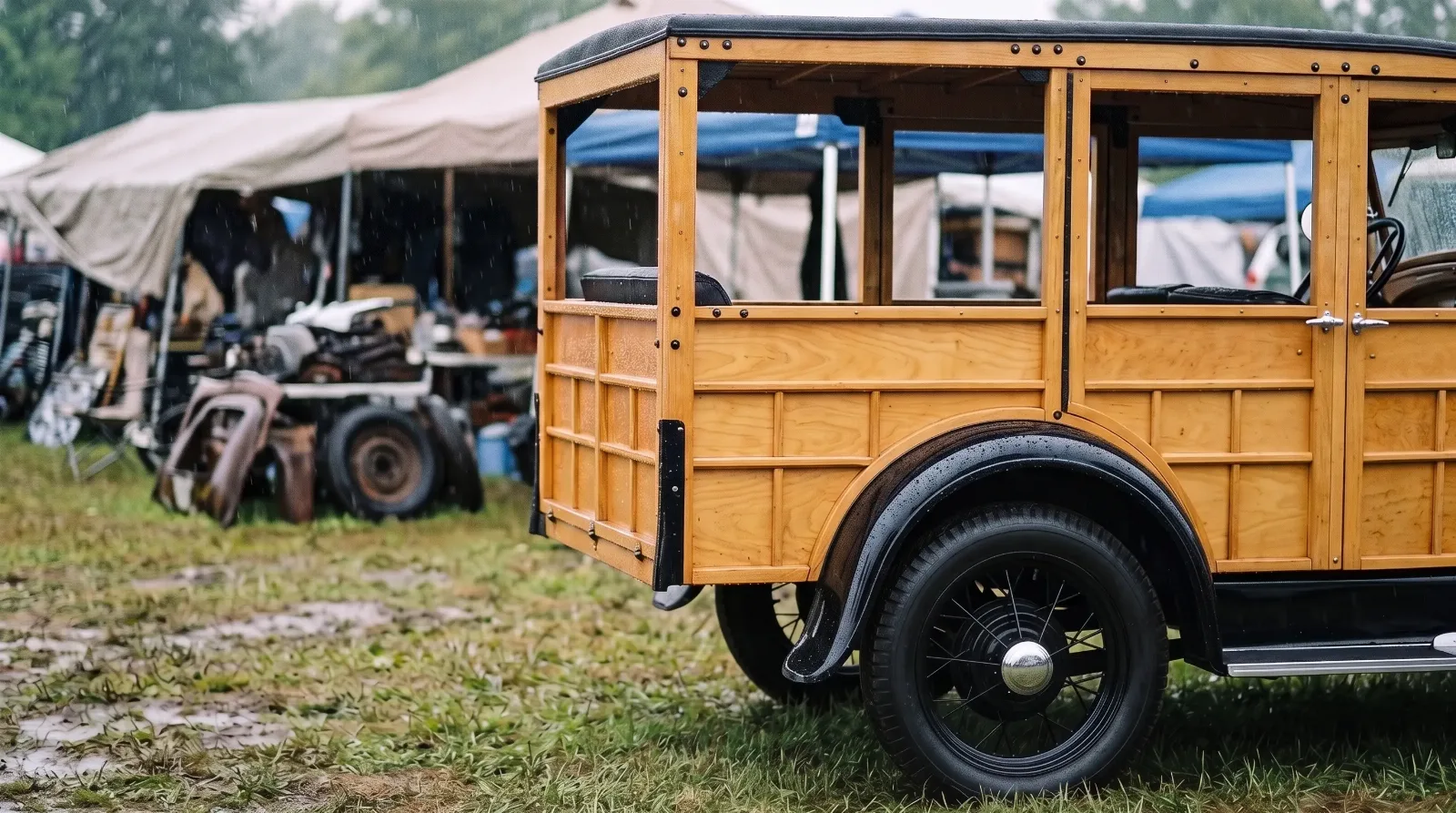
In 1928 the Model A had listed from $385 to $570. For 1929 most prices moved up a little, and the range widened at the top because new styles joined the catalog. These are the 1929 list prices, FOB Detroit.
| Body style | 1929 list price |
|---|---|
| Roadster | $435 |
| Phaeton | $440 |
| Business Coupe | $490 |
| Standard Coupe | $500 |
| Tudor | $500 |
| Special Coupe | $510 |
| Sport Coupe | $530 |
| Fordor | $600 |
| Cabriolet | $645 |
| Town Sedan | $670 |
| Taxi | $800 |
| Town Car | $1,200 |
Several of those lines were new. The 68-A Cabriolet, a coupe with a real folding top and roll-up glass, was introduced in March 1929 with bodies by Briggs. The 150-A Station Wagon made Ford the first of the Big Three to offer a factory-built wagon, with maple, birch and basswood from Ford's own forests in Michigan's Upper Peninsula; 4,954 were built in 1929. The 140-A Town Car, with an open chauffeur's compartment, ran to about 1,000 cars that year. The registry codes also record the 135-A Taxi, the 155-A Town Sedan, the Briggs-built 60-C Fordor and the 165-A and 170-A Standard Fordors.
Other lines quietly ended. The first 54-A Business Coupe, with its cloth top and blind rear quarters, was built from May 1928 to February 1929, and a later version followed. The 49-A Special Coupe ran from July 1928 to July 1929. Anyone dating a closed coupe by its style number should keep those windows in mind.
Mechanical running changes continued too. The early 3.70:1 rear axle ratio was discontinued in a March 1929 service bulletin in favor of the standard 3.78:1. On the truck side, a four-speed transmission with a very low first gear became standard on the Model AA during the 1929 model year, and Ford offered commercial bodies on the Model A chassis from 1929.
Ford goes abroad, and the year turns
The 1929 paperwork reached well beyond Detroit. Edsel Ford cut the first turf at Dagenham, England, on May 17, 1929. On May 31, 1929, Ford signed a ten-year technical assistance agreement with the Soviet Union. On October 28, 1929, Ford signed its contract with the city of Cologne. Each of those threads became its own Model A story in the years that followed.
The date of the Cologne contract is worth pausing on. The stock market broke that same week. The effect on Ford was not immediate in the books, because 1929 was already mostly built and sold. But the industry figures show where things were going: US vehicle output of 5,337,000 in 1929 against 1,332,000 in 1931.
Ford's own response was to spend. Effective December 1, 1929, the company raised its minimum pay from $6 to $7 a day, moving about 24,320 workers up at a cost of $20 million a year. The move was tied to President Hoover's call for business to keep spending. It was the last confident gesture of the Model A's biggest year.
Why 1929 still matters to collectors
The volume of 1929 production is the practical reason so many surviving Model As carry that year. More cars built means more cars saved, more parts made and more reference material for checking originality. A 1929 car also reflects the design after the first year's running changes had settled, which is part of why restorers often find it a straightforward starting point.
The year after brought a different car to look at. Lower lines, a taller radiator shell and smaller wheels arrived with the 1930 restyle, and they split the Model A into two visual families. If you are shopping today, the records above should help you read a body tag and a price card with some skepticism. You can browse current 1929 Model A Fords for sale and test that against what you see.
Sources and notes
Related Reading
Have a
Ford Model A
for Sale?
Reach thousands of serious classic car collectors across the US.
Sell It Here →
Selling a classic? Here's how: where to sell your classic car online
Are You a Classic Car Dealer?
List your full inventory and connect with targeted classic car buyers.
Join as a Dealer →

About the author
Tom Ramirez
Corvette researcher and historian based in Bowling Green, Kentucky. Two decades documenting Corvette production history from original factory records.
Related Listings - Ford Model A
Comments
Be the first to comment on this article.