
On December 2, 1927, Ford showed the public a car it had been building in secret since October, and the crowds that came to look were larger than anything a dealer had seen. Ford Model A history runs four model years, 1928 to 1931, and in that short span the car took a company that had lost first place to Chevrolet, put it back on top, and then watched the Depression cut its output in half. This is the record of those four years, read year by year from production figures, price lists and body codes. For the longer arc from 1908 onward, see our Model T and Model A history; here the subject is the Model A alone.
Car Features
10 min read
Ford Model A History: The 1928 to 1931 Car That Saved Ford
Ford Model A history year by year: the 1927 launch, the 1929 peak, the 1930 restyle, the 1931 slump and how many were really built.
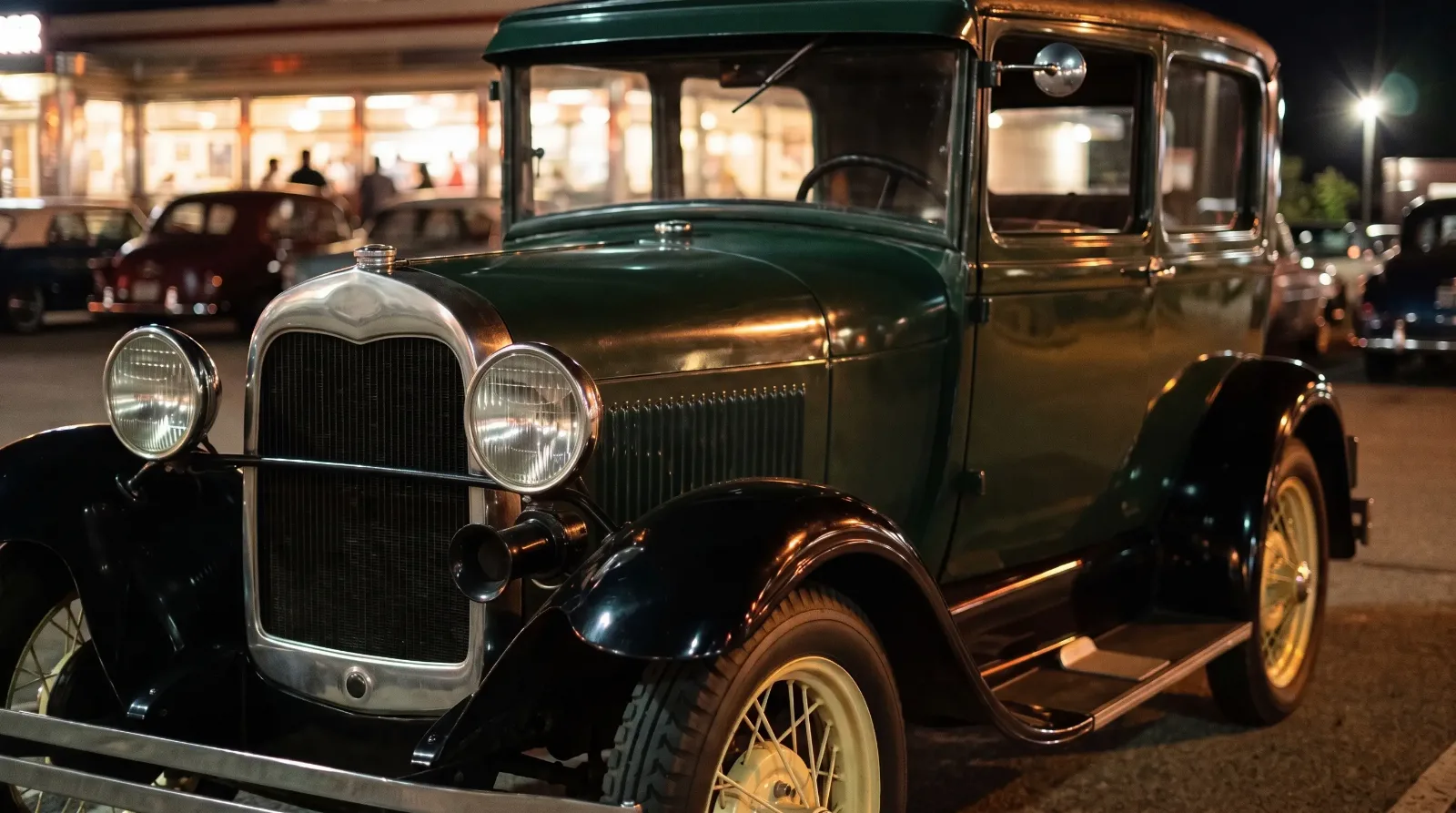
Ford Model A history begins with a six-month gap
The Model A was born out of a problem. Chevrolet passed Ford in US sales in 1927, and the Model T, in production since 1908, could not answer it. Henry Ford ordered work on a new car in 1926, and the project was run by Eugene Farkas with Laurence Sheldrick and Frank Johnson, while Edsel Ford supervised the design. Its styling earned the nickname "baby Lincoln."
Ford stopped Model T production in May 1927 and shut its plants for about six months while the new car was readied. Assembly moved from Highland Park to the River Rouge complex, and the Model A became the first car assembled at the Rouge. Production began on October 20, 1927, the day Henry Ford hand-stamped engine number one. The car went on sale as a 1928 model.
The launch was handled as an event. A five-day advertising campaign began on November 28, 1927, with $2 million spent across 2,000 newspapers, and by Ford's own estimate about 10 million people saw the new car in its first week. In Kansas City, the Convention Hall showing sold 2,250 cars on announcement day. Douglas Fairbanks ordered a Model A sport coupe for Mary Pickford, delivered on Christmas Eve, which was the kind of publicity no advertising budget could buy.
1928: catching up with demand
The first model year was spent building volume. The Rouge and the branch plants were converting at the same time, and US car output for calendar 1928 reached 633,594, with another 110,342 trucks. That is respectable, but it is less than half of what the plants would manage a year later.
The 1928 price list, f.o.b. Detroit and without accessories, ran from $385 for the Roadster to $570 for the Fordor sedan. Between them sat the Phaeton at $395, the Tudor and the Standard and Business Coupes at $495, the Special Coupe at $500 and the Sport Coupe at $550. Other sources quote a higher first-year range of about $480 to $600, which may reflect later 1928 or delivered prices; the club table is the cleaner record.
For anyone studying an early car, 1928 is the year of the details that came and went. The earliest production, the so-called "AR" cars, carried features that were changed within months, including a left-side hand-brake lever that ran until June 1928. There is no single cut-off for "AR": it varies part by part, which is why judges examine each component rather than accept a label. Engines carried a 4.3:1 compression head in 1928, lowered to 4.22:1 for 1929 to 1931, and the early 3.70:1 rear axle gave way to the 3.78:1 ratio that became standard.
1929: the peak year and first place regained
If one year proves the Model A did its job, it is 1929. US car production climbed to 1,507,132, the highest of the run, with 355,453 trucks on top. The millionth Model A was built by February 4, 1929, and the two millionth by July 24, 1929. Ford passed Chevrolet that year and took back US sales leadership, the result the whole changeover had been designed to deliver.
The competition did not stand still. Chevrolet introduced its 1929 six on November 17, 1928: a 194 cubic inch overhead-valve six with 46 hp, six more than the Model A, priced from $525 to $725 and sold as "a six in the price range of a four." Ford answered with breadth rather than cylinders. The 1929 list grew to include a Cabriolet at $645, a Town Sedan at $670, a Taxi at $800 and a Town Car at $1,200, while the Roadster rose to $435 and the Fordor to $600.
Ford also built the car well beyond Detroit. By the end of the run, Model A assembly had reached 36 domestic plants, including Canada, and 17 overseas, among them Walkerville in Ontario with 182,412 cars, Buenos Aires with 45,683 and Copenhagen with 33,033. In March 1929, Percival Perry told British shareholders that Ford and its European associates had already delivered "upwards of 50,000" Model A vehicles.
| Year | US car production | US truck production | Price range, f.o.b. Detroit | Key event |
|---|---|---|---|---|
| 1928 | 633,594 | 110,342 | $385 Roadster to $570 Fordor | Volume ramps up at the Rouge and branch plants |
| 1929 | 1,507,132 | 355,453 | $435 Roadster to $1,200 Town Car | Peak year; Ford passes Chevrolet |
| 1930 | 1,155,162 | 272,897 | $440 Phaeton to $1,200 Town Car | Restyle, 19 in wheels, Victoria arrives |
| 1931 | 541,615 | 186,394 | $430 Roadster to $640 Convertible Sedan | Depression halves output; 20 millionth Ford |
The production columns are US-built vehicles by year (calendar years, as usually read, though the source does not state it); they leave out Canadian and overseas assembly. Prices are the club's factory list without accessories.
1930: the restyle and the new bodies
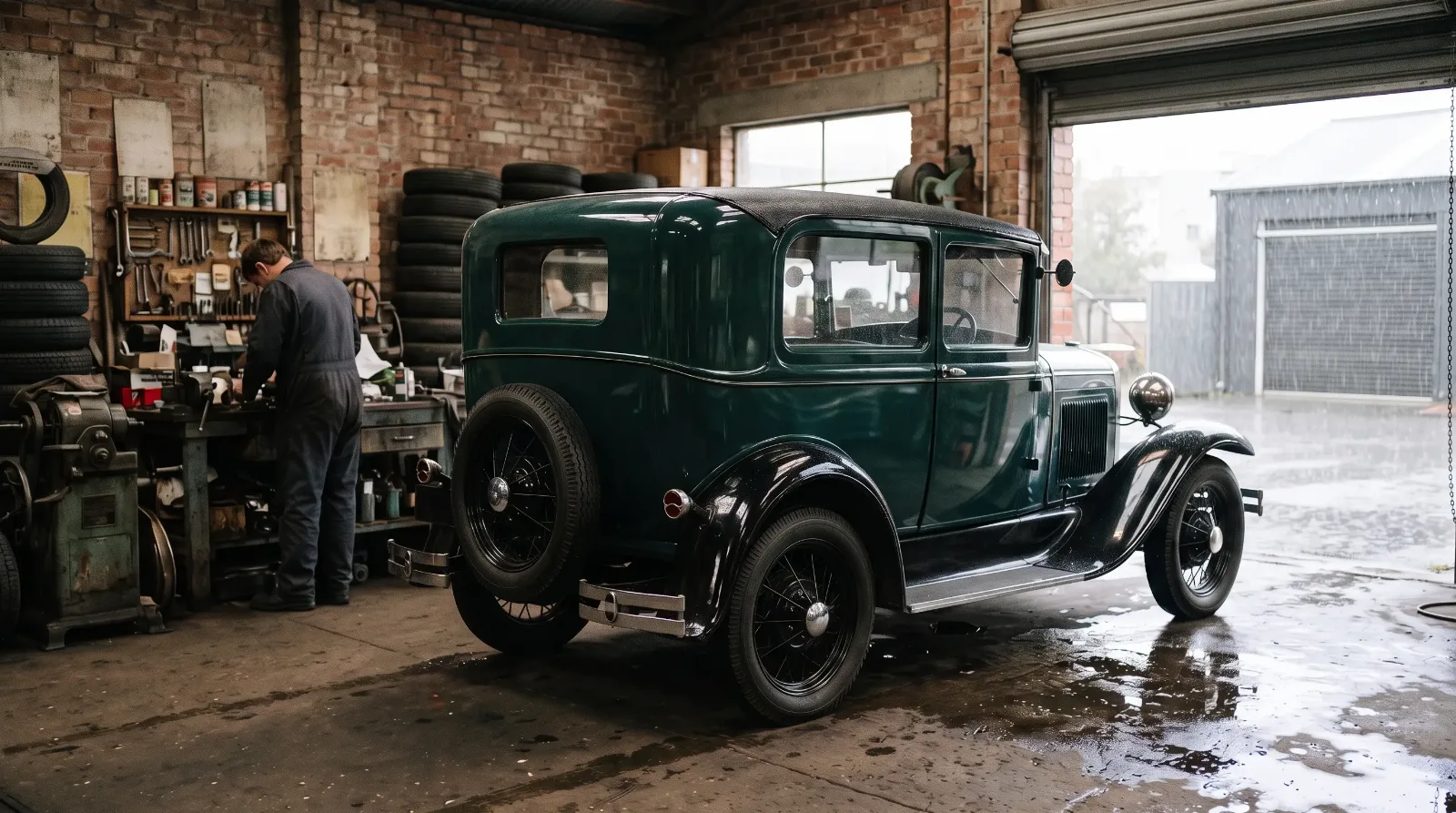
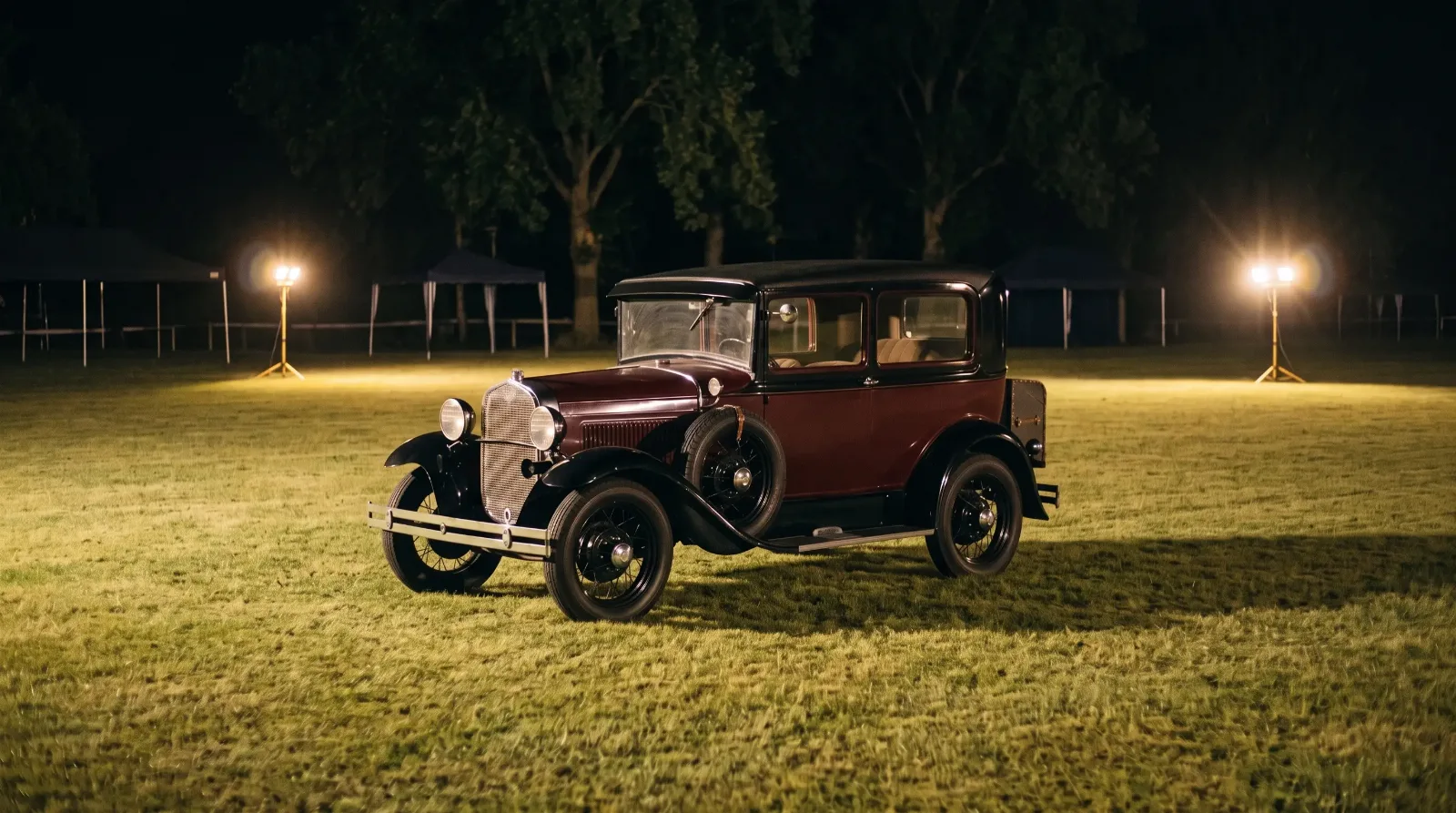
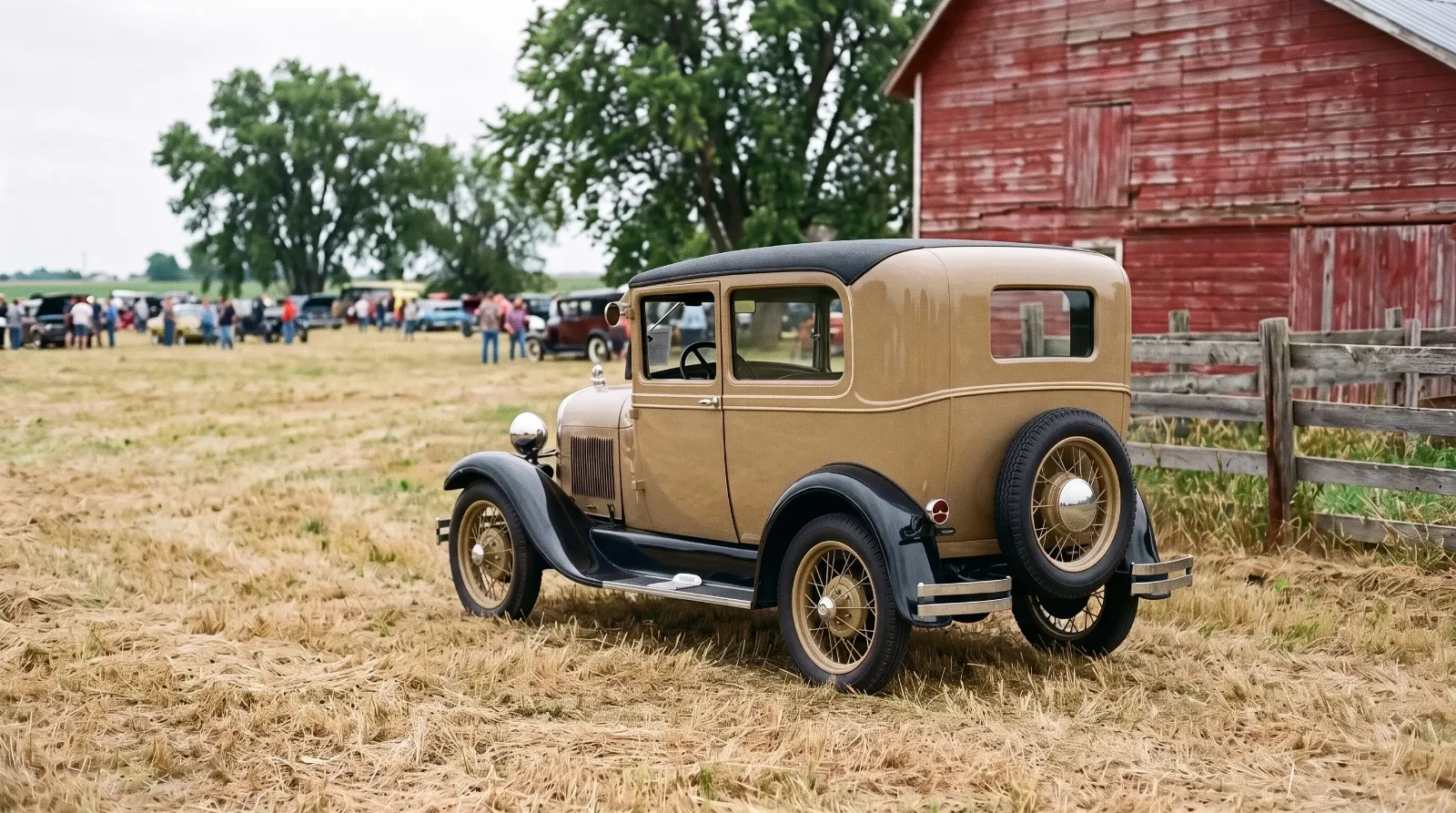
For 1930 Ford changed the look of the car without changing its 103.5 inch wheelbase. The hood and radiator were raised, and the radiator shell was now stainless steel. A higher cowl made room for a larger fuel tank, 11 gallons instead of 10. Wheels dropped from 21 inches to 19 inches, with tires growing from 4.50 to 4.75 in section, which lowered the car and improved the ride. Roadsters and phaetons got fold-down windshields.
The body catalog was rebuilt around new "B" bodies. The 1930 codes include the 40-B DeLuxe Roadster, the 45-B DeLuxe Coupe, the 180-A DeLuxe Phaeton, the 170-B DeLuxe Fordor and the 190-A Victoria, while the Special and Business Coupes were dropped. Roadster production alone reached 124,214 for 1930, of which 11,313 were DeLuxe. The full range, with codes and production, is set out in our guide to every Model A body style.
The Victoria, introduced in November 1930, was the most stylish of the new cars, with a slanted visorless windshield, a bustle back and folding front seats. Auction-house records put output at about 6,400 in late 1930 and roughly 40,000 in all. Inside, the instrument panel changed in June 1930 from the smooth panel with an oval speedometer to a ribbed panel with a round one, a change worth knowing when dating a car by its dash.
"A Model A tells you its year in small things: the panel, the wheel size, the shell, the body code on the plate. Read them in order and the car dates itself. Read only the title and you are trusting someone else's restoration."
Sarah Whitfield
1931: slant windshields and a shrinking market
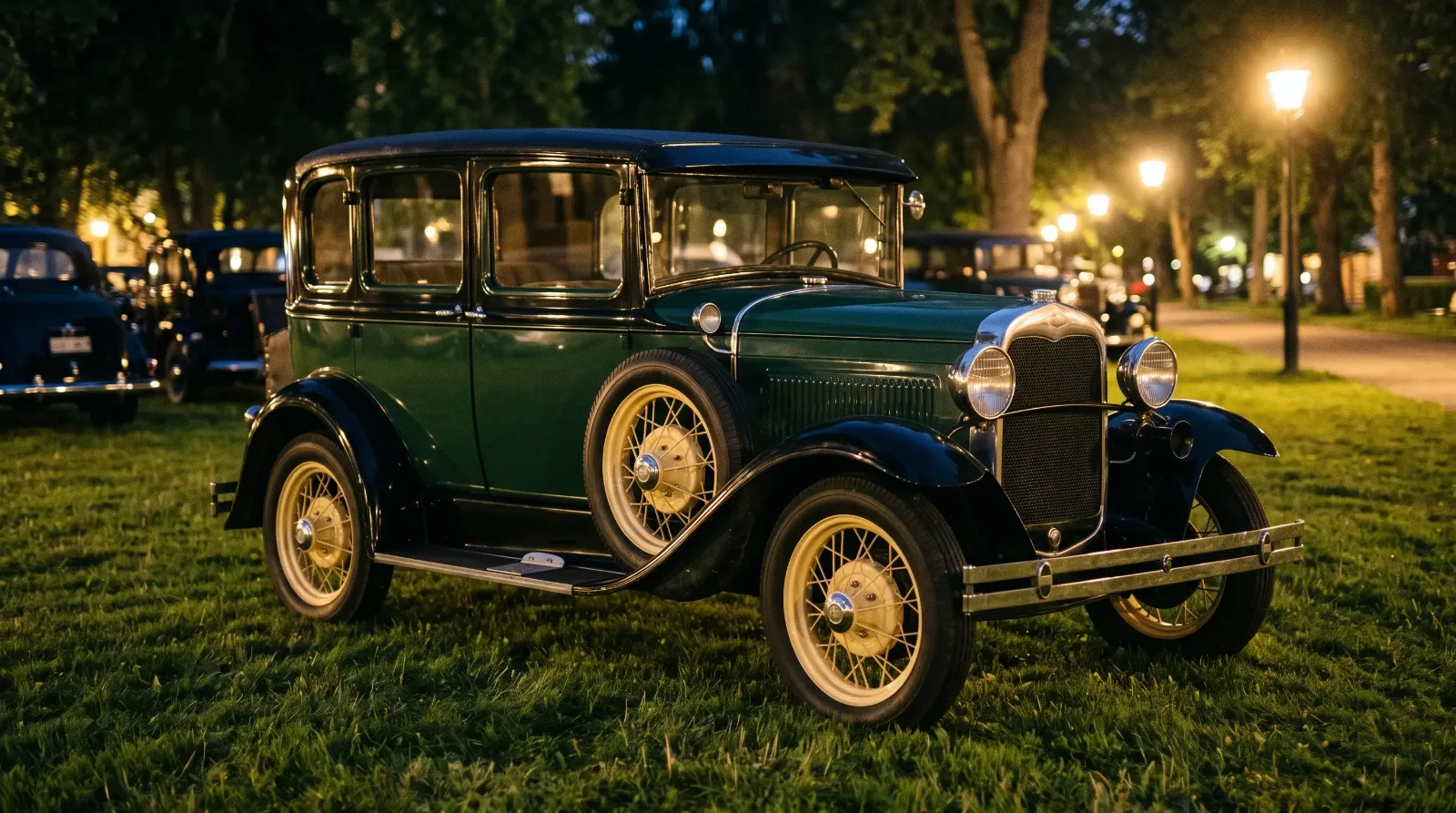
The last model year brought careful refinement into a collapsing market. Radiator shells gained a body-color accent on the stainless, splash shields became one-piece, a new instrument panel arrived in April 1931, and laminated safety glass became optional at mid-year. A Tacoma Cream stripe replaced the earlier stripe on several styles from July 1931. New for 1931 were the DeLuxe Tudor (on the 55-B body), the 68-C slant-windshield Cabriolet, the 160 series slant-windshield Fordor and Town Sedan, the 400-A Convertible Sedan, and the 66-A DeLuxe Pickup.
The numbers moved the other way. US car output fell from 1,155,162 in 1930 to 541,615 in 1931, a cut The Henry Ford describes as the Depression halving Ford's annual production. Prices were trimmed, with the Roadster at $430 and the Tudor at $490, but a four-cylinder car in its fourth year was hard to sell against Chevrolet's six, and Chevrolet took first place back in 1931.
On April 14, 1931, the 20 millionth Ford left the Rouge line: a black 1931 Model A Town Sedan with a slant windshield, driven by Henry Ford with Edsel beside him. It was lettered "TWENTY MILLIONTH" on its sides and roof and toured the country before going into the Henry Ford Museum in December 1931.
When the Model A ended, and how many were built
The end date depends on what you mean by "end." The 1931 model was the last Model A model year. US assembly wound down in late 1931, and Henry Ford decided in October 1931 to bring out a V8 for 1932. Final assembly did not stop then, however: the last units, mainly in Canada, where 1,482 were built in 1932, ran to March 1932. So "1928 to 1931" is correct for model years, and "October 1927 to March 1932" is correct for the production run.
The total has the same problem. The Model A Ford Club of America history puts production at 4,849,340, all body styles worldwide, from October 1927 to March 1932. Wikipedia gives 4,858,644 for the same span. The two differ by fewer than 10,000 cars, and either rounds to about 4.85 million. A third figure, about 4.3 million, appears in some references; it is most likely US-only or cut off in August 1931, a different basis rather than a correction. Engine production adds a cross-check: 4,830,806 production engines from October 1927 to November 1931.
Did the Model A save Ford?
The record supports the title's claim on its own terms. Ford entered 1927 behind Chevrolet with an obsolete car and closed its plants for half a year. By March 1930, a little over two years after the launch, it had built three million Model As, and it had already retaken the US sales lead in 1929 with the best year of the run. Without the Model A there was nothing to sell between the end of the T and the arrival of the V8.
What the car could not do was hold that lead against a six-cylinder rival and a collapsing economy. By 1931 output had halved and Chevrolet was back in front. The Model A bought Ford time, and Ford used it: the four-cylinder Model B and the V8 Model 18 replaced it on March 31, 1932.
The car's reach outlived its run. The GAZ-A, a licensed copy of the 1930 Model A, was built in the Soviet Union from 1932 to 1936, and Ford's British plants built a 2,043 cc version to suit the horsepower tax. In the United States the cars remain plentiful enough that a well-documented example is still within reach; if you are shopping, start with the Ford Model A cars for sale and read each one by its codes, its panel and its wheels before you read its asking price.
Sources and notes
- Model A Ford Club of America: Model A history
- Model A Ford Club of America: new car prices, 1928 to 1931
- The Henry Ford: Ford production figures by year
- Ford Motor Company: the 1928 Ford Model A
- Mac's Motor City Garage: December 2, 1927, the Model A Ford is introduced
- Wikipedia: Ford Model A (1927 to 1932)
Related Reading
Article
Ford Model T and Model A: The Complete Story of Henry Ford's Cars, 1908 to 1931

Article
From Model T to Model A: What Ford Changed in 1927
Article
Ford Model A Body Styles: Tudor, Fordor, Roadster, Victoria and More
Article
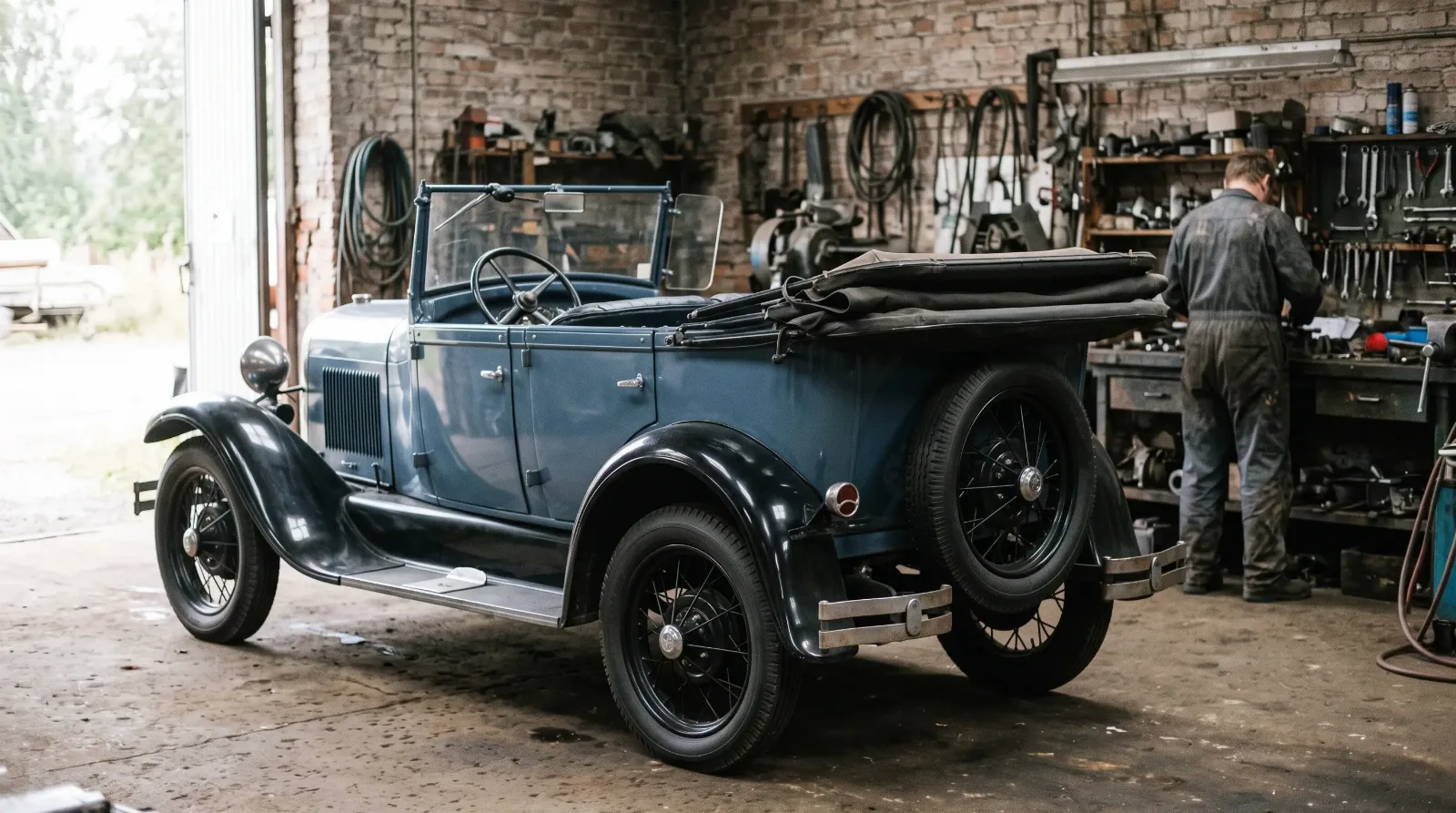
The Early 1928 AR Model A: How to Spot One

Article
1929: The Model A's Biggest Year
Article
The 1930 Model A Restyle: Stainless Shell, Taller Hood and Smaller Wheels
Article
1931: The Model A's Final Year
External
/ford/model-a
Have a
Ford Model A
for Sale?
Reach thousands of serious classic car collectors across the US.
Sell It Here →
Selling a classic? Here's how: the best sites to sell a classic car
Are You a Classic Car Dealer?
List your full inventory and connect with targeted classic car buyers.
Join as a Dealer →

About the author
Sarah Whitfield
Third-generation classic car collector specializing in pre-war American and European coachbuilt automobiles. Researcher and concours enthusiast.
Related Listings - Ford Model A
Comments
Be the first to comment on this article.